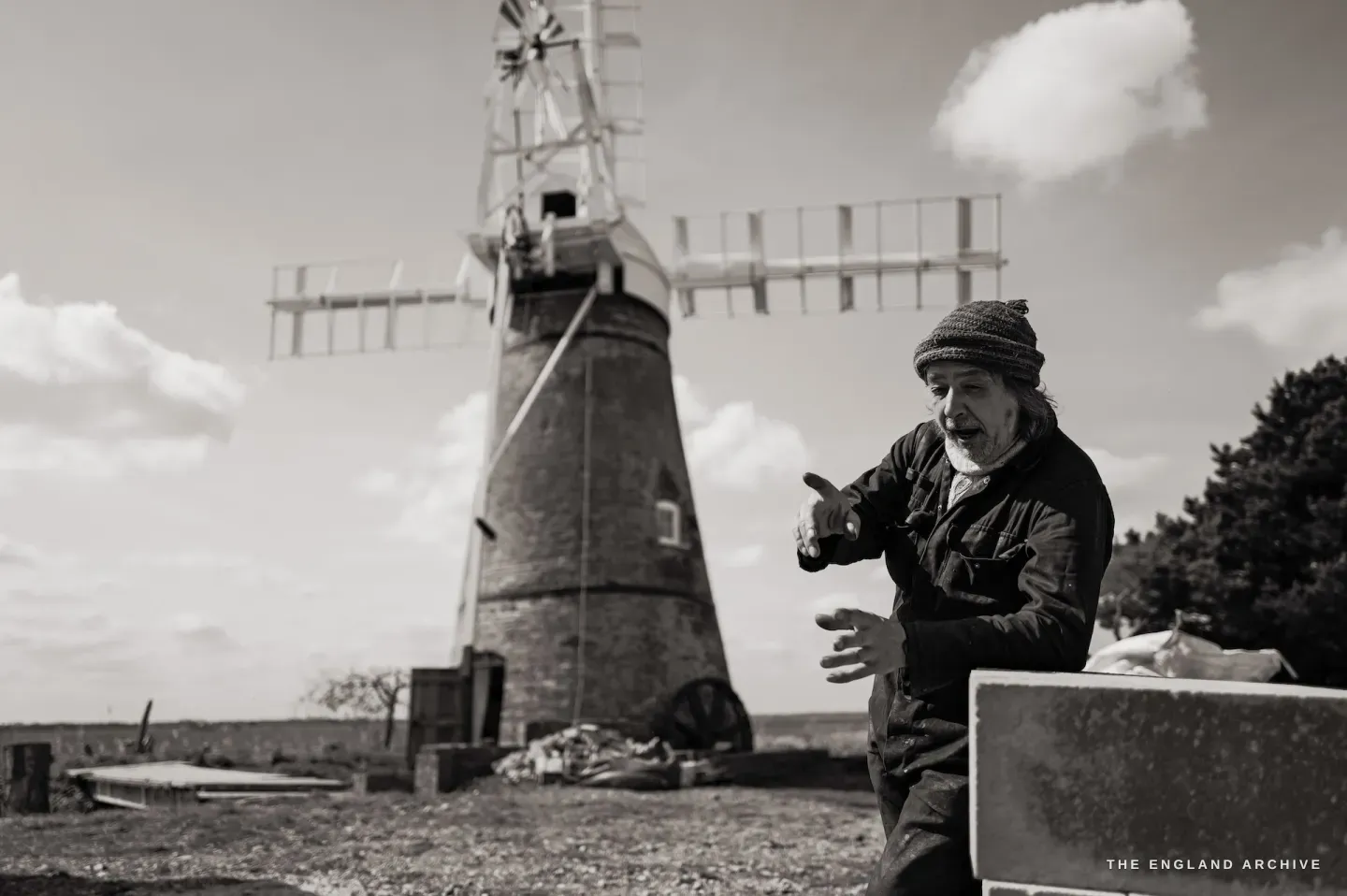
IM-0026 · Paul Kemp, Millwright
PR-0006
Teaching
Postcard
The smallest object the archive makes. Posted to a friend who would recognise the subject, pinned to a noticeboard, slipped into a thank-you note, kept in a desk drawer for the days when the work needs a small physical reminder. The pack of six lets one frame travel through six lives at once.
Paper for this tier
Premium A6 card stock
Heavy art-quality card. The postcard is itself a small print object - signed, dated, archive-coded.
Open Edition
The print that goes on a wall and stays there. A4 fits anywhere; A3 reads across a room. Archival paper, signed and dated, not numbered - the point is daily presence, not collecting. Most of the archive's prints in private homes are this tier.
Paper for this tier
Hahnemühle Photo Rag (matte cotton, 308gsm)
The world's most widely used fine-art photographic paper. Soft, lightly textured, deep blacks, neutral whitepoint. The default across the archive - roughly 90% of frames print on this. The same paper Mash sends to every documented subject as their gift print.
Collector Edition
The print as an object. Twenty-five will exist; once the twenty-fifth is sold, the edition closes for good. The kind of print given as a milestone gift, hung in a considered space, and passed on. The ArtSure Certificate of Authenticity is the paper trail collectors, galleries, and future auction houses expect.
Same Hahnemühle Photo Rag as the Open Edition. The differentiation here is the object: deckle edges on all four sides, window mount, ArtSure certificate, and a numbered edition.
Museum Edition is reserved for hero frames and is not offered on this print. Browse the shop directory to see which prints carry the Museum tier.
Card details are entered on Stripe’s secure pages, not here. Shipping address is collected at checkout.
About this print
Paul gesturing with both hands, the mill behind him, mid-explanation. He talked the way people talk when they have carried knowledge for so long that sharing it has become a kind of duty - a working millwright's working sentence, delivered without performance. The frame is the visible image of how the trade gets passed on: hands first, words second.
Leica Q3, working light, no posing. This is the photograph the journal entry is built around.
Where the money goes
Every print sold through this archive is split four ways after print costs (paper, ink, packaging, shipping) and Stripe fees come off the top:
- 15% to the depicted subject (Paul Kemp, Millwright).
- 10% to the Apprenticeship Fund - seed support for apprentices in the crafts the archive documents.
- 20–40% to the contributing photographer (tiered).
- Rest to the archive - hosting, editorial time, the next shoot, the print returned to the subject after their visit.
The full mechanic is published at /contribute.