A Morning at Cardozo Kindersley
East Anglia · Cambridge · Makers
The appointment was for half past ten. We left early and got there by ten, which in a working workshop is awkward by a factor of thirty minutes but we had decided in the car that if the door opened we would go in rather than sit outside looking English about it. The door opened.
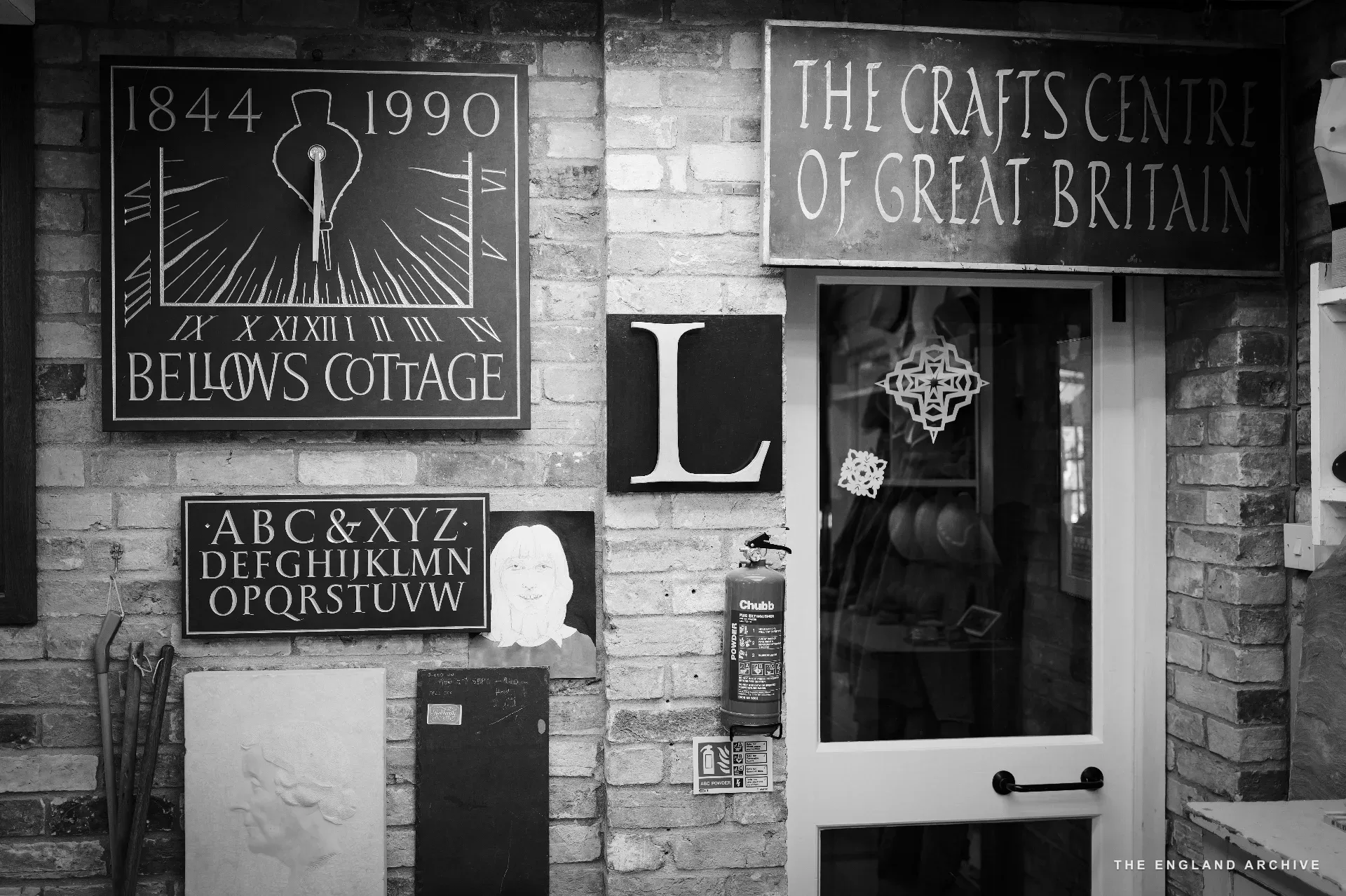
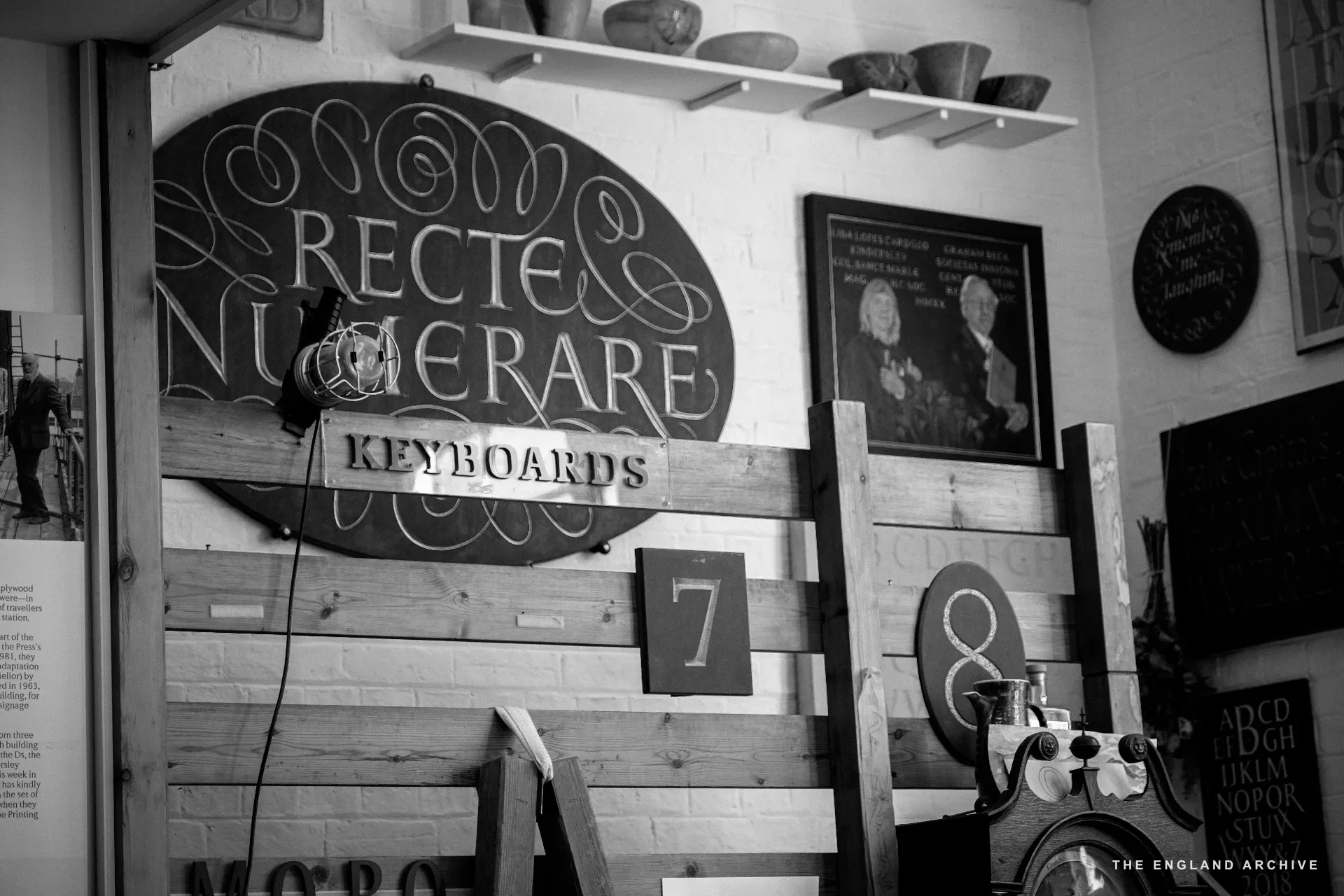
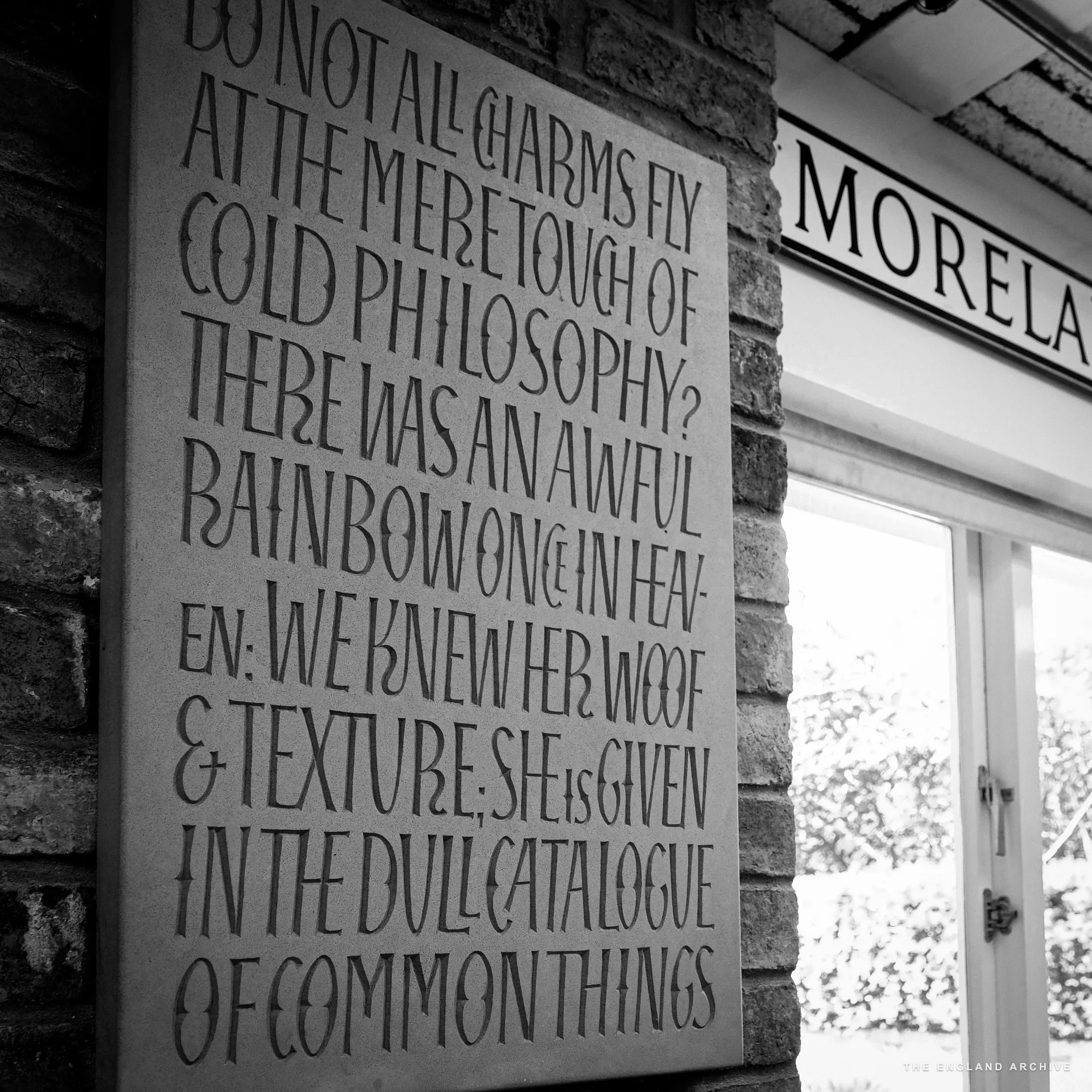
The Cardozo Kindersley Workshop sits on a residential street in Cambridge, a building you would walk past if you did not know. We knew. We had been emailing for weeks with Harriet, who runs the office for Lida and Roxanne, and the visit had been carefully arranged. Four hours had been set aside. The sign on the door gives the workshop's name in the hand-cut lettering that the workshop itself produces. There is a quiet logic to that: the sign announcing letter-cutting is an example of letter-cutting. Inside is a world that has not materially changed in the sixty years the Kindersley name has been above the door, and for several hundred years before that inside any workshop in England that carved letters onto stone.
The welcome
Vincent opened the door. He is one of the two sons; he was already working and had heard us knock. Beard, calm manner, the kind of unguarded warmth that does not feel performed because it isn't. He invited us in, said Harriet would be with us in a minute, and went back to what he had been doing. A few seconds later Harriet appeared, welcomed us properly, and waved us to sit at the big table that runs the length of the front room. She would get things organised, she said. Help yourself to the view.
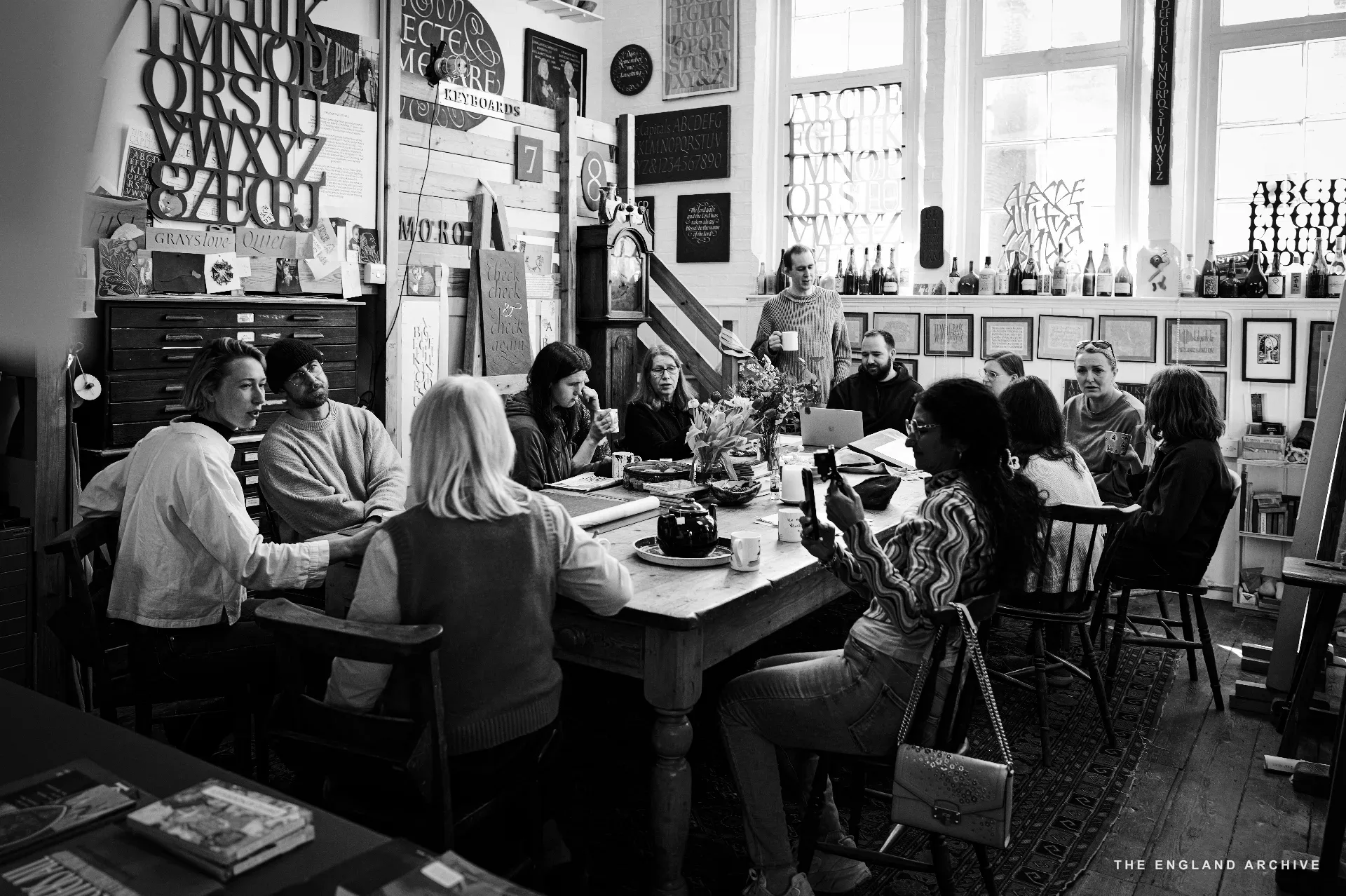
Vincent came and sat down while we waited. He asked whether we were photographers. I explained that we were not, quite; that we were documentarians, and that the photography was one of three things the archive does; that the other two were the writing and the long-term record. I started into the sketch of what The England Archive is and he listened carefully, with the kind of attention people in craft workshops give you when they are used to explaining their own work to visitors and have learned that the courtesy should run both ways.
Then Lida came in.
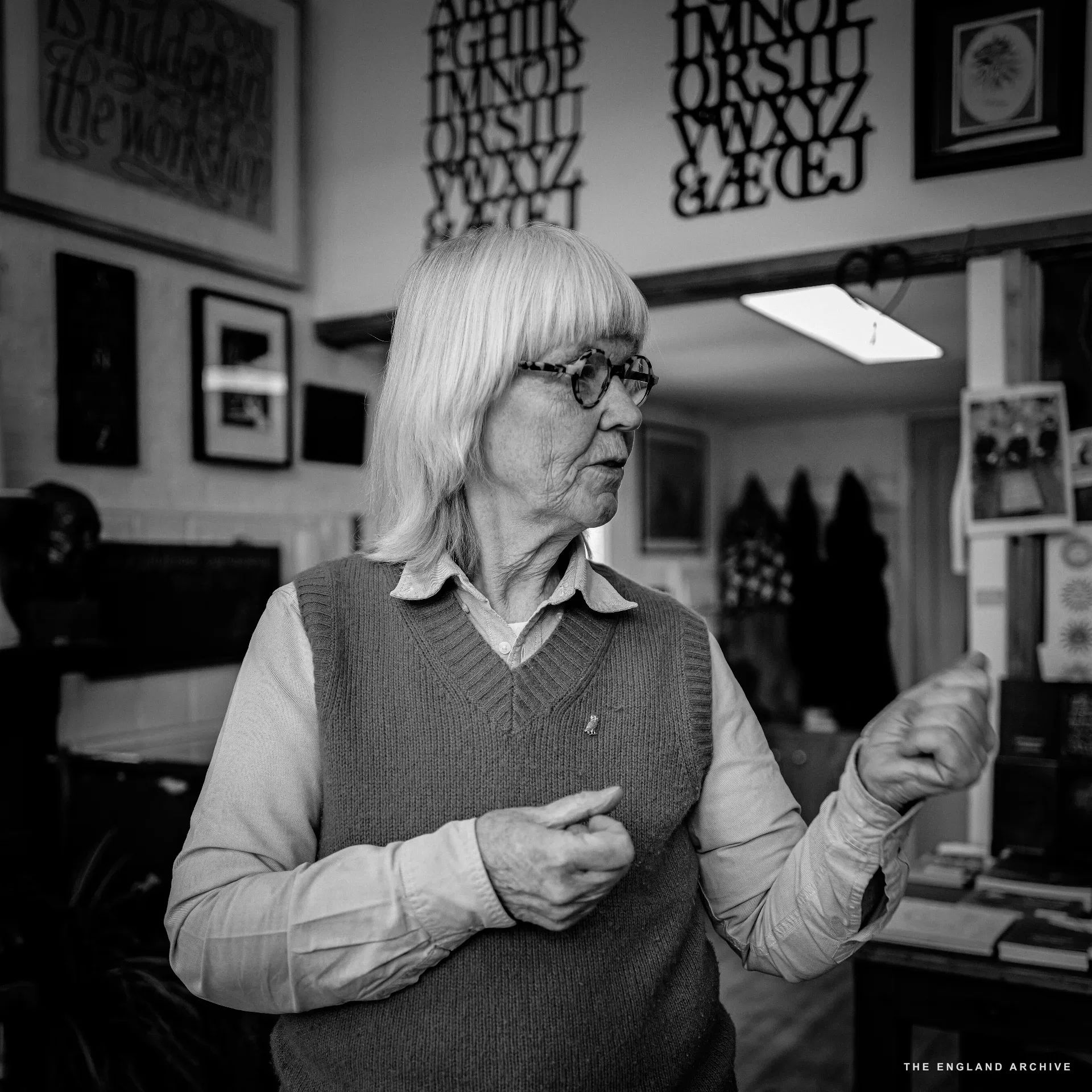
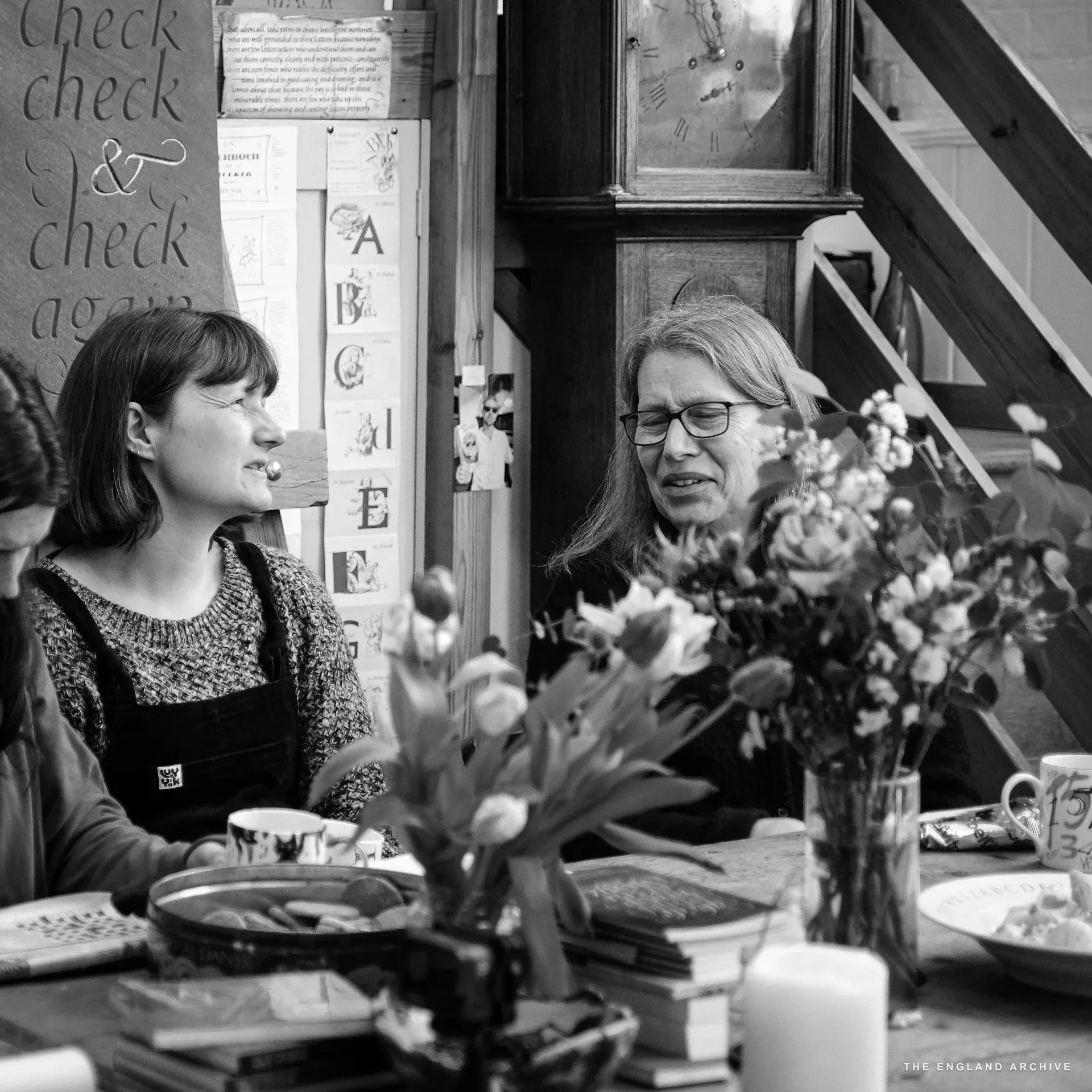
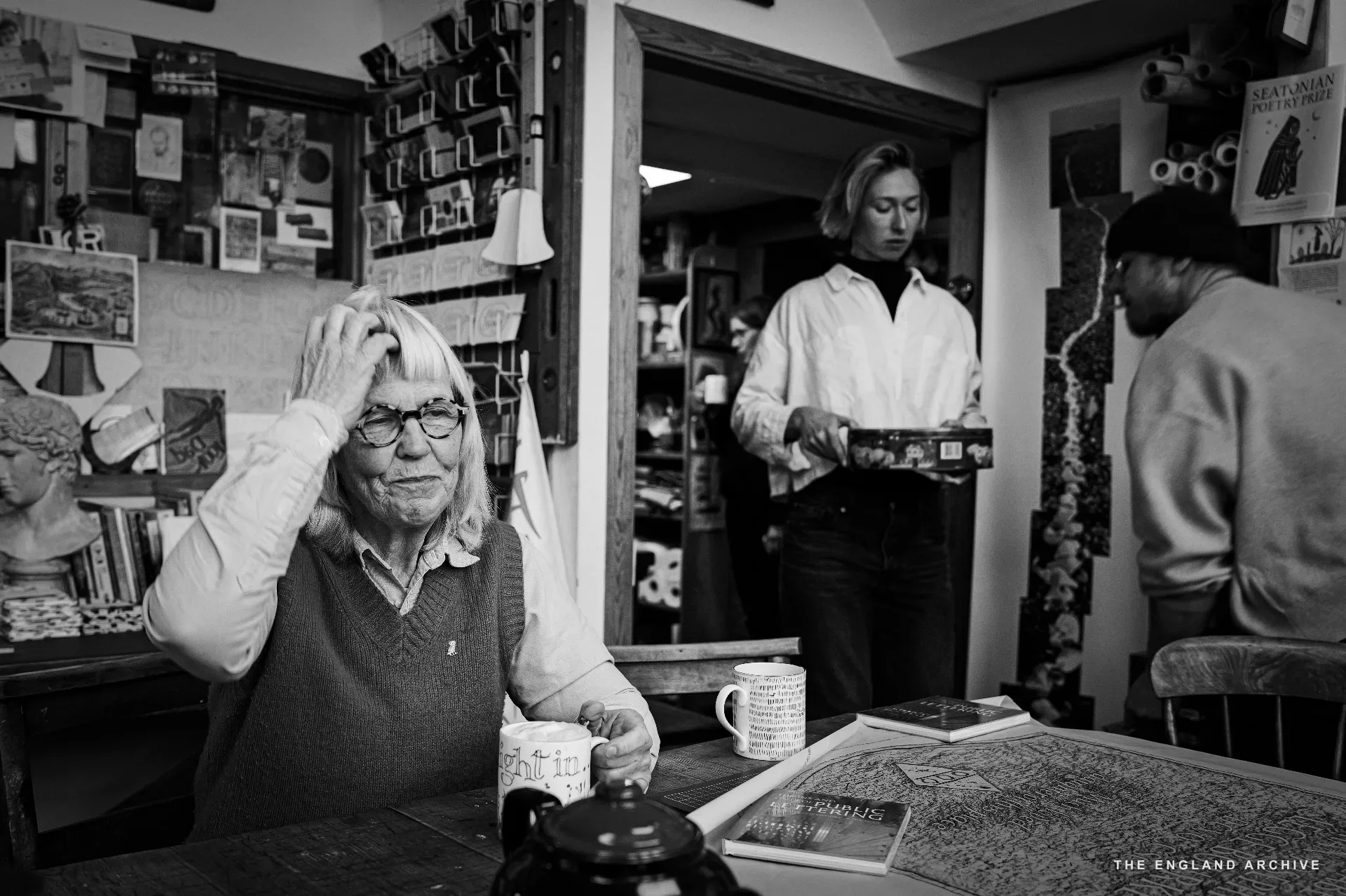
She walked into the front room and I stood up and said "Lida" - the way you greet someone you recognise. She looked at me carefully and asked, have we met before. I said no. She said, but you know me. I said, of course, everyone knows you. She said, but I don't know you. Well, I said, that is how it goes. Everyone knows you, but you cannot know everyone back. We laughed. She welcomed us to sit, and then she went into the kitchen and a few minutes later came back with a small brown teapot and two cups, and poured us green tea.
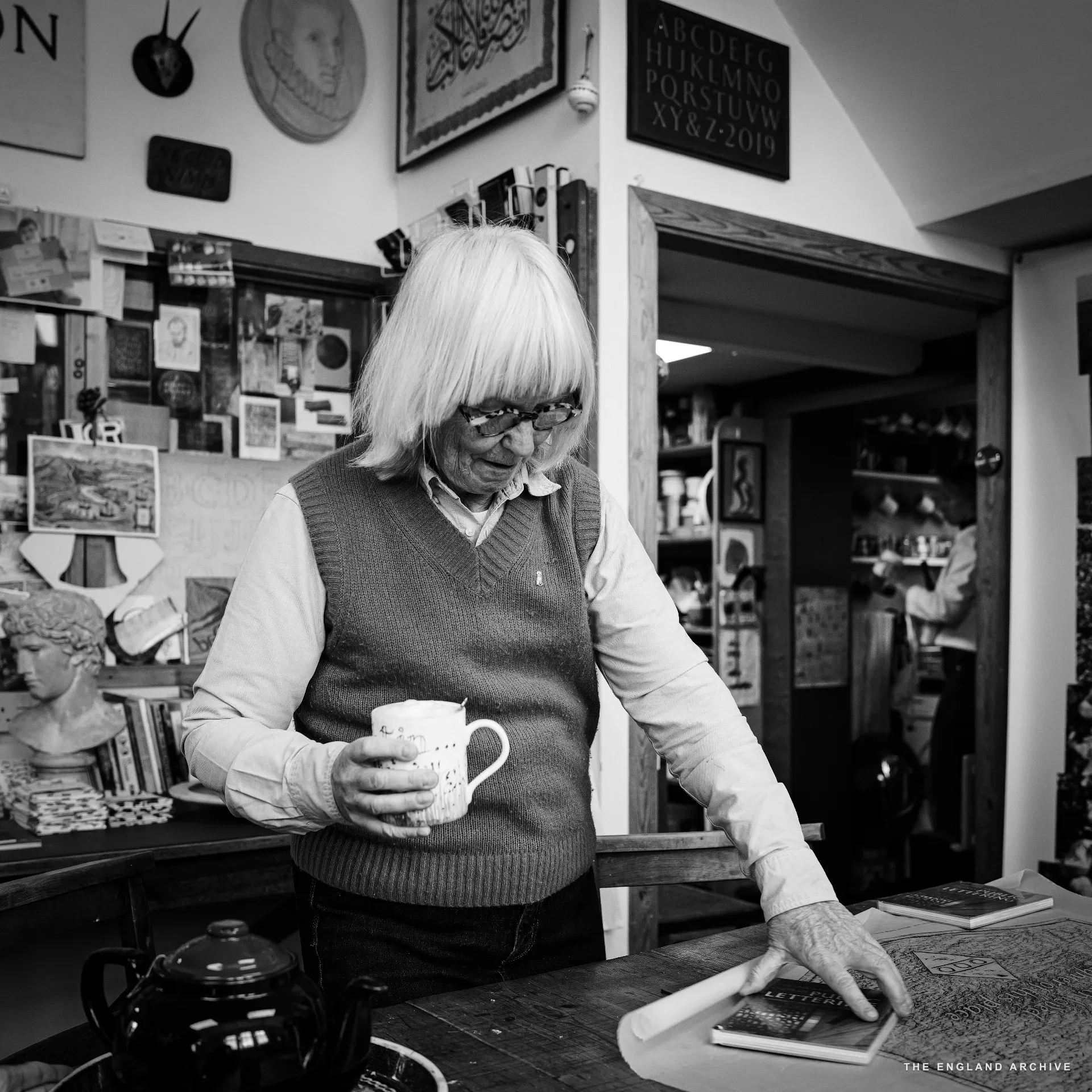
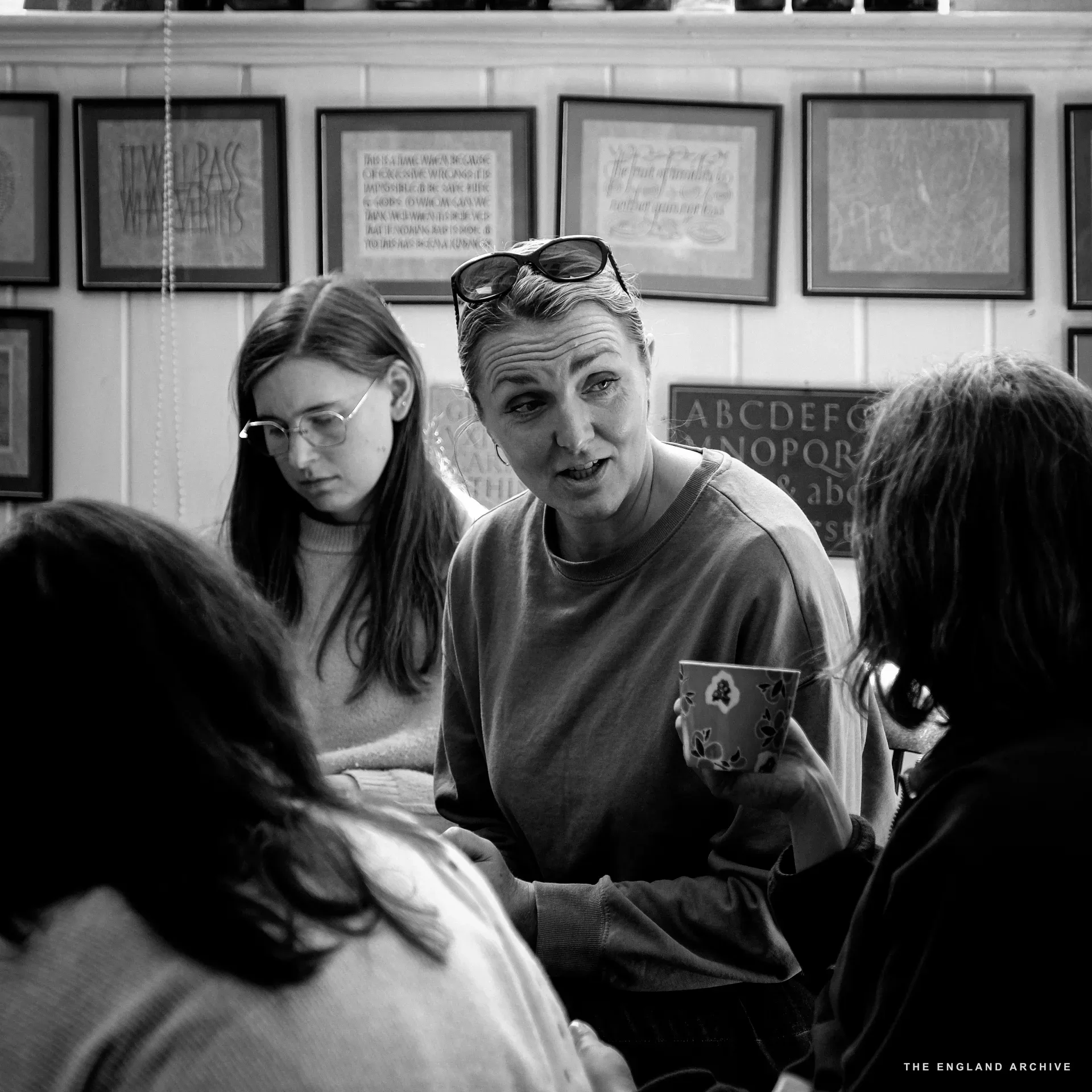
We sat there drinking it, and she sat with us, and we talked. The workshop's quiet hum went on in the background - a chisel tapping somewhere, a kettle, the small sounds of a day that has already started. You understand in a workshop that has been running a long time that the morning tea is not a break from the work. It is the work, in the specific sense that it is the moment when people are reminded they belong to the same thing.
The hour at the table
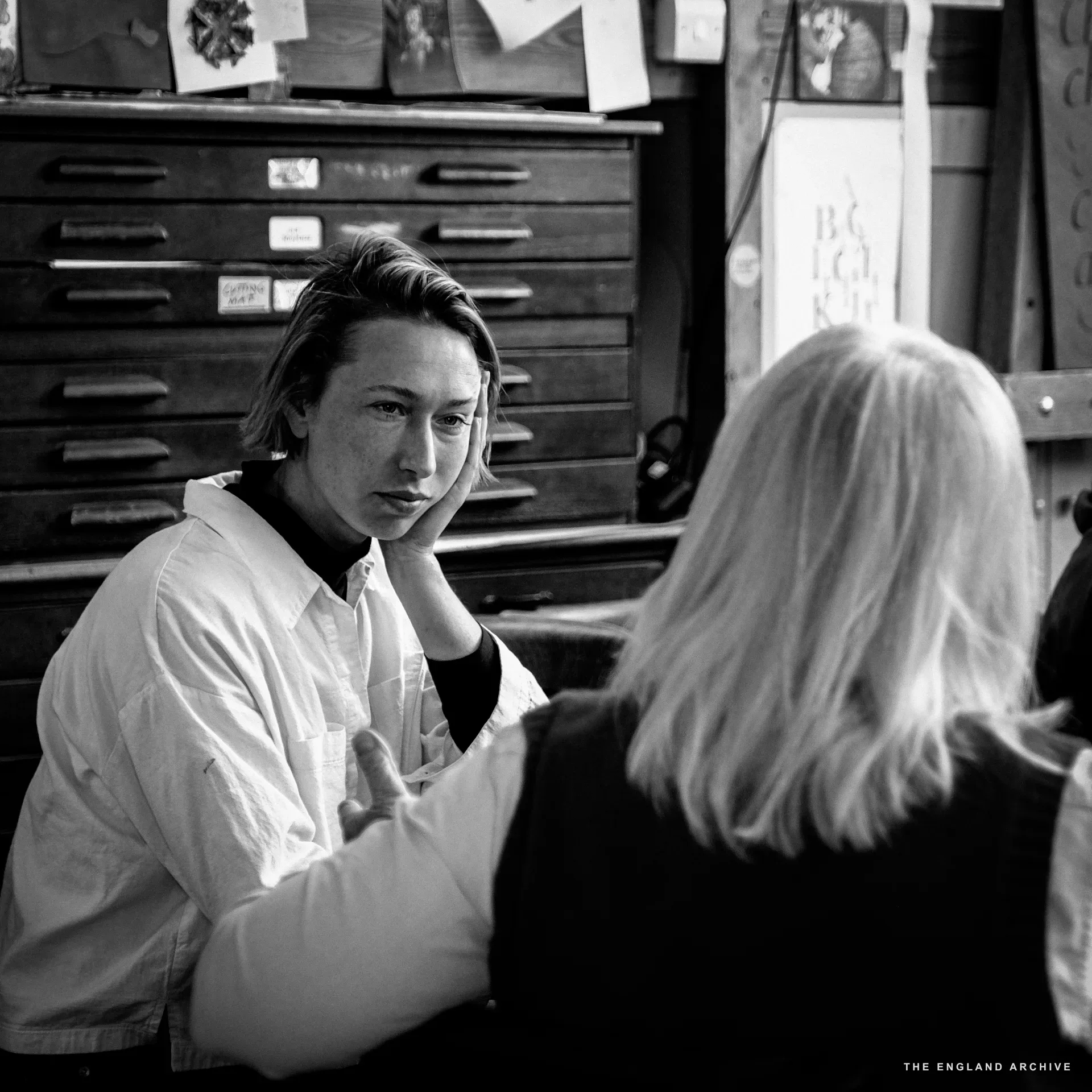
Roxanne came in next. Lida's daughter-in-law; Vincent's wife; and, as Lida had begun to say and Roxanne had begun to accept, the person who now runs the workshop. Lida still comes in every day, but the running of it - the commissions, the apprentices, the wages, the hundred small decisions that make a workshop a workshop rather than a group of people cutting letters - has been passing into Roxanne's hands for some years. You could feel the pass still in progress. They defer to each other in a way that does not feel like hierarchy. Roxanne asked the questions; Lida answered where Lida's answer was needed; Roxanne extended Lida's answer into its present-tense form.
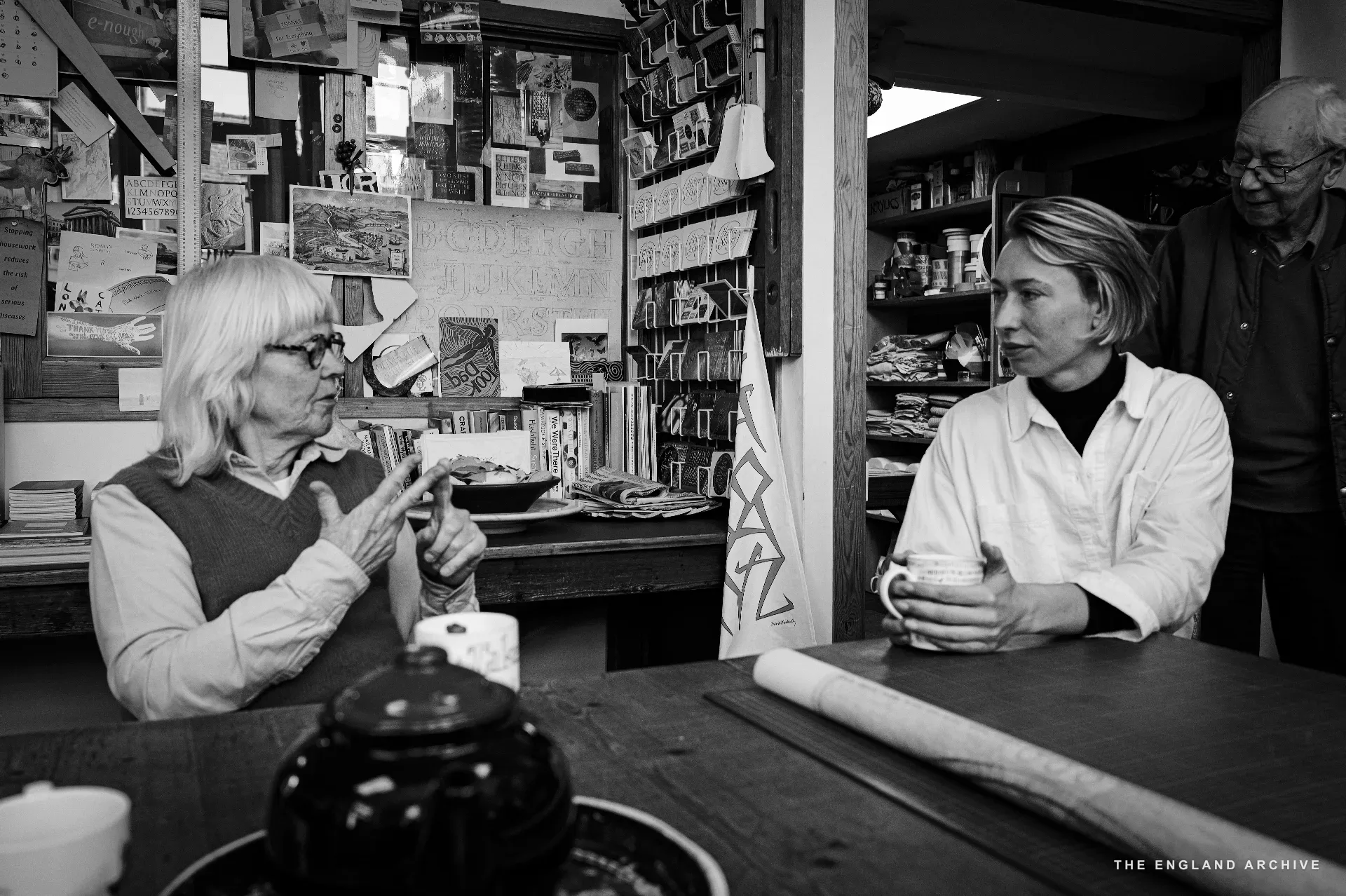
They asked what the archive was trying to do. I went through it properly. I told them about where this had started - two people who have spent years passionate about culture, heritage, arts and crafts, photography, and travel, and who had finally brought those threads together into a single long project. I talked about what the archive is in its first year and what it wants to be by the end of year two and into year three: a permanent, citable record of the people keeping England's heritage alive, held together by a single spine of permanent archive IDs and a single documentary voice. They are people who have spent their working lives producing objects that were supposed to last a thousand years. They listened with the attention of people who were not being sold anything. When I finished, Roxanne asked one or two questions of the kind that tell you the person in front of you has understood the whole thing. Lida said she thought this was a good thing to be doing.
Bhavani was talking to Lida while I was explaining the structure. The two of them had settled into their own conversation about the workshop's history and the shape of the day, and the separation felt natural. In a place like this, you can have several conversations in the same room without anyone being excluded from any of them.
Around us, over the course of the first hour, the rest of the team came through the front room one by one. A letterer in his thirties; Emily, who had been at the workshop eight years; two others whose names are in the notebook; and the apprentice, about whom more below. Everyone had tea or coffee. The big table filled up and emptied and filled up again. I finished my green tea. Picked up the Q3. Walked around.
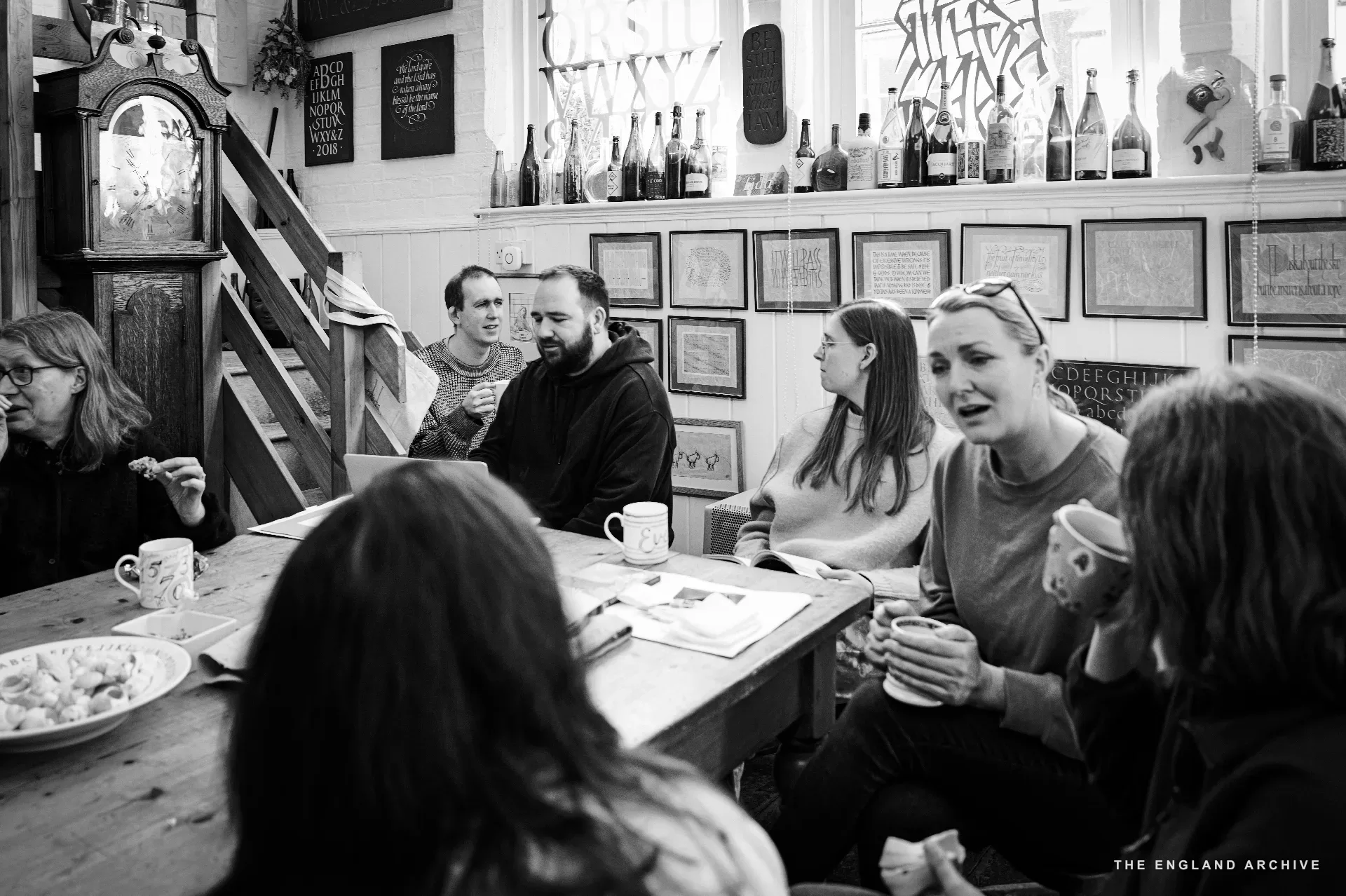
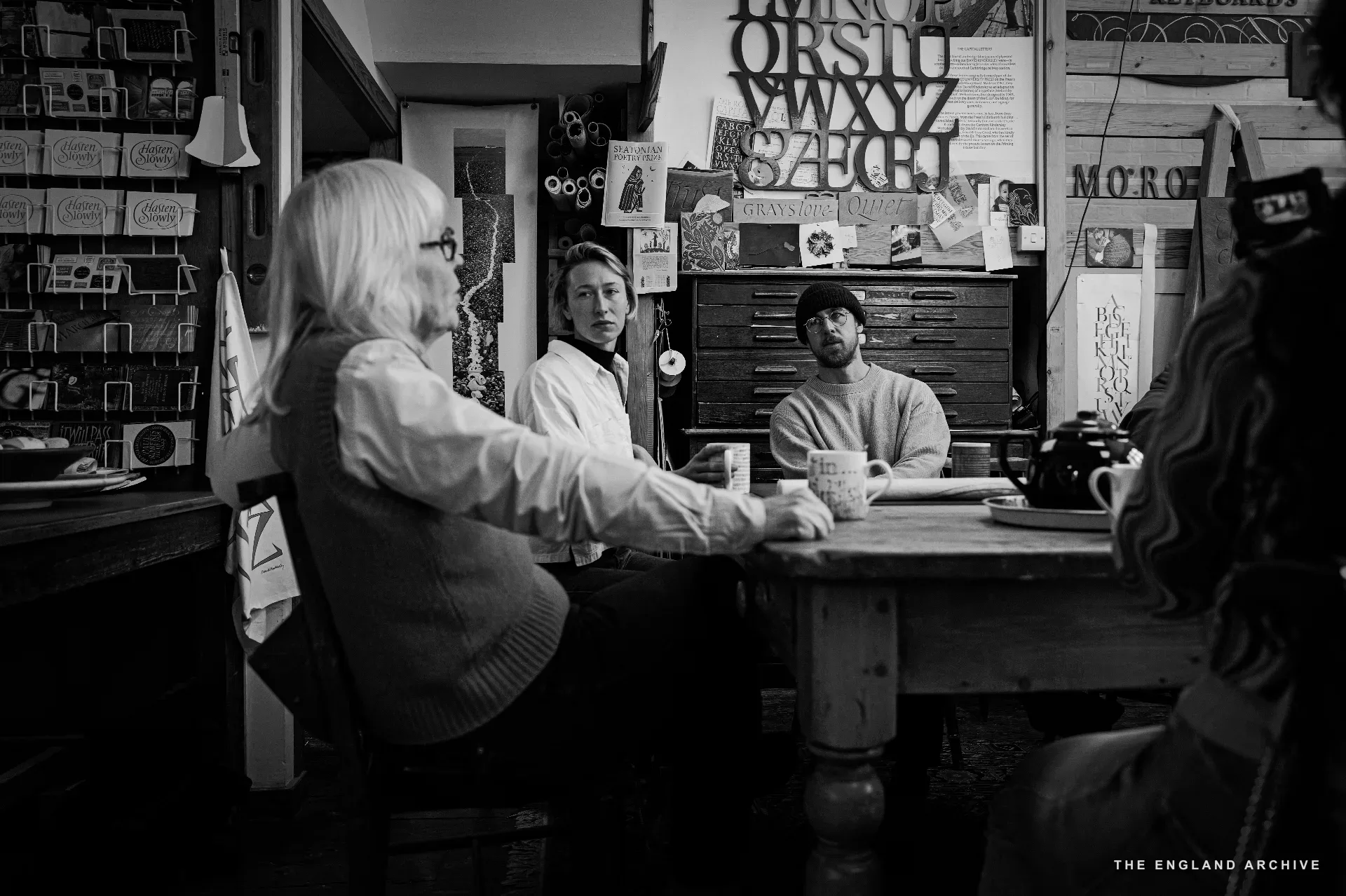
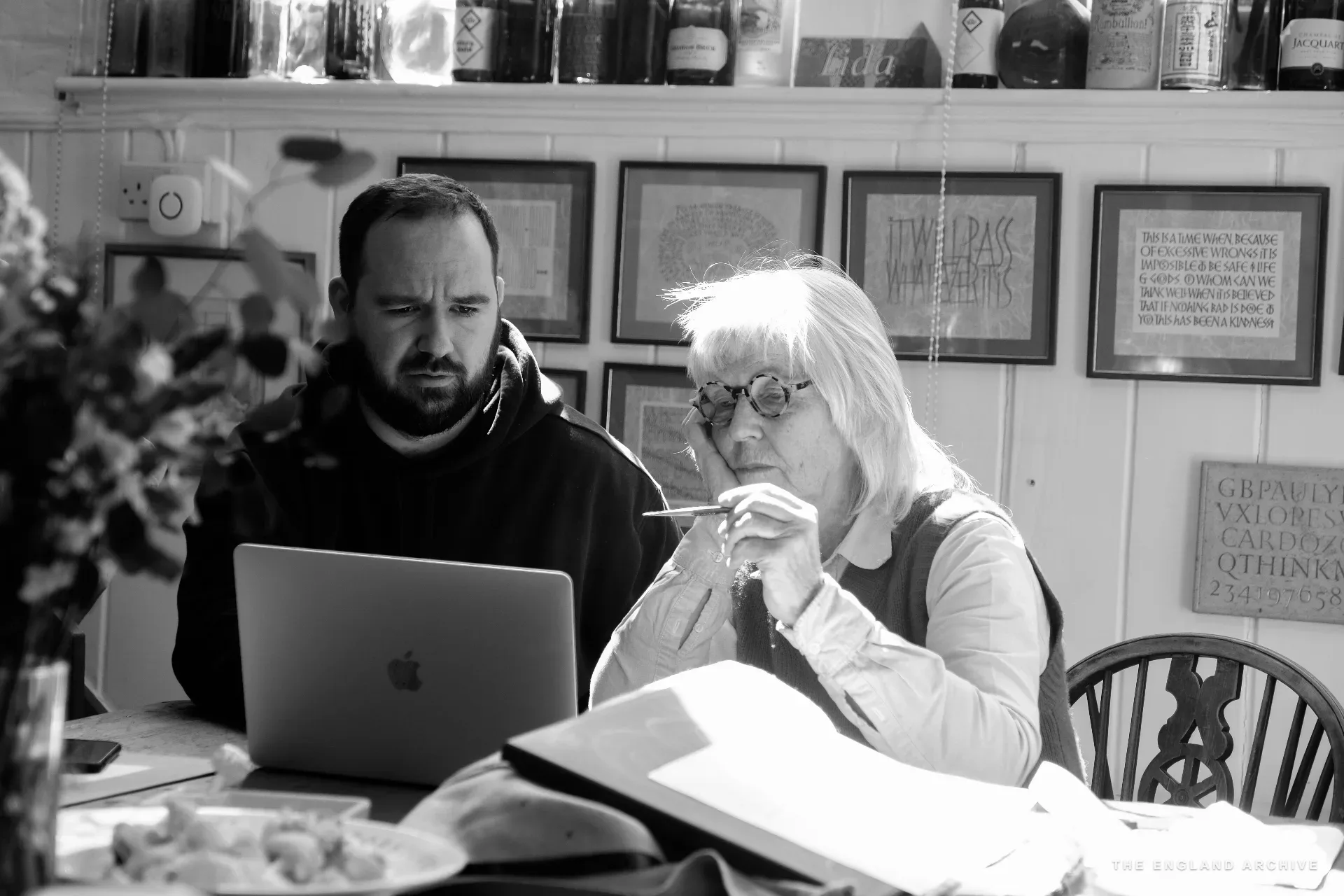
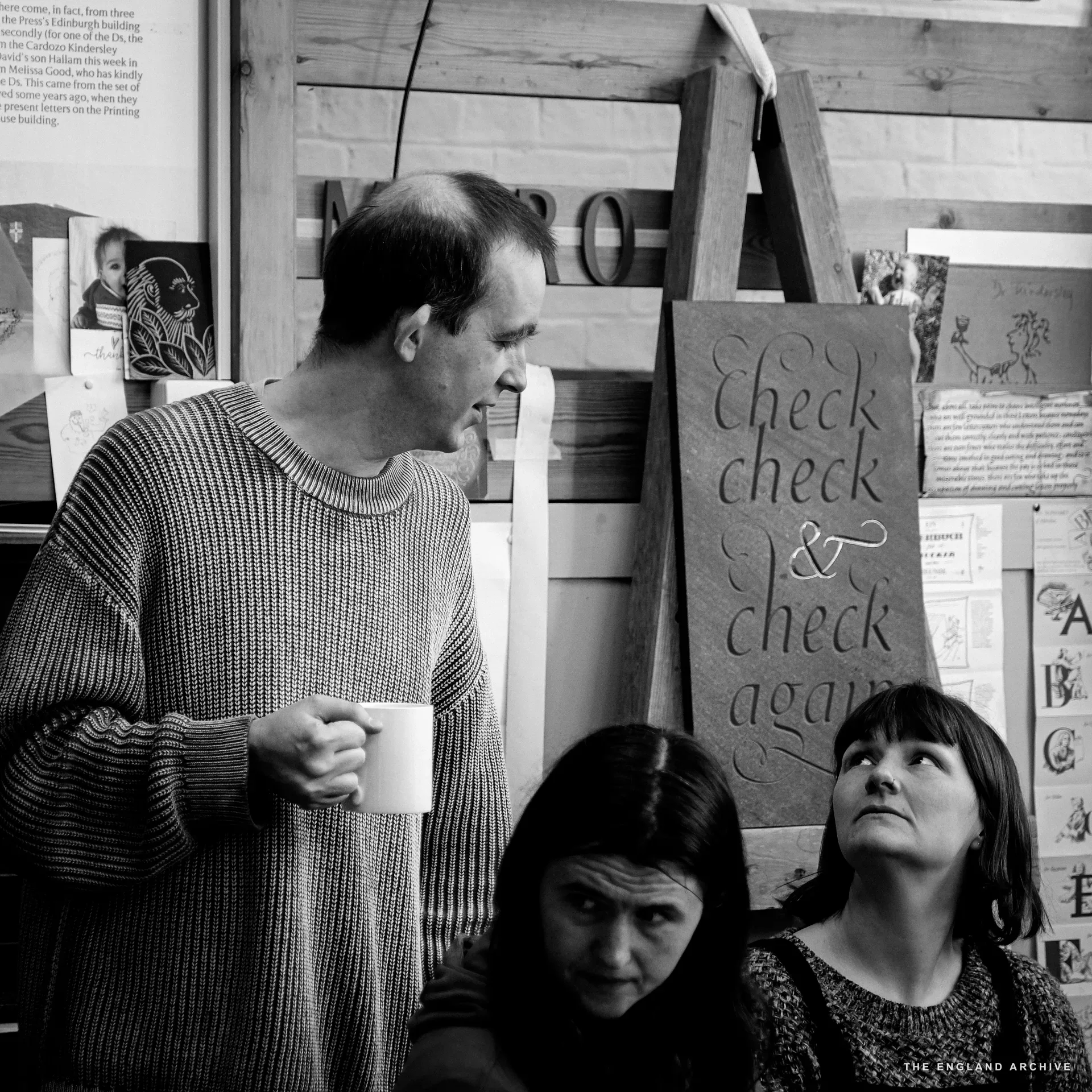
You know the feeling of being somewhere you are not going to be chased out of. It is not that common. Four hours had been set aside and the workshop was giving us all four; nobody was watching the clock; the work would happen either before we came or after we left or (as I would learn) was already happening on the benches next door while we talked. The right thing to do in that situation is to stop narrating yourself and let the place narrate itself. I did that for a while with a camera in my hand, and it is the pictures I took during that stretch of the morning that will do the most work when the page about the workshop is built.
The apprentice
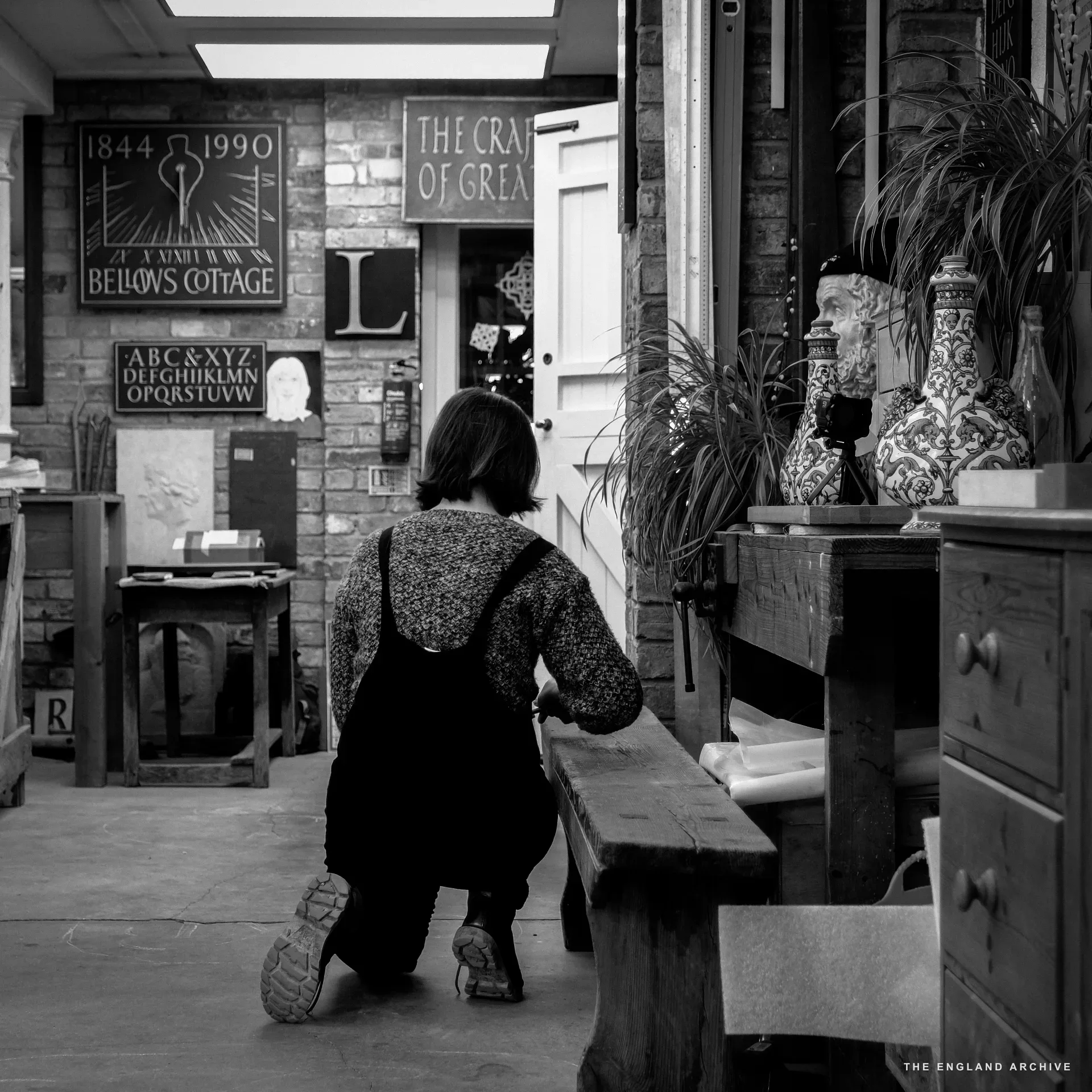
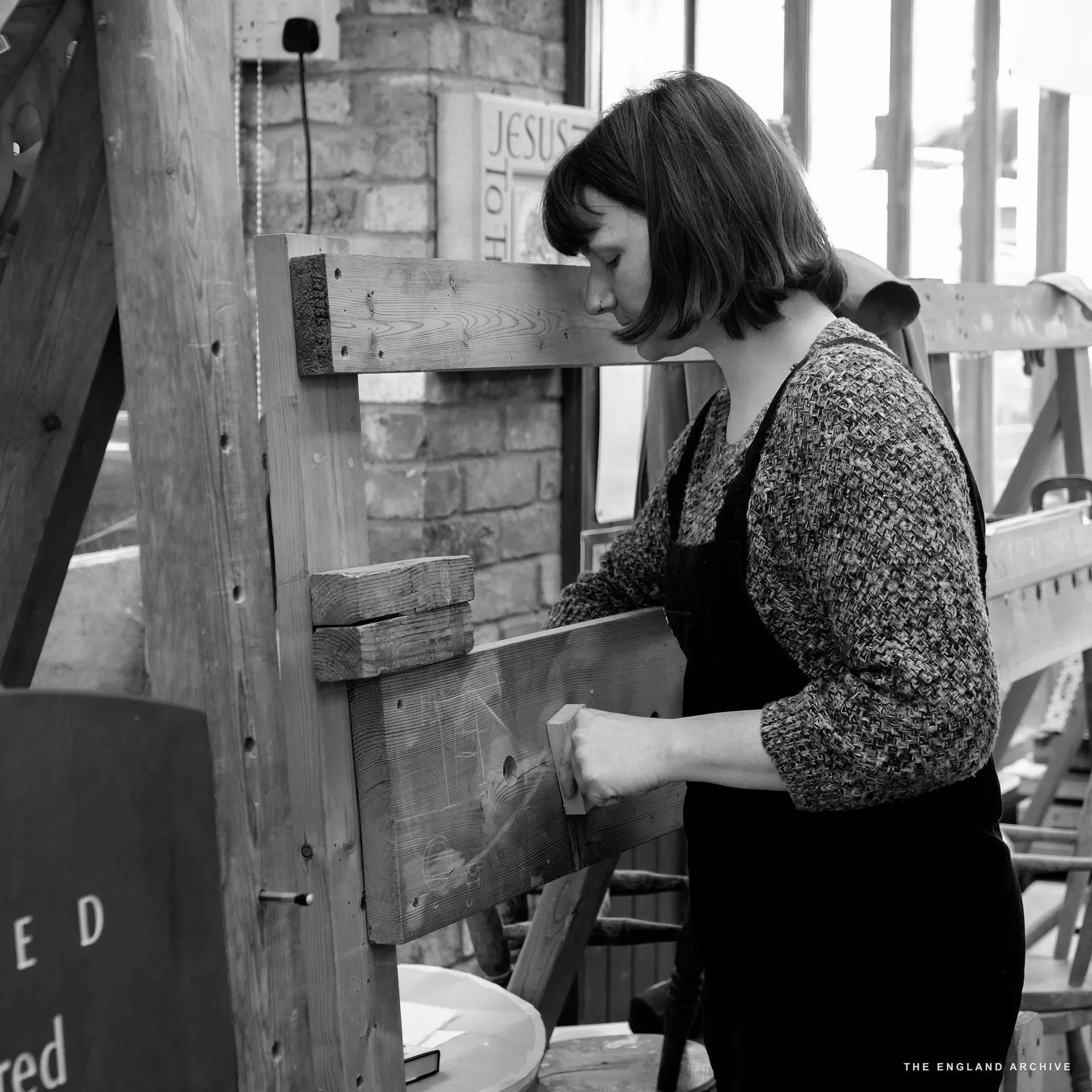
Sometime during that first hour, Roxanne told me, a young woman had walked in through the front door - the same door we had come in through - and said that she wanted to be an apprentice. She had been emailing the workshop for weeks and had not heard back. She had tried the telephone and nobody had picked up. So she had gotten on a train and come to Cambridge and knocked on the door and stood in the front room and said plainly what she was there for. Roxanne, who had a lot of other things happening that morning, had looked at her for a beat and then said, all right, come with me. And had shown her to a bench, and given her a pencil, and told her to sharpen it.
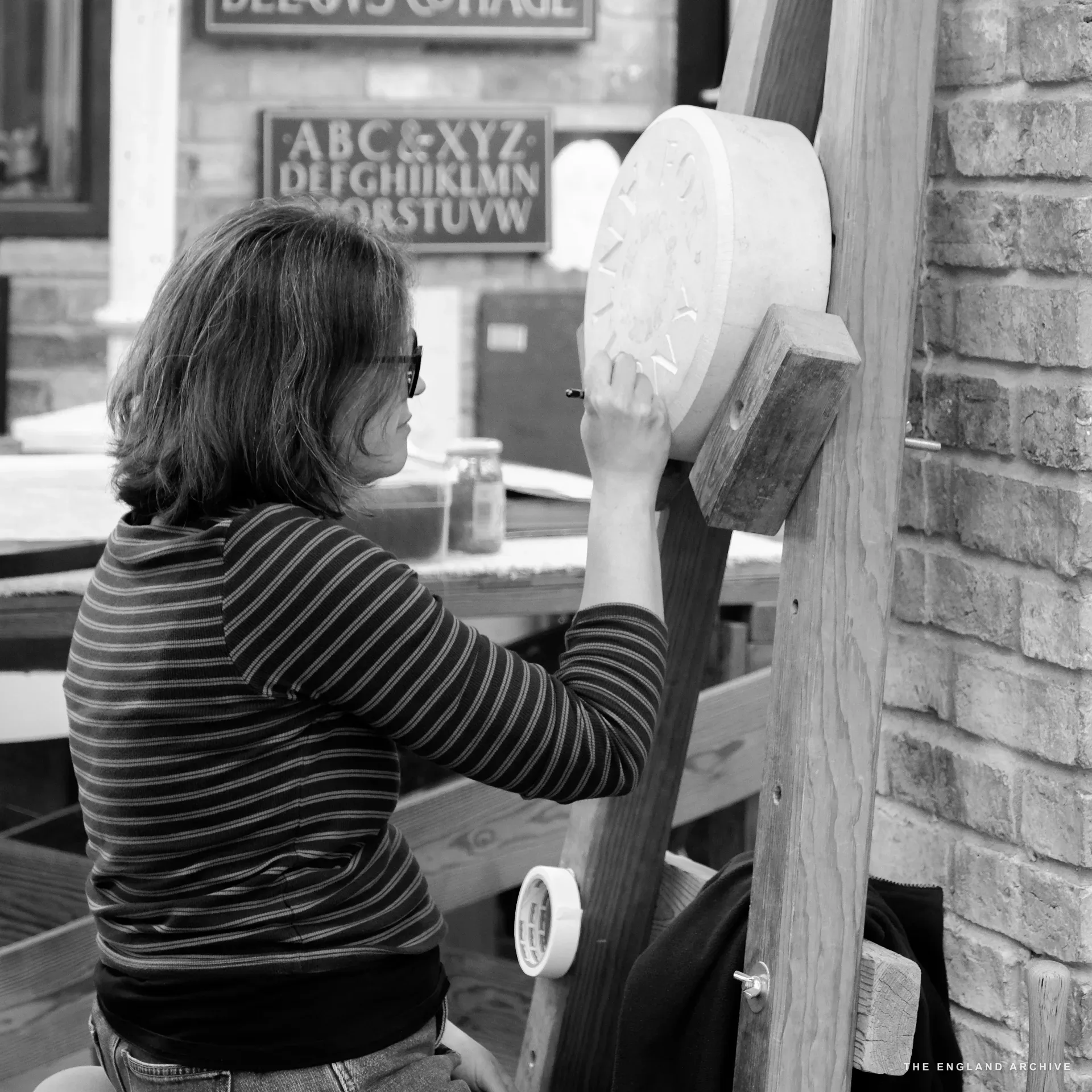
I walked into the room where she had been set up and there she was, at a bench, bent over a pencil, working. She had been there an hour. She was concentrating. She did not look up. I took a photograph from far enough away not to intrude.
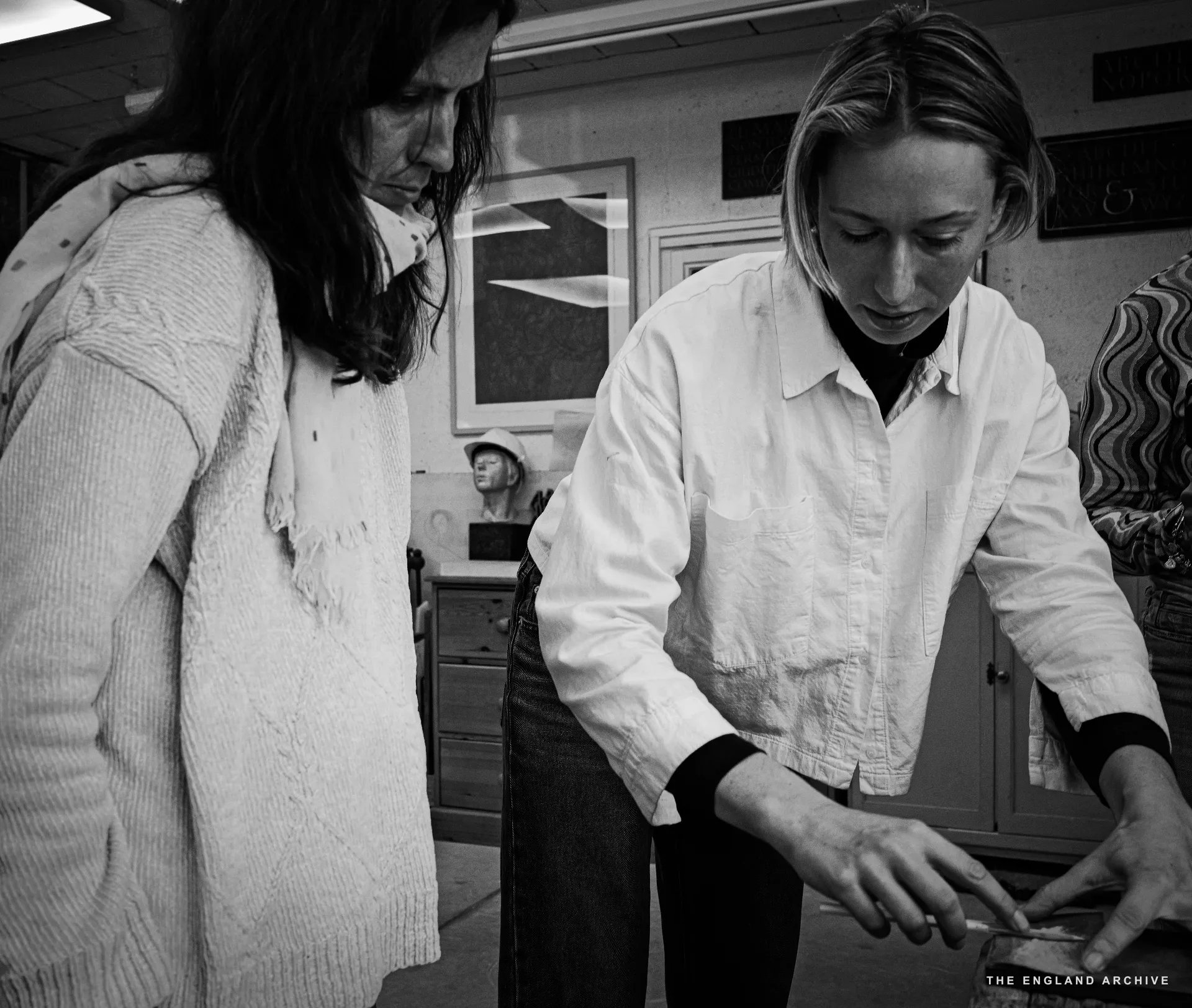
The archive is built on the premise that living tradition survives when one person keeps showing up. Here is the opposite side of that coin: living tradition survives when a workshop is willing to accept the person who shows up. The door was open; the pencil was given. The rest of what happens to her over the next several years of apprenticeship depends on the workshop. The first hour depended on her.
Into the workshop
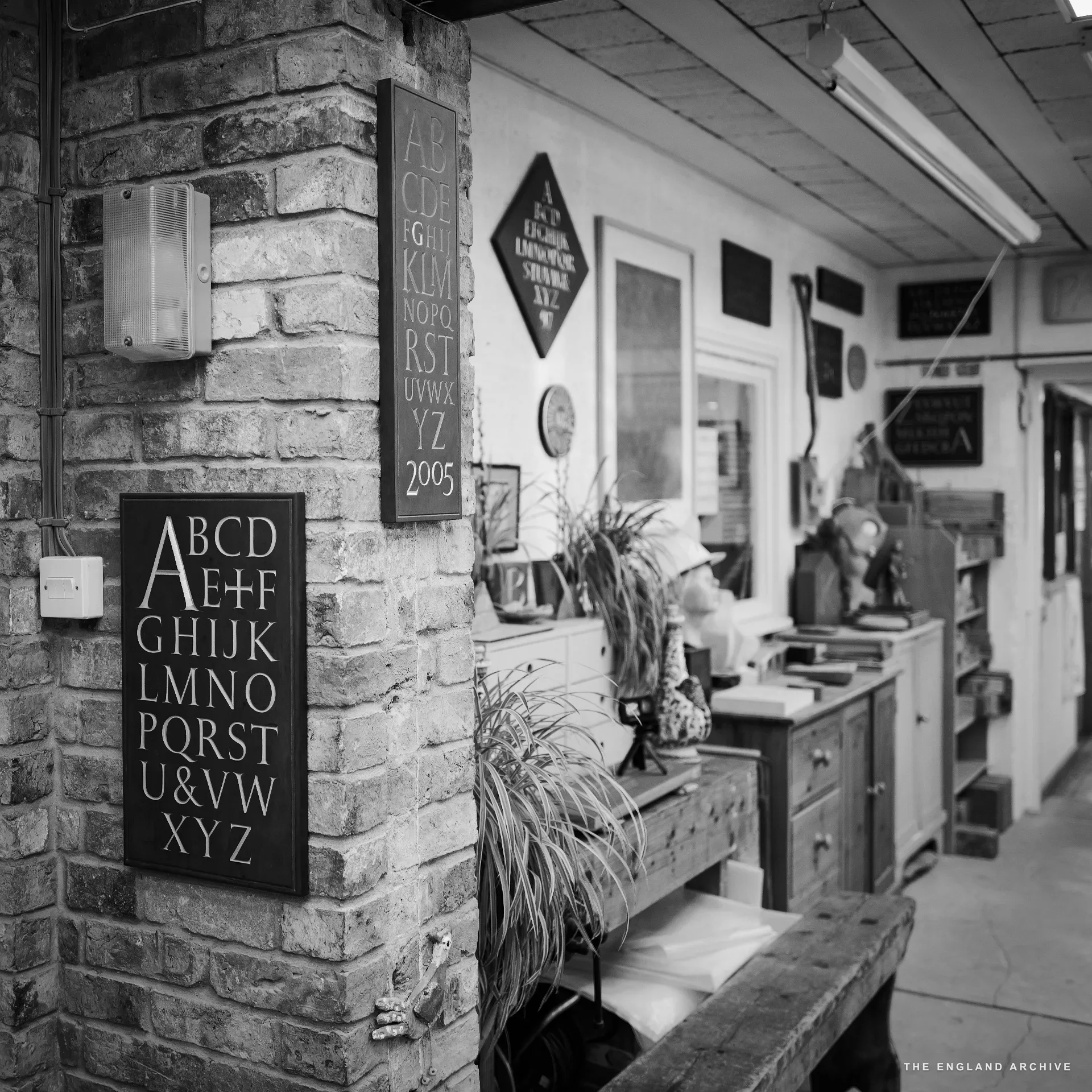
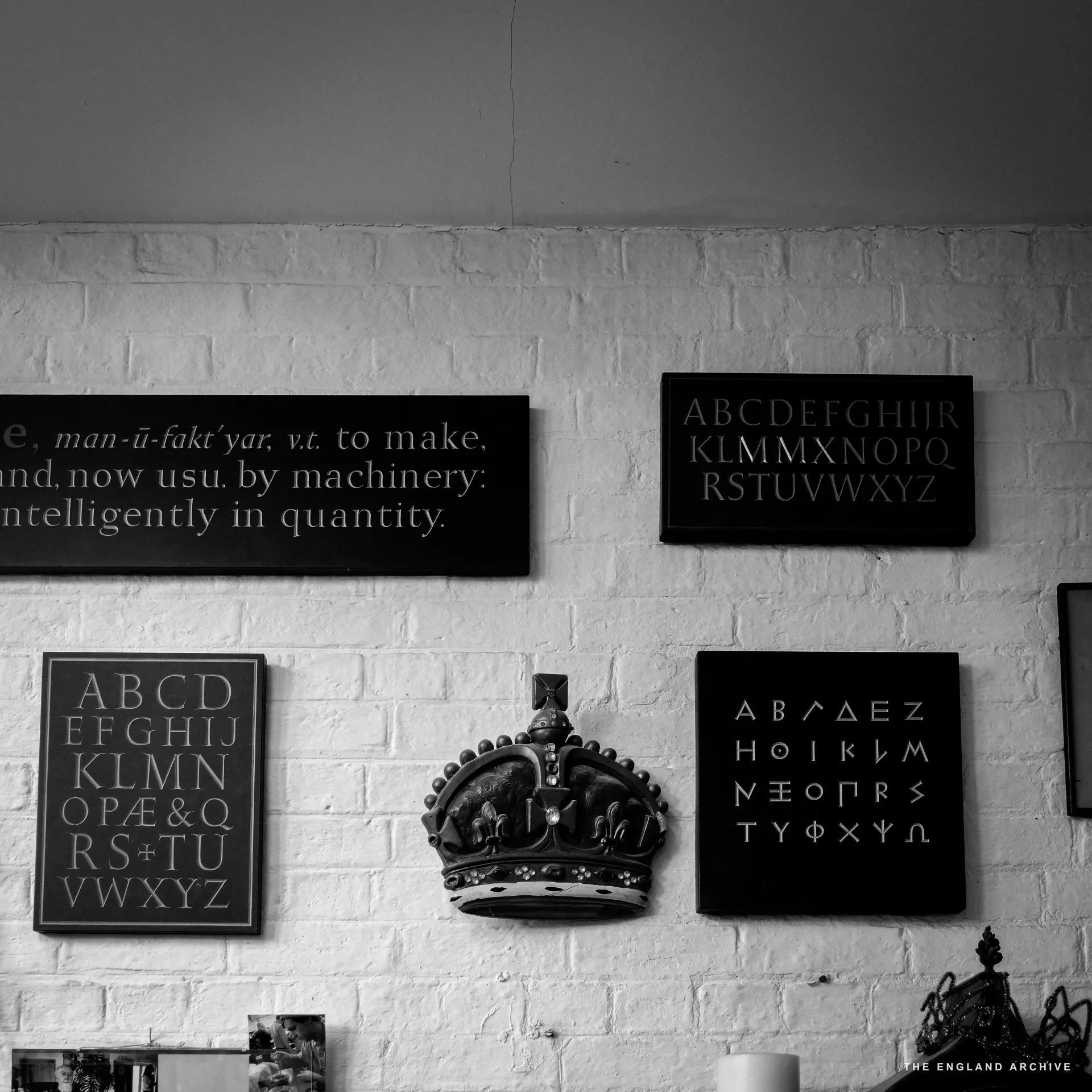
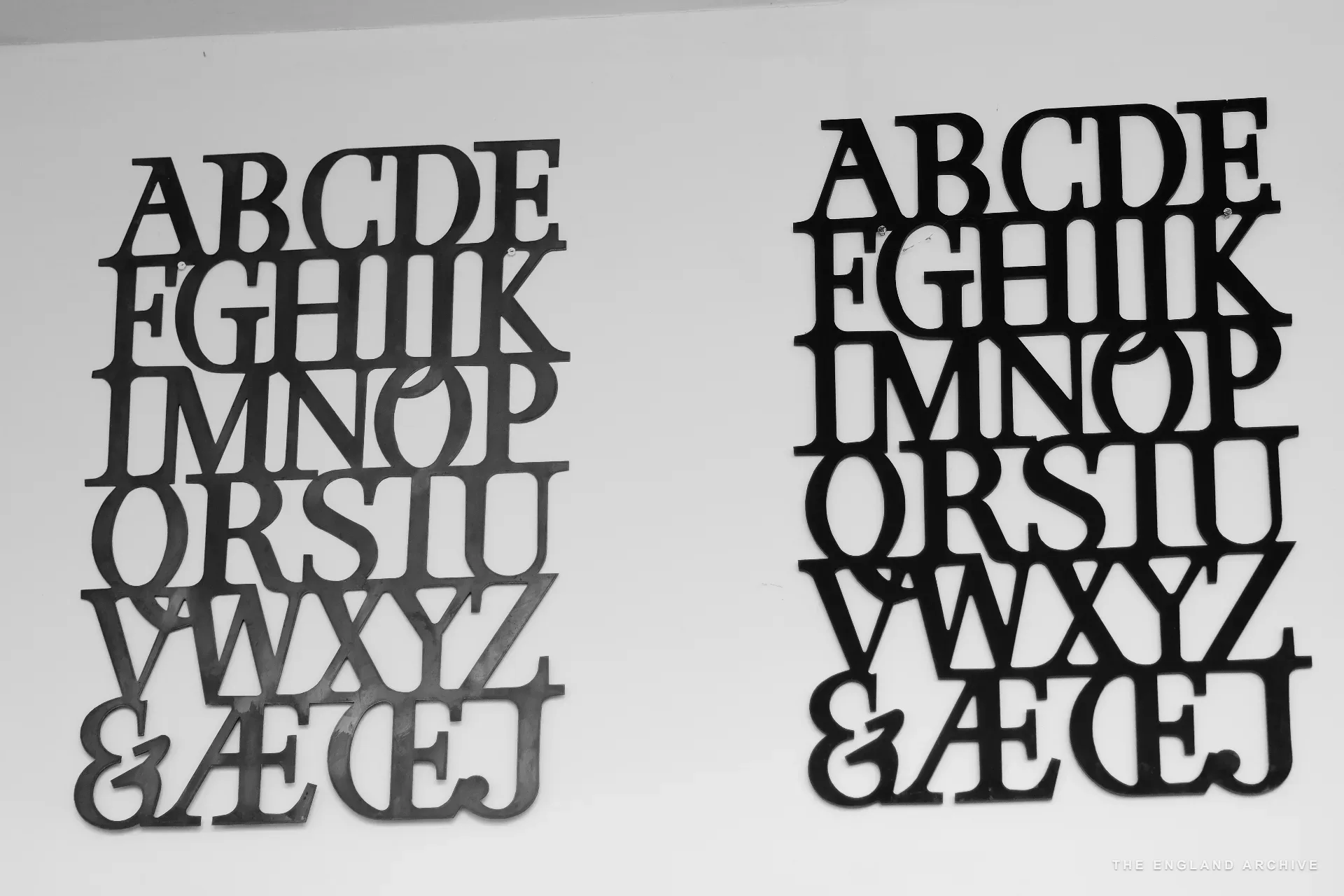
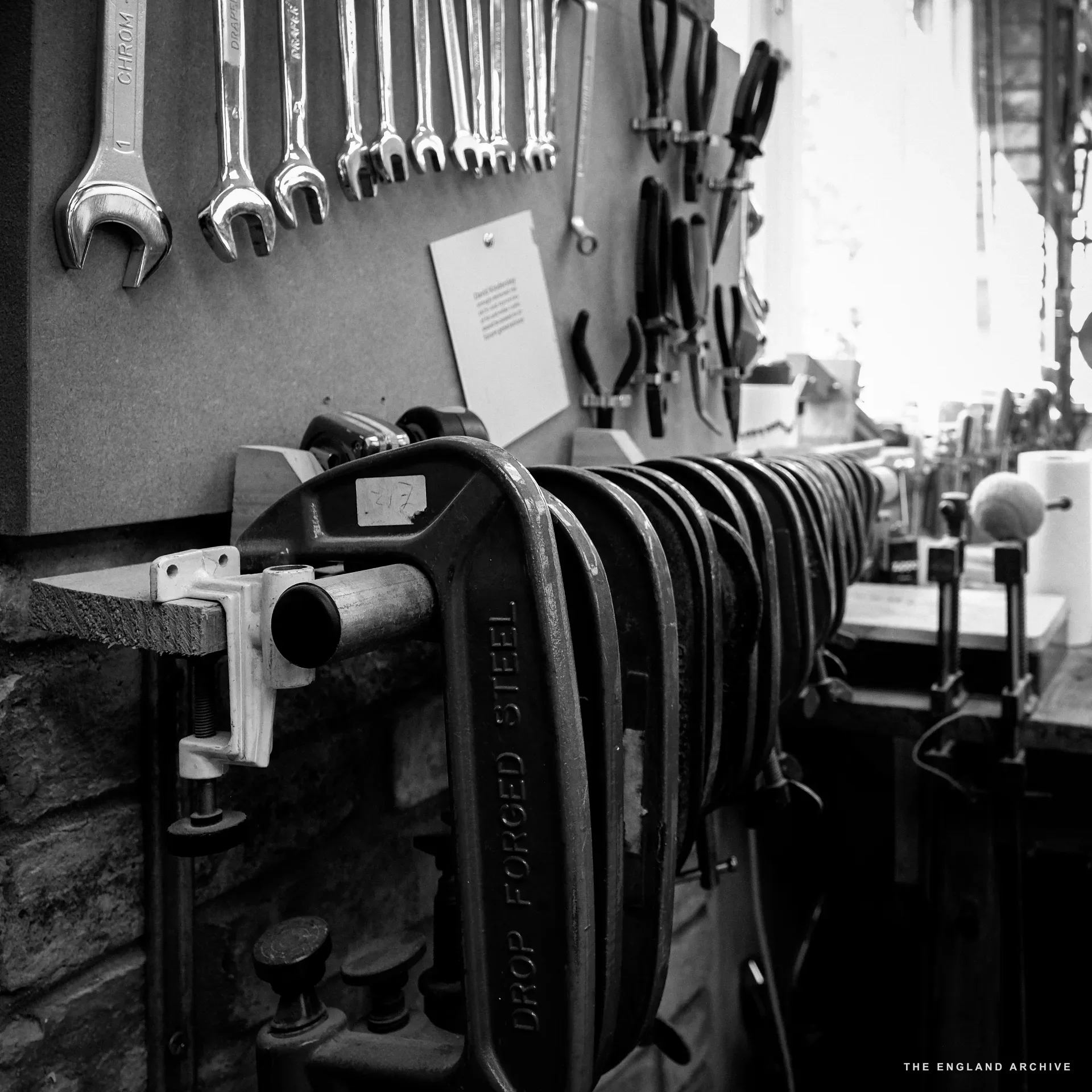
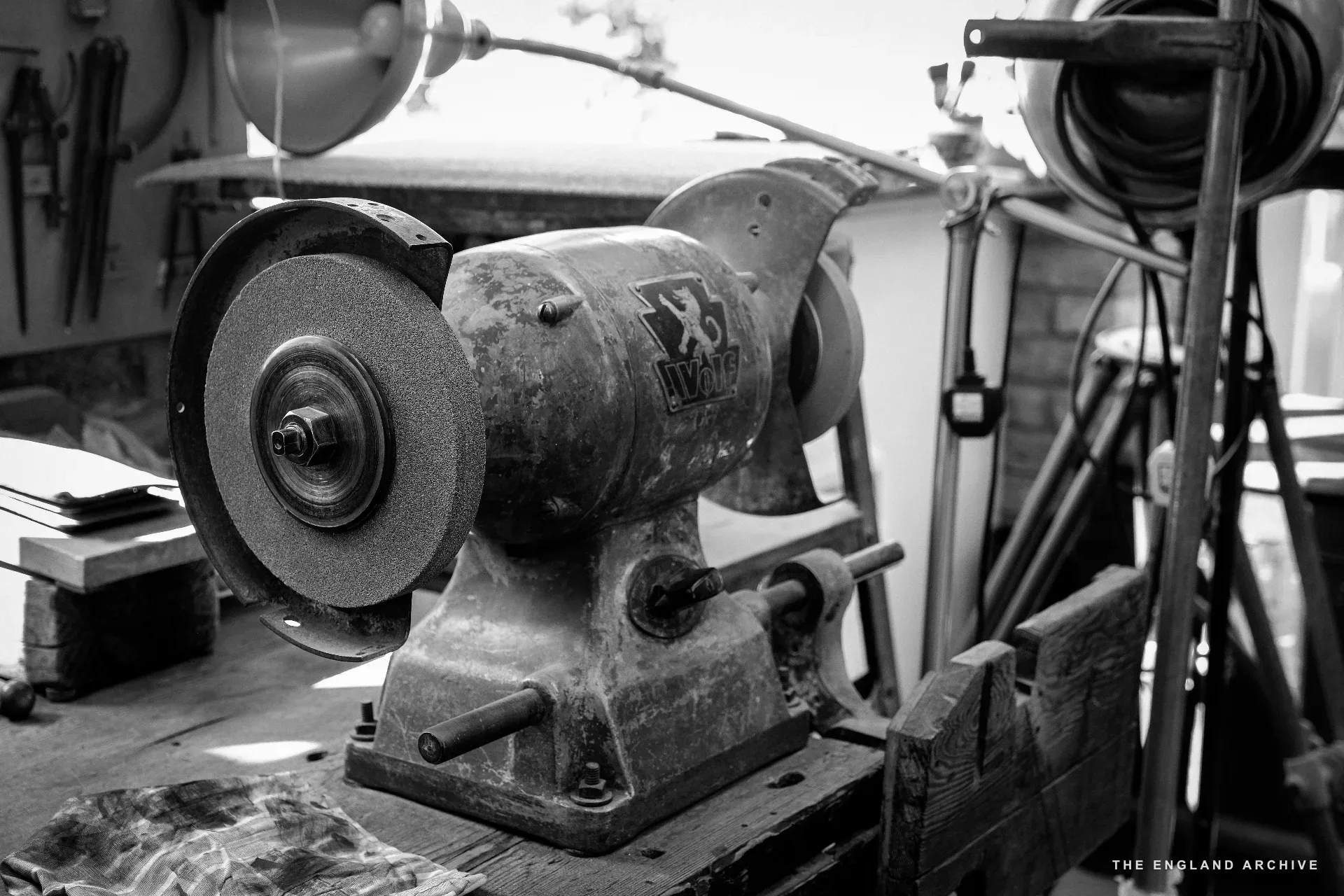
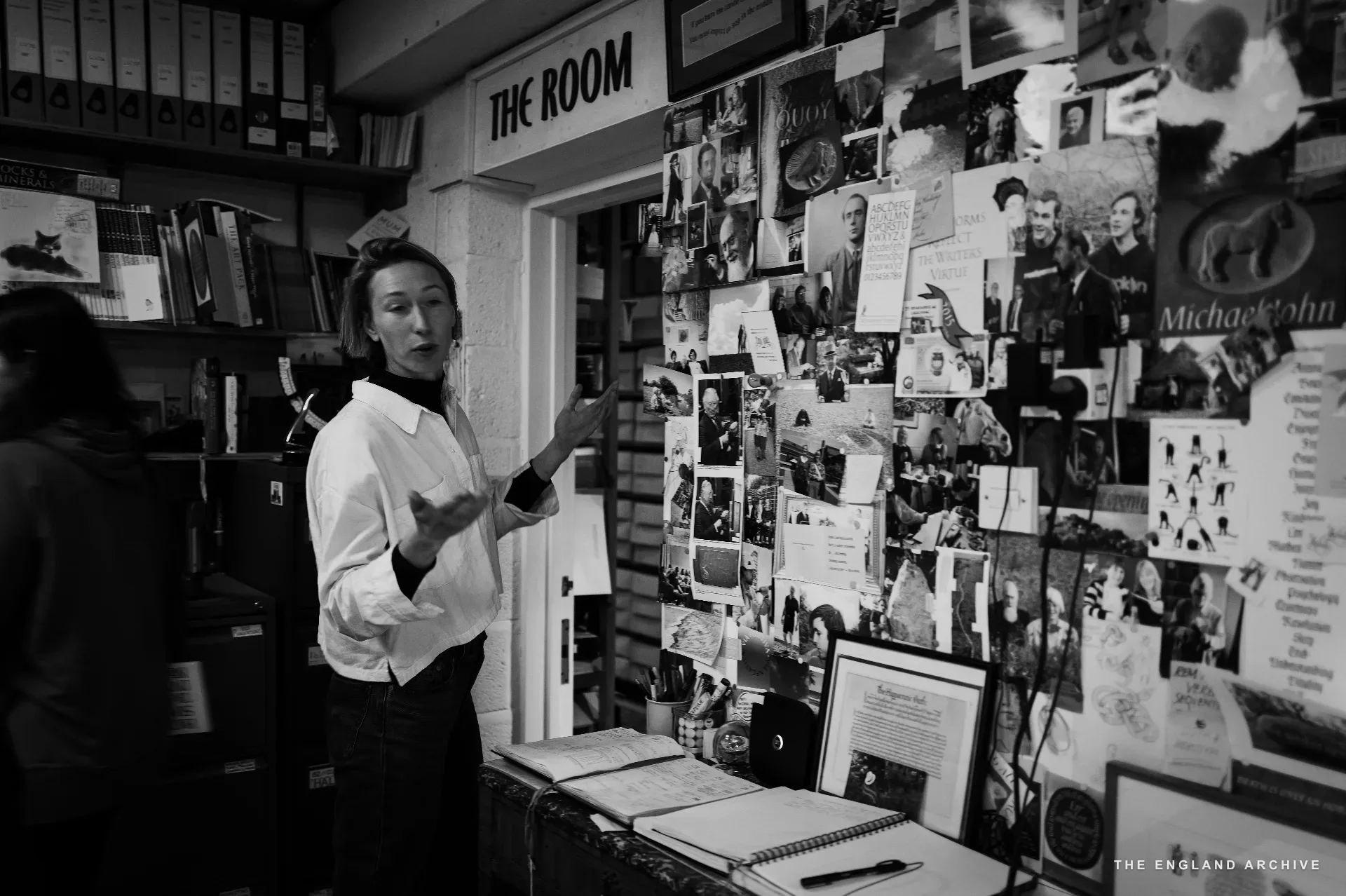
After the tea and the explaining, Roxanne got up and said, let me take you through. We went out of the front room and through a corridor and into the main workshop space, which is bigger than you expect from the street. Benches along the walls. Natural light. Stone leaning in racks. The air smells faintly of dust and of something woodier that I think is the soft cedar used for design models. On every wall, examples - lettered slates, practice pieces, finished work waiting for collection, paper rubbings of pieces that have already gone to their final homes.
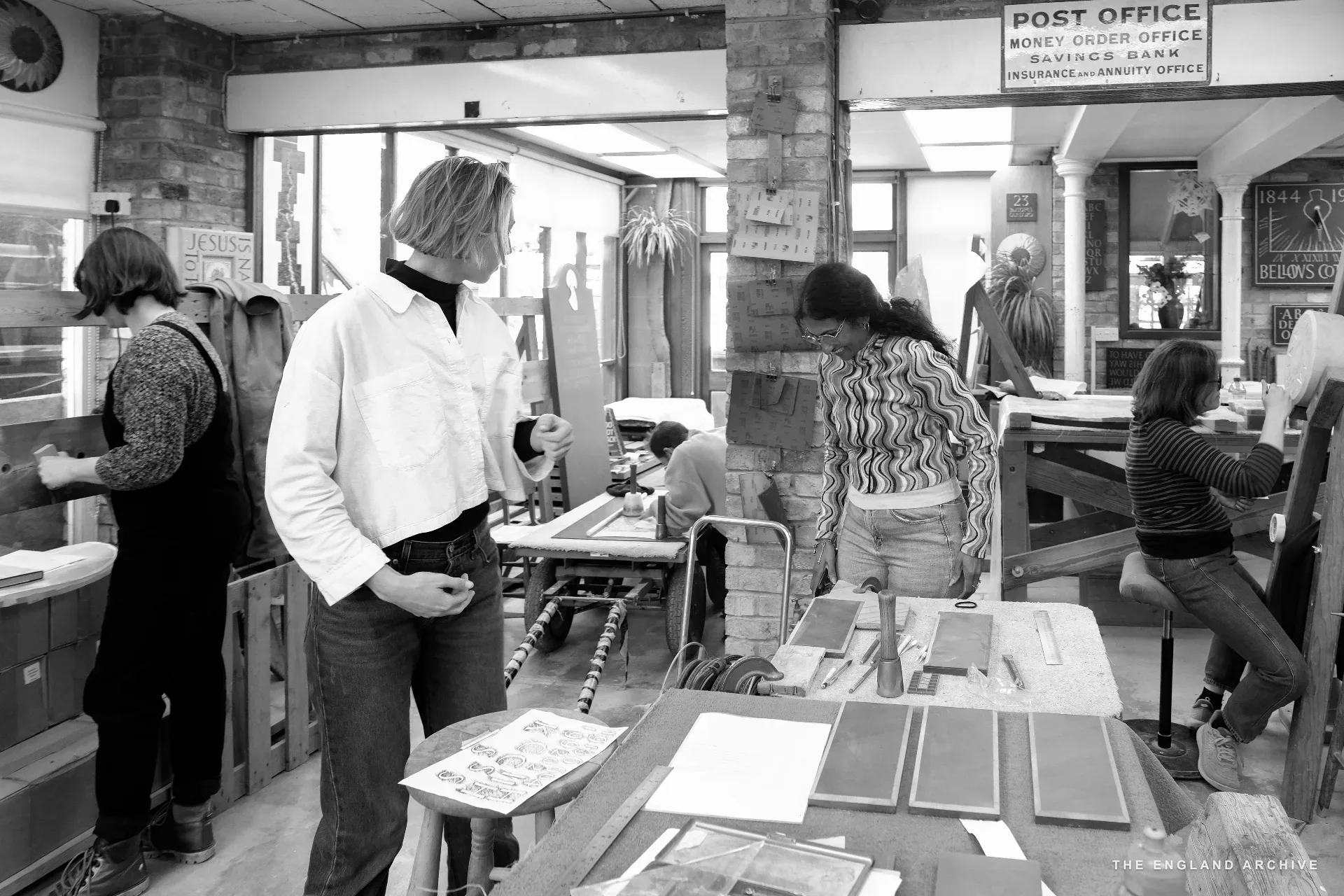
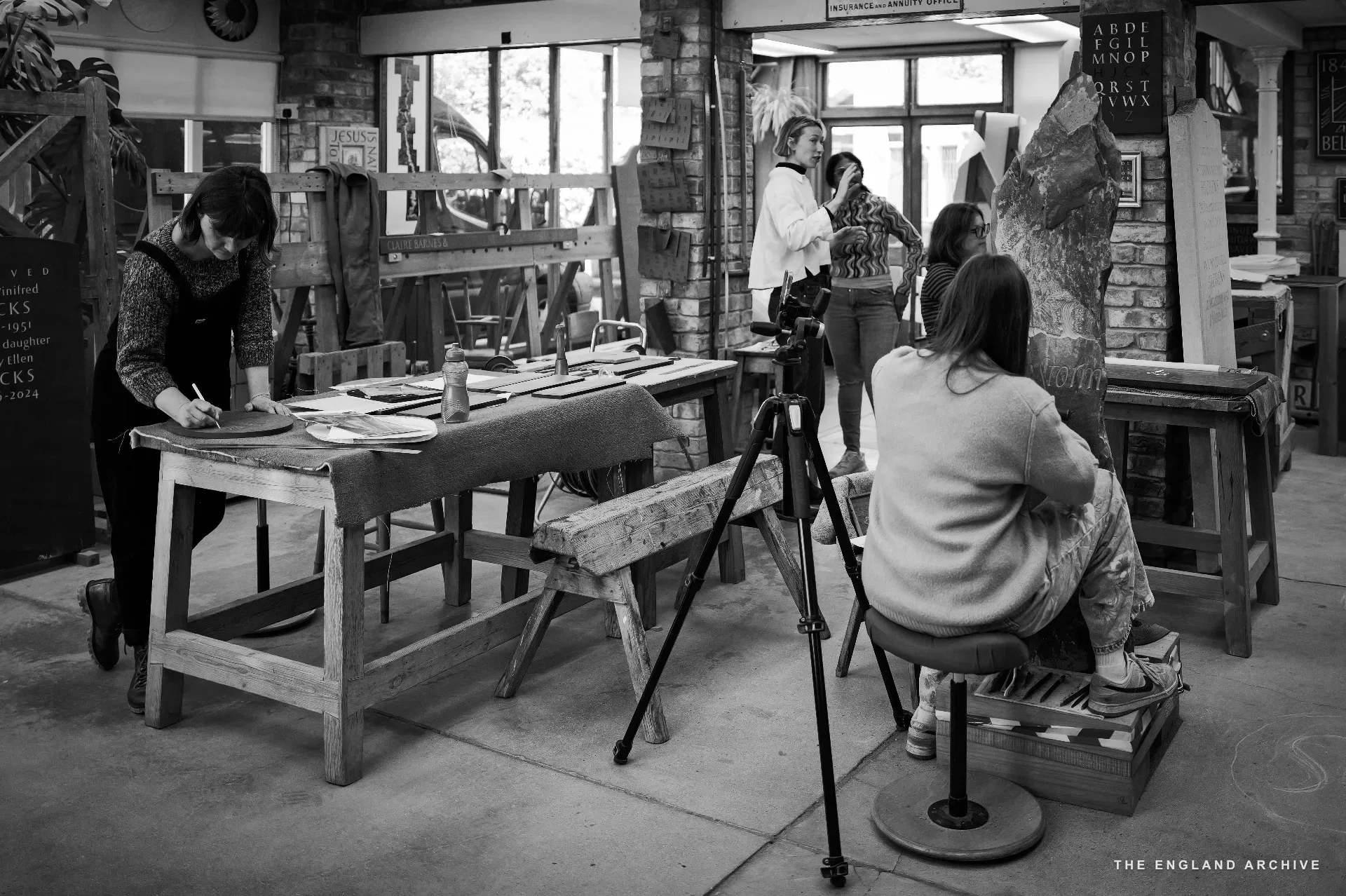
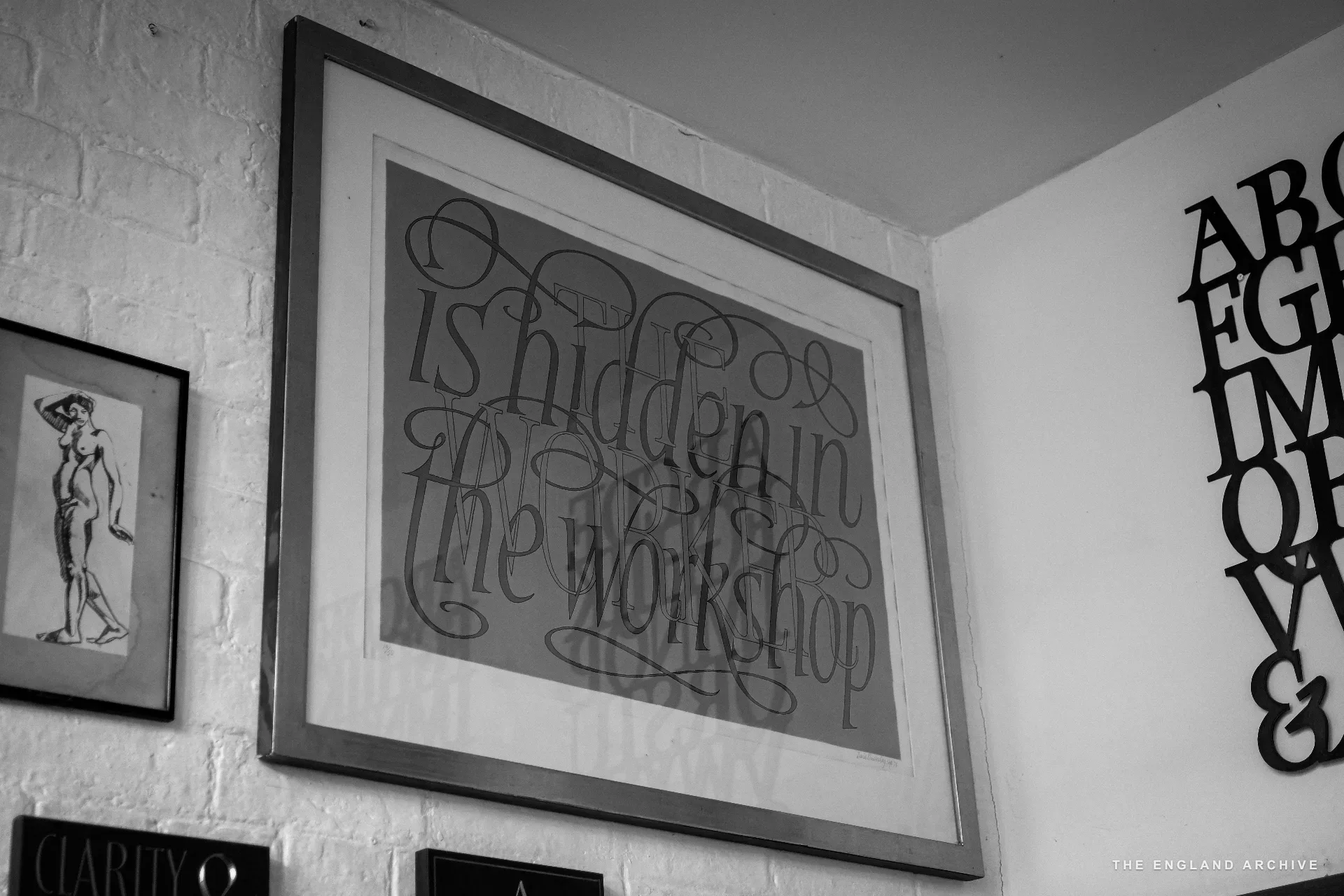
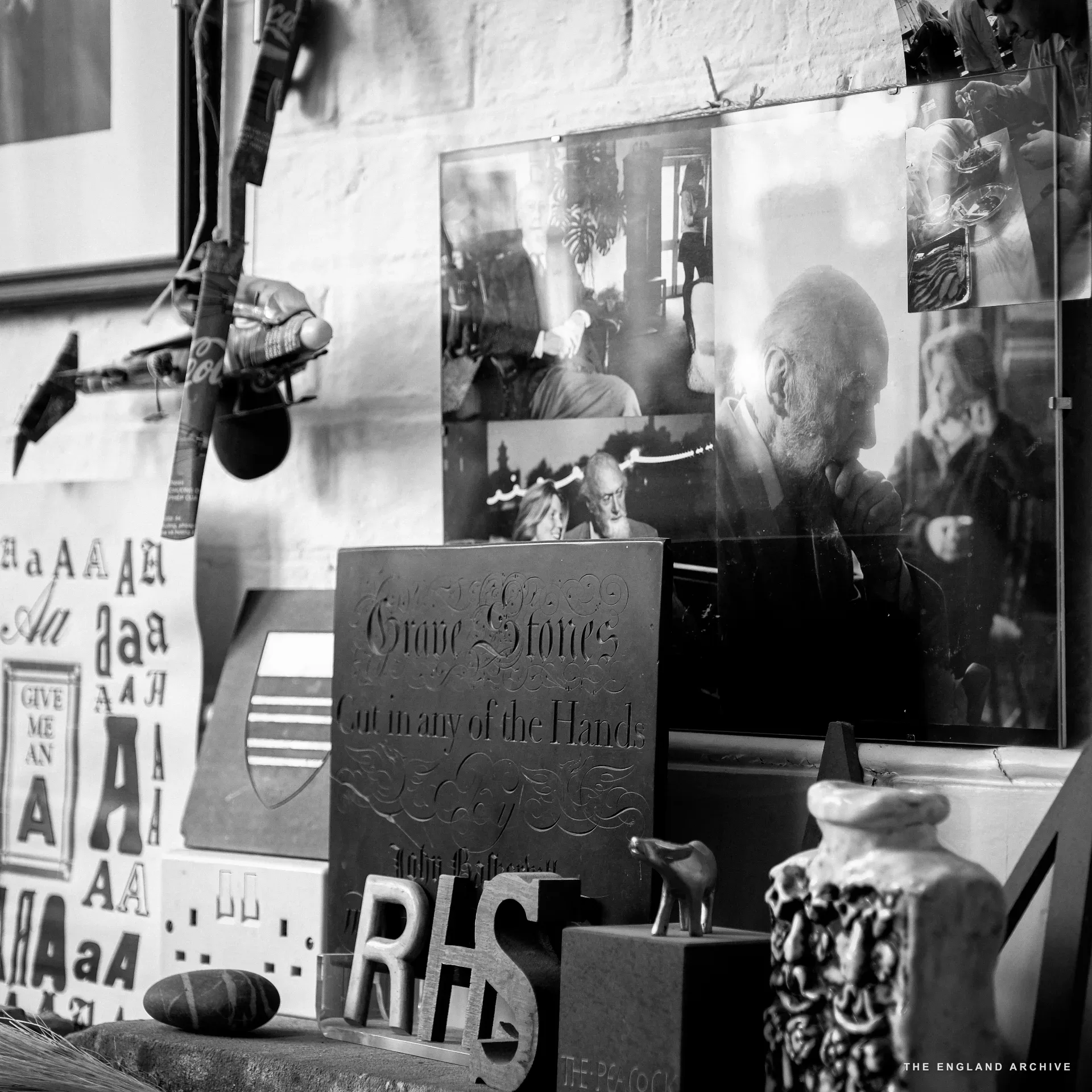
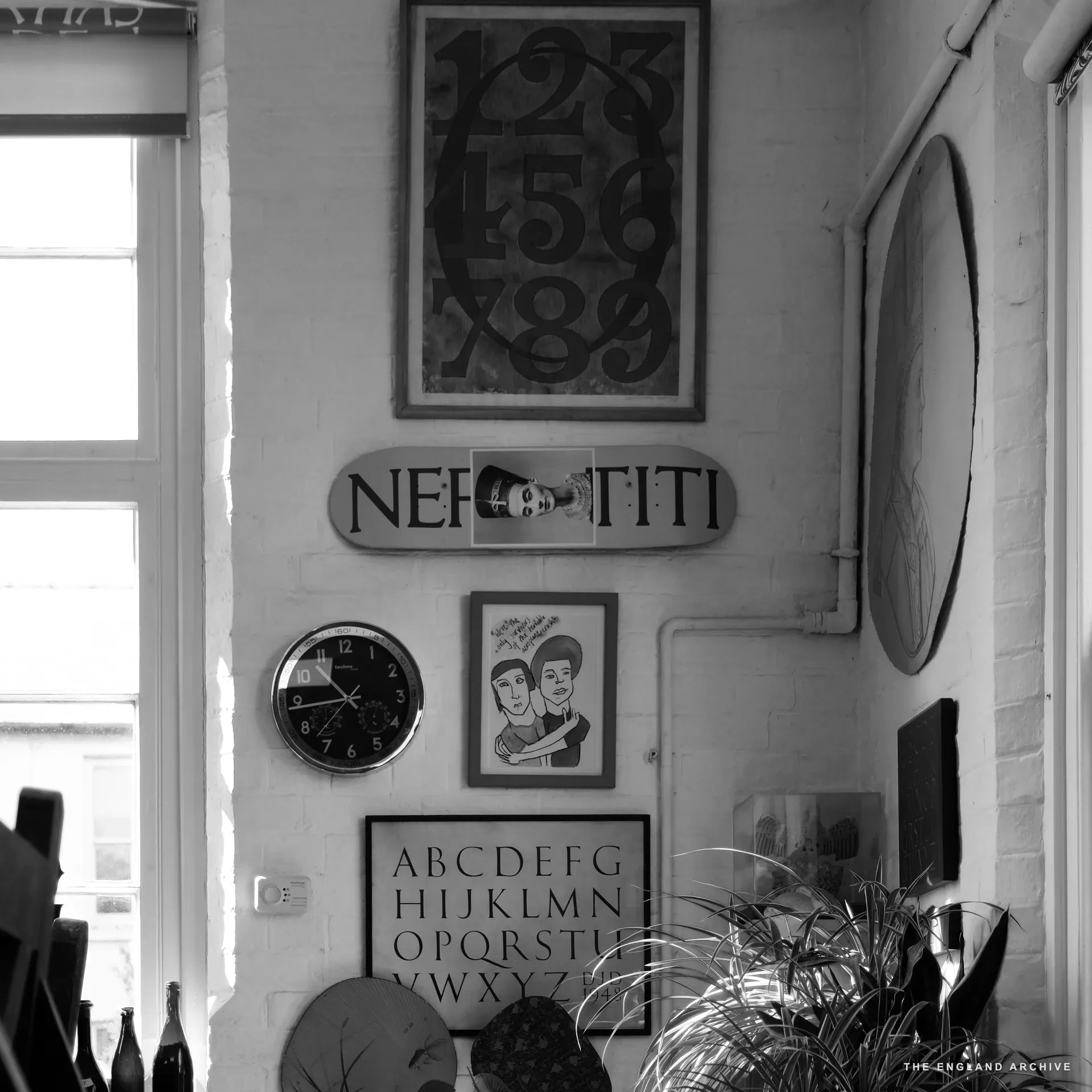
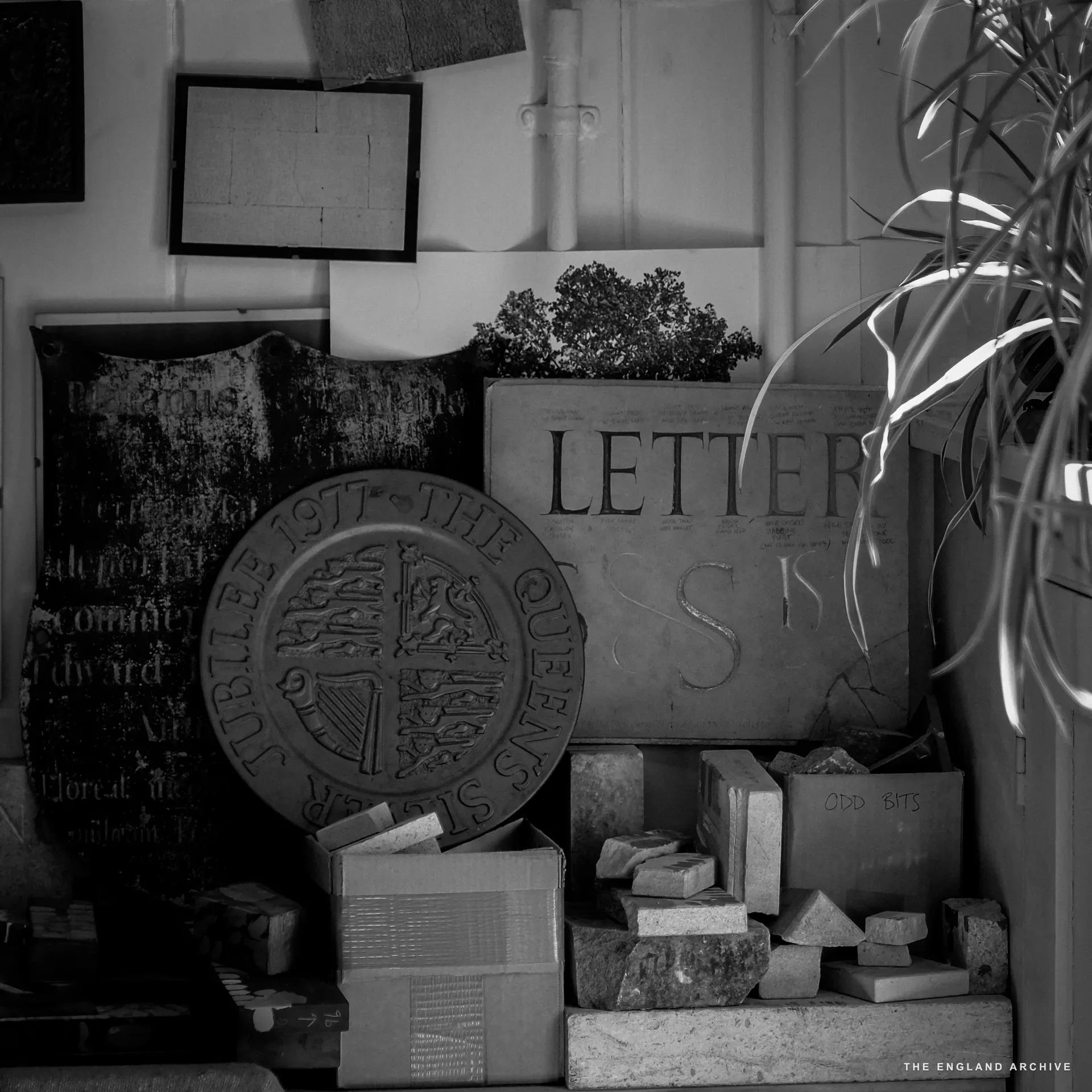
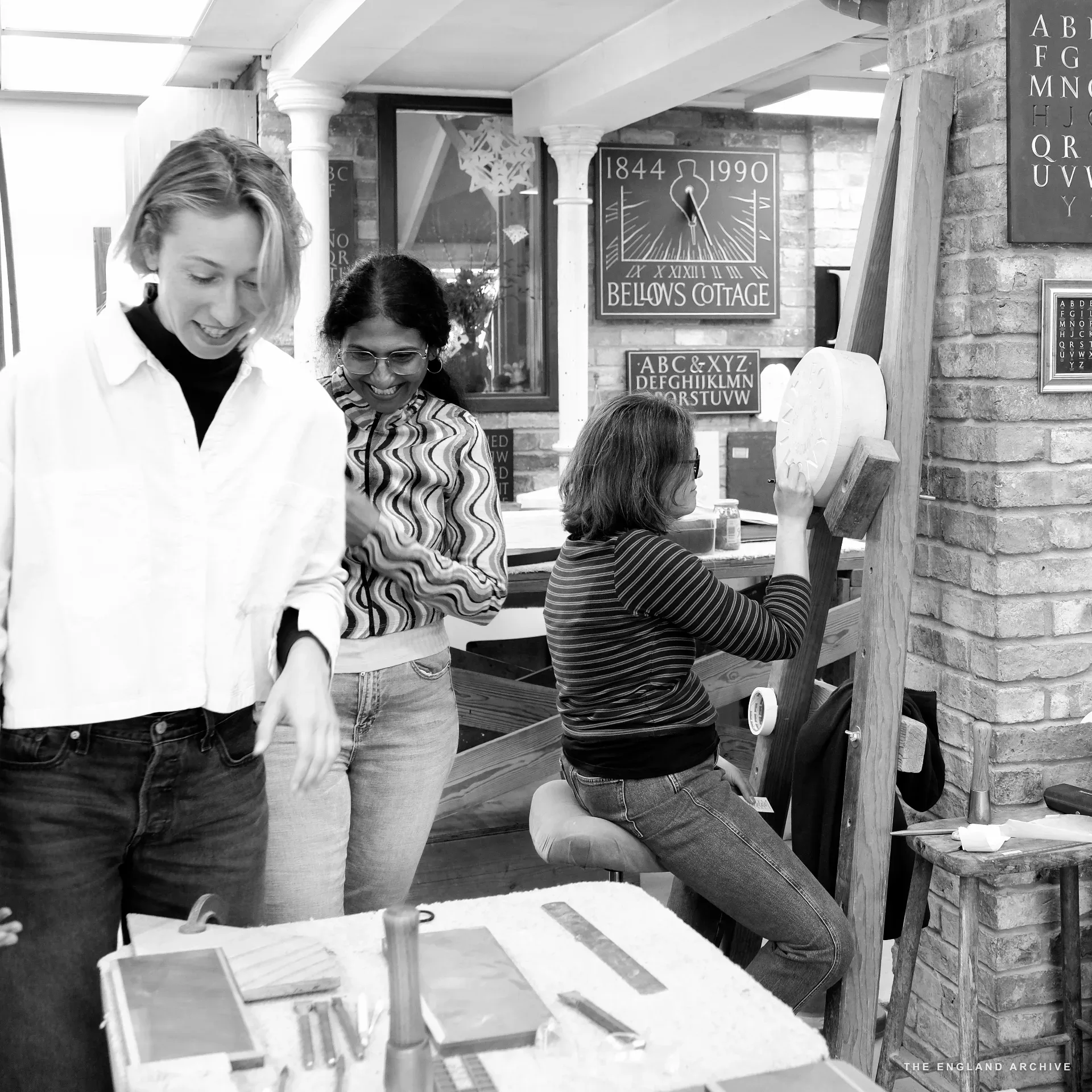
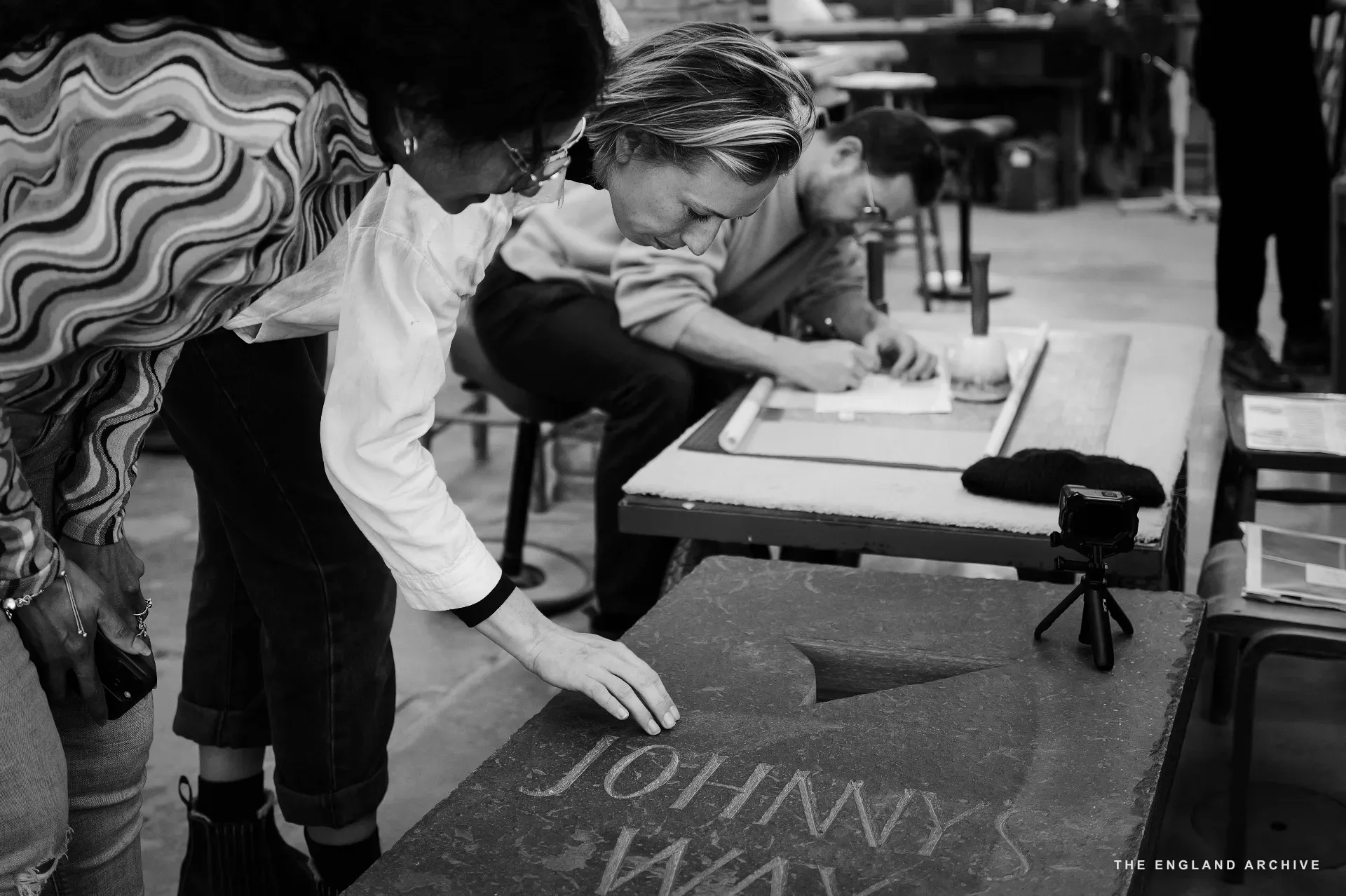
Emily was at her bench. She has been at the workshop for eight years. The piece she was working on was a memorial - a stone pillar, carved along two faces. One face read The Storm. The other, The Calm After The Storm. The commission was for someone who had been through an illness and had come out the other side, and who wanted the piece for their home. I asked Emily what it was like to carve two such different tones on the same object. She said you treat them as one piece, because they are; you understand that what one side means depends on what the other side means; and the tempo of the lettering has to hold them together so that they read as part of a single thought.
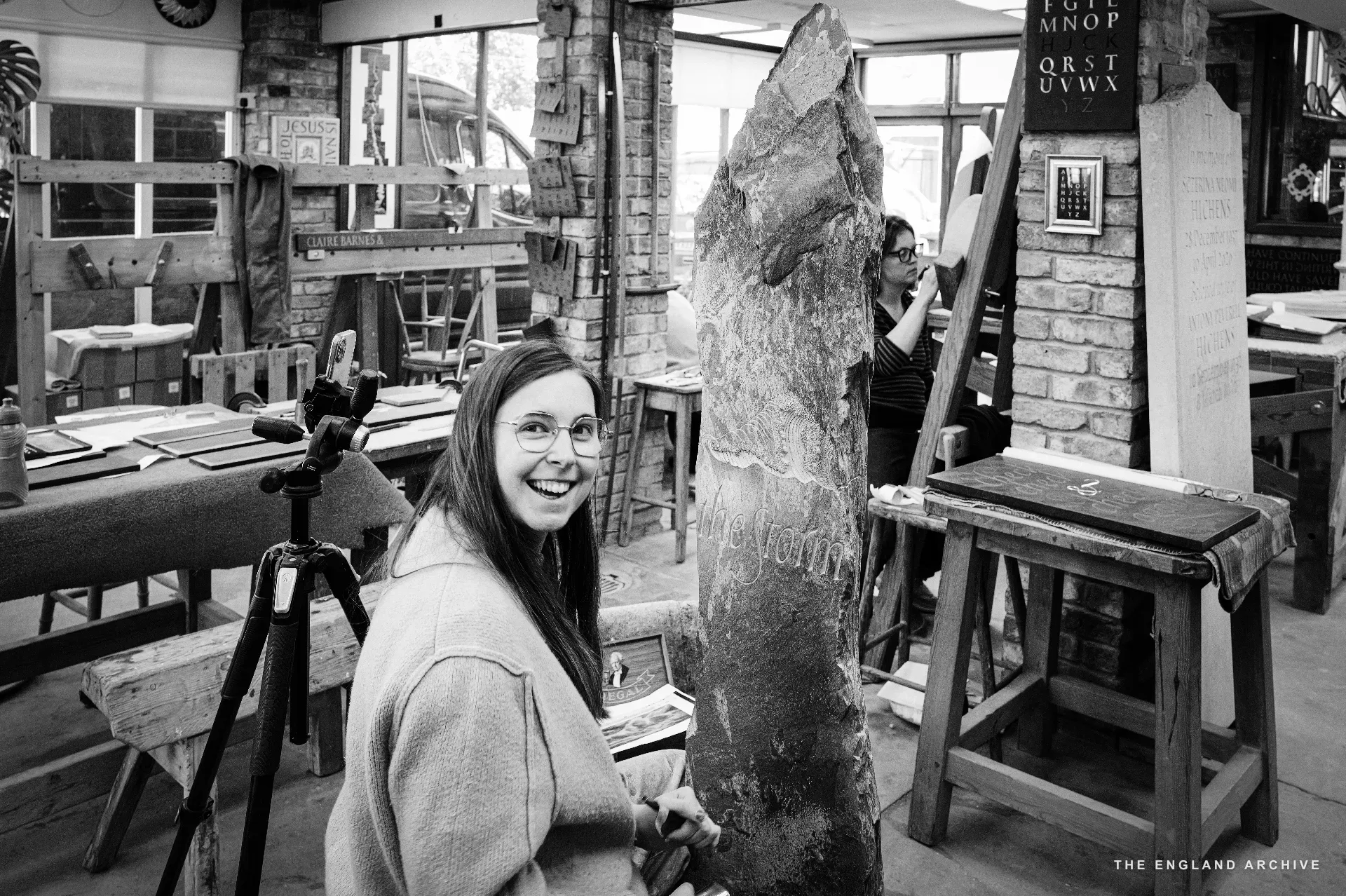
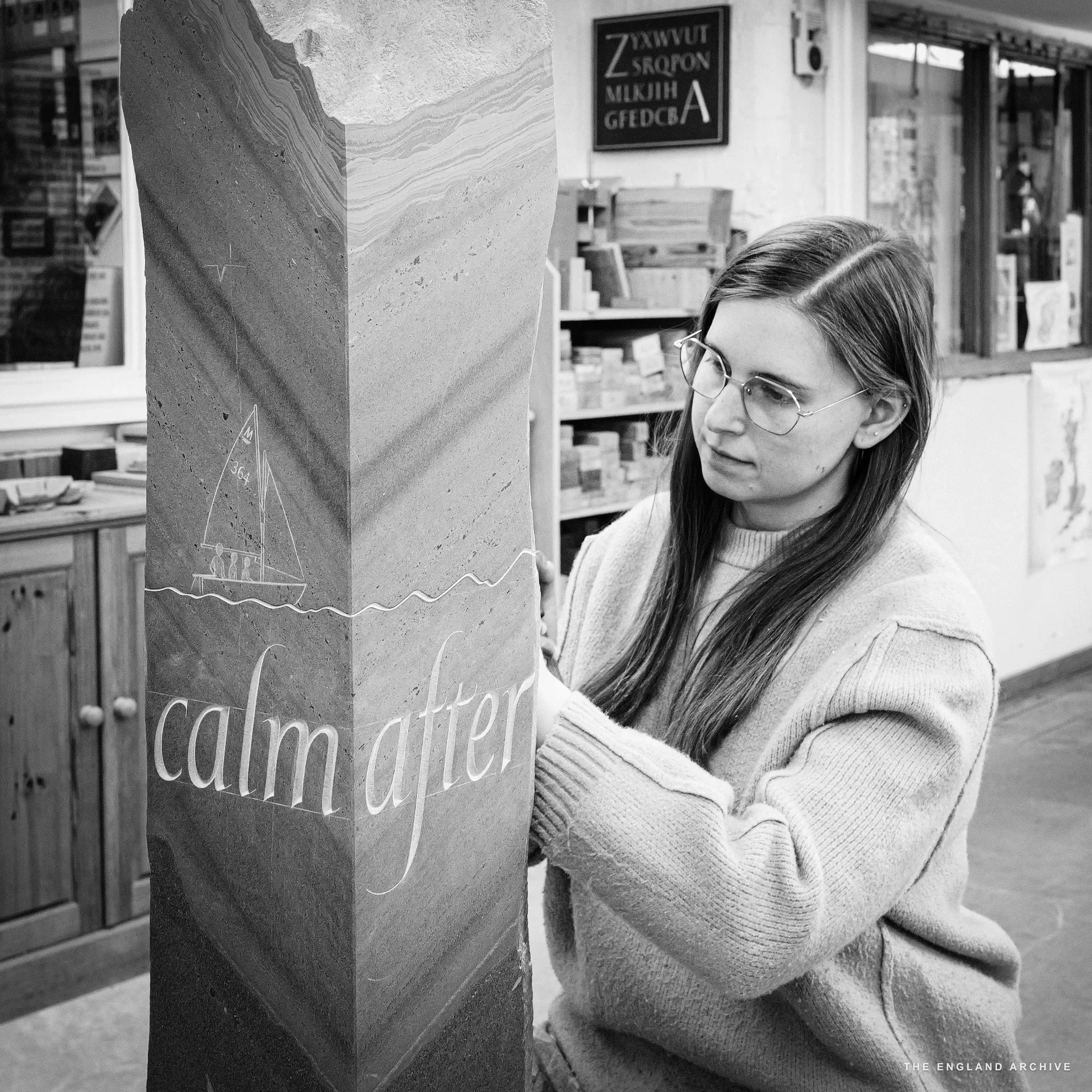
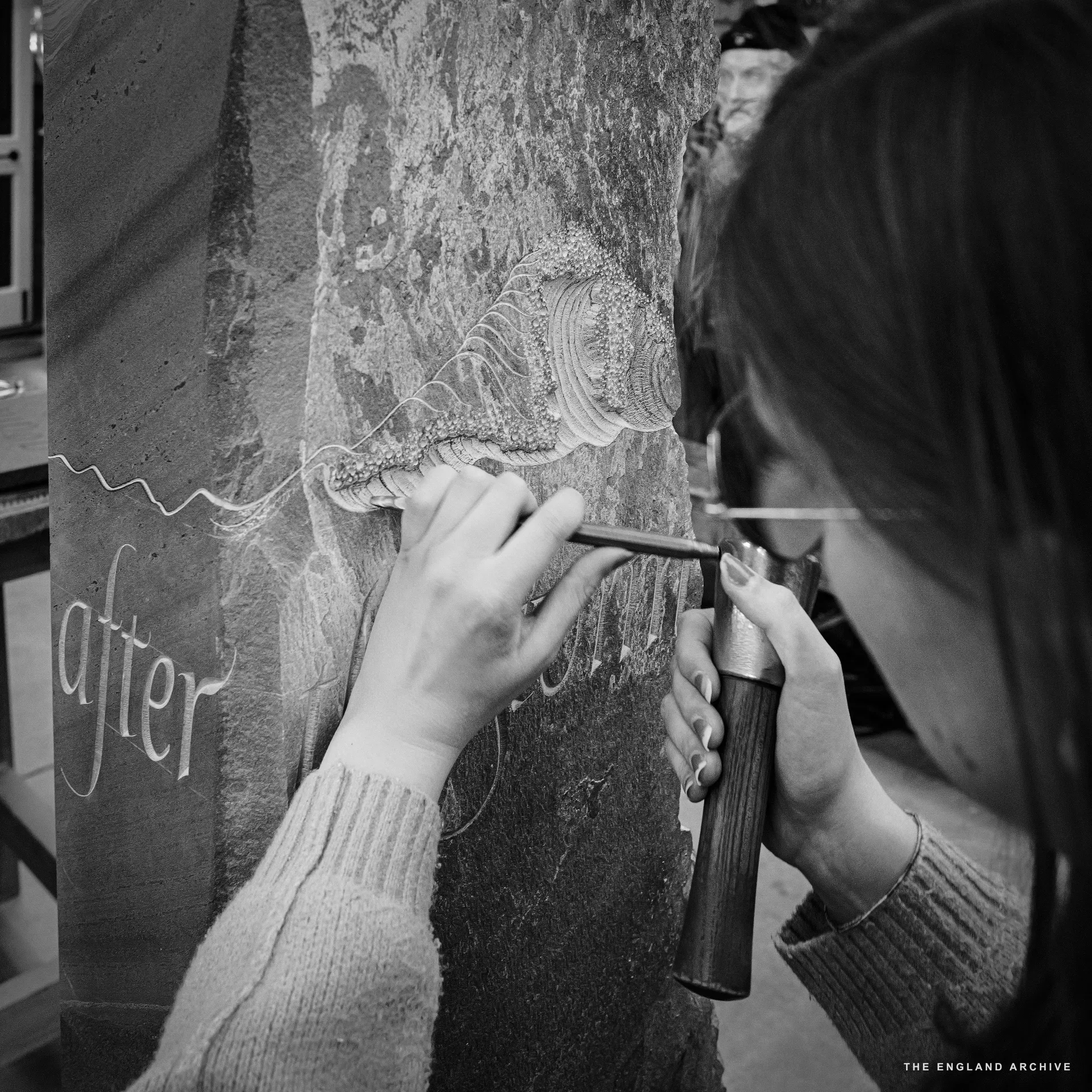
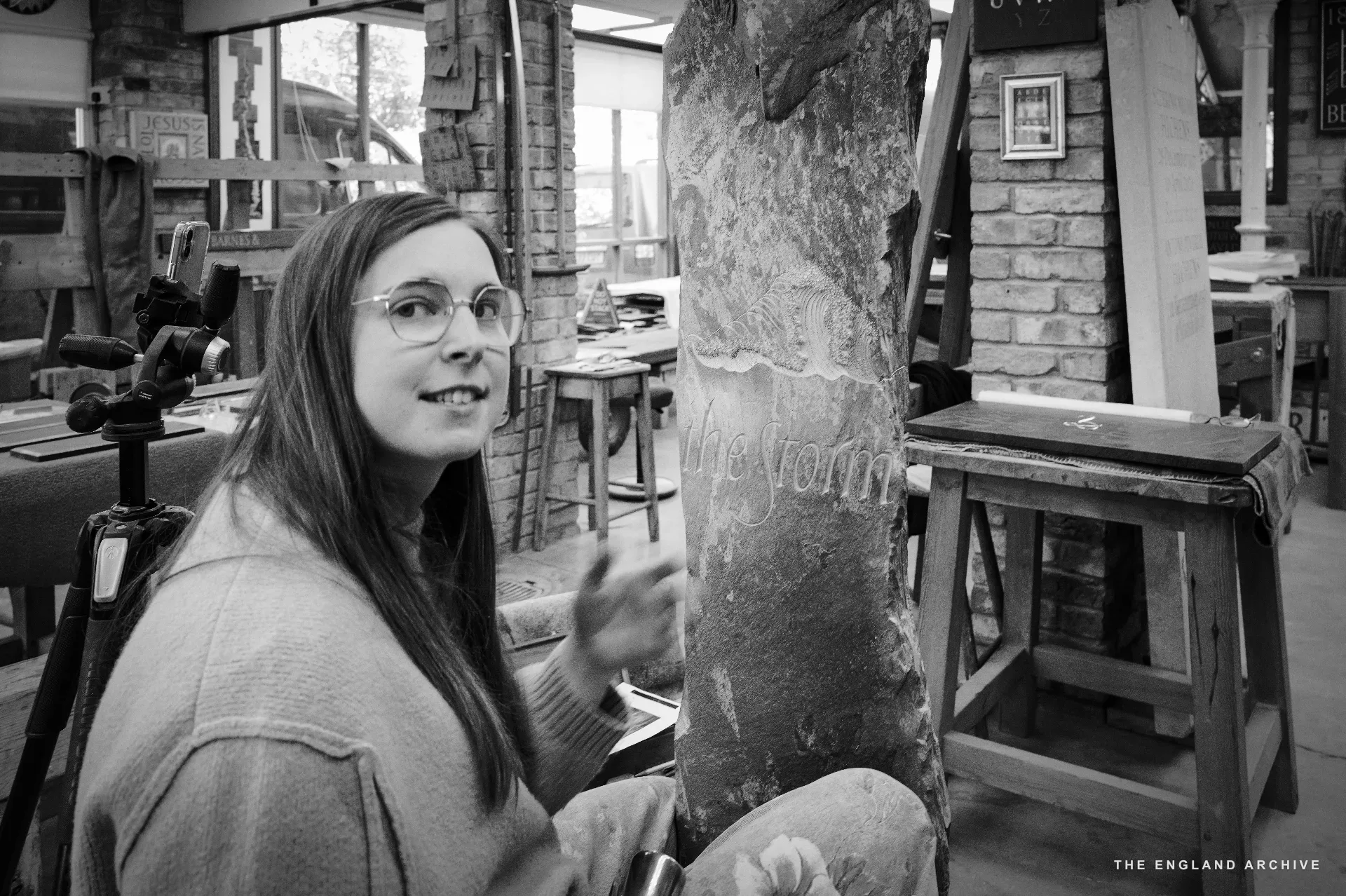
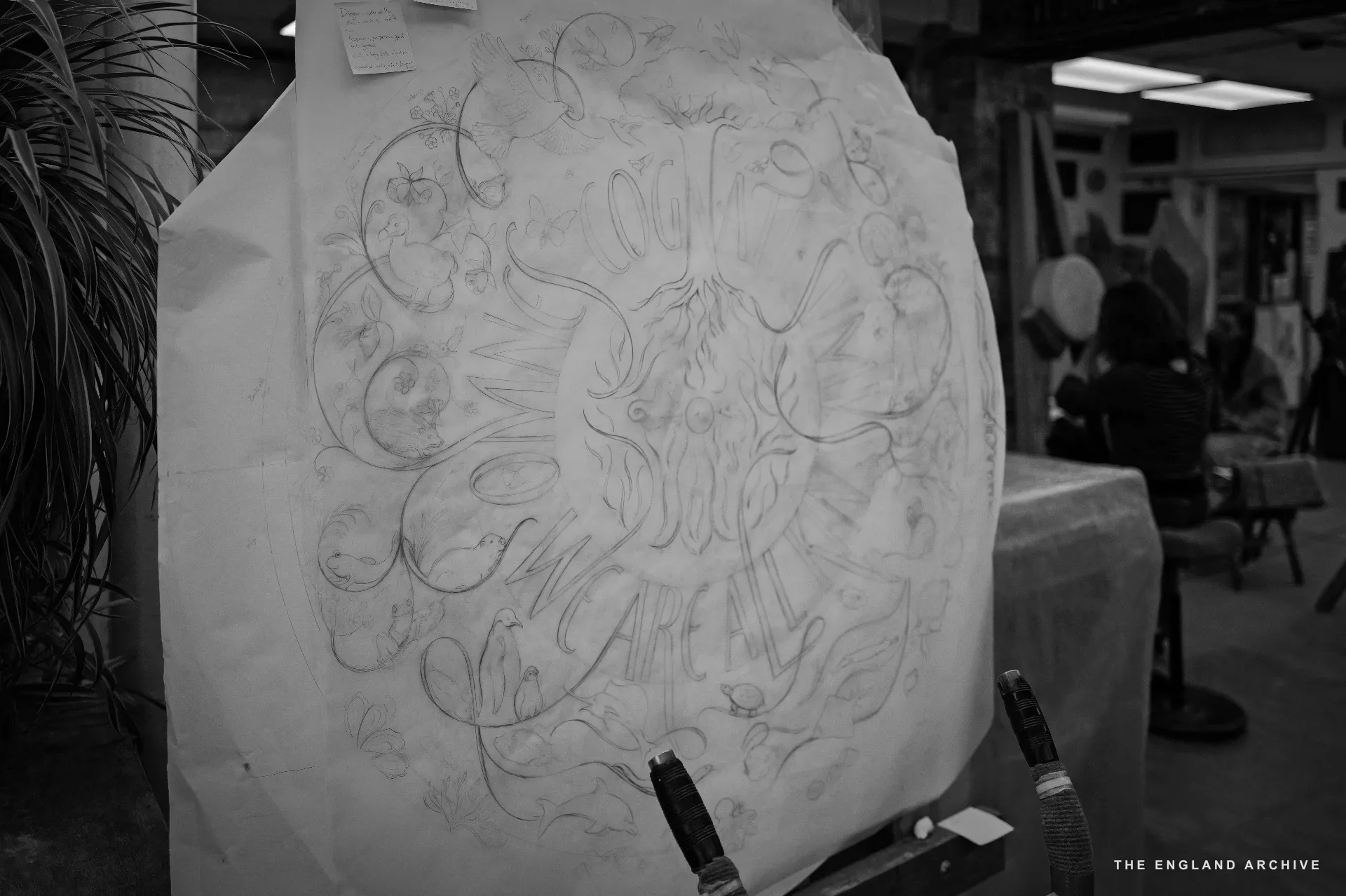
Roxanne explained the process first - the design on paper, the transfer to stone, the setting-out in pencil, the tapping of the chisel, the tempo. Then Emily answered the rest. We talked about mistakes, and about what you do when you make one. The honest answer is that mistakes in stone are mostly unrecoverable in the sense that you cannot un-cut; you have to design the recovery into the piece. Sometimes a letter turns itself into a different letter. Sometimes a whole line is re-composed. Sometimes the piece stops being what it was going to be and becomes what the error has made it. The workshop has been doing this long enough that every kind of mistake has a known family of solutions, and the apprenticeship is partly a training in recognising which family you are in.
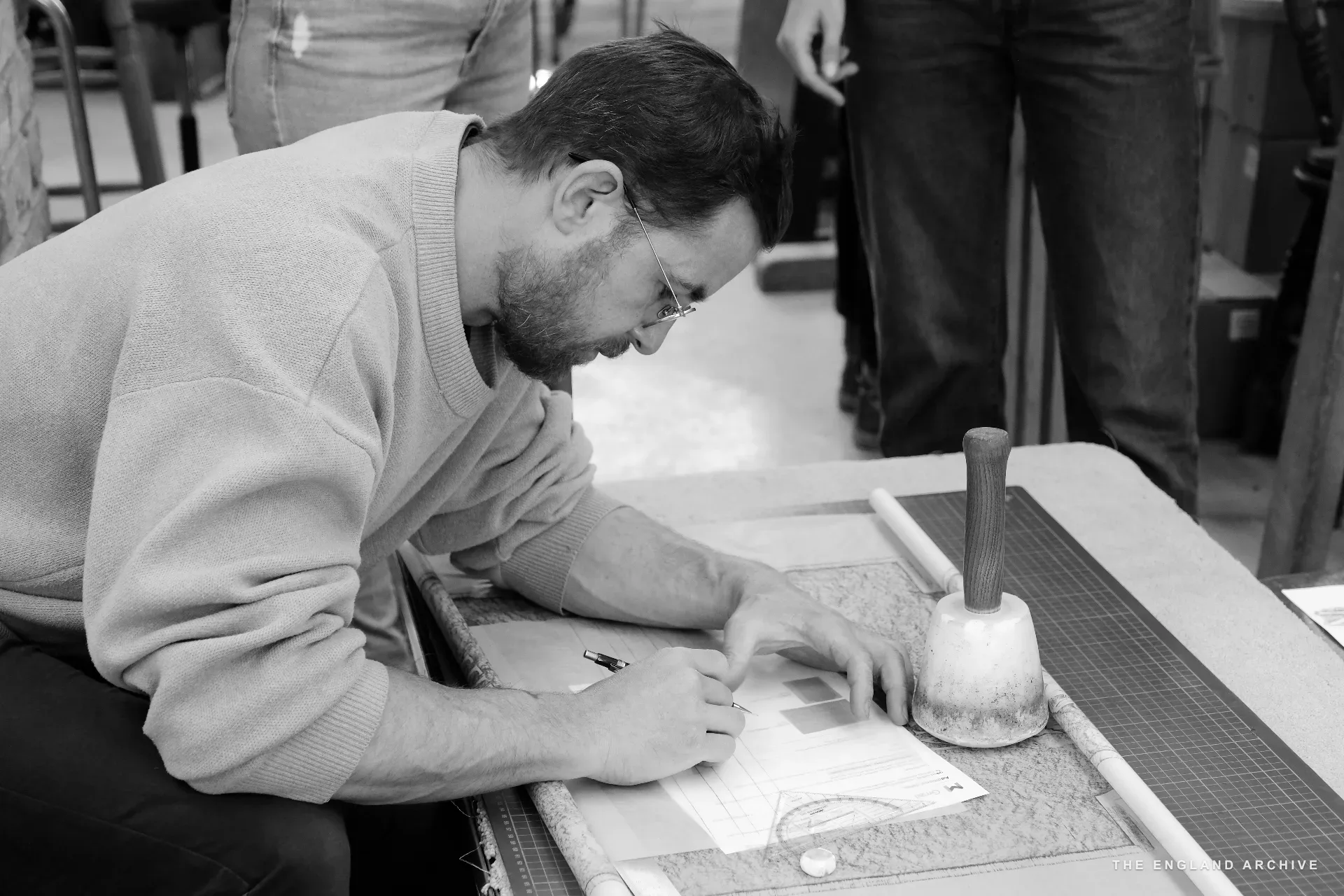
Across the room Vincent was at his bench with a sheet of paper and a pencil. He was designing the lettering for a commission in the oldest tool pairing there is for this work - paper, and a hand holding a pencil. I took a few frames of the work in progress and walked on.
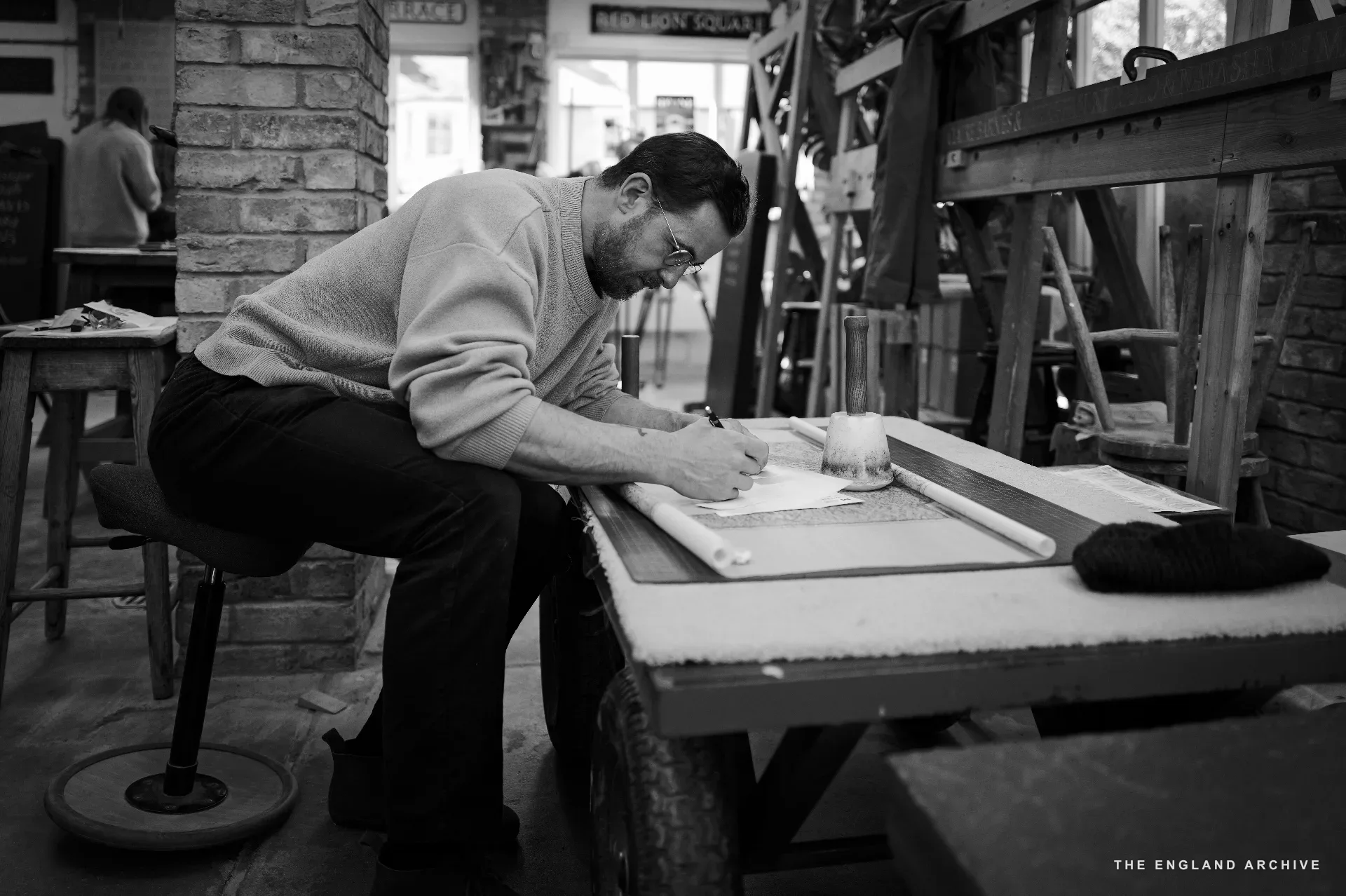
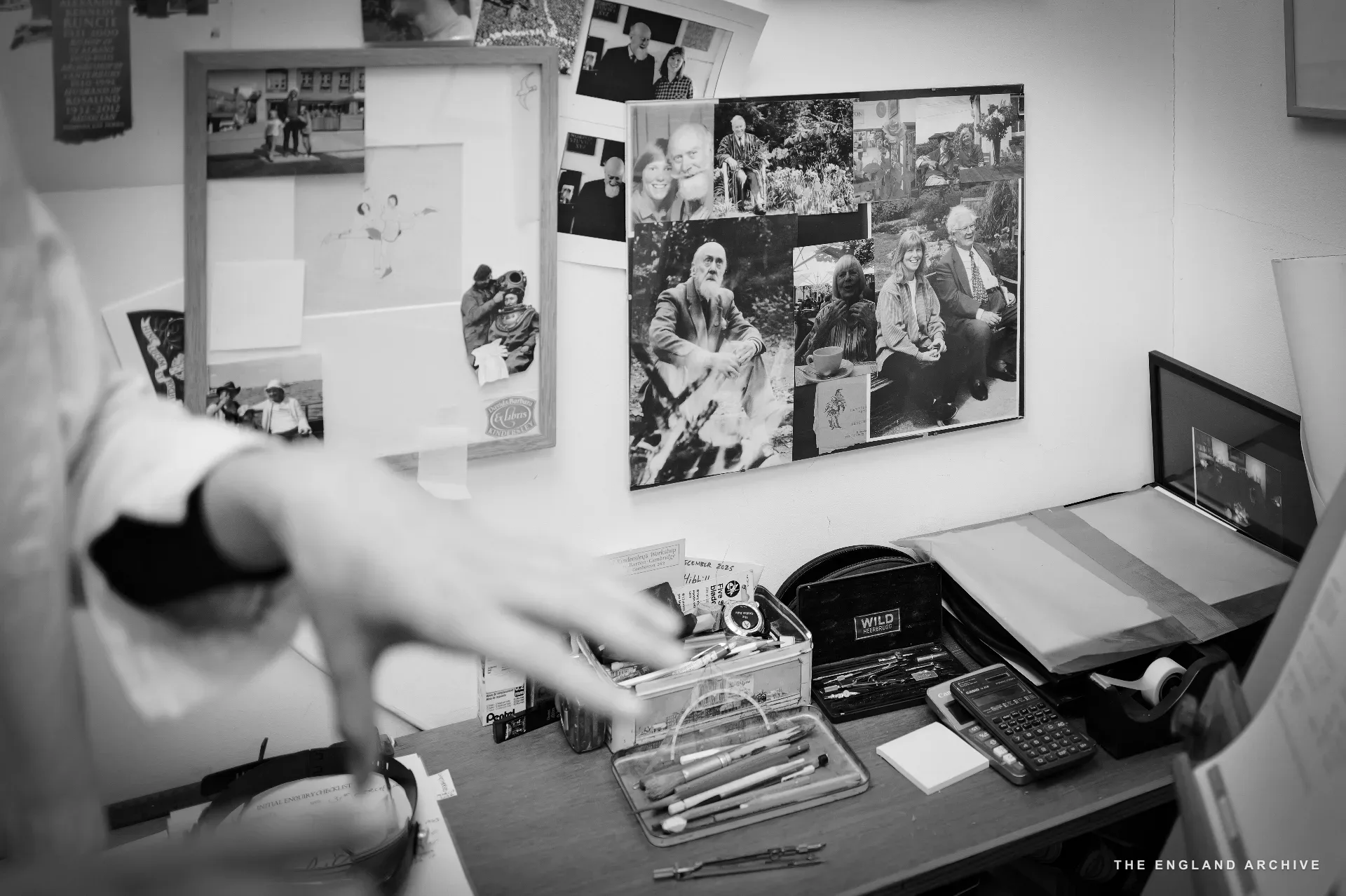
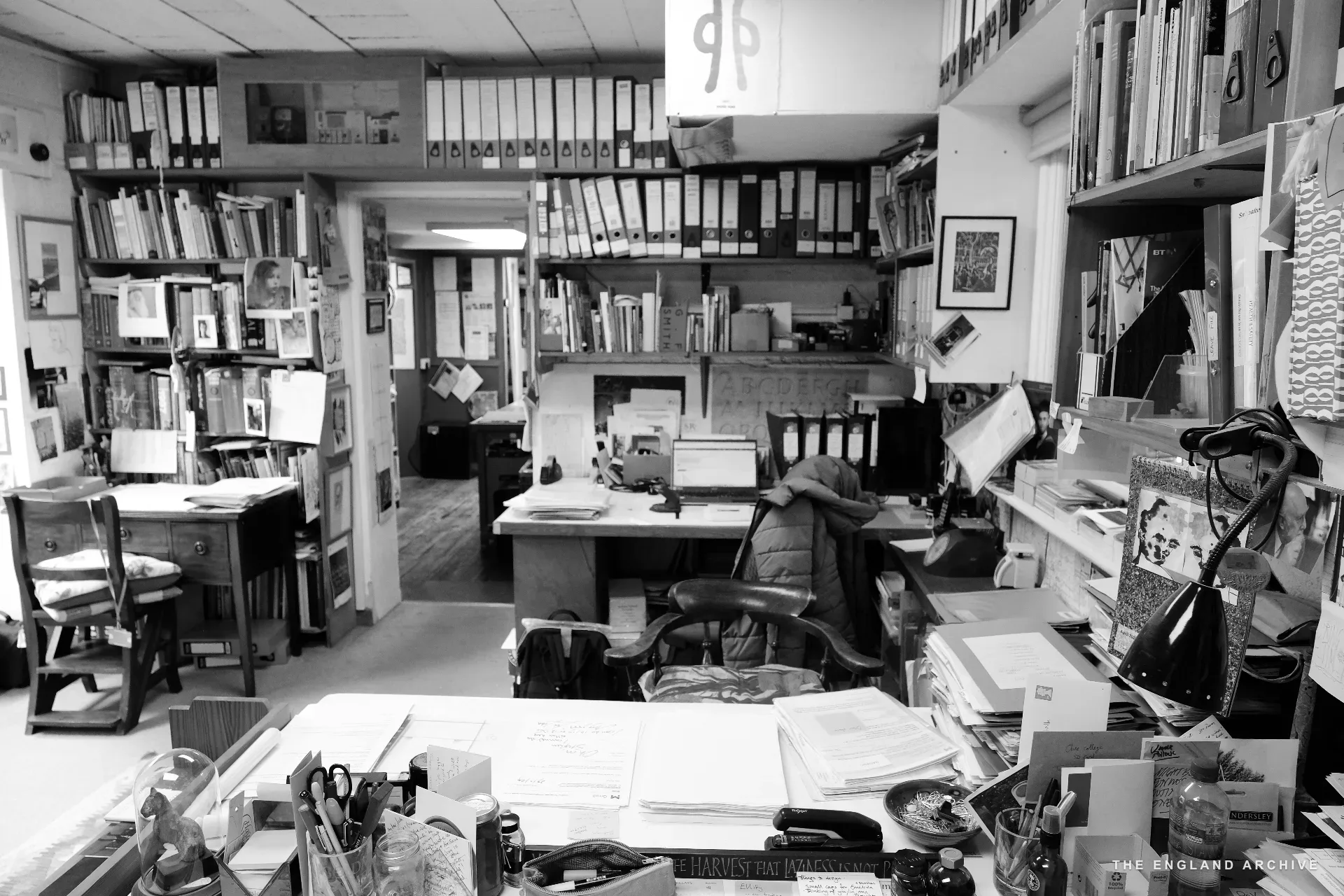
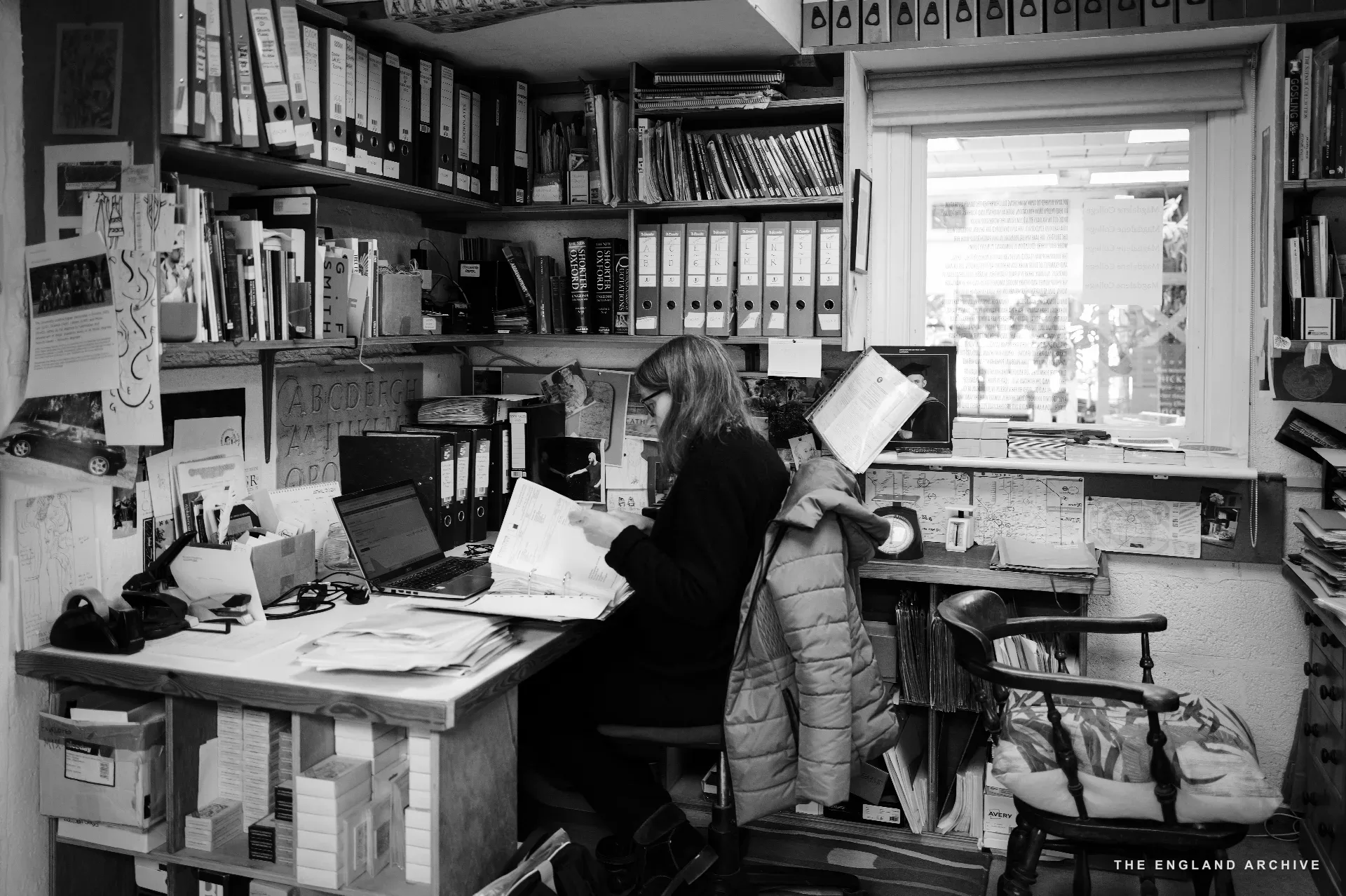
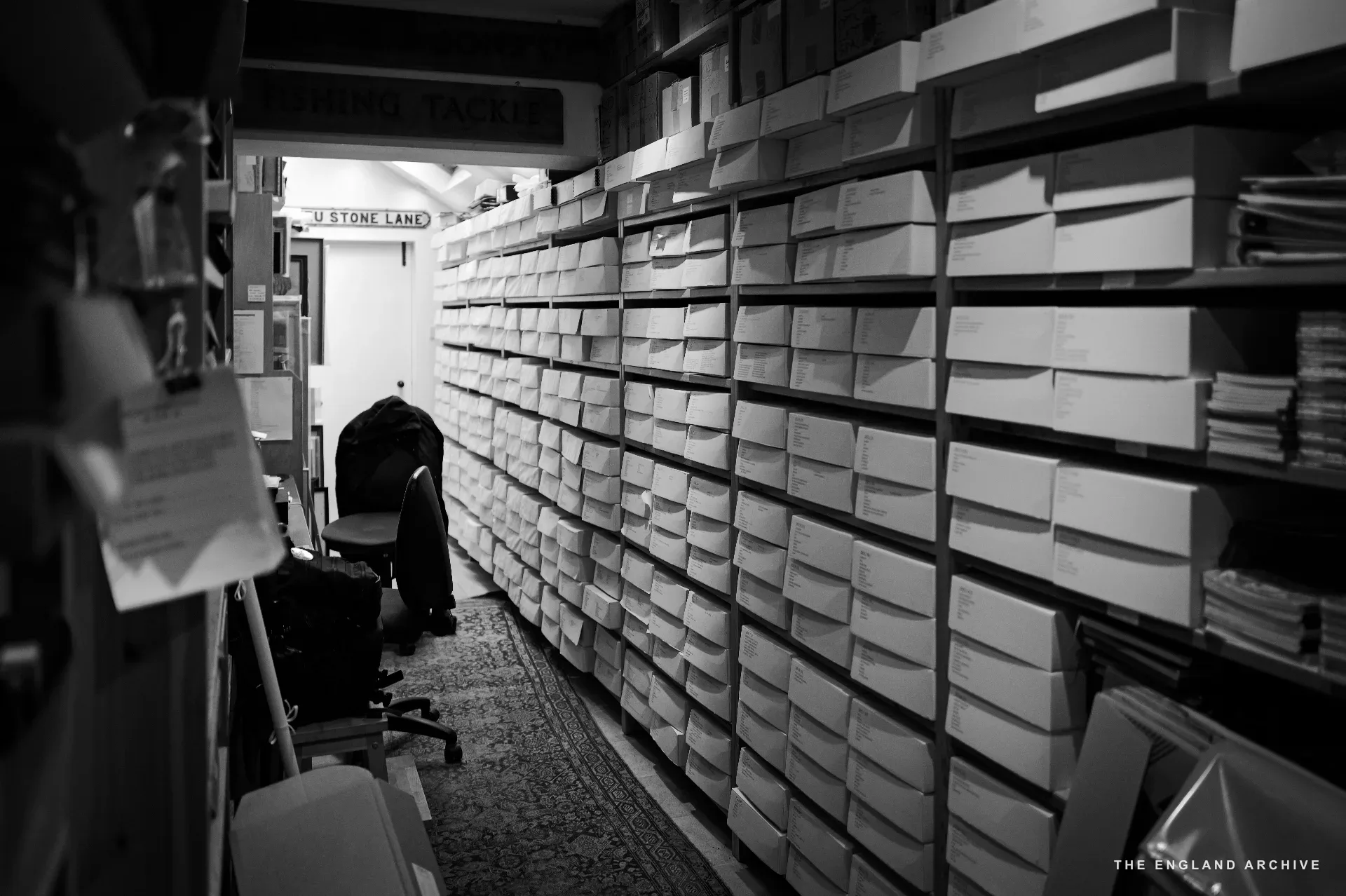
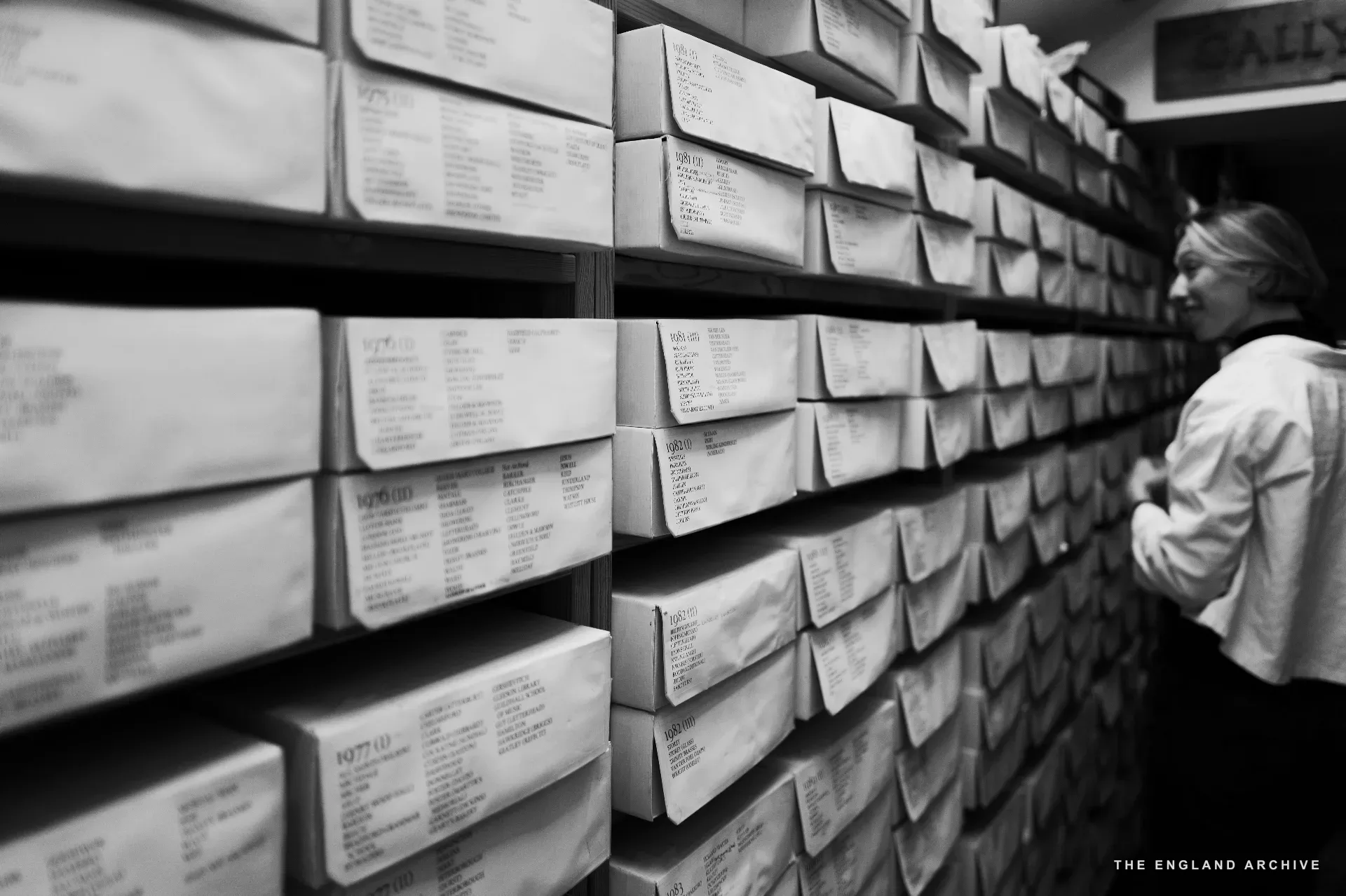
Beyond the benches sits the back office, where Harriet runs the day-to-day of the workshop and where the working papers for every commission of the past sixty years live in white archive boxes labelled in hand. The boxes are the workshop’s memory in document form. The benches outside this room are where the lettering is cut; this room is where the workshop remembers what it has cut, who for, and when.
The pencil
Then Roxanne told me about the pencil.
The first thing an apprentice does at the Cardozo Kindersley Workshop is sharpen a pencil. Not for the sake of having a sharp pencil - a machine could produce one in two seconds - but because the act of sharpening is the training. It is, she said, how you learn to work with material. Regular pencils are sharpened in the cheap electric way, or with a penknife in the way your father showed you: you take wood off the sides until the point emerges. That is not how you do it here.
She produced two pencils and laid them on the bench in front of me.
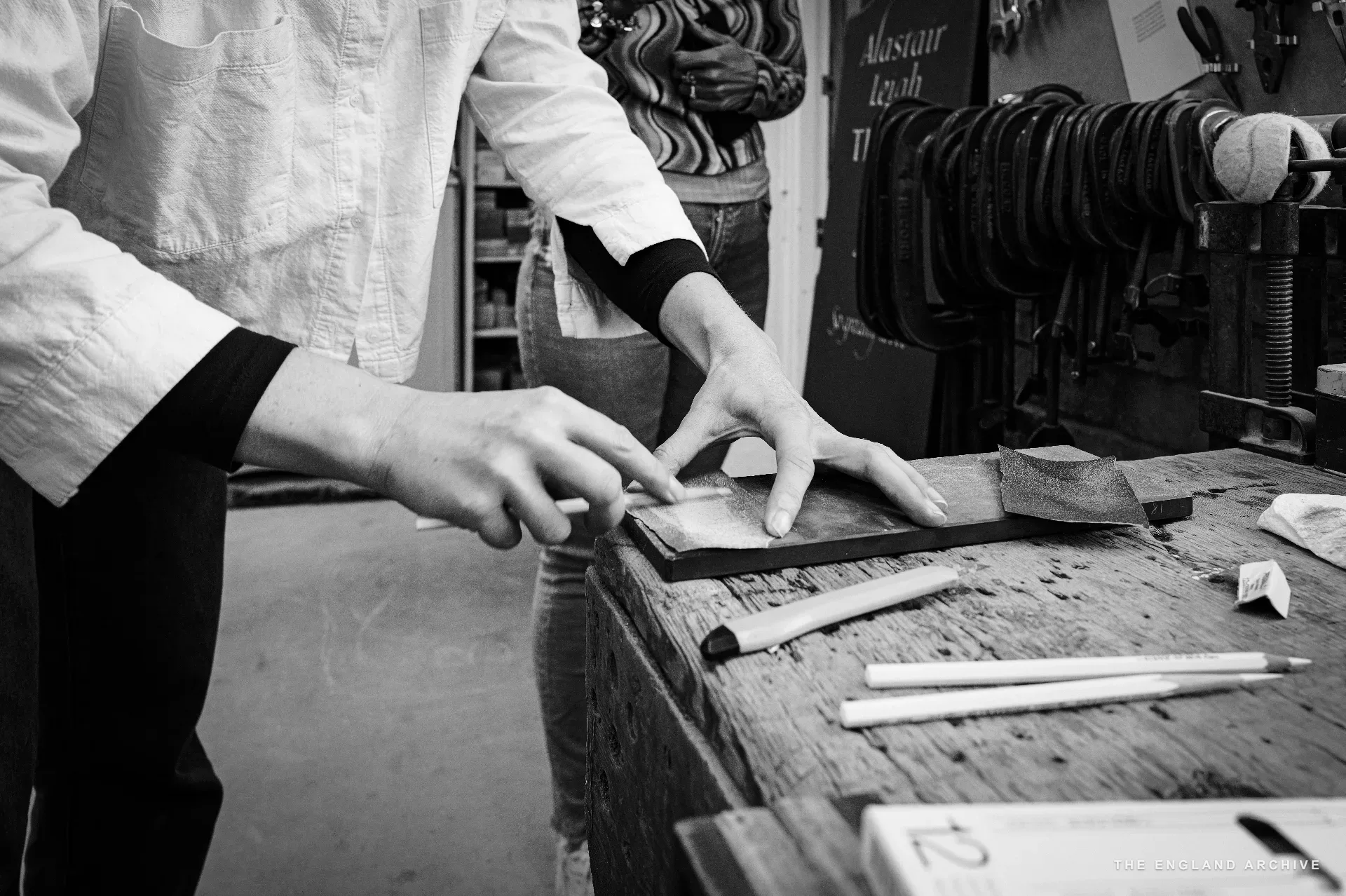
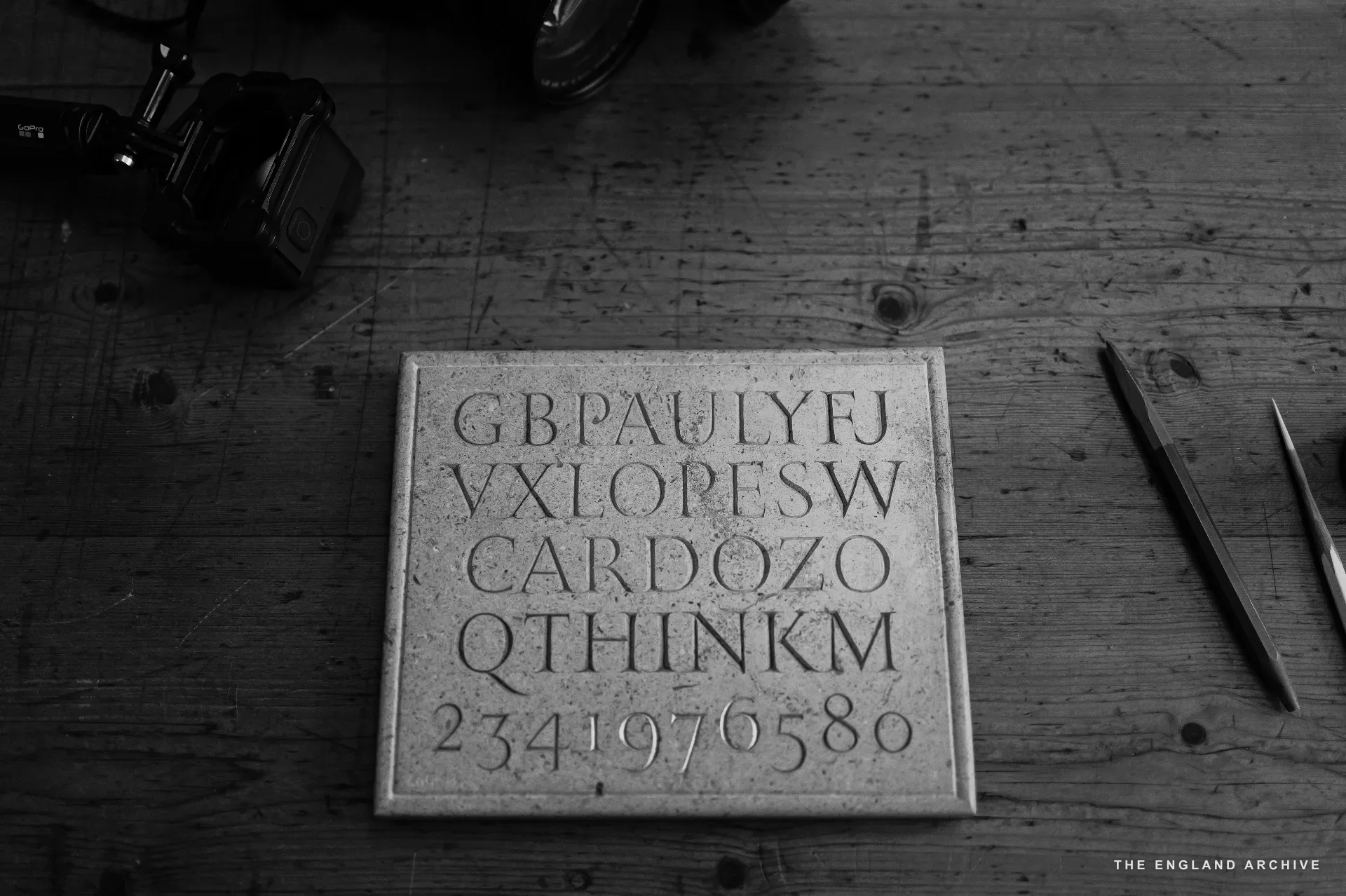
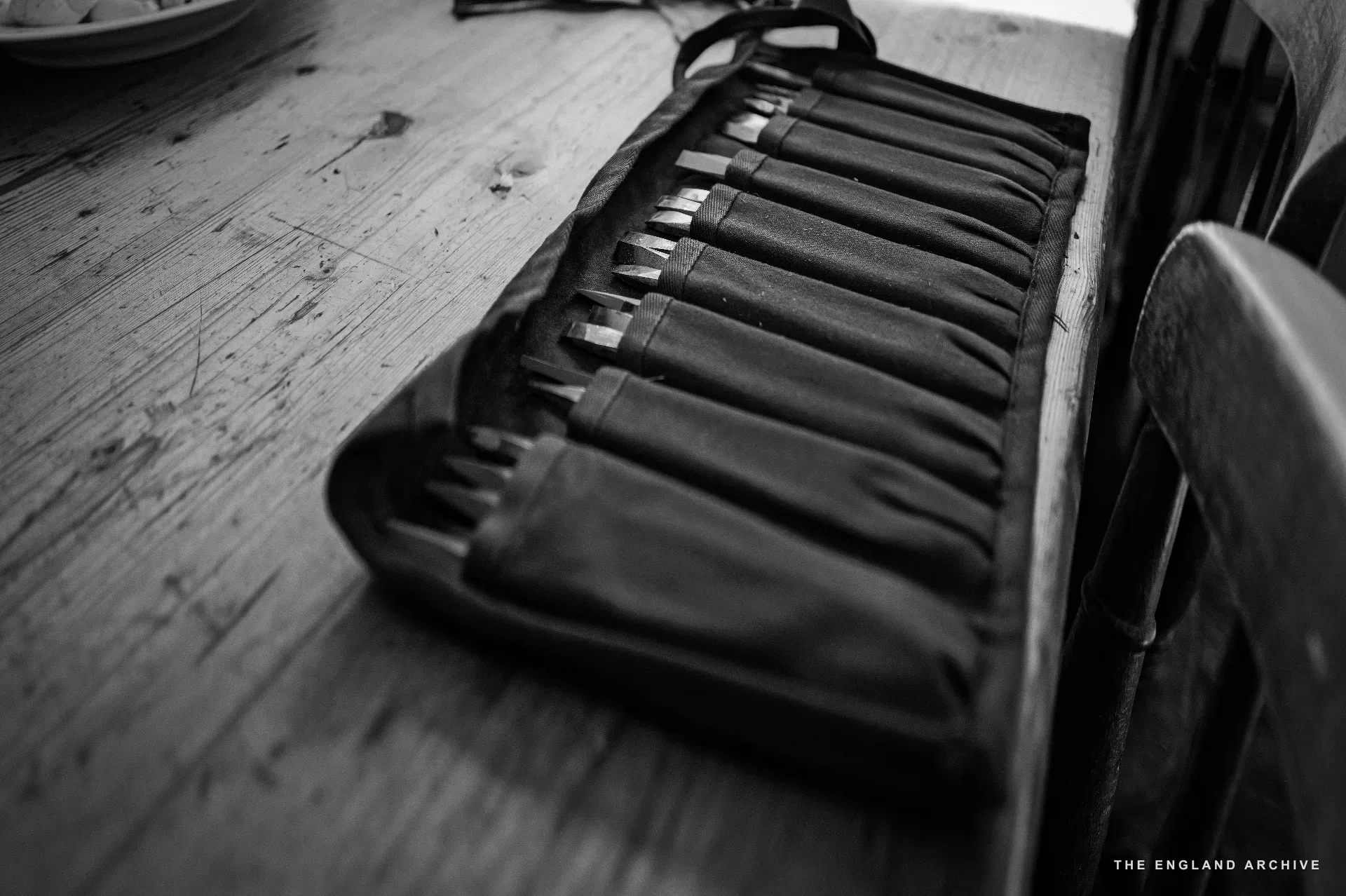
The first pencil was sharpened normally. A short black point, the wood tapered around it, exactly what you would expect. The second pencil was different. It had been cut from the middle - the lead extended an inch beyond the wood, slim, exposed, unprotected, sharpened down to a point so fine that the graphite looked almost translucent against the grey. It would be useless for writing on paper. The pressure would break it. It was not for writing on paper. It was for drawing on stone.
Then Roxanne gave me the lesson that was the reason the workshop teaches this first.
No machine cuts this pencil. Every apprentice learns to do it by hand, with a very sharp knife, on a soft piece of wood surrounding a softer piece of graphite, and the mistakes you make on the pencil are the mistakes you cannot afford to make on the stone. If you are aggressive, the lead breaks. If you are impatient, you take too much at once and the point goes sideways. If you grip too hard, your hand cramps before you finish and the final stroke is wrong. The pencil is a machine for teaching you that the craft is in the control, and the control is in the patience, and the patience is learnable but only by learning it on a piece of wood and graphite before you lift a chisel.
When an apprentice can sharpen the pencil - properly, consistently, without breakage - they are allowed to use the pencil to set out lettering on stone. When they can set out lettering in pencil, they are allowed to pick up a chisel. The whole curriculum of the apprenticeship - years of it - follows from that single initial act. The chisel does not come first. The control does.
Lettering in stone is, the workshop teaches, nothing but sharpening a pencil. The sentence is literal in the sense that the movement is the same - tight, patient, attentive to resistance, yielding where the material yields, stopping where the material asks you to stop. And it is metaphorical in the sense that every craft that works with material works this way: the practitioner is trained by the material itself, through the medium that permits the most mistakes for the lowest cost. When you have paid for your education in broken pencils, you are allowed to handle the stone.
I have been given a lot of quotable sentences this year. This one is the keepable one.
The portraits
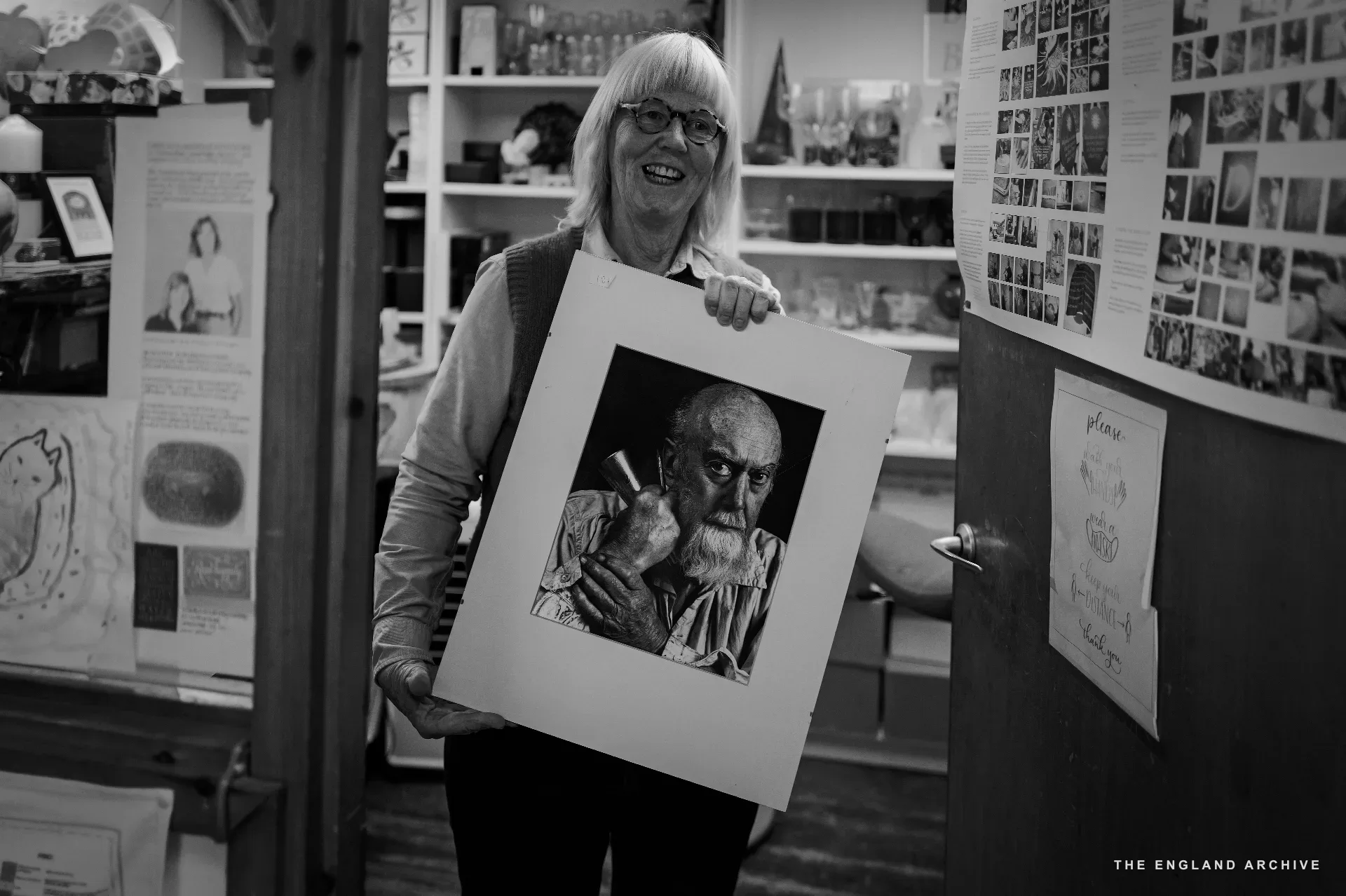
After the tour I set up the Bronica. The SQ-A sits on its tripod in a way that tells people what is about to happen, and this is useful in a workshop; the moment it was out, the team understood that portraits were now the work of the next half hour and the workshop would give them that. Roxanne first. Lida next, seated and standing. Then Vincent. And then Hallam walked in.
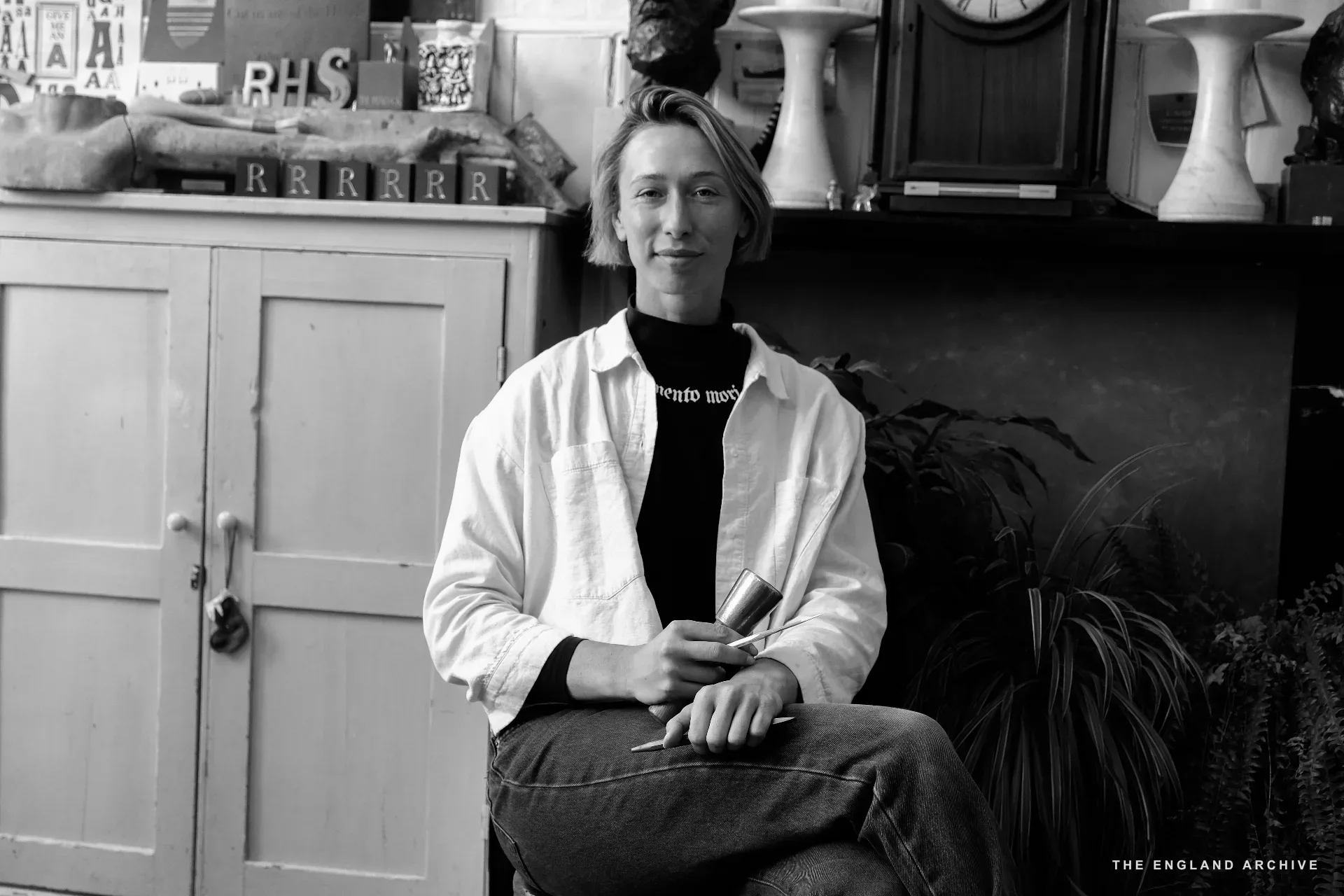
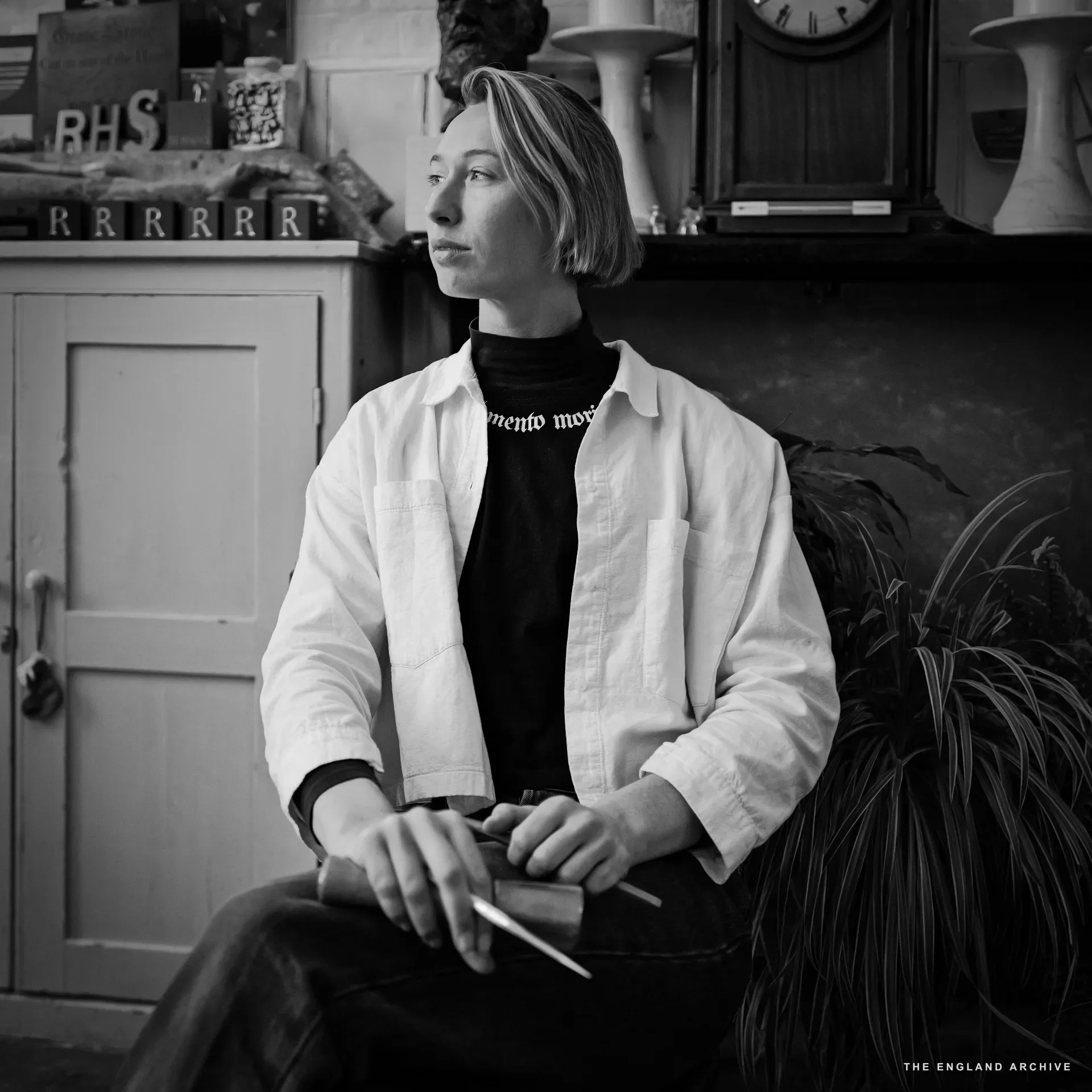
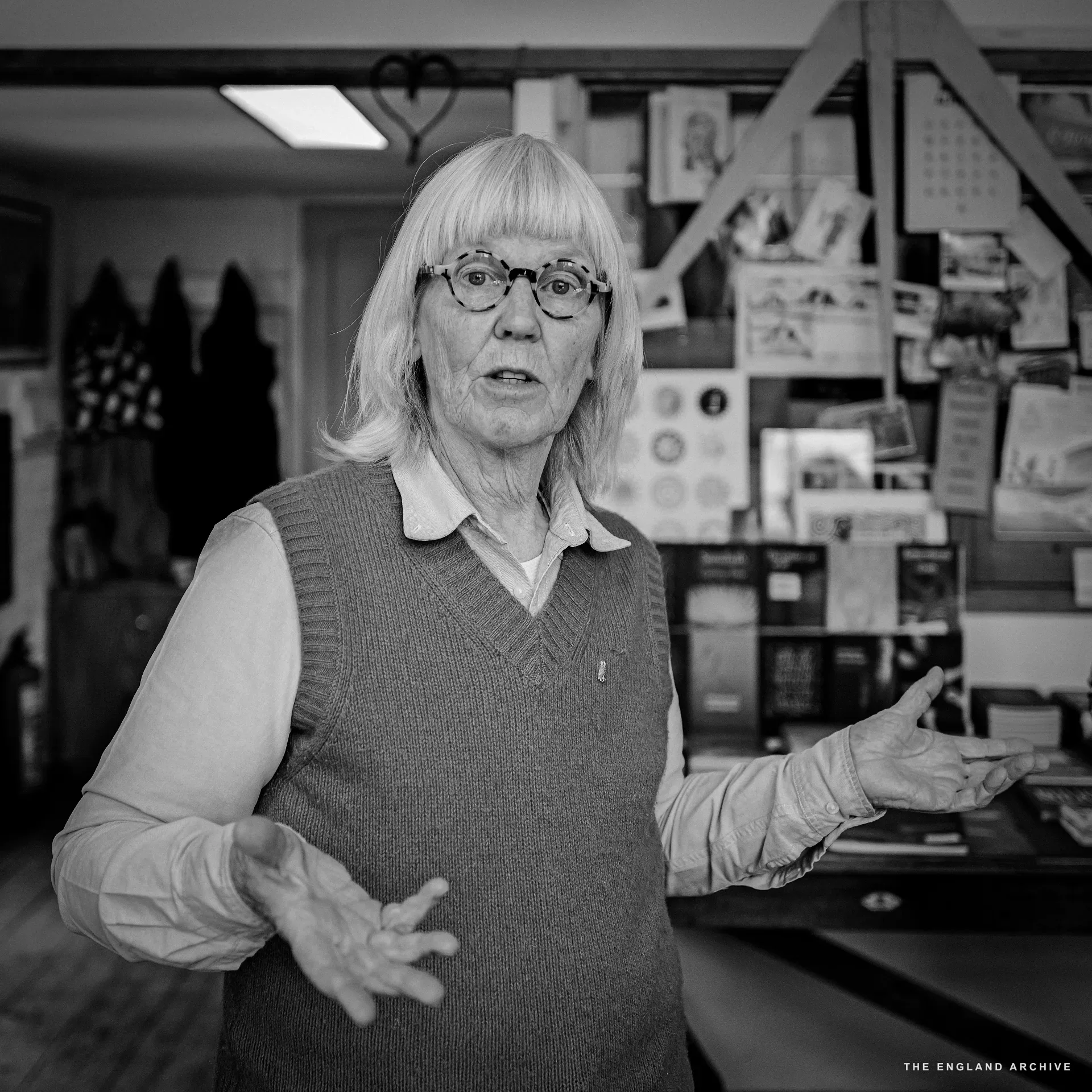
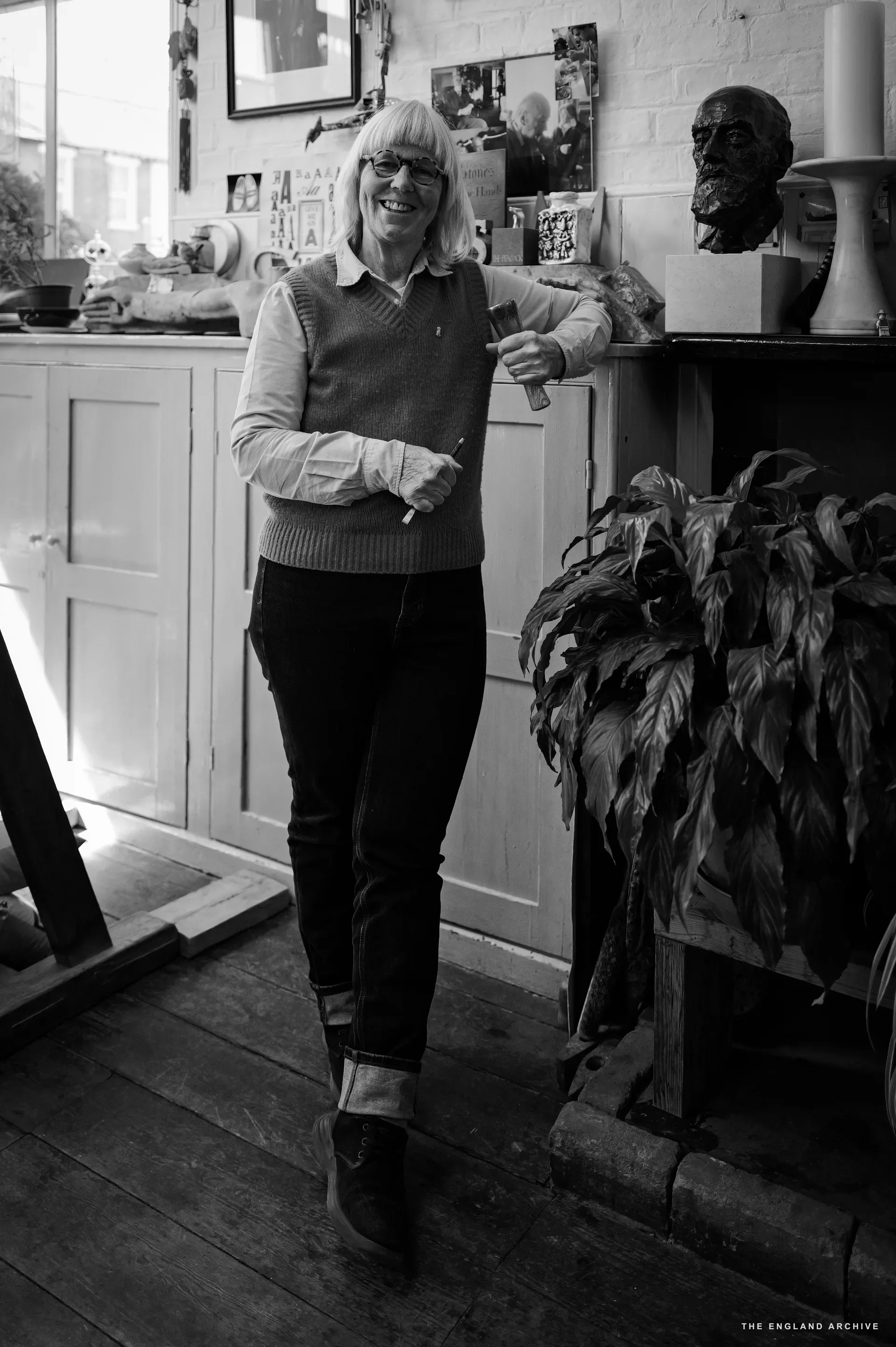
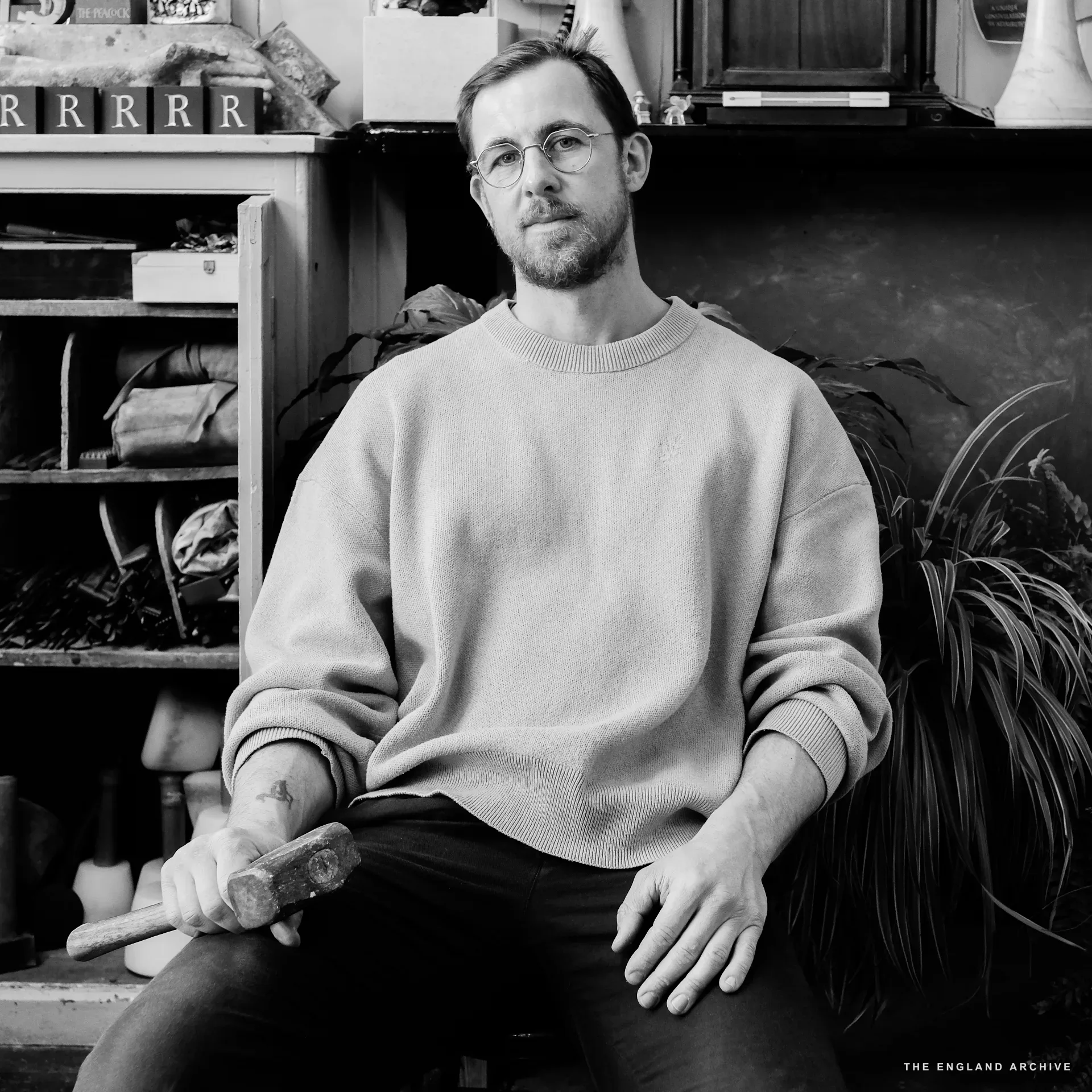
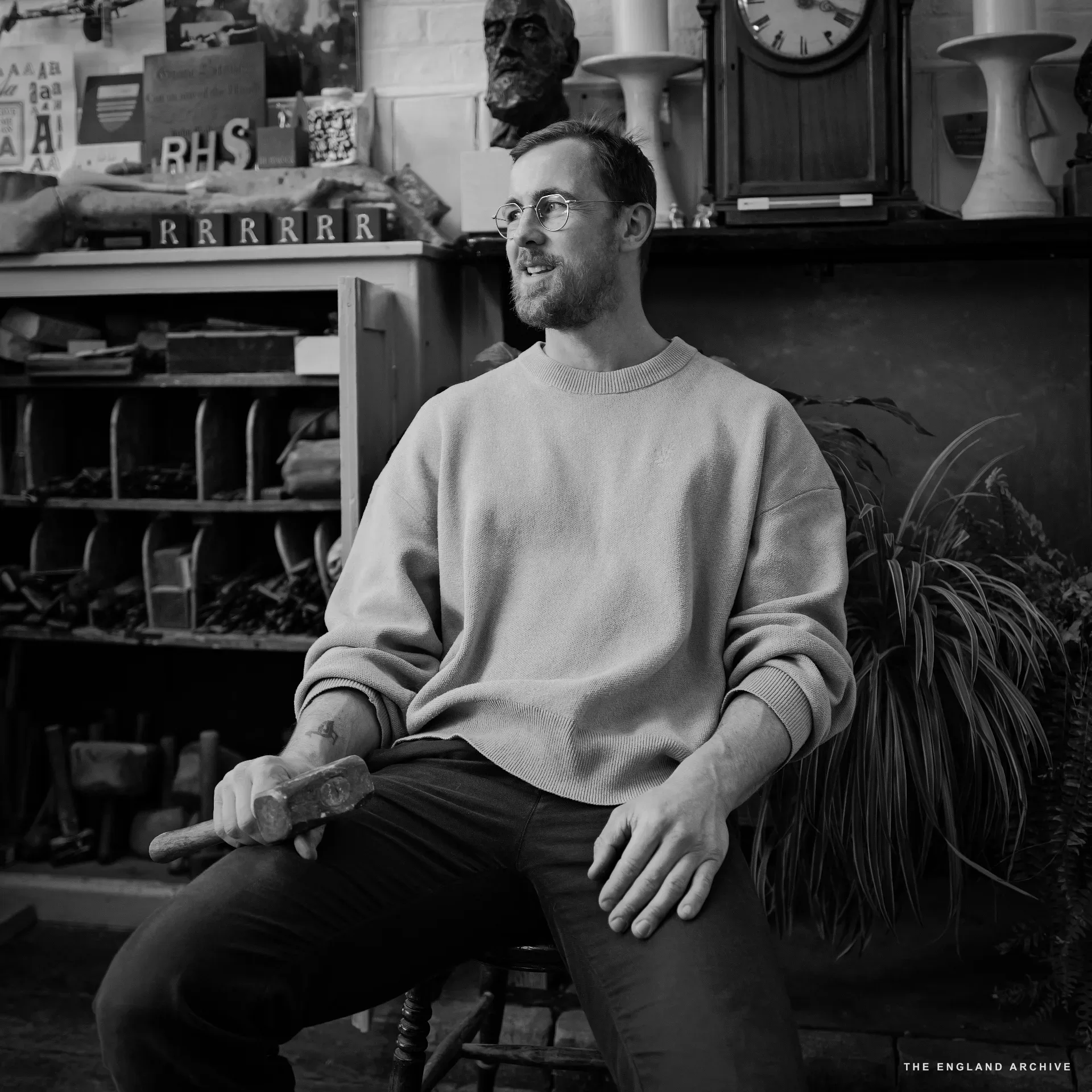
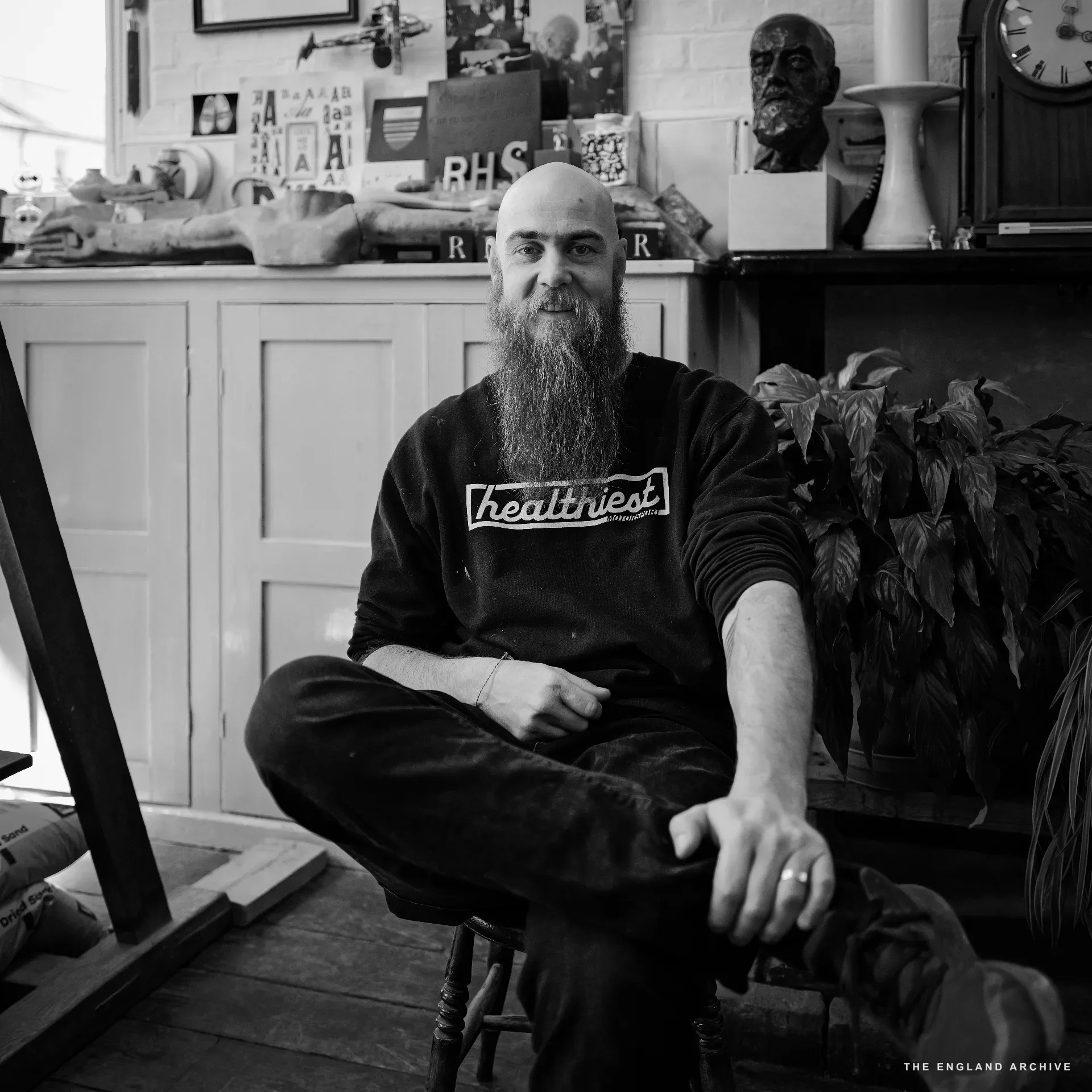
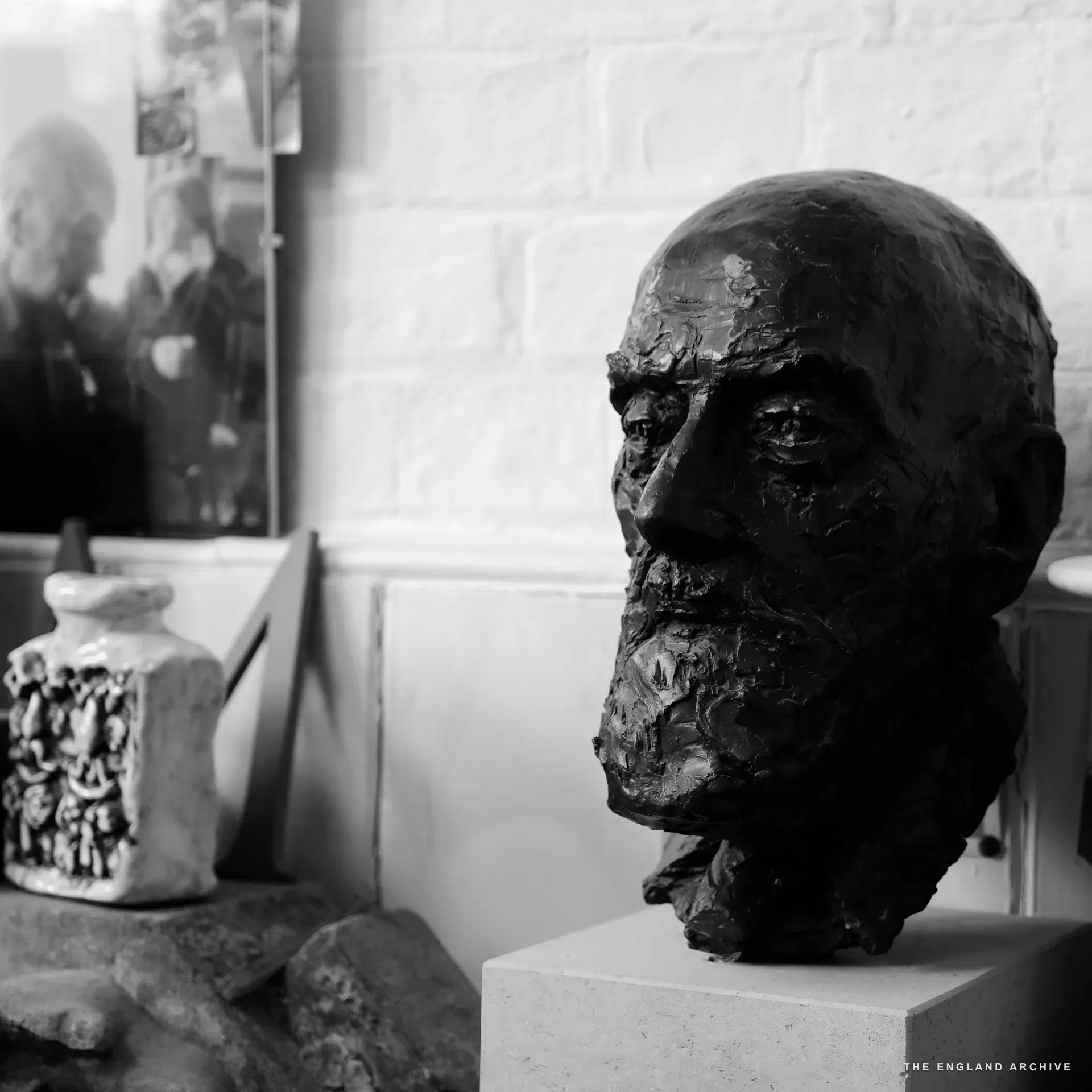
Hallam is the elder of the two sons. He had not been in the front room during the morning; I had not met him until this moment. He came in and I looked up and felt, briefly, that I was about to take a portrait of David Kindersley. Not because Hallam was impersonating his father; because he genuinely carries his father's face. The beard in particular. You could have shown me a photograph of David in his fifties and of Hallam now and I would not have been certain for a second or two which was which. A face that has come down through two generations of the same work.
I took his portrait carefully. The Bronica's film-advance sound counted out the frames. Hallam was easy in front of the camera in the way people are who have lived their whole lives around an object that carves letters into stone - they know what a recording device is for, and they do not need to perform for it.
Leaving
They had to be somewhere after lunch - a funeral, I think; one of them said so in passing, the way you mention a commitment without making it the subject. It was time for us to go. The four hours had been given in full and there was nothing left to ask of them for today.
We gathered by the door. I said that if the Bronica portraits didn't come out well, I had the perfect excuse to come back. Roxanne laughed. Anytime we are here, she said, come back. Lida said the same. Hallam nodded in the way Hallam nods. Vincent was already back at the lightbox.
Before we left they said something I wrote down as quickly as I could. They said that they were privileged to be part of the archive, and that what we were doing was a good thing. I do not know how to describe what it is like to hear that from a workshop that has been cutting letters onto English stone for three generations. I will only say that Bhavani and I walked back to the car in silence for a minute, and then talked about it for the whole drive home.
The thing that stays with me, a day later, is not any single photograph or quote. It is the way the workshop handled us - the tea, the time, the attention, the letting-in of two strangers who had emailed a few weeks earlier with a pitch. They could have done this as a thirty-minute visit. They chose to do it as four hours at the table. They treated the documentation of their craft as if it deserved the same care the craft itself deserves. Of course it does. I just did not expect them to know that about us so fast.
This is the only visit the archive will make to the Cardozo Kindersley Workshop. Four hours was what was given, and four hours is what we have. Everything that matters about the morning has to live in what came out of those four hours: the portraits on the Bronica, the frames on the Q3, the sentences Roxanne said at the benches, the pencil on the wood, Lida's face as she poured the tea. The piece of writing you are reading; the subject pages; the craft essay that surrounds them. The record closes here. What happens in the workshop from tomorrow is theirs; what happens in the archive is the careful treatment of what they allowed us to take home.
Mash Bonigala and Bhavani Bonigala visited the Cardozo Kindersley Workshop on Wednesday 22 April 2026 as part of Year 1 of The England Archive, a three-year documentary photography project recording the people keeping England’s heritage crafts, traditions, landscapes and buildings alive.
The Cardozo Kindersley Workshop is at 152 Victoria Road, Cambridge CB4 3DZ. The workshop accepts commissions and apprentices. If you have a connection to an English heritage craft that you think the archive should document, we would love to hear from you.