Homer Sykes
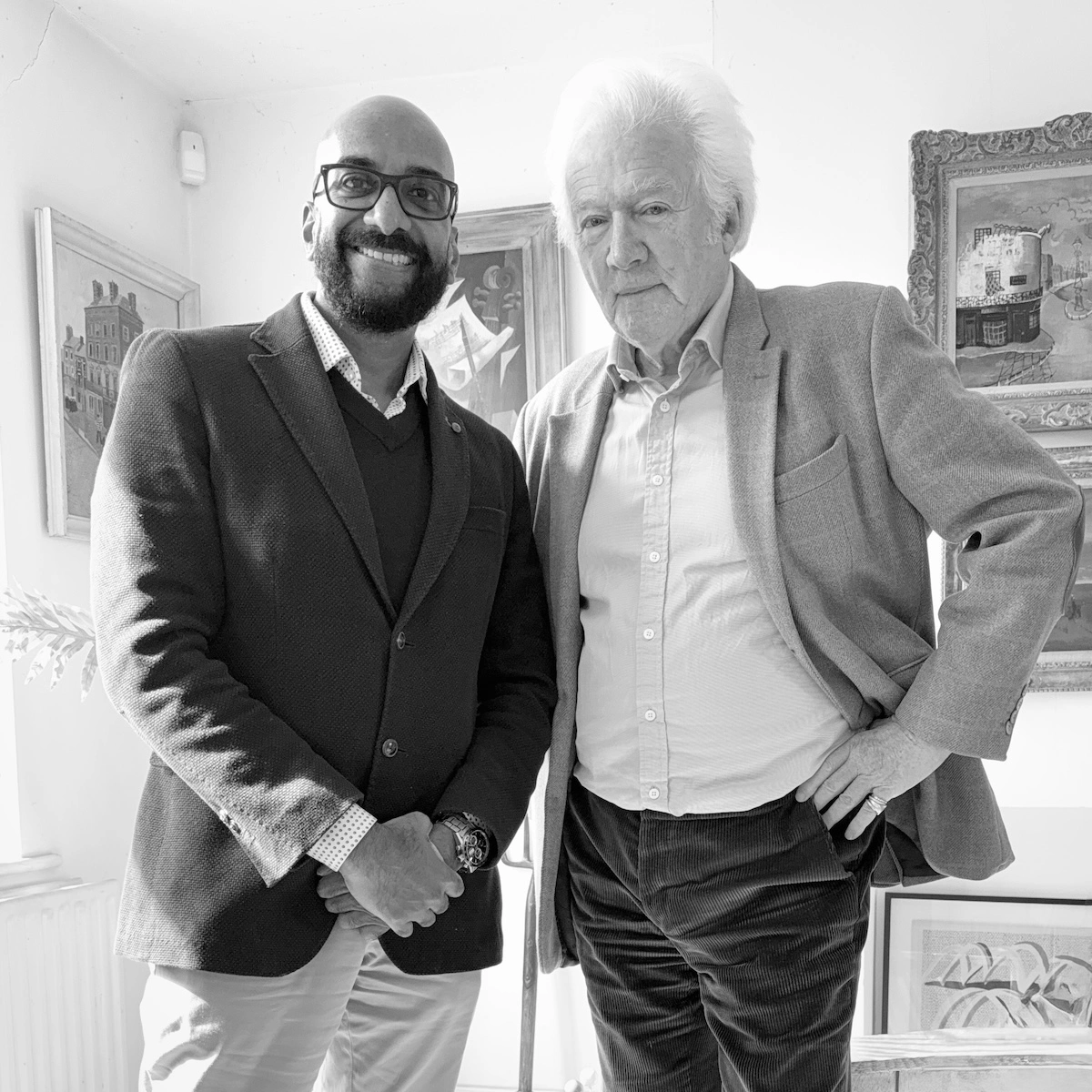
I arrived about fifteen minutes early. Sat in the car, engine off, and just waited. Not because I was nervous exactly, but because it felt right to sit with the moment before walking into it.
When the time came, I knocked. Homer opened the door himself, and my first thought was: this man looks exactly as a photographer of his generation should look. A beautiful tweed blazer. White hair going its own way. Seventy-seven years old and carrying every one of them well, but with this twinkle in his eyes that belonged to someone much younger. The kind of eyes that are still looking, still curious, still finding things funny.
He let me in.
The house told you everything before he said a word. The front room, the living room - it was the home of someone who had spent a life paying attention. Gorgeous black and white prints on the walls. Paintings. And then facing you as you walked in, a floor-to-ceiling bookcase that must have held hundreds of books. Photography, painting, travel, politics, science. Every shelf a different conversation. I stood there for a moment just taking it in.
Homer asked if I wanted tea. He didn’t wait for an answer, just walked into the kitchen and started making it. The kettle had just boiled. He poured, added a bit of milk, stirred it, and handed it to me. No fuss. That small gesture told me a lot about the man.
We sat down and we talked for hours.
Homer is funny. Properly funny, the dry kind, where the joke has already landed before you’ve realised he made one. But underneath the wit there was this depth of knowledge and generosity that I wasn’t quite prepared for. He listened to me talk about the project at length, and then he gave me his honest thoughts - not just encouragement but real observations, things to watch for, places where a project like this can lose its way. He talked about complexity and how it becomes the enemy over time.
Simplify, he kept saying. Get to the essential thing and stay there.
And then he talked about photographs.
I have heard versions of these ideas before. But there is a difference between reading something and hearing it from someone who has actually done it for fifty years.
We spent a long time with An Annual Affair. He opened my copy on the table and walked me through specific images - what was happening, what he was thinking, how he was trying to capture the reality of the thing rather than a cleaned-up version of it. His memory was extraordinary. At one point I mentioned a location and he reached over, opened the book without hesitating, and turned straight to the page. The exact photograph, the exact place. I was genuinely startled. Fifty years on and he still knows where every image lives.
We talked about access and how to approach people at events. About what happens behind the scenes and why that matters as much as the ceremony itself. About the difference between being present and just being there.
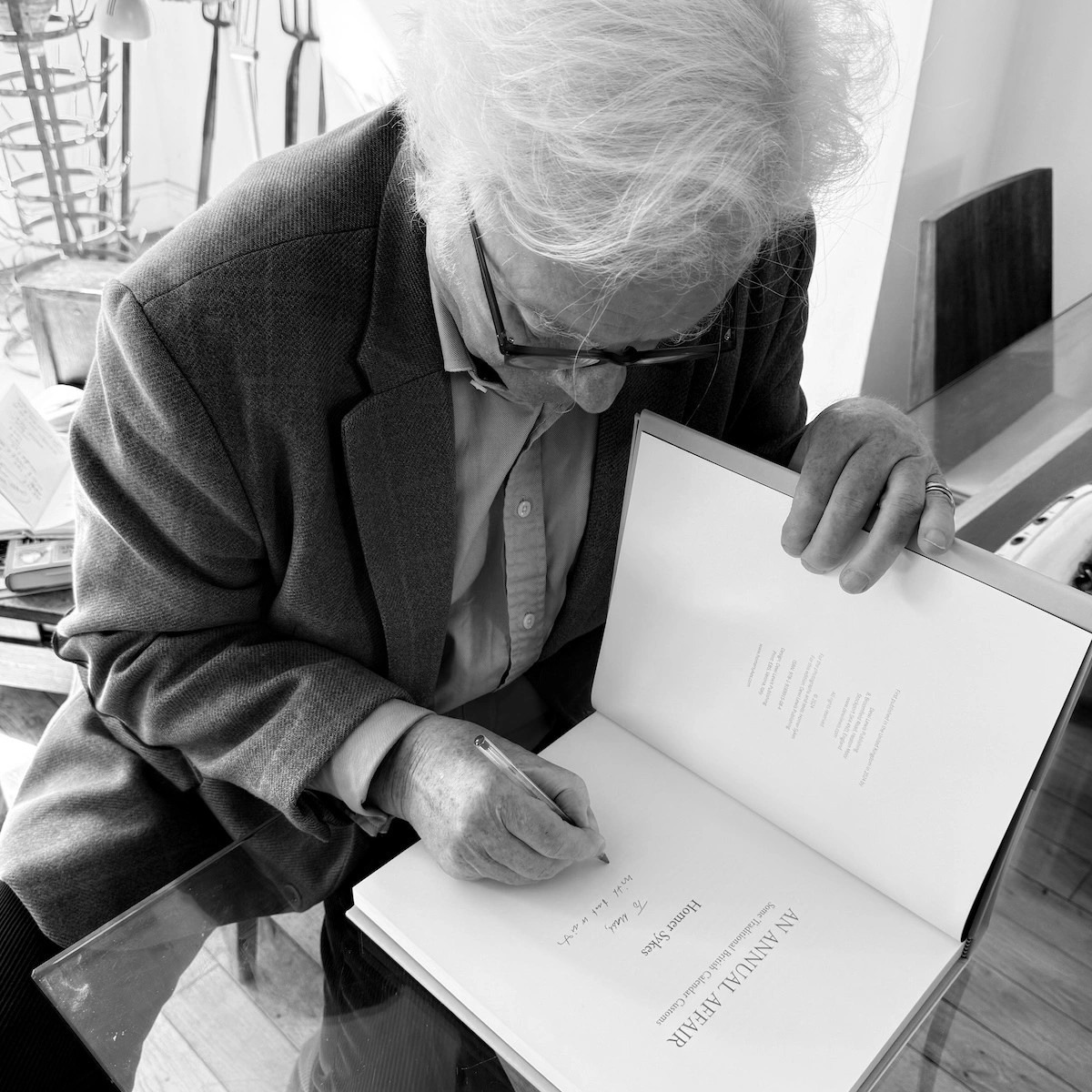
Near the end, I asked him to sign my copy. He took the book and signed it on the title page. To Mash, with best wishes.
And then he mentioned Hunting With Hounds.
He brought it over and I picked it up. Square format. Black and white with exactly the tonal quality I have been chasing - rich, deep, not manipulated into drama but honest and considered. I told him it was exactly what I was aiming for. He looked at me for a moment, then said: I’ve got a copy for you.
He went and found a brand new copy, opened it, and signed it to Bhavani.
I drove home replaying the whole thing. The tea, the books, the conversation, the way he talked about photography like it was still the most serious and worthwhile thing a person could do with their time. I think it is. I think that visit confirmed something I already believed but needed to hear out loud.
I have a lot of work ahead of me. I know that more clearly now than I did this morning. But I also know more precisely what kind of work it is.