Regions/ East Anglia/

Long Melford

A Suffolk wool village built by the late-medieval cloth trade, sitting on ground that has been occupied since roughly 8,300 BC. Holy Trinity church, the mile-long Green, Melford Hall, Kentwell Hall and Trinity Hospital are the visible surface; the lived memory of the village is held by the people who grew up inside it.

550Years since Holy Trinity was rebuilt
1Mile of village Green
10kYears of continuous occupation
71Photographs in the archive

AR-0026

County
Suffolk
District
Babergh
Parish
Long Melford
Postcode
CO10 9
Grid ref
TL 865 460
Region
East Anglia

Long Melford sits at the top of the Stour Valley, three miles north of Sudbury, on the Suffolk side of the Essex border. The village grew rich in the late-medieval cloth trade, and the wealth of that period is still legible in the place: Holy Trinity, rebuilt between 1467 and 1497 by John Clopton as one of the longest parish churches in England; Melford Hall, given to the Cordell family after the Dissolution and held by the Hyde Parkers since 1768; Trinity Hospital, founded by Sir William Cordell in 1573 and still housing low-income and elderly residents of the parish today.

The Green is the other great piece of the village. Over a mile long, broad and open, edged on both sides by houses set back behind grass verges. The Manor of Melford still technically owns the Green and the verges along Hall Street. Until Dutch elm disease took them in the 1980s, a stand of great elms dominated its length - one of them among the largest in Britain. S R Badmin’s 1940 watercolour Long Melford Green on a Frosty Morning (now in the V&A) records the trees as they were.

Under all of this lies much older ground. The 2011 BBC excavation uncovered a section of Roman road and Iron Age material; Mesolithic finds nearby push the settlement story back to roughly 8,300 BC. Long Melford is not a medieval village on older ground. It is the latest layer of a place that has been continuously occupied for ten thousand years.

The archive’s work in Long Melford is led by the Long Melford Historical and Archaeological Society (LMHAS), founded in 1969 and meeting at the Old School Community Centre. Two of the society’s members - Julie Thomson and Melonie Clubb - walked Mash and Bhavani through the village on 18 April 2026. That first visit is the starting point; the photographic record of the village itself, and the 4x5 portraiture, will follow on later visits.
History

Ten thousand years of occupation

8,300 BC - c. AD 410

Prehistoric to Roman

The settlement story of Long Melford does not begin with the wool trade. Mesolithic flint tools found in the parish push continuous human occupation back to roughly 8,300 BC. Iron Age material recovered from the same ground shows that the river crossing here was a meaningful place long before Rome arrived.

In 2011, Michael Wood and a team of villagers excavated a section of Roman road for the BBC series The Great British Story. The find was significant - it showed that the Roman presence here was deeper and more organised than anyone had realised, with signs of a substantial settlement along the road. Long Melford is not a medieval village sitting on older ground. It is the latest layer of a place that has been continuously occupied for ten thousand years.

c. 1086 - 1450

The wool village takes shape

The Domesday Book records Melford (Mellaforda, meaning "mill ford" - the ford across Chad Brook that gives the village its name) as a substantial settlement in 1086. Through the medieval centuries the parish grew rich from the East Anglian cloth trade, one of the economic engines of late-medieval England. Wool was cleaned, spun, dyed and woven on a scale that funded the rebuilding of the parish church and gave the Clopton family the wealth that still shapes the skyline.

By the mid-fifteenth century the village held several coaching inns along what is now Hall Street, a population wealthy enough to support extensive rebuilding, and a trading position that made it one of the more prosperous places in Suffolk. The Bull, built around 1450 as a wool merchant’s house, survives from this period.

1467 - 1603

Clopton, Cordell, and the Tudor century

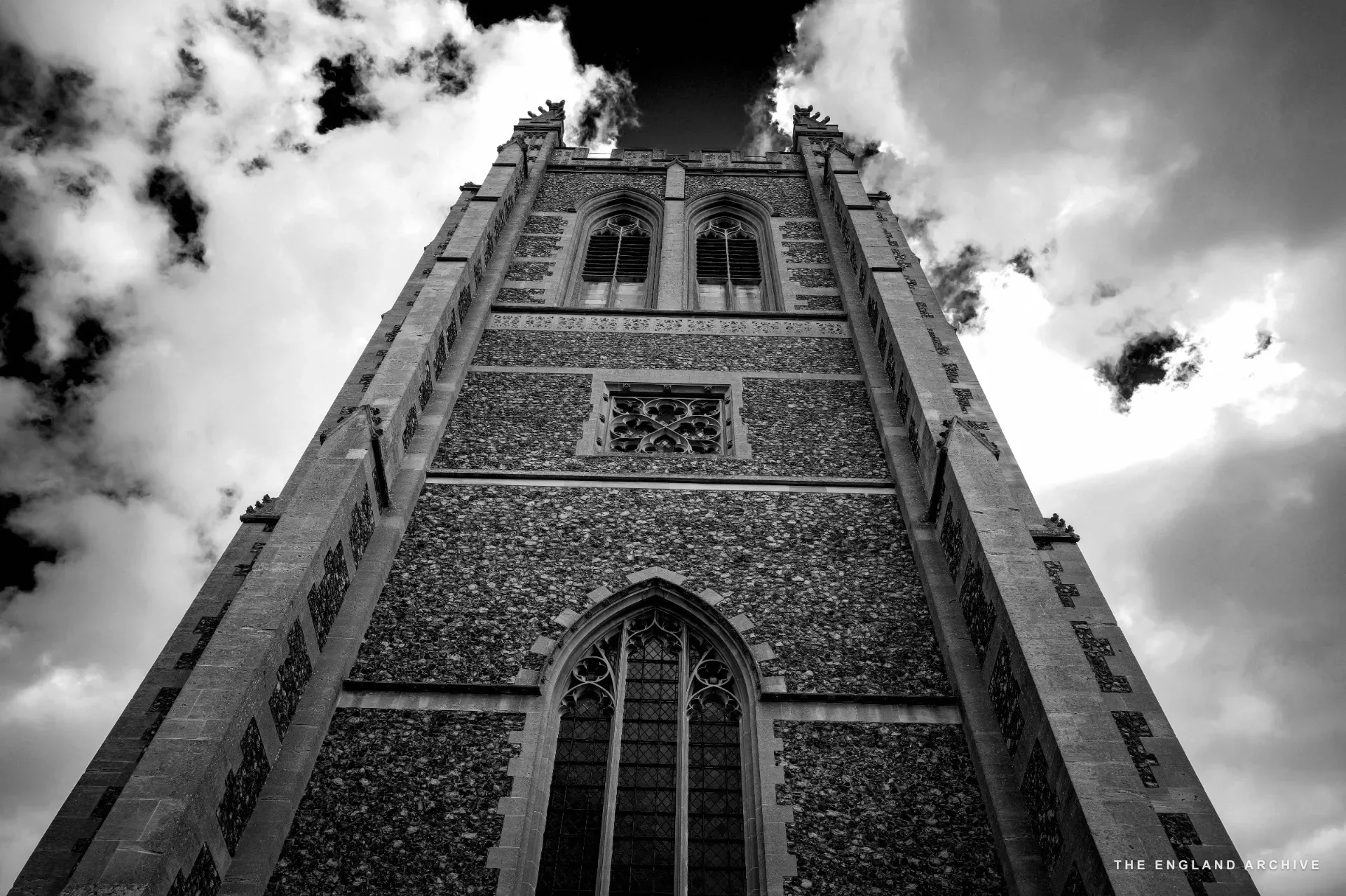
Between 1467 and 1497, John Clopton rebuilt Holy Trinity on a scale that no village had any business supporting - nearly 250 feet long, in the full Perpendicular style, with flushwork flint and stone chequerboards along the length of the nave. One rich family in one generation built something that has now stood for 550 years.

After the Dissolution of the Monasteries, the Melford estate passed to the Cordells. Sir William Cordell, who rose far under the Tudors (Master of the Rolls, Speaker of the House of Commons in 1558), rebuilt Melford Hall and entertained Queen Elizabeth I there in 1578. In 1573 he endowed Trinity Hospital - an almshouse for twelve aged men - with enough land to support it in perpetuity. The hospital still does exactly what Cordell set it up to do, more than four and a half centuries later.

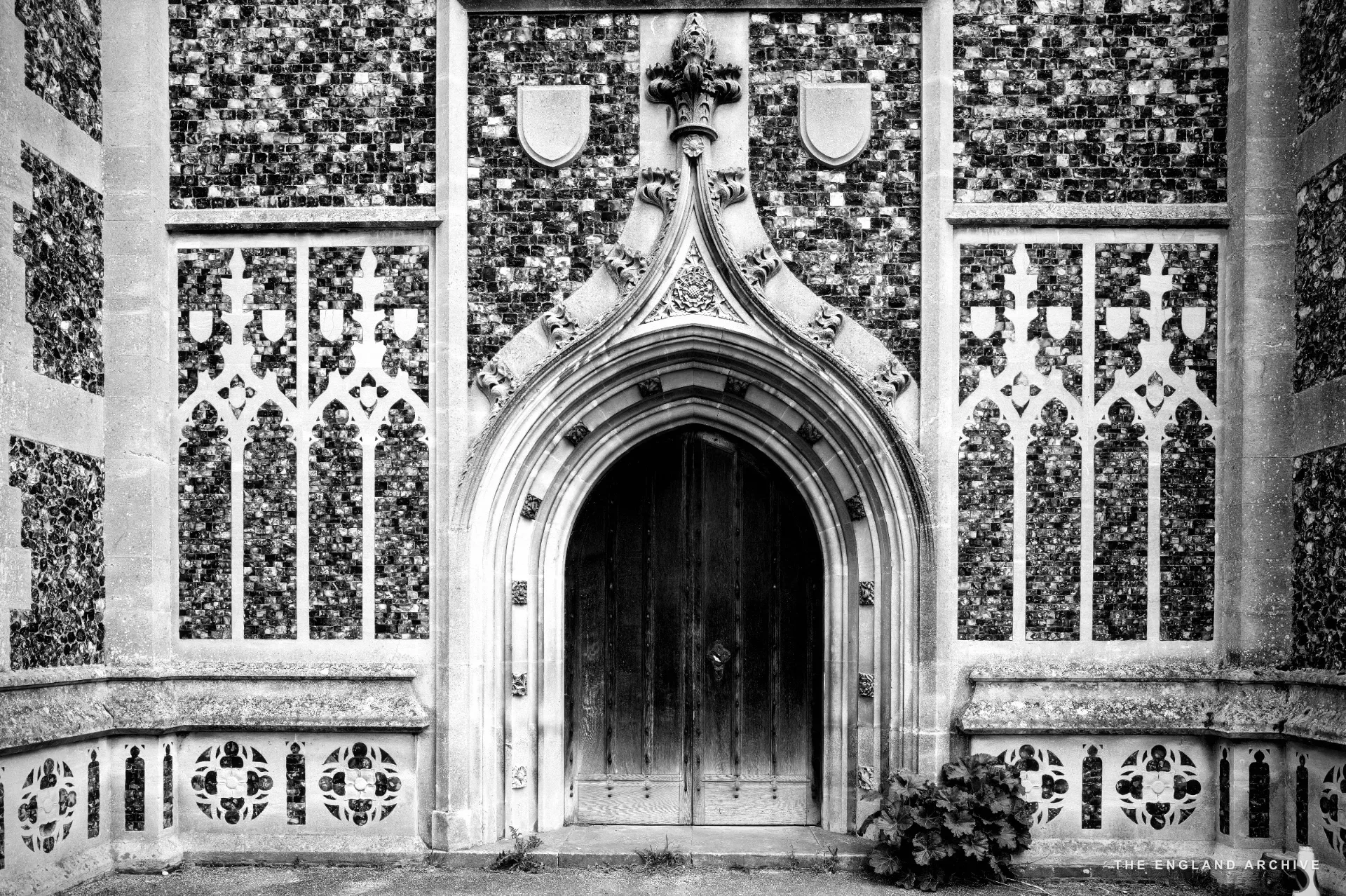
The arched Perpendicular doorway of Holy Trinity, flushwork flint and stone panels either side, a plant in the corner.
IM-0134

1700 - 1900

Georgian refacing and Hyde Parker patronage

By the early eighteenth century the wool trade had declined, but the village remained prosperous enough to reface many of its medieval frontages in the Georgian and Regency styles - which is why a building you pass on Hall Street often looks later than it actually is. Walk inside and the Tudor structure is still there. Blue plaques along the street mark notable residents and events.

The Hyde Parker family - distinguished naval officers, including the admiral who commanded the Battle of Copenhagen in 1801 - took Melford Hall in 1768 and have held it ever since. Beatrix Potter was a cousin and visited often; some of her sketches still hang in the house. The Stour Valley Railway opened in 1865 and a branch line reached Bury St Edmunds, bringing the village into the national rail network.

In 1633 - earlier than this period but part of the same arc - the raised outer wall of Trinity Hospital was built, four or five feet of the Green given up to it, after the brethren complained that their fruit was being stolen.

A three-storey Georgian red-brick townhouse above a modern shopfront on Hall Street.
IM-0092

1900 - 1999

The twentieth century

Edmund Blunden, one of the finest First World War poets, is buried in Holy Trinity churchyard - a quiet anchor of twentieth-century literature in the village. The medieval tower of Holy Trinity had fallen in 1710; the replacement built in 1903 was matched so carefully to the rest of the church that the seam is almost invisible from the road.

The twentieth century brought substantial losses. The Stour Valley branch to Bury St Edmunds closed to passengers in April 1961; the main line through Melford closed in 1967 under the Beeching cuts. The village station building survives as a private house, and much of the trackbed is preserved as the Melford Walk. Dutch elm disease took the great elms of the Green in the 1980s - including one among the largest in Britain.

Set against these losses, the Long Melford Historical and Archaeological Society was founded in 1969 and has been documenting the parish ever since. The BBC filmed Lovejoy here through the eighties and nineties, of which just a fraction remain - Ian McShane knew where the real stock was.

2000 - present

Today

In 2011 the BBC series The Great British Story returned to Long Melford with Michael Wood and Dr Carenza Lewis for a community dig that opened up parts of the Roman road and produced the first substantial modern evidence of the depth of occupation here. The artefacts are on display in the Long Melford Heritage Centre, which was set up the same year by John Nunn and Rob Simpson and is still run by volunteers.

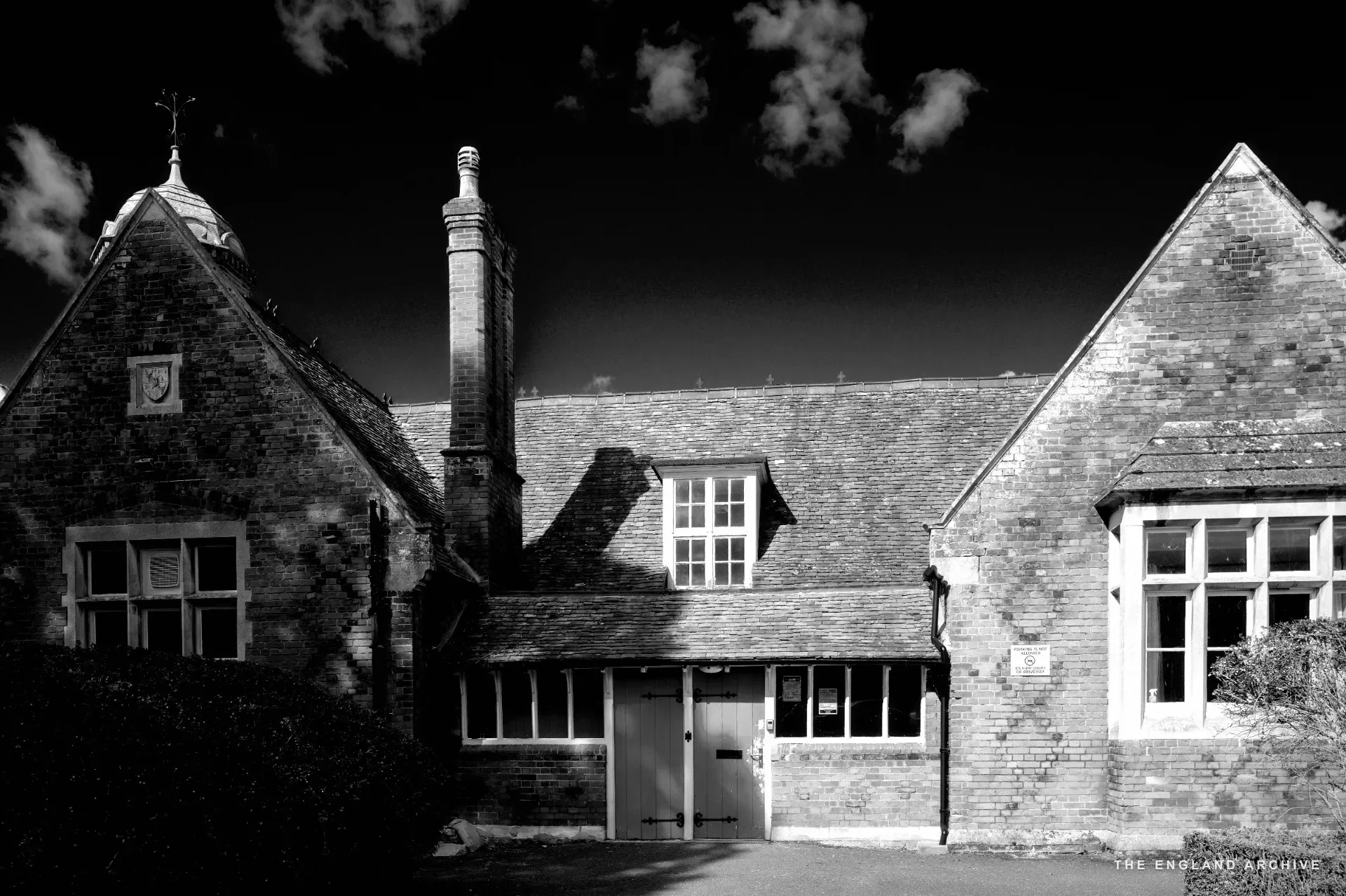
LMHAS continues to meet at the Old School Community Centre, its membership carrying the detailed local knowledge that makes the village legible. Melford Hall remains open through the National Trust; Kentwell still runs its Tudor re-enactments through the summer; Trinity Hospital still houses the residents its founder intended. The parish church is still the parish church - open every day, and still where the village marries, buries, and marks its year.

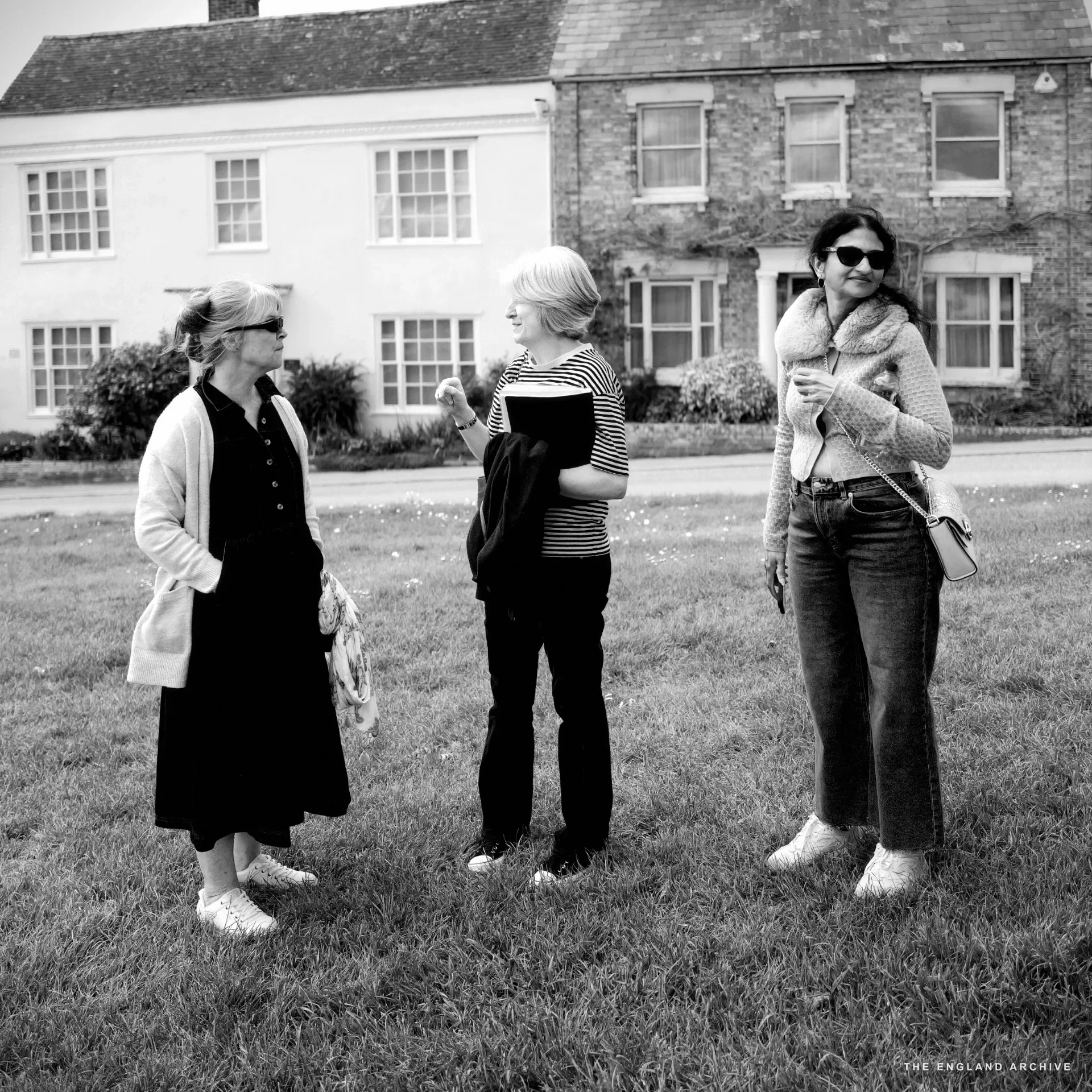
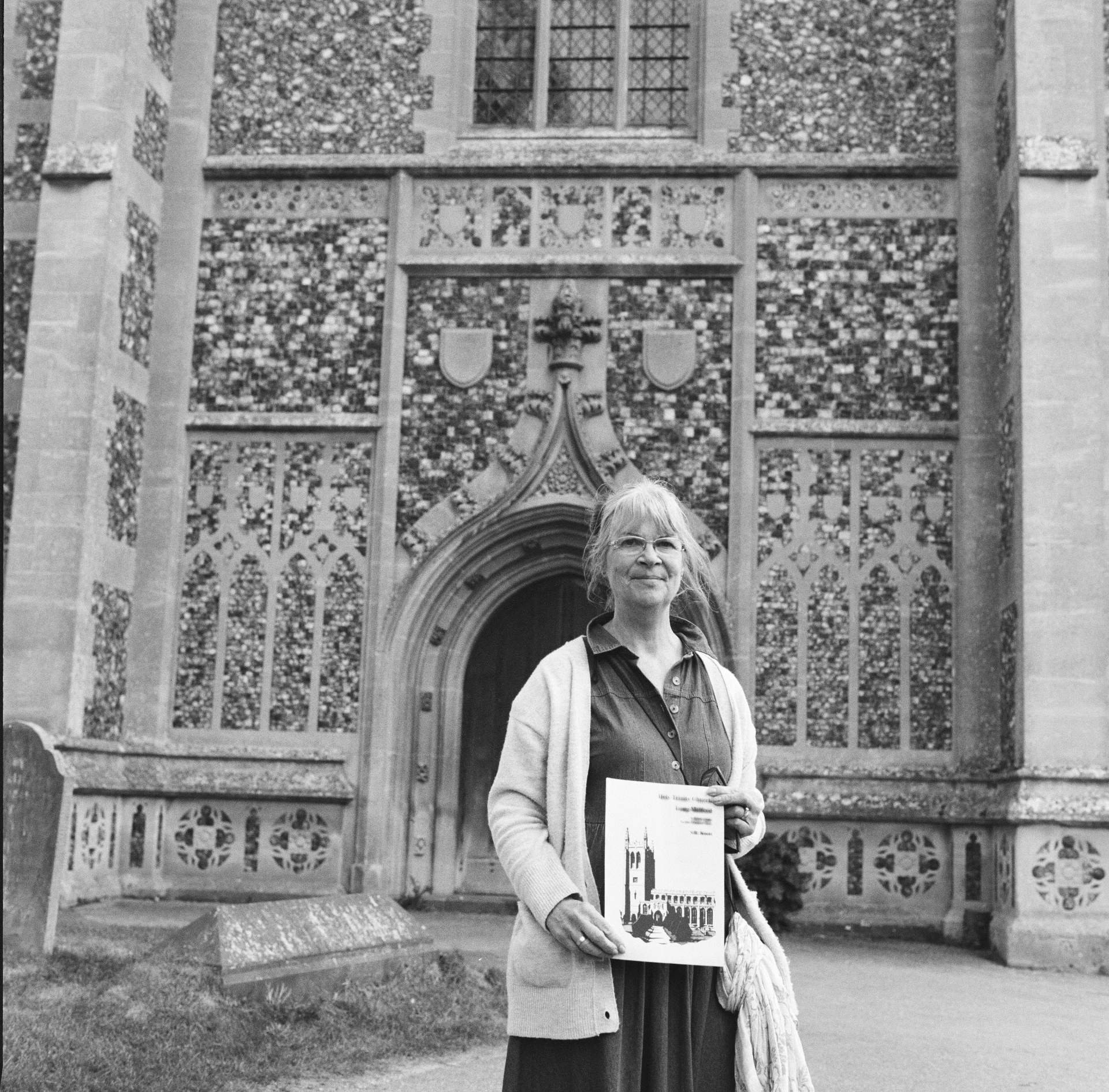
Julie Thomson, Melonie Clubb and Bhavani standing together on the grass of the Green, pale pink and cream Georgian houses behind them.
IM-0141

The places

Notable buildings and landscape

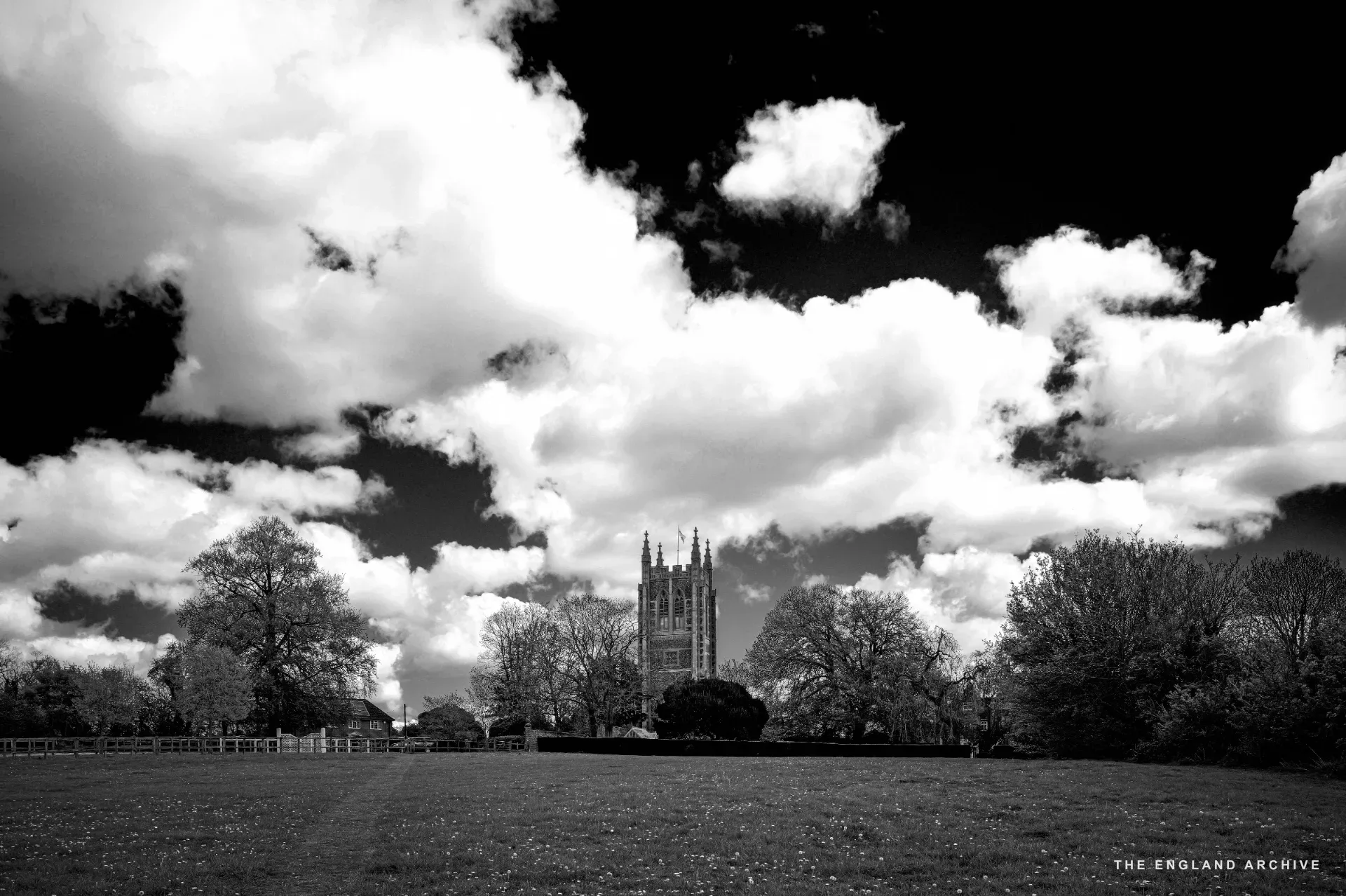
An upward view of Holy Trinity's tower, its flint and stone chequerboard flushwork catching the light, against a blue sky with clouds.
IM-0133

Parish church

Holy Trinity Church

Rebuilt 1467-1497 · Grade I listed

One of the longest parish churches in England, nearly 250 feet from west front to east end, built in the full Perpendicular style during the peak of Suffolk’s late-medieval wool wealth. The walls are patterned with flushwork flint and stone in chequerboards that catch the light differently at every time of day. The Clopton Chantry Chapel holds 15th-century painted vines and the words of an Old English poem, The Vine of Life, by the monk John Lydgate. Medieval stained glass survives in several of the windows, including the Hare Window - three hares chasing each other in a circle, each sharing ears with the next.

The nave runs straight to the east window and the eye keeps running. Beyond it sits the Lady Chapel, practically a small church in its own right, with a painted multiplication table added in the 18th century when it was briefly used as the village school. Edmund Blunden, the First World War poet, is buried in the churchyard. The current tower was built in 1903 after the medieval original fell in 1710, carefully matched to the rest of the church; you would not spot the difference from the road.

Address
Church Walk, Long Melford, Sudbury, Suffolk CO10 9DT
Open
Daily. Nov-Mar 10am-4pm. Apr-Jun 10am-5pm. Jul-Aug 10am-6pm. Sep-Oct 10am-5pm. Sundays open from 12:30pm (service at 10:30am). Viewing may be restricted during weddings, funerals or other services.

Tudor country house, National Trust

Melford Hall

Built c. 1547-1578 · Grade I listed

An imposing red-brick Tudor mansion at the north end of the Green, turreted at the corners and set behind a long wall and a moat. Given to the Cordell family after the Dissolution of the Monasteries and rebuilt by Sir William Cordell, who rose far under the Tudors, served as Master of the Rolls and, in 1558, as Speaker of the House of Commons. He entertained Queen Elizabeth I here in 1578.

The Hyde Parker family have held the Hall since 1768. They gave it to the National Trust but still live there - the arrangement you see in many of the better-preserved country houses in this part of England. Beatrix Potter was a cousin of the Hyde Parkers and visited often; some of her animal sketches still live in the house. The brick has weathered into a colour that photographs well in almost any light.

Address
Hall Street, Long Melford, Sudbury, Suffolk CO10 9AA
Open
Wednesday to Sunday and Bank Holidays, 12pm-4pm. Last admission 3:45pm. House closes for the winter season; check the National Trust page for current dates.

Moated Tudor country house

Kentwell Hall

Built c. 1500-1550 · Grade I listed

One of the finest moated Tudor houses in England, set in twenty-five acres of gardens and parkland at the north end of the village. Privately owned and best known for its long-running living-history re-creations that invite visitors to step into the 16th century in scale and depth unmatched by any other house in the country.

The scale of the grounds, the preserved rare-breeds farm, the gardens and the quality of the re-creation events together make Kentwell one of the most important working country houses in Suffolk. Not documented in the archive yet; a subject-page visit is on the long list.

Address
Long Melford, Sudbury, Suffolk CO10 9BA
Open
Apr-Sep, Wednesday-Sunday. 11am-5pm during school holidays; 11am-4pm otherwise. House closes one hour before the gardens. Check the Kentwell Hall site for current events.
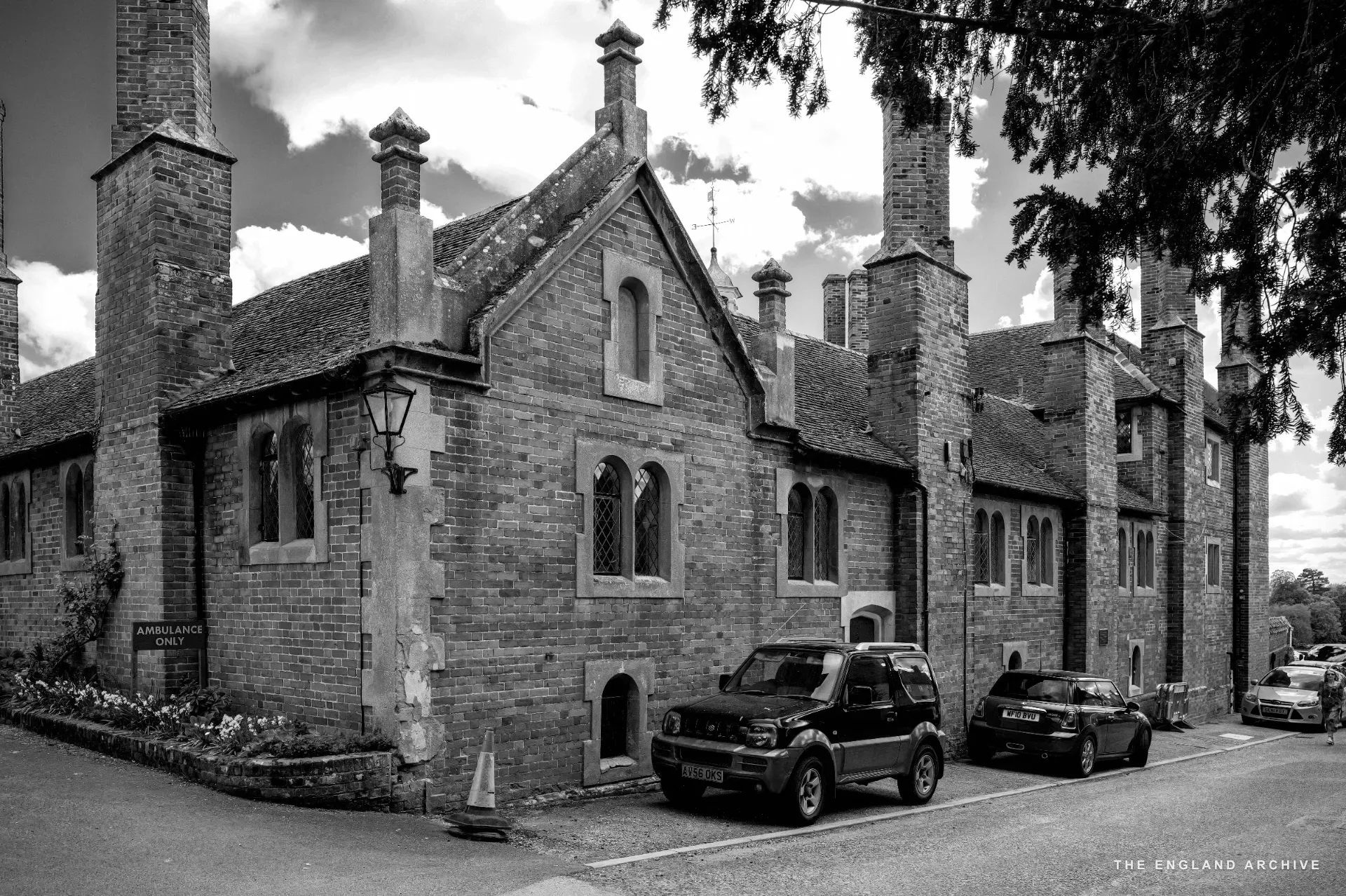
The Tudor red-brick almshouse range of Trinity Hospital with tall chimneys and Gothic windows, cars parked at the side elevation.
IM-0139

Tudor almshouse, still in use

Holy & Blessed Trinity Hospital

Founded 1573; outer wall 1633 · Grade I listed

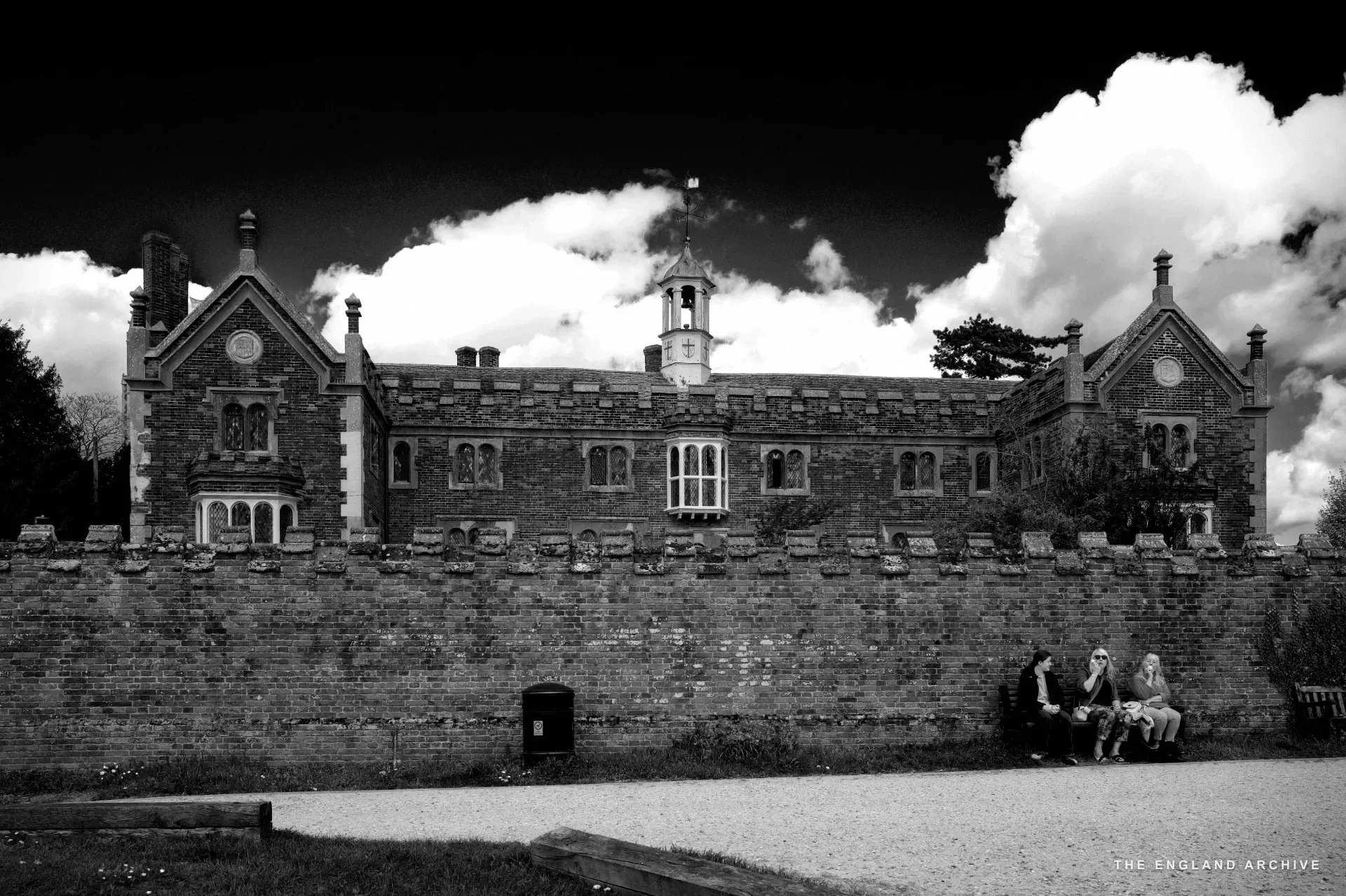
A Tudor red-brick almshouse quadrangle standing immediately next to Holy Trinity, sharing its plot of ground. The word hospital here means hospitality, not medicine. Sir William Cordell - the same man who rebuilt Melford Hall - founded it in 1573 after buying the Melford estate, endowing it with enough land to support twelve aged men, a warden, and a helper. Residents had to be over 55, drawn from Long Melford or an adjacent parish, and admission was controlled by the rector and two churchwardens.

The hospital is still doing what Cordell set it up to do. Eleven flats are occupied by low-income or elderly residents of the parish, a twelfth is reserved for the warden, and the trustees still meet and administer the charity. The raised outer wall dates from 1633, added when the brethren complained that their fruit was being stolen; four or five feet of the Green had to be given up to accommodate it.

Address
The Green, Long Melford, Sudbury, Suffolk CO10 9DN
Open
A working almshouse - not generally open to the public. Exterior and garden wall are visible from the Green.
A long view of Trinity Hospital behind its raised red brick outer wall, central cupola above, three figures seated on a bench against the wall.
IM-0140

Historic common, roughly one mile long

The Green

Medieval or earlier

An impressive swathe of broad open grass running north-south in the village, edged on one side by houses set back behind grass verges. One of the most celebrated pieces of English village landscape, owned by the Manor of Melford along with the verges that line Hall Street. Until the 1980s a stand of great elms dominated its length, one of them among the largest in Britain; the V&A holds S R Badmin’s 1940 watercolour Long Melford Green on a Frosty Morning, which records the elms as they were.

Dutch elm disease took the trees. The Green is more open now than anyone alive remembers it being as a child. The loss is part of the lived memory of the village - raised continually in conversation with older residents, and a recurring thread in the archive’s Rememberer material.

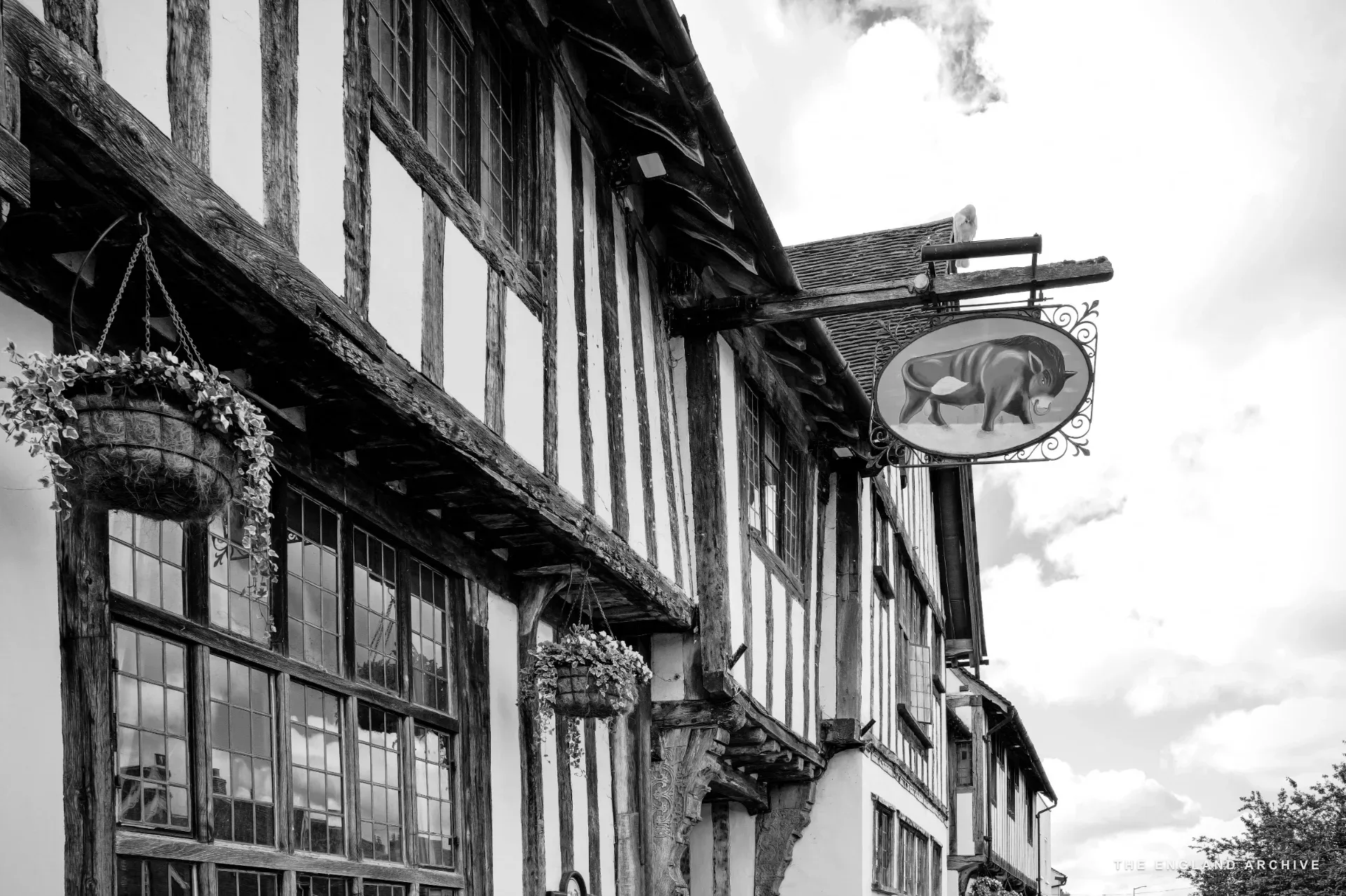
The Bull Hotel's Tudor timber-framed frontage with hanging flower baskets and a painted pub sign.
IM-0087

Medieval inn, continuously operating since c. 1580

The Bull Hotel

Built c. 1450 · Grade I listed

A big black-and-white timber-framed frontage on the east side of Hall Street, built around 1450 as a wealthy wool merchant’s house and operating as an inn since roughly 1580. That is 450 years of continuous hospitality on the same site. The Tudor beams and the heavy carved doorway surround are all still there - the Georgian refacing that shaped most of Hall Street never reached the Bull’s facade. John Lennon stayed here for a spell in the 1960s.

Address
Hall Street, Long Melford, Sudbury, Suffolk CO10 9JG

Village museum and archaeology display

Long Melford Heritage Centre

Opened 2011

Tucked behind the Village Memorial Hall down Chemist Lane, the Heritage Centre holds the finds from the 2011 Long Melford Big Dig, Roman artefacts recovered over the years, and a large display of village photographs from the 19th century through to the 1960s. Opened in 2011 after the filming of the BBC series The Great British Story with Michael Wood and Dr Carenza Lewis, whose associated community dig surfaced material from the village’s Roman and medieval past. Set up and still run by a band of volunteers.

Address
Rear of the Village Memorial Hall, Chemist Lane, Long Melford, Suffolk CO10 9JR
Open
Apr-Nov. Saturday 10am-4pm, Sunday 12pm-4pm, Wednesday afternoons 2pm-4pm. Admission free.

The people

Biographies

John Clopton

Wool merchant; principal financier of the rebuilt Holy Trinity c. 1423 - 1497

A wool-wealthy Long Melford squire whose family had held land in the parish for generations. Clopton financed the near-complete rebuilding of Holy Trinity between 1467 and 1497, producing a church whose scale was unmatched by any other parish building in Suffolk. His chantry chapel survives inside the church, its ceiling painted with vines and the words of a John Lydgate poem.

Sir William Cordell

Master of the Rolls; rebuilder of Melford Hall; founder of Trinity Hospital c. 1522 - 1581

Lawyer and Tudor statesman who rose to become Master of the Rolls and, in 1558, Speaker of the House of Commons. Cordell bought the Melford estate after the Dissolution and rebuilt Melford Hall; in 1573 he endowed Trinity Hospital with enough land to support twelve aged men of the parish in perpetuity. He entertained Queen Elizabeth I at Melford Hall in 1578 and is buried in Holy Trinity, where his tomb can still be seen.

The Hyde Parker family

Baronets; holders of Melford Hall since 1768 1768 - present

A line of Suffolk baronets, several of them distinguished naval officers (most famously Sir Hyde Parker, commander at the Battle of Copenhagen in 1801). The family has held Melford Hall since 1768 and still lives in the house despite transferring it to the National Trust in the twentieth century. Beatrix Potter was a cousin and visited often; some of her original animal sketches still hang on the walls.

Edmund Blunden

First World War poet; buried at Holy Trinity 1896 - 1974

One of the most respected First World War poets - his memoir Undertones of War (1928) is still required reading for anyone working on the literature of the trenches. Blunden is buried in Holy Trinity churchyard; his grave is a quiet but important stop for readers making a literary pilgrimage to Suffolk.

Julie Thomson

Amateur Historian; committee member, LMHAS

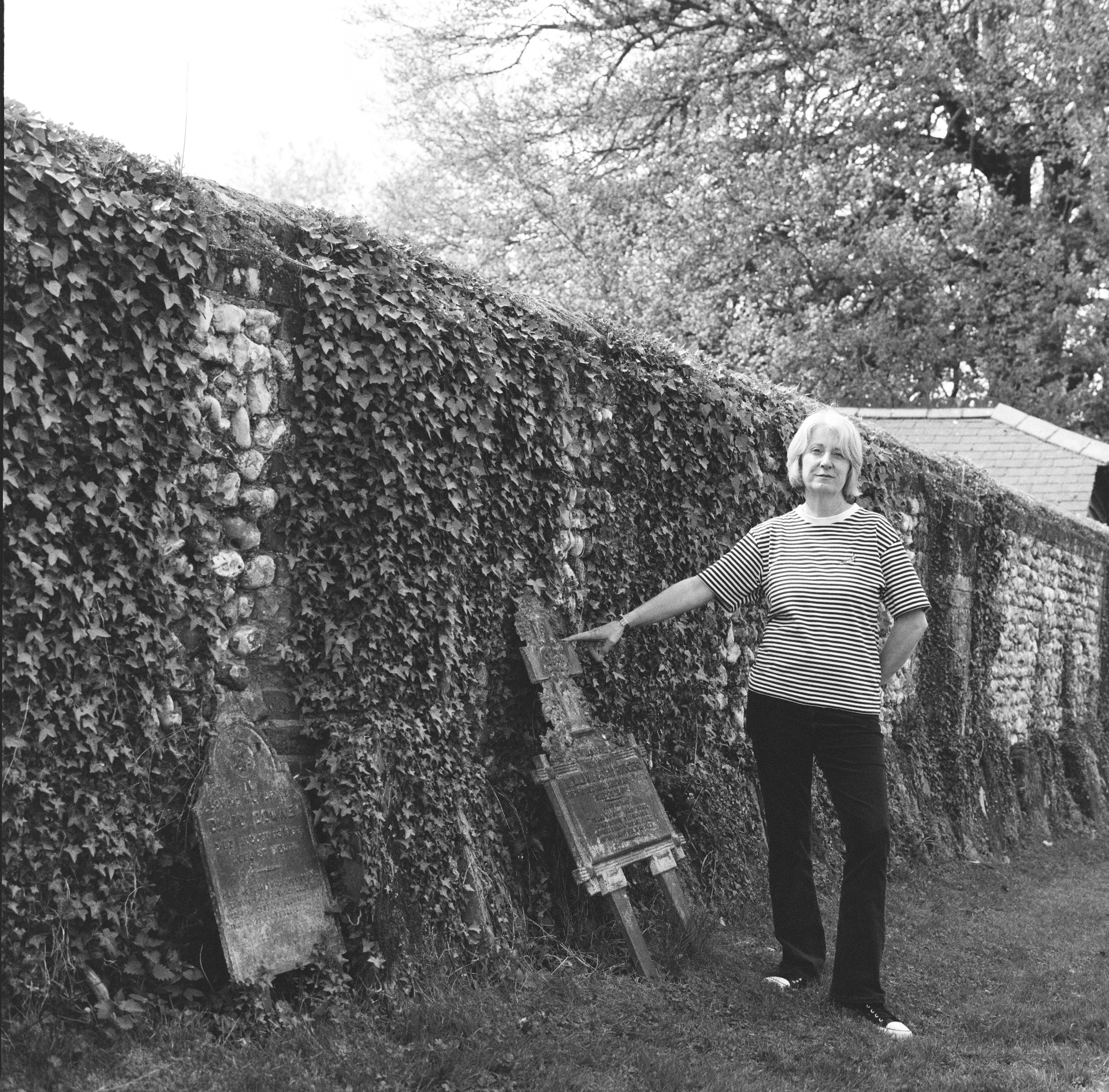
Local historian and long-standing member of the Long Melford Historical and Archaeological Society. Julie holds the documentary and architectural record of the village - dates, names, buildings, papers - and was one of the two guides on the archive’s first walk through the village in April 2026.

Melonie Clubb

Rememberer; LMHAS; daughter of a founding member

Melonie carries the lived texture of the village. Her father was one of the founding members of the Long Melford Historical and Archaeological Society in 1969. She was born and raised in the parish and holds the generational memory - who lived in which house, which trees were tallest on the Green before Dutch elm disease, the stories that do not make it into any printed guide.

Local institutions

Societies, councils and trusts

Long Melford Historical and Archaeological Society

Local history society · founded 1969

The scholarly and civic home of Long Melford’s local history. LMHAS meets at the Old School Community Centre; members lead guided walks, publish pamphlets and booklets, and run the Long Melford Heritage Centre. The society is the first place to go for anyone researching any aspect of the parish’s past.

Email
LMHAS1969@outlook.com
Web
www.lmhas.co.uk

Long Melford Parish Council

Local government

The parish council administers local services, manages the Melford Walk footpath, and is the point of contact for all civic matters in the village. The council offices sit on Cordell Road.

Address
Parish Offices, Cordell Road, Long Melford, Suffolk CO10 9HZ
Email
clerk@longmelford-pc.gov.uk
Web
www.longmelford-pc.gov.uk

Long Melford Heritage Centre

Village museum and archive · founded 2011

Opened in 2011 after the BBC Great British Story community dig, the Heritage Centre holds finds from the 2011 excavation and a photographic archive of the village from the nineteenth century to the 1960s. Set up and run by volunteers, it sits behind the Village Memorial Hall down Chemist Lane and opens weekends and Wednesday afternoons from April through November.

Address
Rear of the Village Memorial Hall, Chemist Lane, Long Melford, Suffolk CO10 9JR
Web
melfordheritage.org.uk

The Chadbrook Benefice

Anglican parish grouping

Holy Trinity is part of the Chadbrook Benefice, which groups several rural Suffolk parishes under a shared parish administration. The benefice office handles weddings, baptisms, funerals, and general enquiries for the church.

Email
chadbrookoffice@gmail.com

Local businesses

Pubs, cafes and shops

The archive is not a commercial directory. These are the businesses that form the working village - listed so visitors can find them, and so the record is complete.

Hotels

  • The Black Lion

    A 15th-century coaching inn with ten letting rooms overlooking the Green, a 40-cover restaurant built around seasonal Suffolk produce, and the most prestigious address in the village.

    Address
    The Green, Long Melford, Sudbury, Suffolk CO10 9DN
    Phone
    01787 312356
  • The George and Dragon Hotel

    A 15th-century coaching inn on Hall Street with twelve letting rooms, an ample garden, and a kitchen known for real ales and home-cooked food. Sunday carvery through the afternoon.

    Address
    Hall Street, Long Melford, Sudbury, Suffolk CO10 9JA
    Phone
    01787 371285

Restaurants

  • Scutchers Restaurant

    Fine dining restaurant run by head chef Nick Barrett for close to three decades, on Westgate Street at the northern edge of the village. The old pub sign preserved in the Old School commemorates the original Scutchers Arms.

    Address
    Westgate Street, Long Melford, Sudbury, Suffolk CO10 9DP
    Phone
    01787 310200

Cafes

  • The Long Melford Tea Room

    Vintage tearoom on Hall Street with loose-leaf tea in china cups, home-made cakes, quiches, and light lunches. Afternoon tea by appointment; private hire available.

    Address
    1 Dudley House, Hall Street, Long Melford, Sudbury, Suffolk CO10 9JR
    Phone
    01787 881361

Bookshops

  • Oldspeak Bookshop

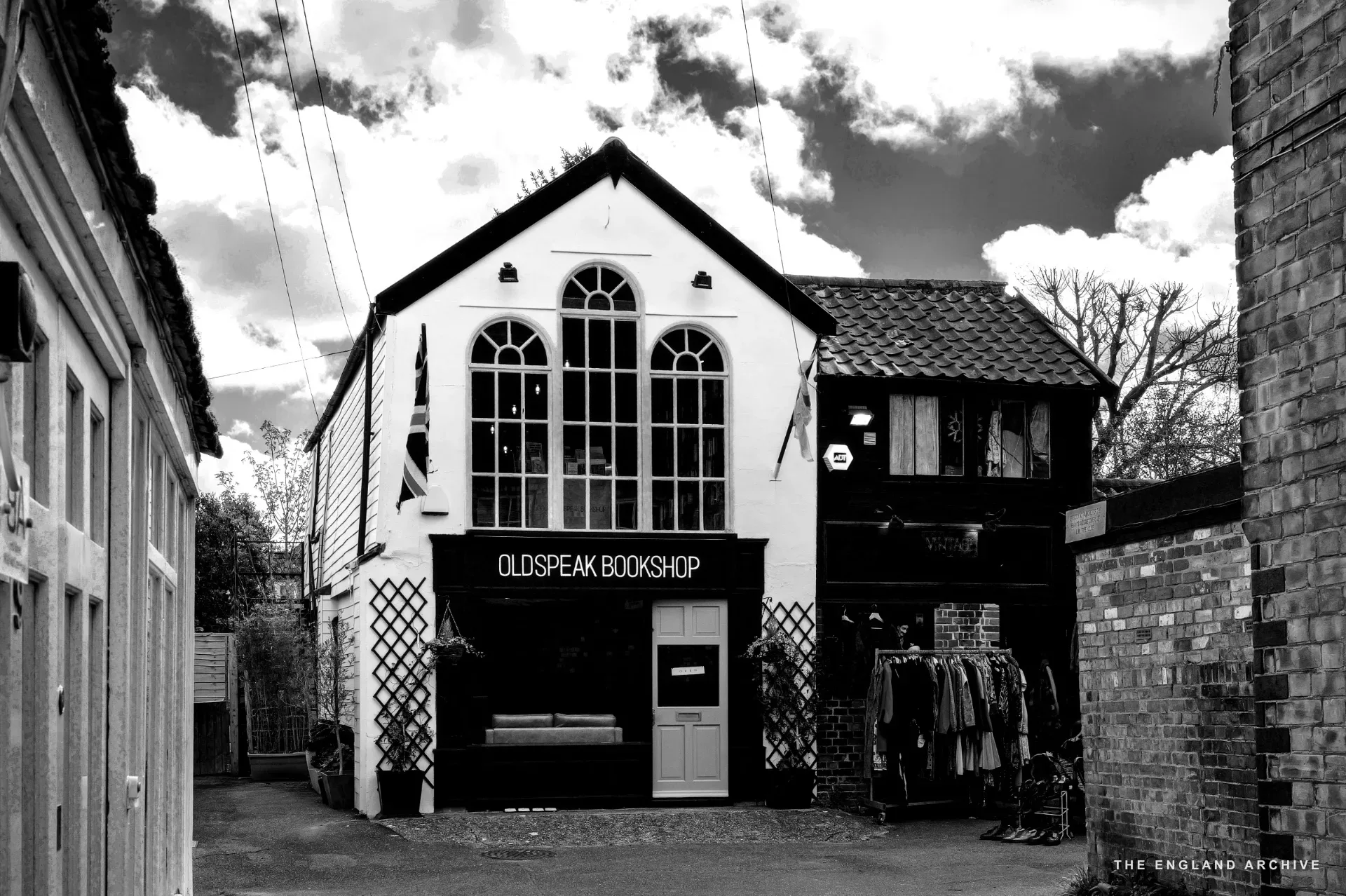
    An independent bookshop tucked in Ringers Yard behind 9 Hall Street, named after the Newspeak-opposite from <em>Nineteen Eighty-Four</em>. Strong on political philosophy, conservative thought, signed editions, and a first-floor reading area.

    Address
    Ringers Yard, rear of 9 Hall Street, Long Melford, Suffolk CO10 9JF

Shops

  • Blackwell and Co Delicatessen and Bakery

    An artisan deli and bakery on Hall Street - around seventy per cent of what they sell is made in-house. Cured charcuterie, traditional hams, artisan cheeses, signature sandwiches, fresh bakery.

    Address
    Hall Street, Long Melford, Sudbury, Suffolk CO10 9JF
    Phone
    01787 220733

Visit

How to get there

Location

Long Melford, Sudbury, Suffolk (postcode district CO10 9)

OS grid reference TL 865 460

Getting there

By car
From London and the M25, take the A12 north towards Colchester, then the A134 to Sudbury and continue three miles north on the A134. From East Anglia, the A134 runs directly through the village.
By train
The nearest station is Sudbury on the Gainsborough Line (Greater Anglia). Trains run from London Liverpool Street with one change at Marks Tey; journey around 1h 20m. Long Melford is three miles north of Sudbury; a bus or taxi covers the last leg.
By bus
Local buses connect Sudbury, Bury St Edmunds and Long Melford through the week; services are limited on Sundays. Check Suffolk County Council’s travel information for current timetables.

Parking

Several car parks serve visitors. The Old School car park (opposite Melford Hall, suggested donation) and the Village Hall car park (Chemist Lane, suggested donation) sit centrally. The Cock and Bell car park has restrictions. On-street parking along Hall Street is free but busy on weekends. For Holy Trinity, the church has a small dedicated car park off Church Walk.

Walking routes

  • The Melford Walk · A footpath and wildlife corridor along the trackbed of the old Stour Valley Railway, running roughly a mile and a quarter along the eastern edge of the village. Managed by the Parish Council. Opens into open farmland with a classic approach view of Holy Trinity across the fields.
  • The Stour Valley Path · Long-distance path following the Stour through Dedham Vale - Constable country - and up past Sudbury. Several miles of the route lie within walking distance of Long Melford.
  • Long Melford Neighbourhood Plan walks · A set of six walks developed by the Long Melford Neighbourhood Plan, available in the village’s defunct telephone boxes or online at longmelfordvillagehall.co.uk/long-melford-walks.

When to visit

Late spring and early autumn. Holy Trinity is open every day. Melford Hall opens Wednesday-Sunday in season; Kentwell runs special-event weekends from April through September that are worth planning around. The Heritage Centre is open on Wednesday and at weekends, April to October.

Accessibility

Holy Trinity is level-access from the churchyard; a ramp is available for the south porch. Melford Hall and Kentwell both have mixed access - check the National Trust and Kentwell pages for current accessibility guides. Hall Street pavements are narrow in places, and some of the side lanes are cobbled.

Map

Long Melford on a map

Places on this map

Map data © OpenStreetMap contributors, under the Open Database Licence.

Further reading

Books, broadcasts, and primary sources

Share

Share this page

Subscribe to updates for Long Melford (RSS)

Cite this page

AR-0026 · https://englandarchive.org/regions/east-anglia/long-melford

Suggested citation:

The England Archive. (April 2026). Long Melford [AR-0026]. https://englandarchive.org/id/AR-0026

The archive ID above is a permanent handle. /id/AR-0026 resolves to this page and will continue to do so if the URL ever changes. If you are citing one of the photographs on this page, each carries its own IM-NNNN - hover any thumbnail in the gallery above to see it.

From Long Melford

Subjects Documented

Documentary Archive 18 April 2026

Melonie Clubb

Lifelong resident of Long Melford and carrier of the lived texture of the village. Daughter of a founding member of the Long Melford Historical and Archaeological Society, she holds the grain of the place - what used to be where, who lived in which house, which trees stood on the Green before Dutch elm disease took them.

Documentary Archive 18 April 2026

Julie Thomson

Historian and committee member of the Long Melford Historical and Archaeological Society. Keeper of the public record of the village - its dates, its buildings, its documents, and the order of events that made Long Melford what it is.

Journal

Visits to Long Melford

A Walk Through Long Melford with Julie and Melonie · 18 April 2026
Four hours through the village with Julie Thomson and Melonie Clubb of the Long Melford Historical and Archaeological Society. The historian and the rememberer, in two voices, walking the place they carry. JN-0010

People at Long Melford

Categories Represented

Further in the archive