A Walk Through Long Melford with Julie and Melonie
East Anglia · Rememberers

We were late pulling into the car park. Not properly late, but late enough that two ladies were already standing by the verge when we turned off the main road, and I clocked them without clocking them, and drove right past, up a dead-end street I had no business being on. In the rear-view mirror I watched the two of them still standing there, still watching us, and I said to Bhavani, that’s them, that has to be them, we’ve gone the wrong way.
We reversed out, came back down, pulled into the Old School Community Centre car park properly this time, and they were waving. Julie Thomson and Melonie Clubb. Long Melford Historical and Archaeological Society. The first ninety seconds of the visit were laughter about the wrong turn, which is the kind of accidental warmth you cannot plan for but you gratefully accept when it arrives.
Julie had the day planned out. We would start inside the Old School, where the society meets and where Melonie went to school as a child. Then we would walk the village. Julie would talk about the buildings, the dates, the architecture, the people who built the place. Melonie would fill in the other half. The lived version. What it was like to grow up here. What her father knew. What used to be where. What the village remembers about itself.
The Old School
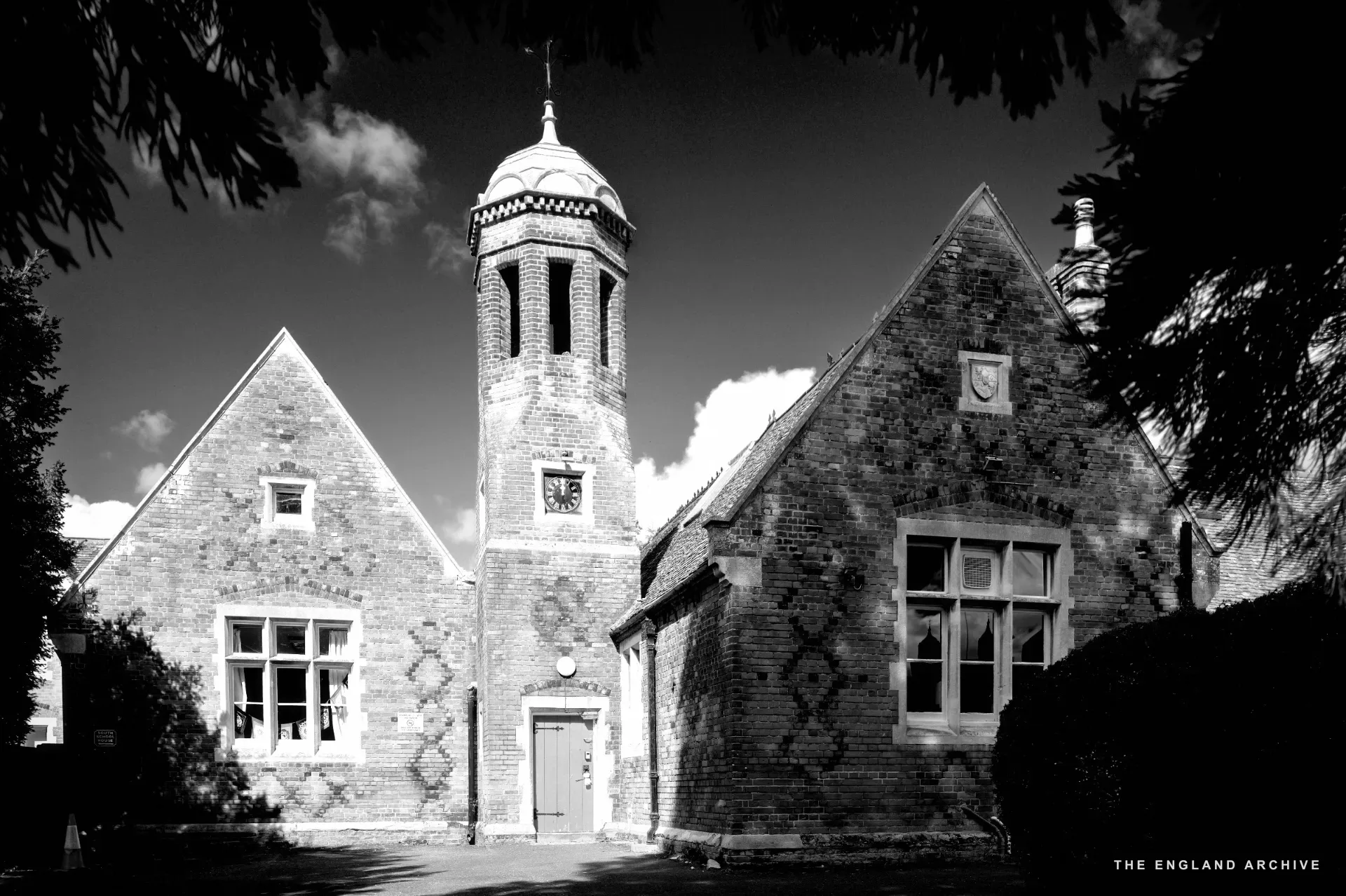
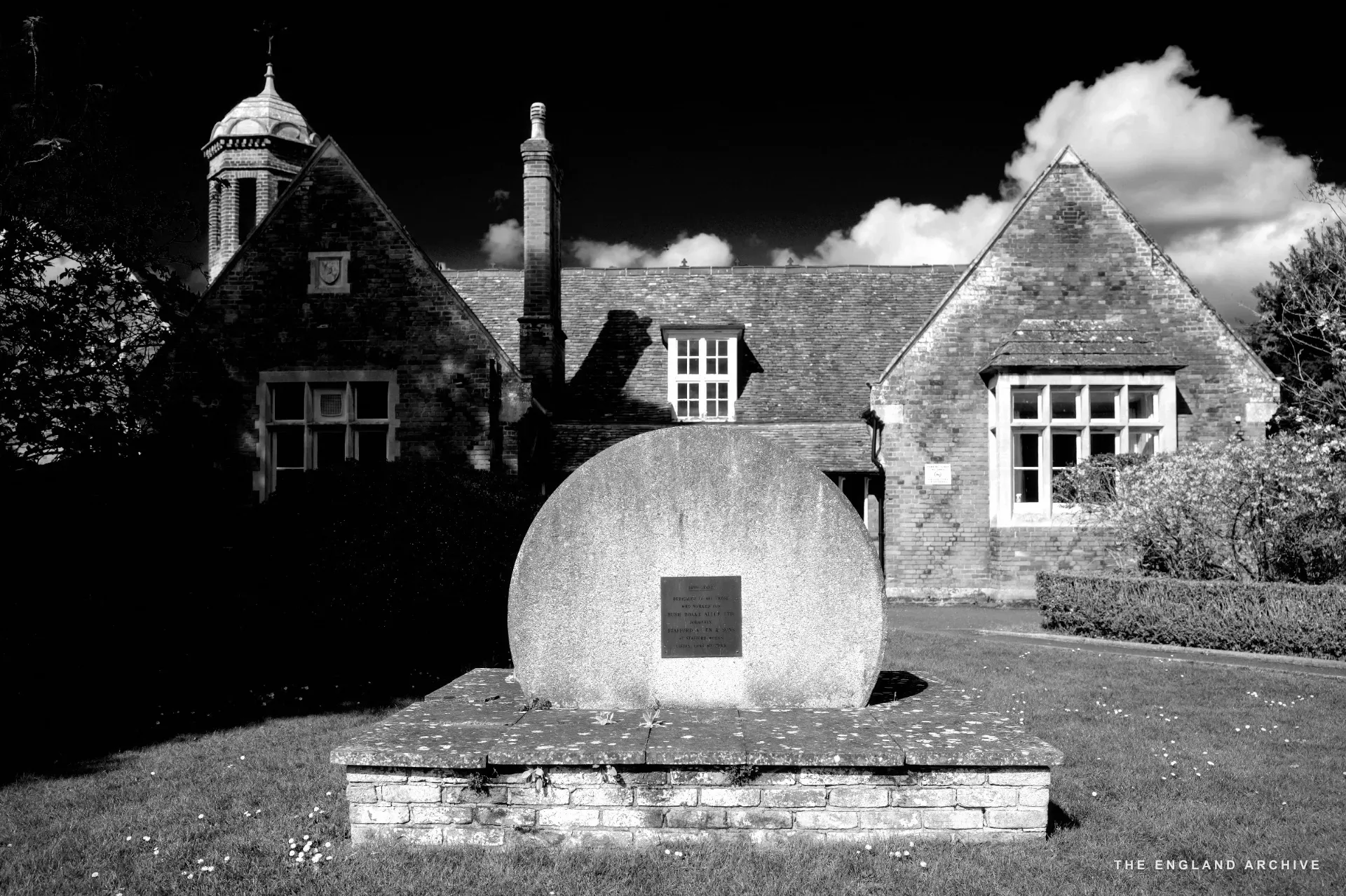
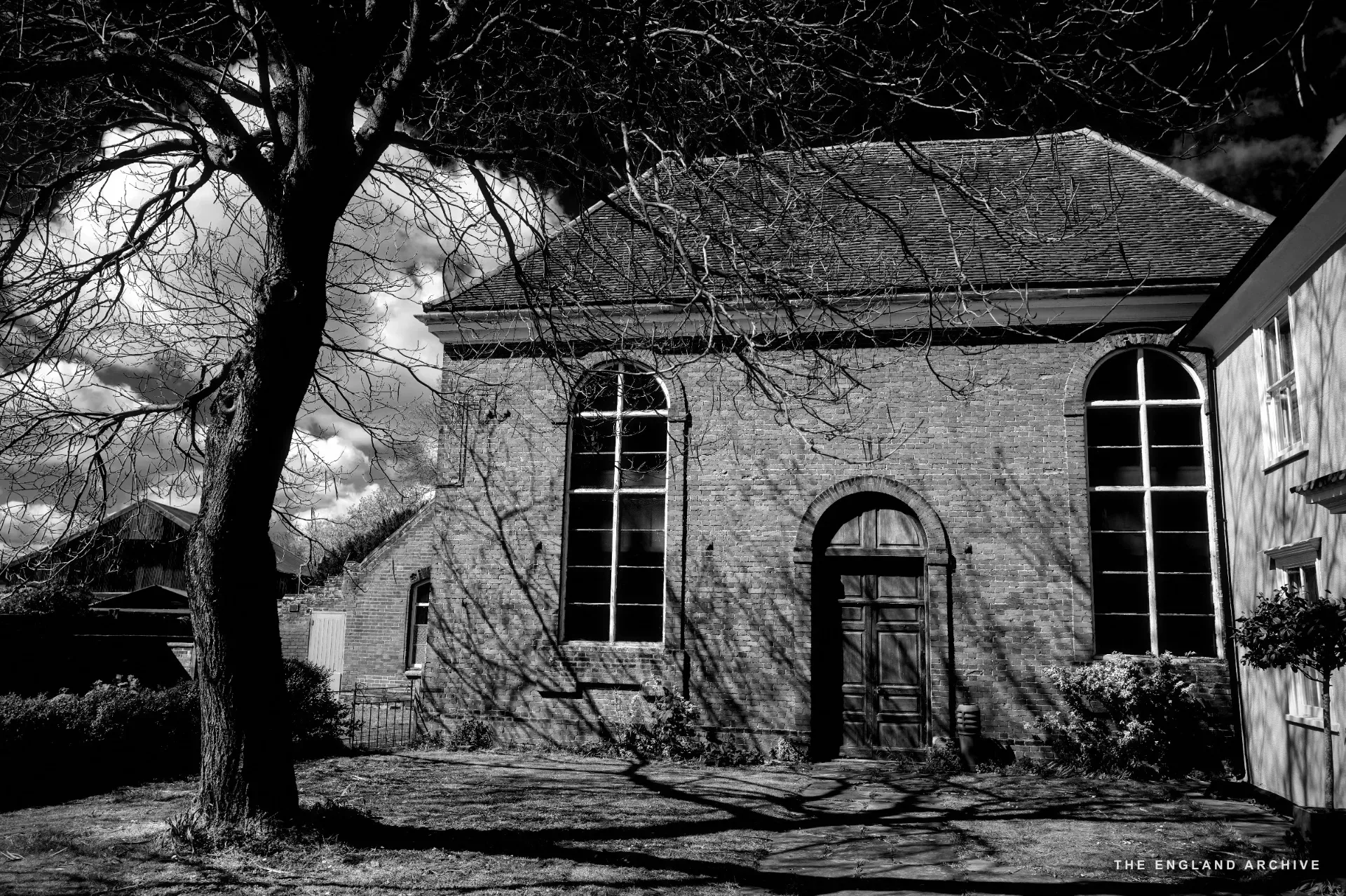
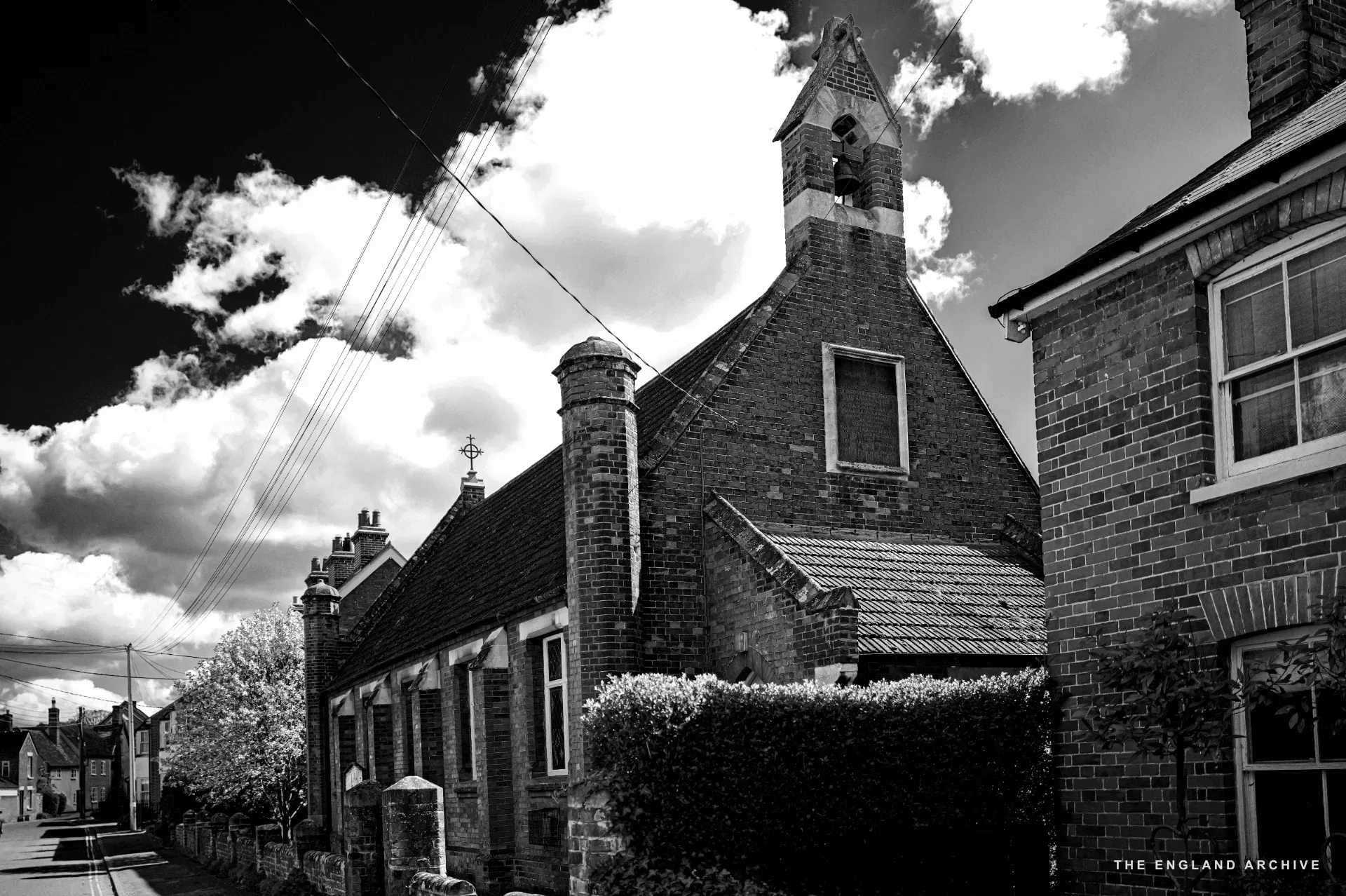
The building is unassuming from the road. Red brick, single storey, the kind of modest Victorian village school you pass in a hundred English villages without stopping. Inside, the old classrooms are meeting rooms now. LMHAS meets here. So do half a dozen other village groups. The kitchen is a reasonable size. The parking is free. The building functions because it is genuinely communal, not because it has been curated into a community asset by a heritage trust.
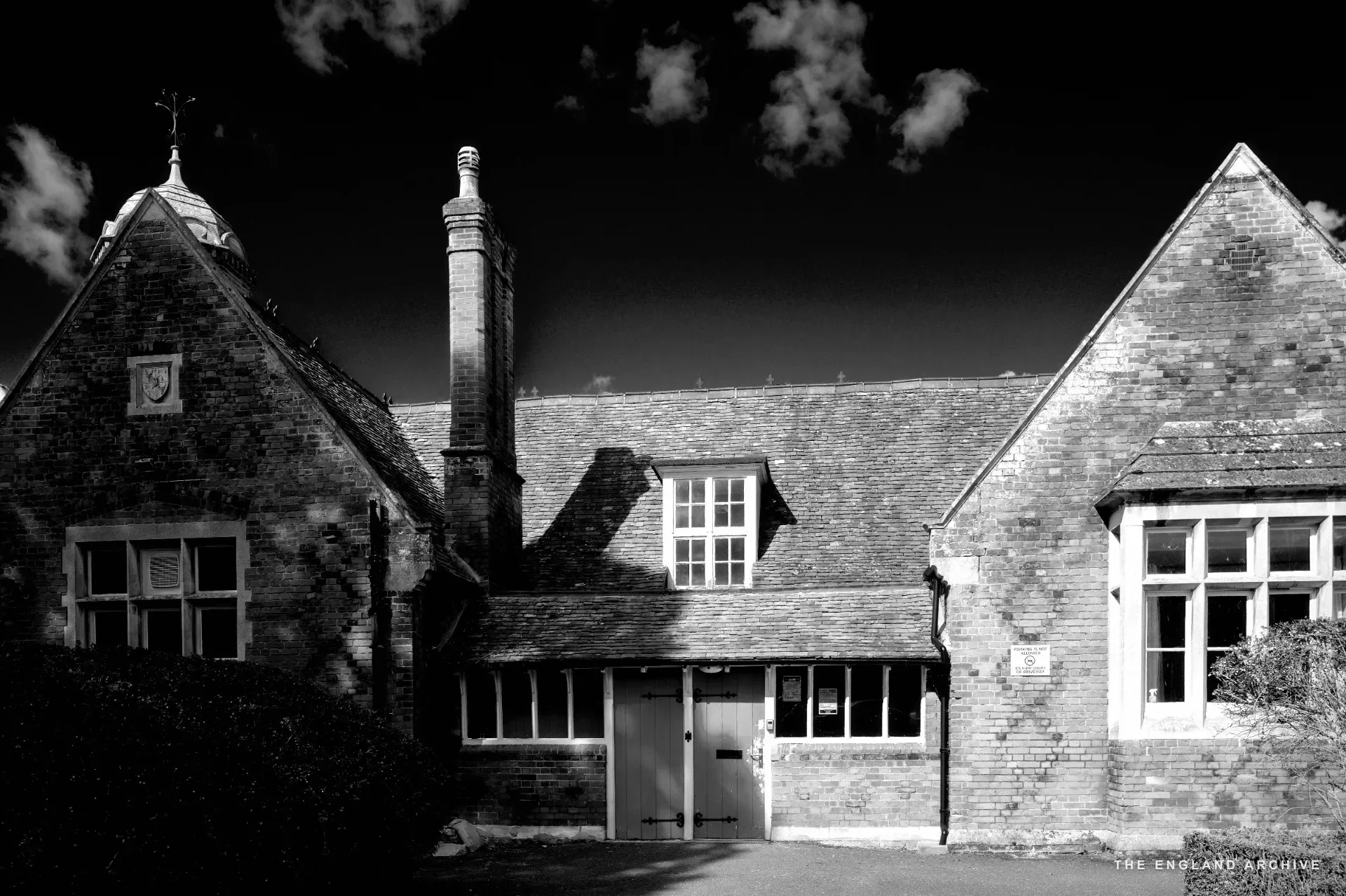
Melonie walked us through the rooms she had been a pupil here as a child, and here is the line I want to keep. She did not overly enjoy school - but this school she loved, and has many fond and happy memories of.
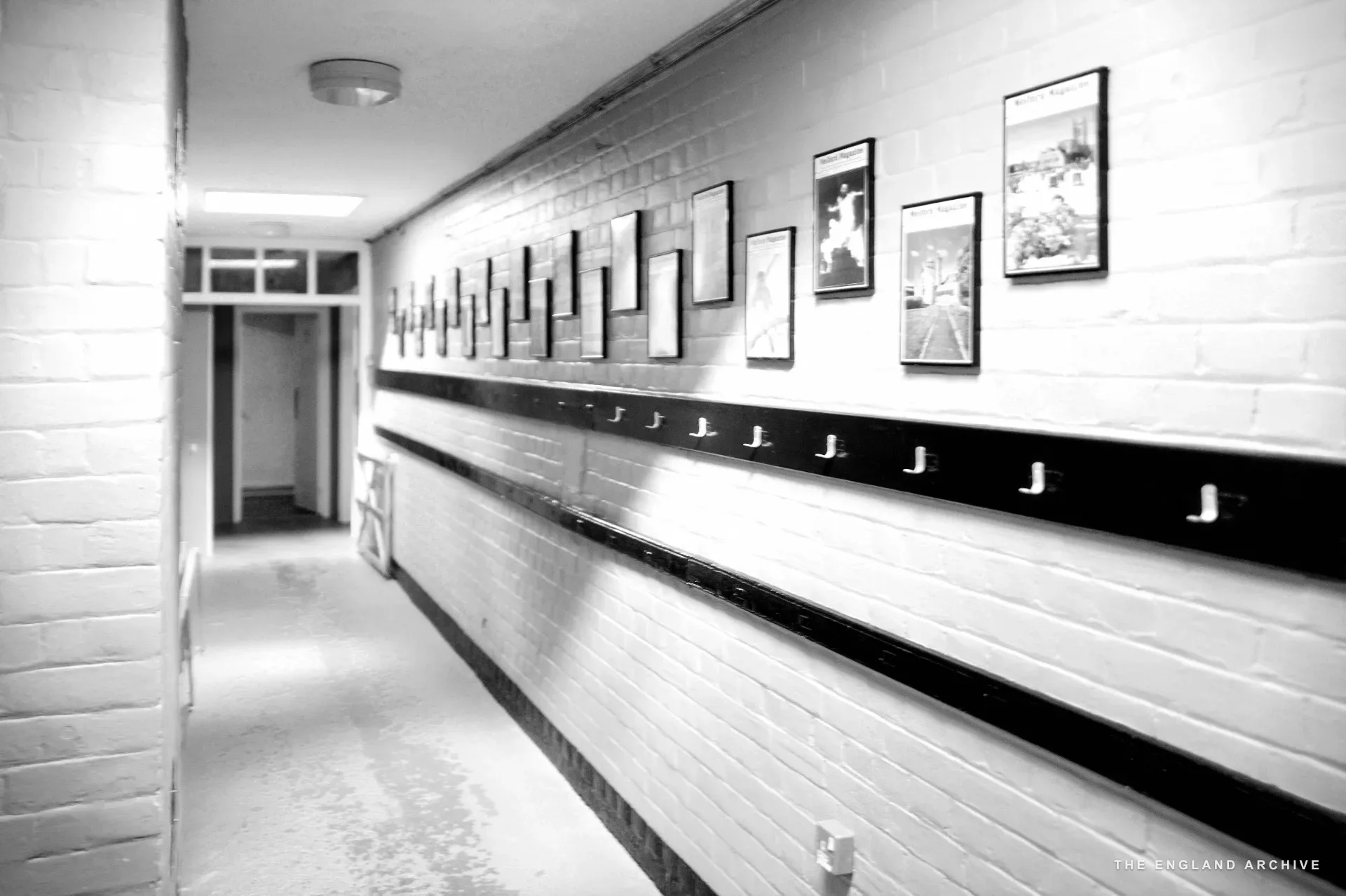
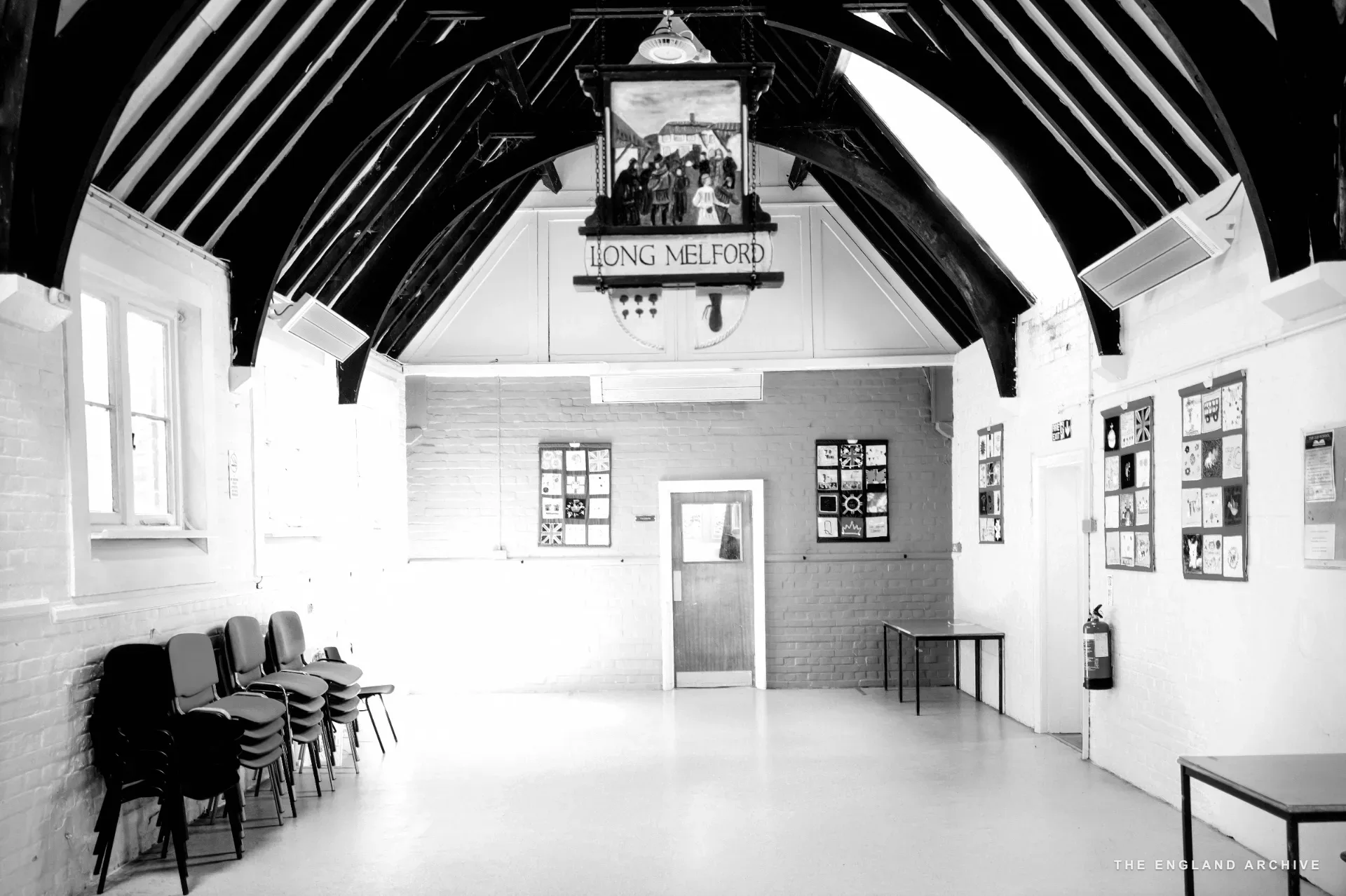
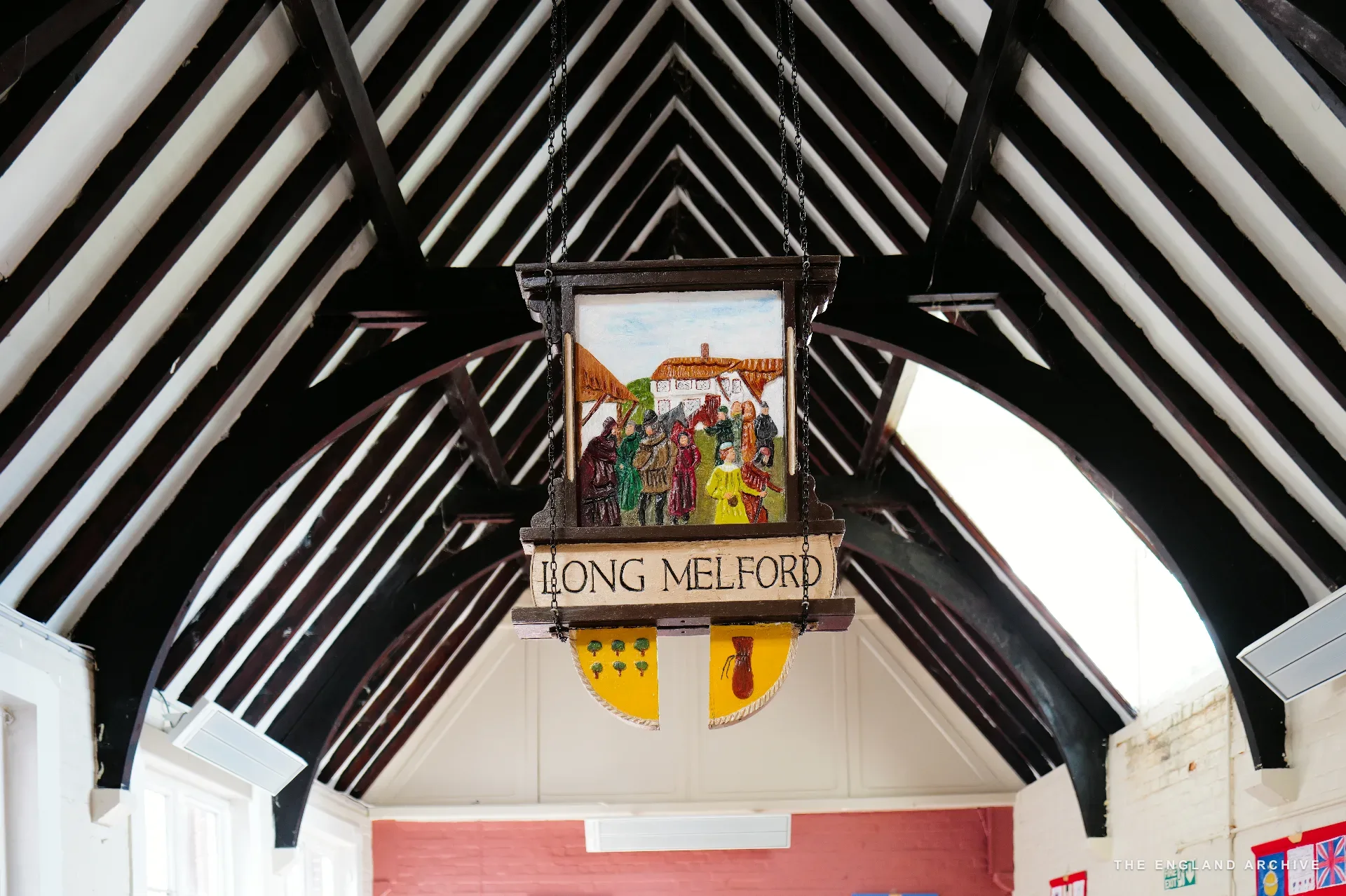
You only get that kind of detail from someone who grew up inside a building. You do not get it from a guide, or a pamphlet, or a society archive. You get it because the woman standing next to you has the floor plan of the place laid over her own childhood, and she is willing to share it.
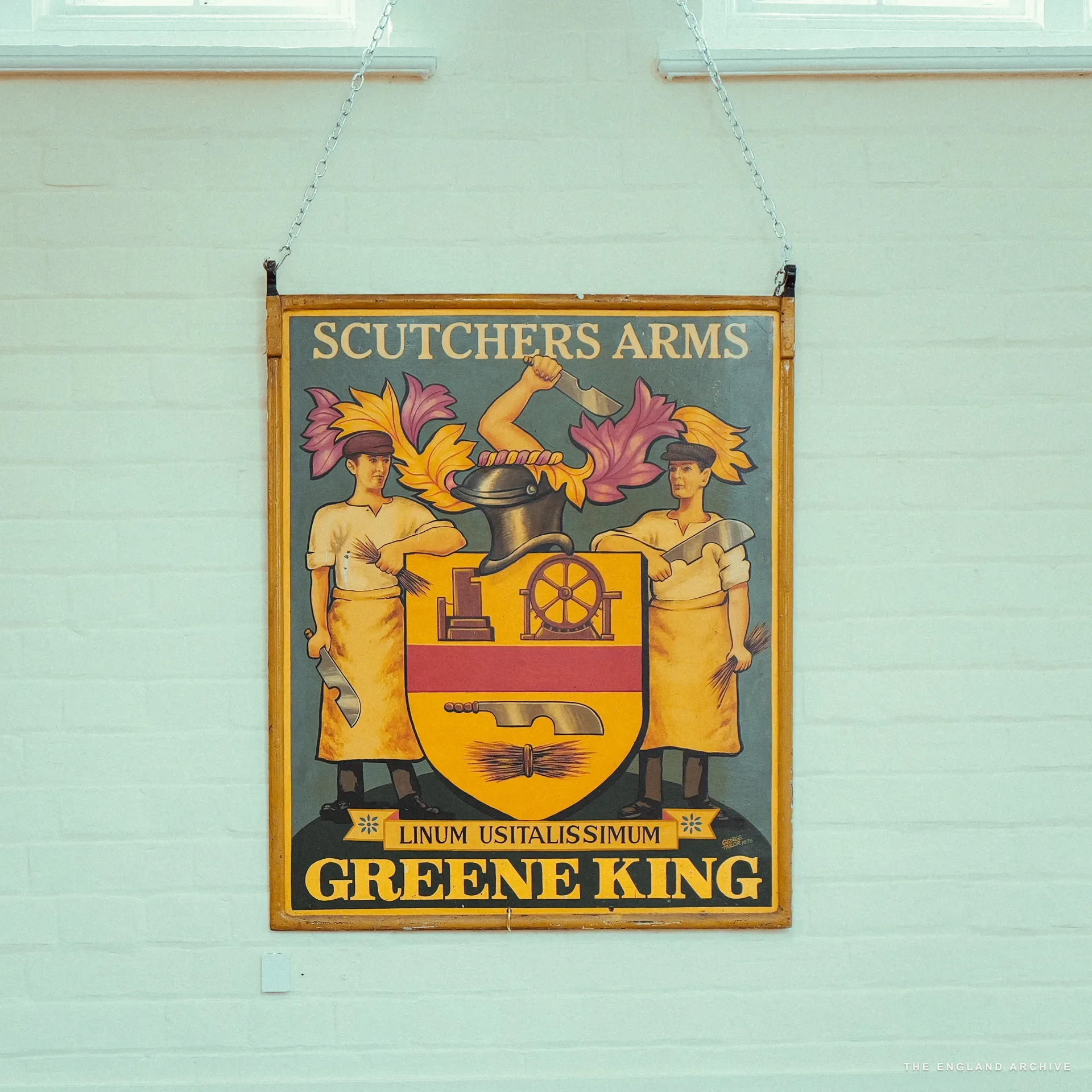
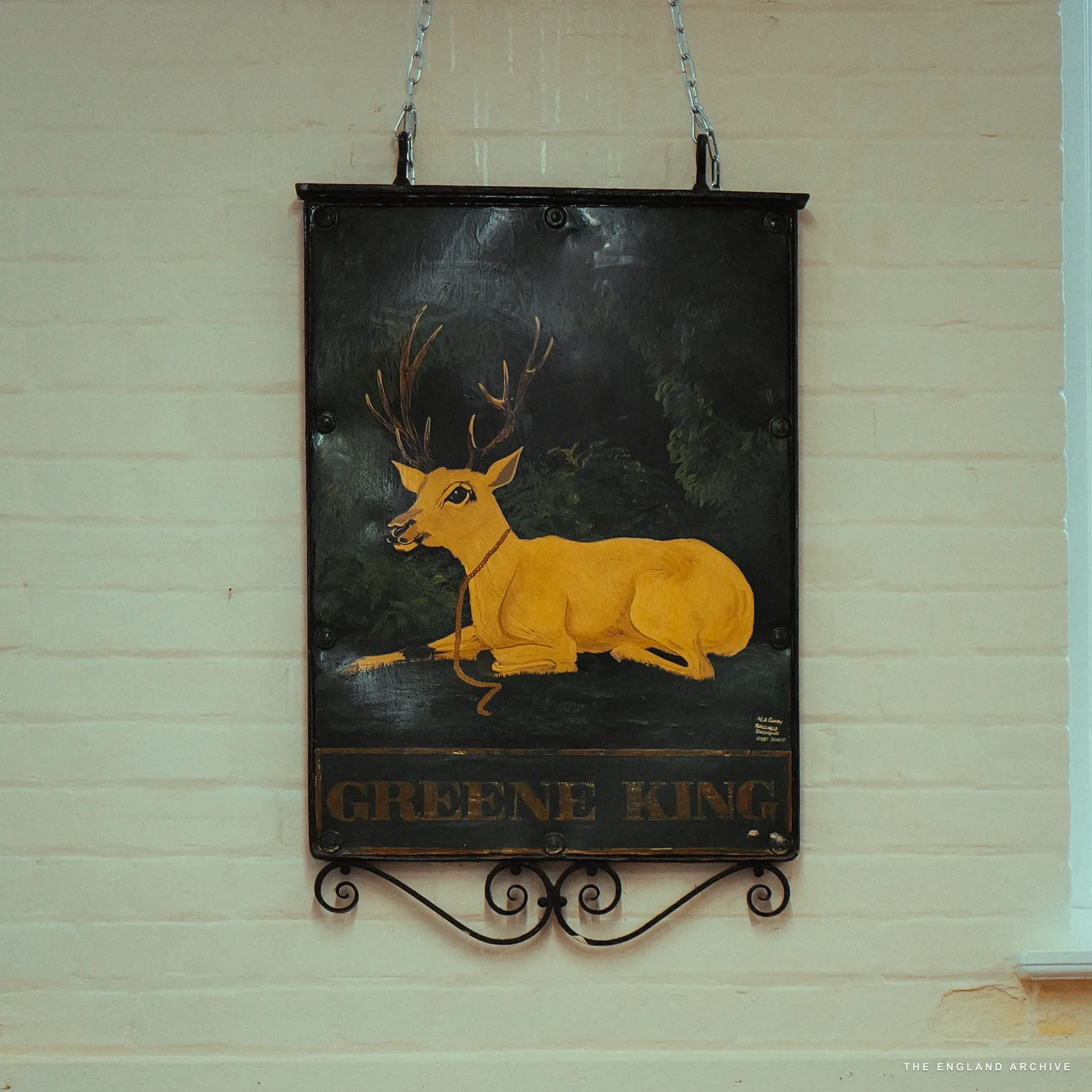
I made a note of it and kept walking.
Towards Hall Street
We came out of the Old School and turned south, into the main run of the village. Hall Street. Two and a half miles of it eventually, though we did not walk the full length today. The main street changes name several times as it runs, which is Long Melford being honest about itself. High Street becomes Hall Street becomes Little St Mary’s, becomes Southgate Street, becomes Rodbridge Hill. The village never quite ends, it just slides into the next landscape.
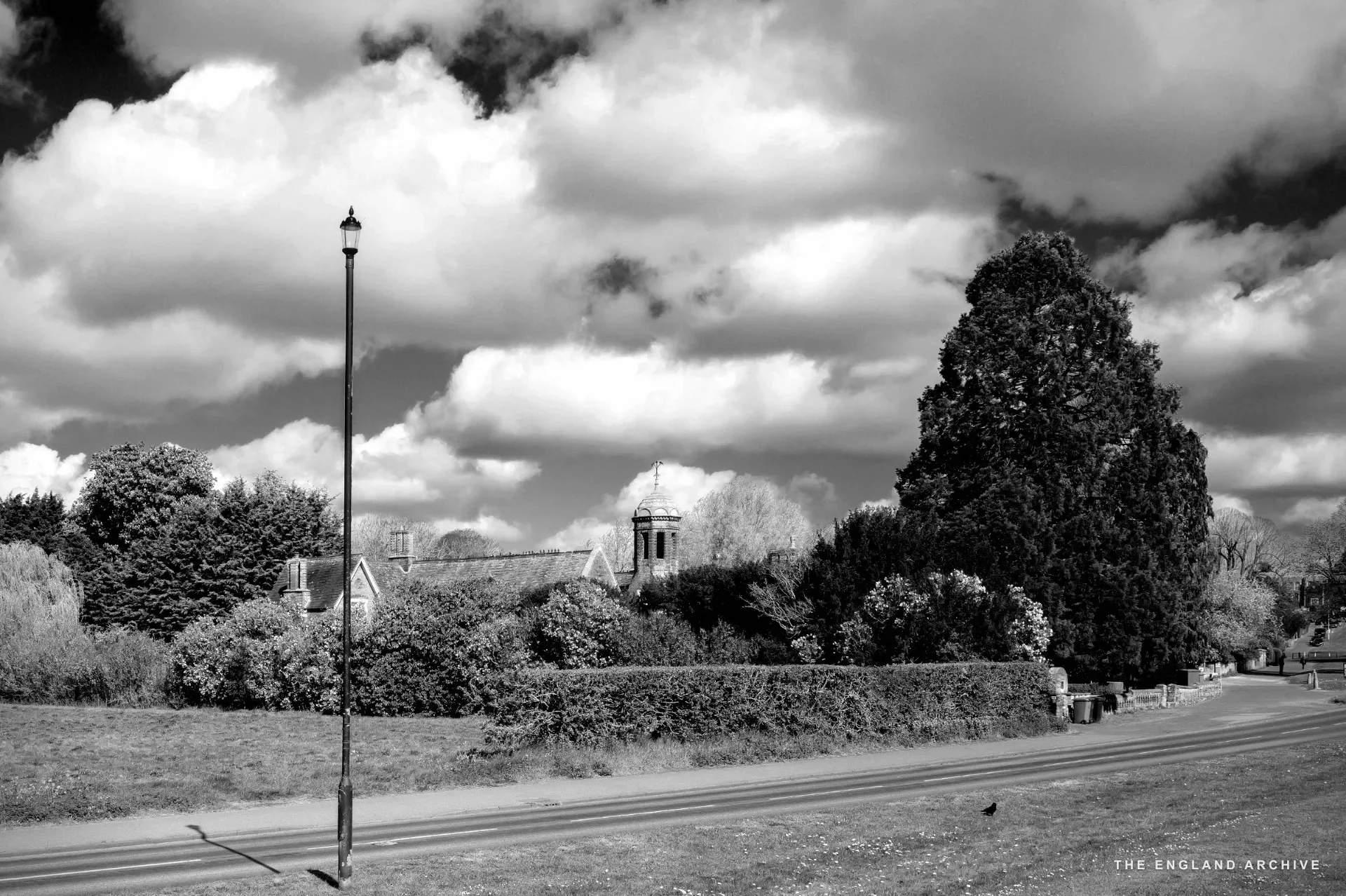
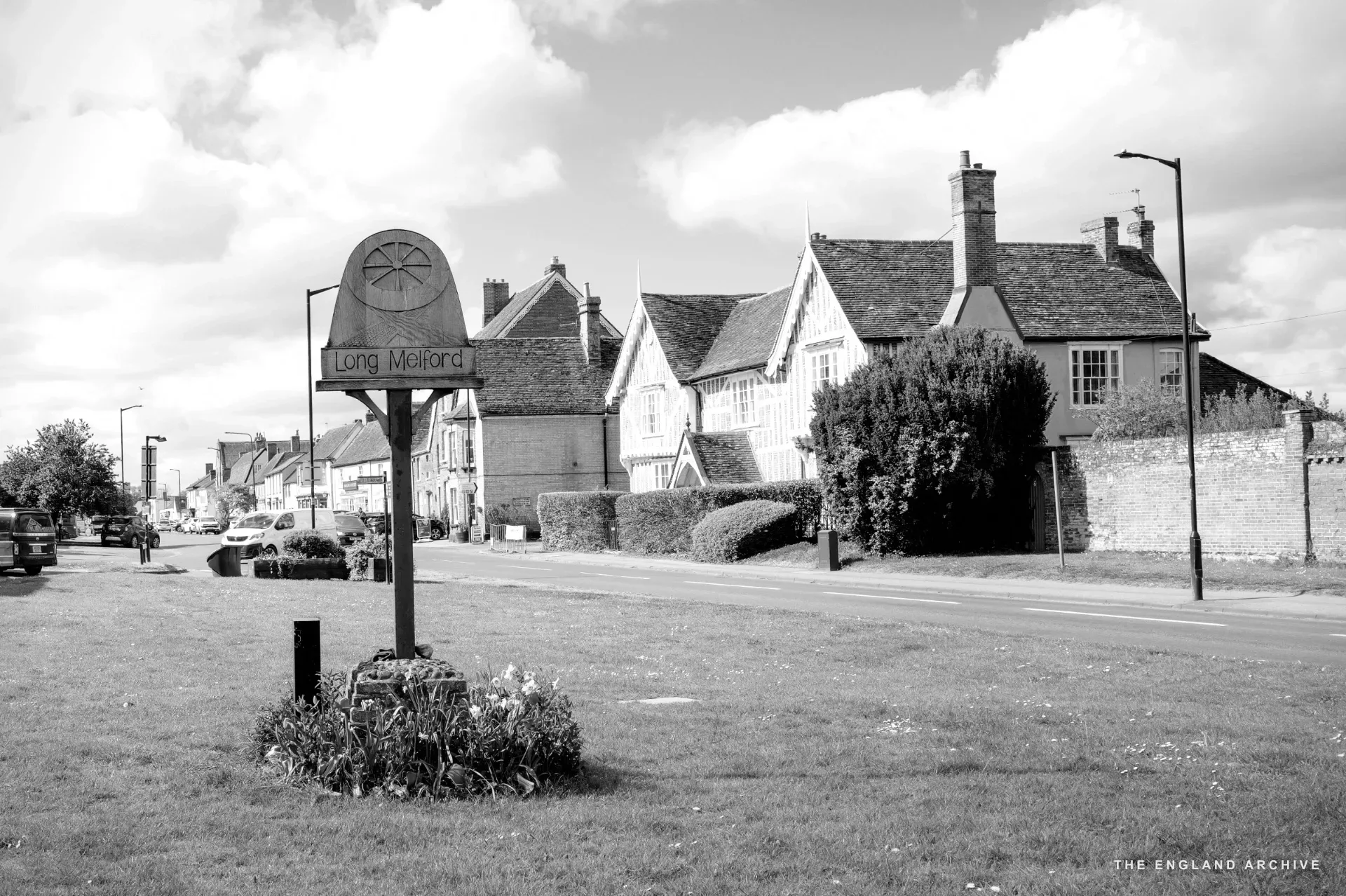
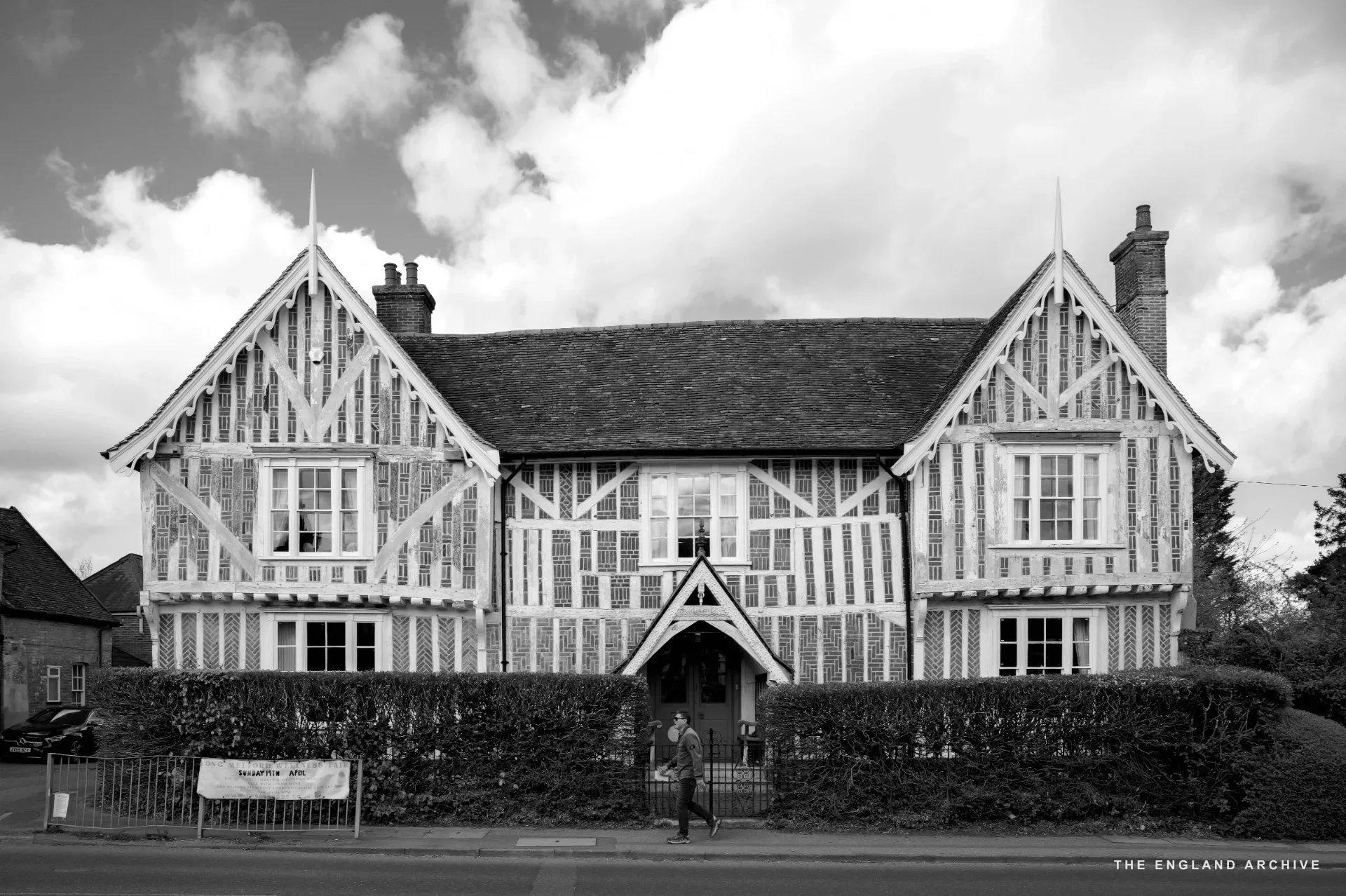
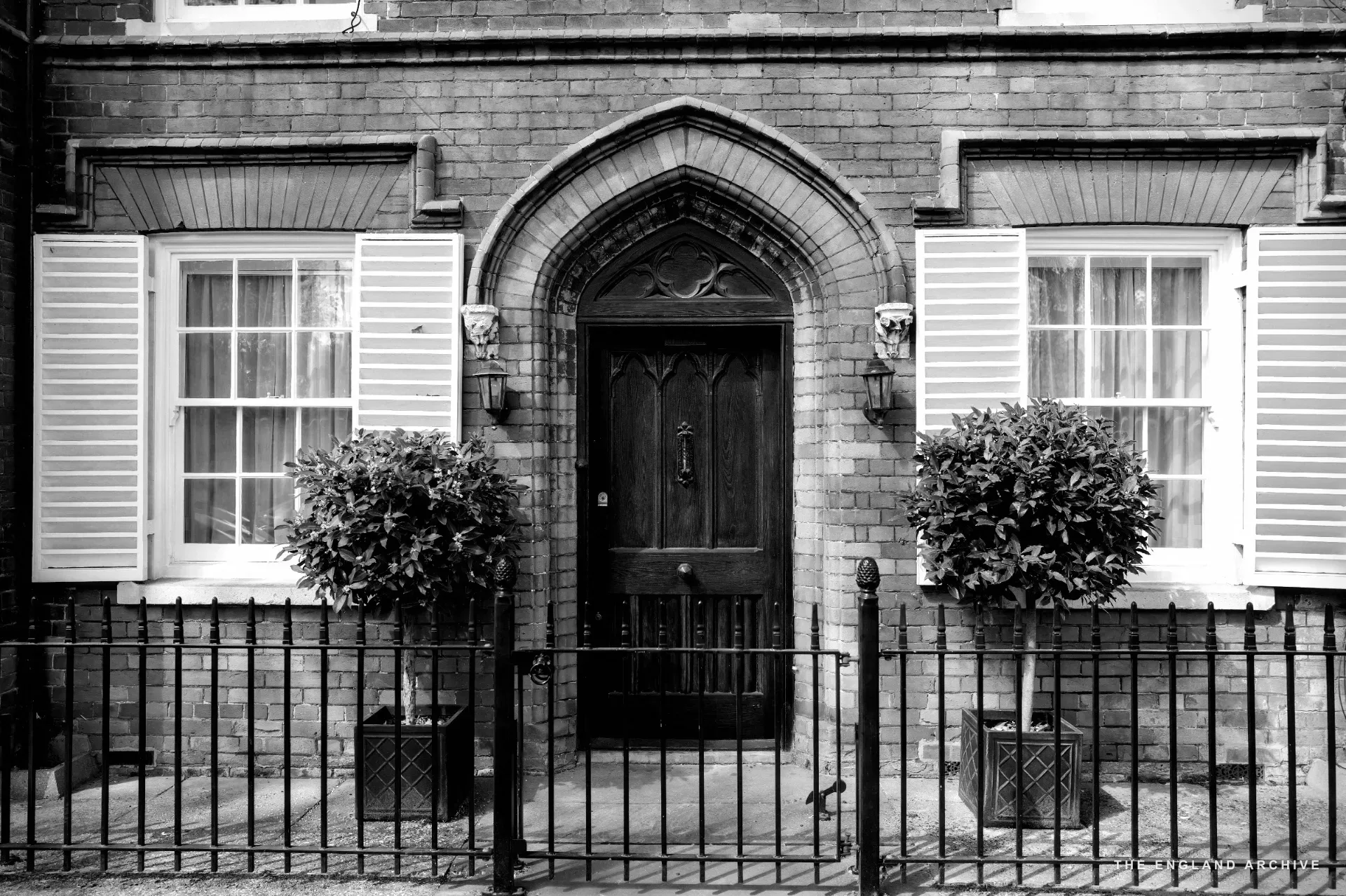
The buildings on both sides are a layering of periods. Most of them are medieval or Tudor underneath, timber-framed, many of them wealthy wool merchants’ houses in origin. A lot of the street fronts were refaced in the Georgian and Regency periods, which is why the building you pass from the pavement often looks later than it actually is. Walk inside and the Tudor structure is still there.
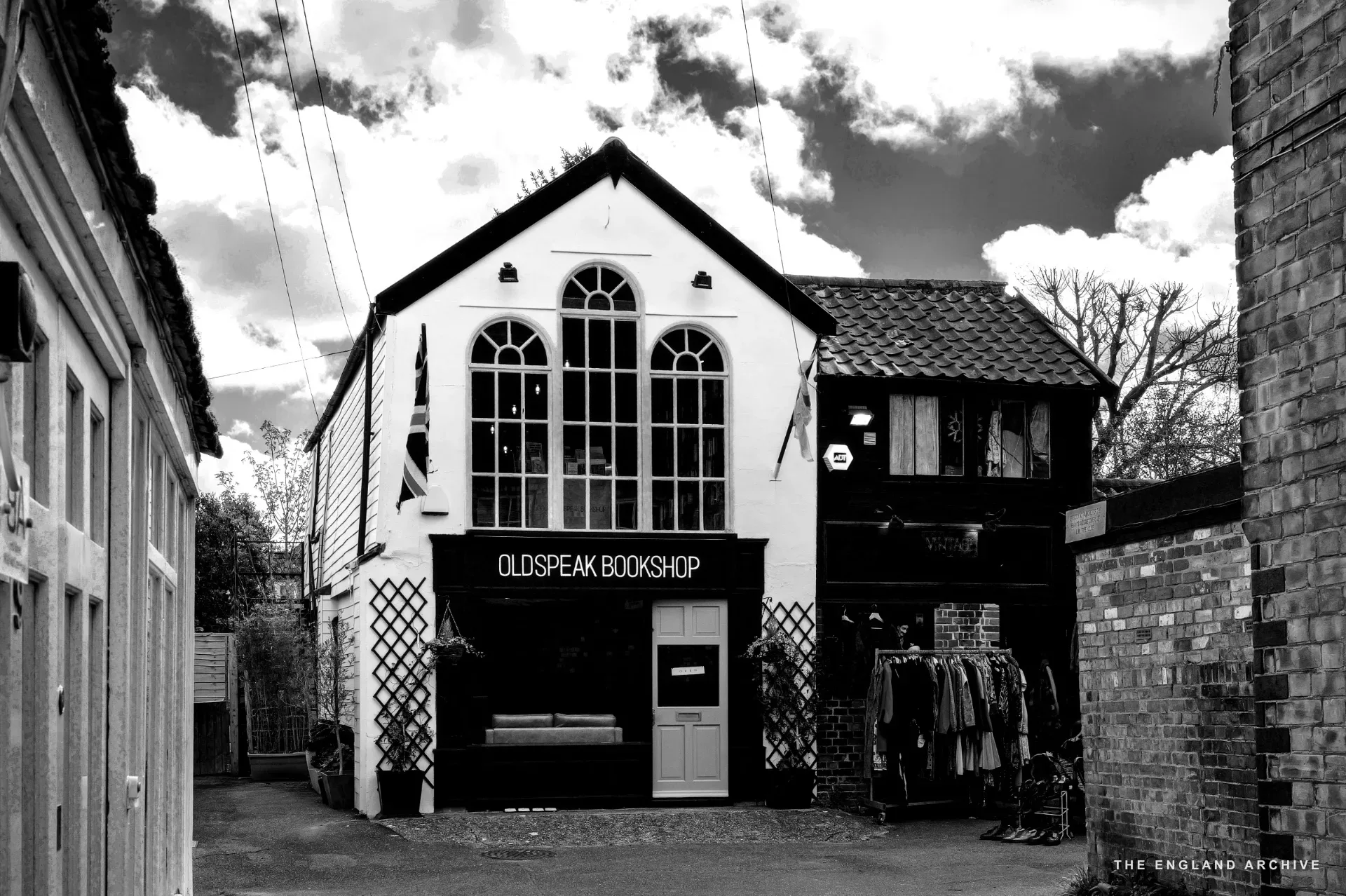
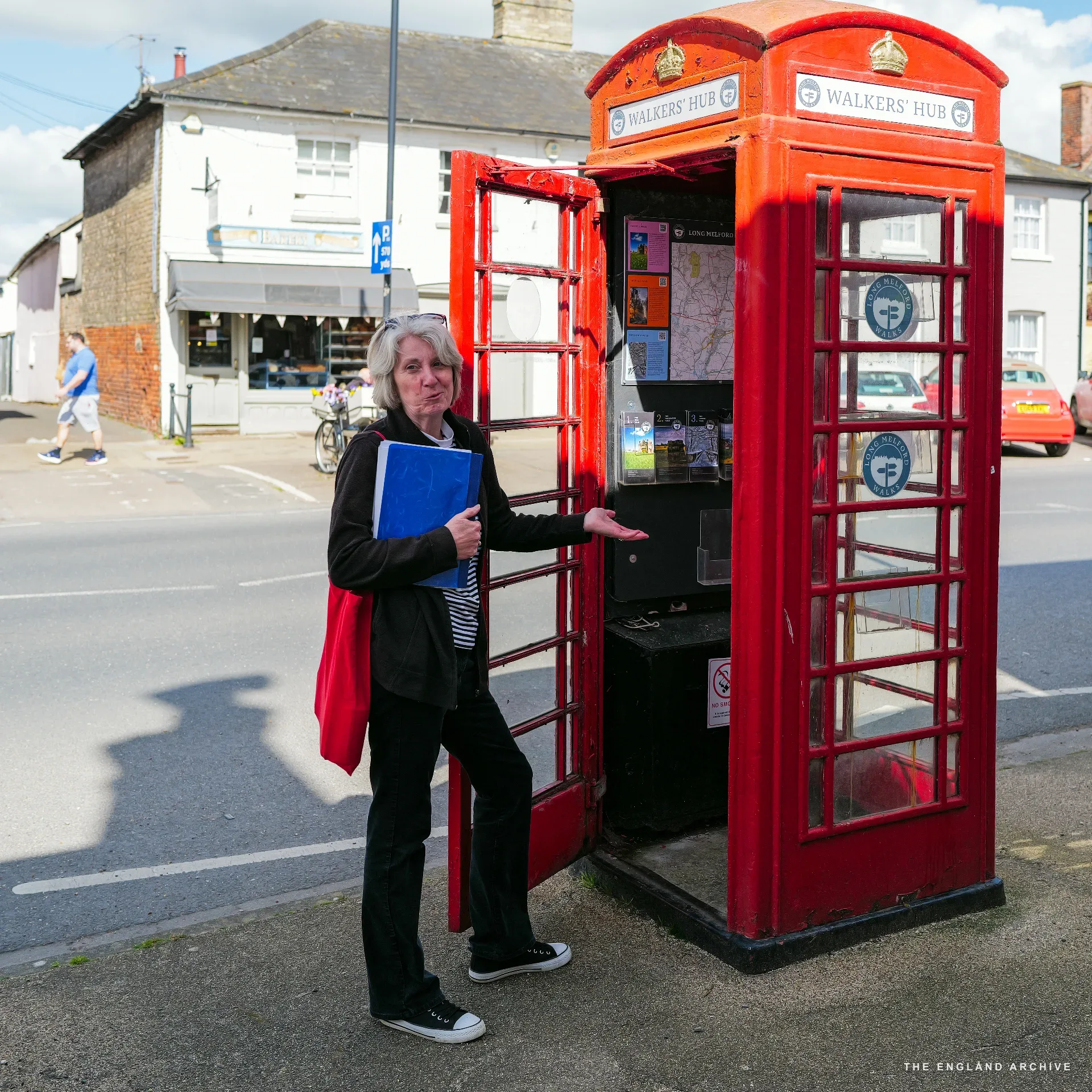
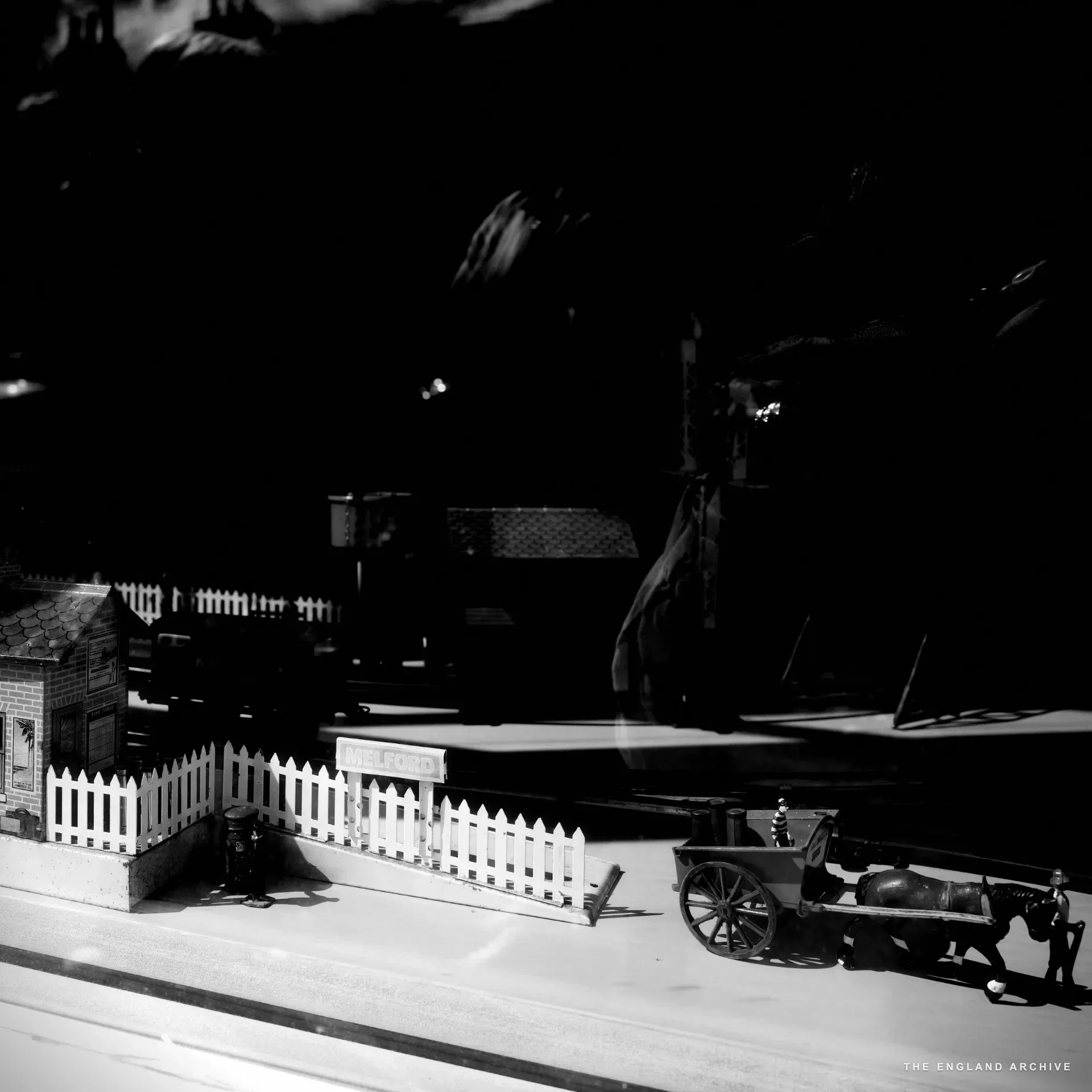
The BBC filmed Lovejoy here through the eighties and nineties, just a fraction of the antique shops from that time remain. The industry did not exist for the programme, but it was not hurt by it either. Ian McShane knew where the real stock was.
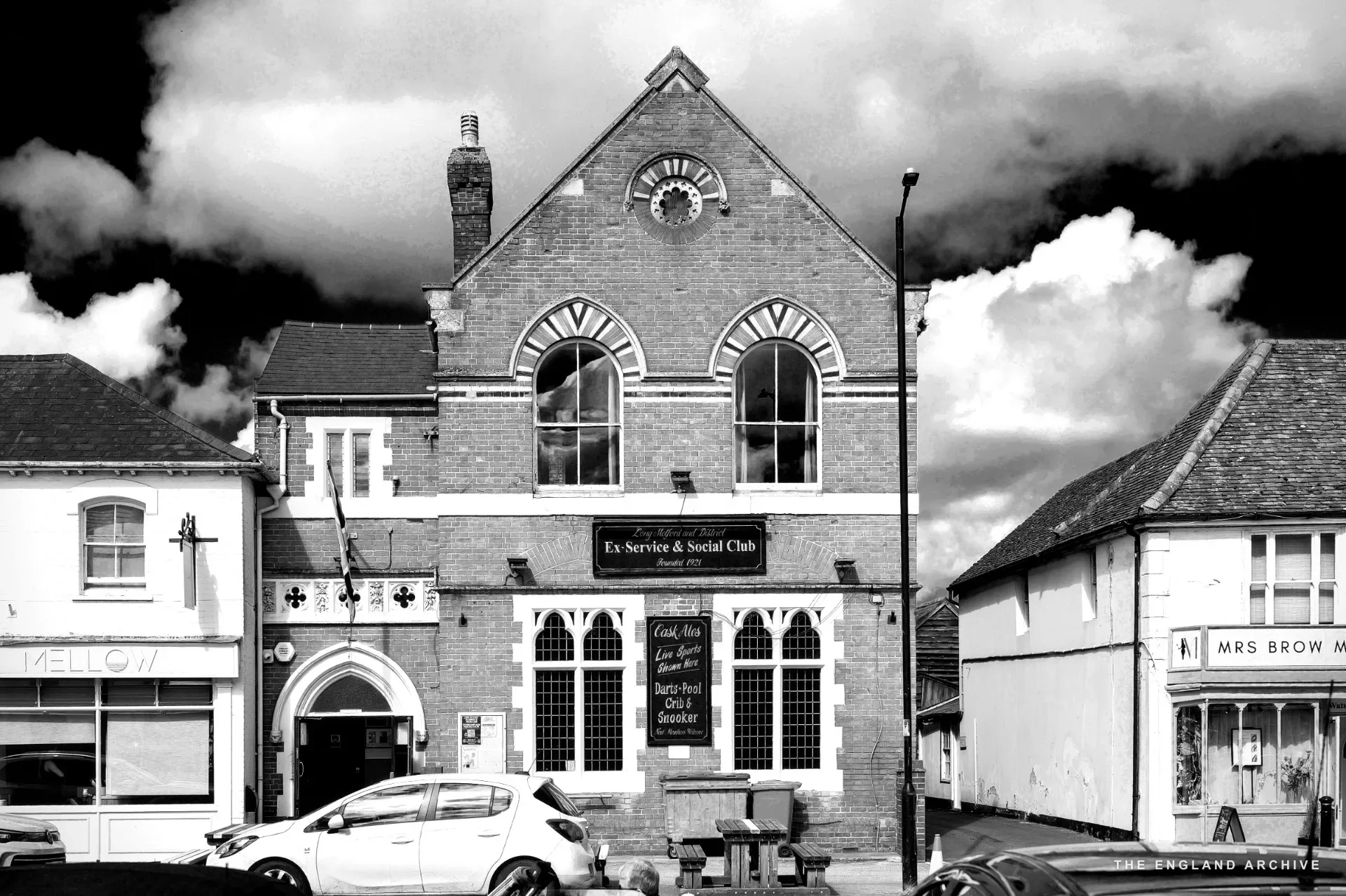
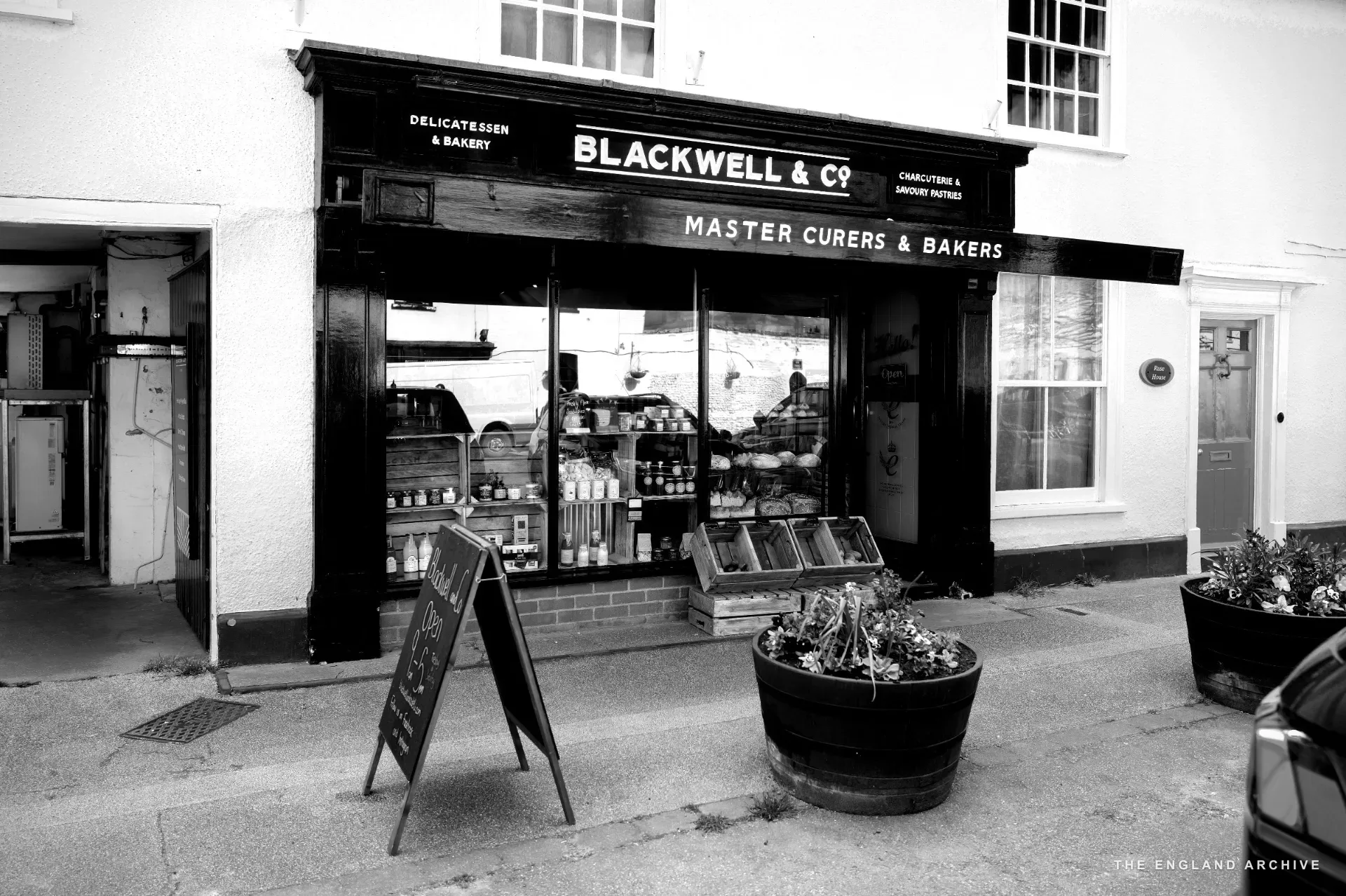
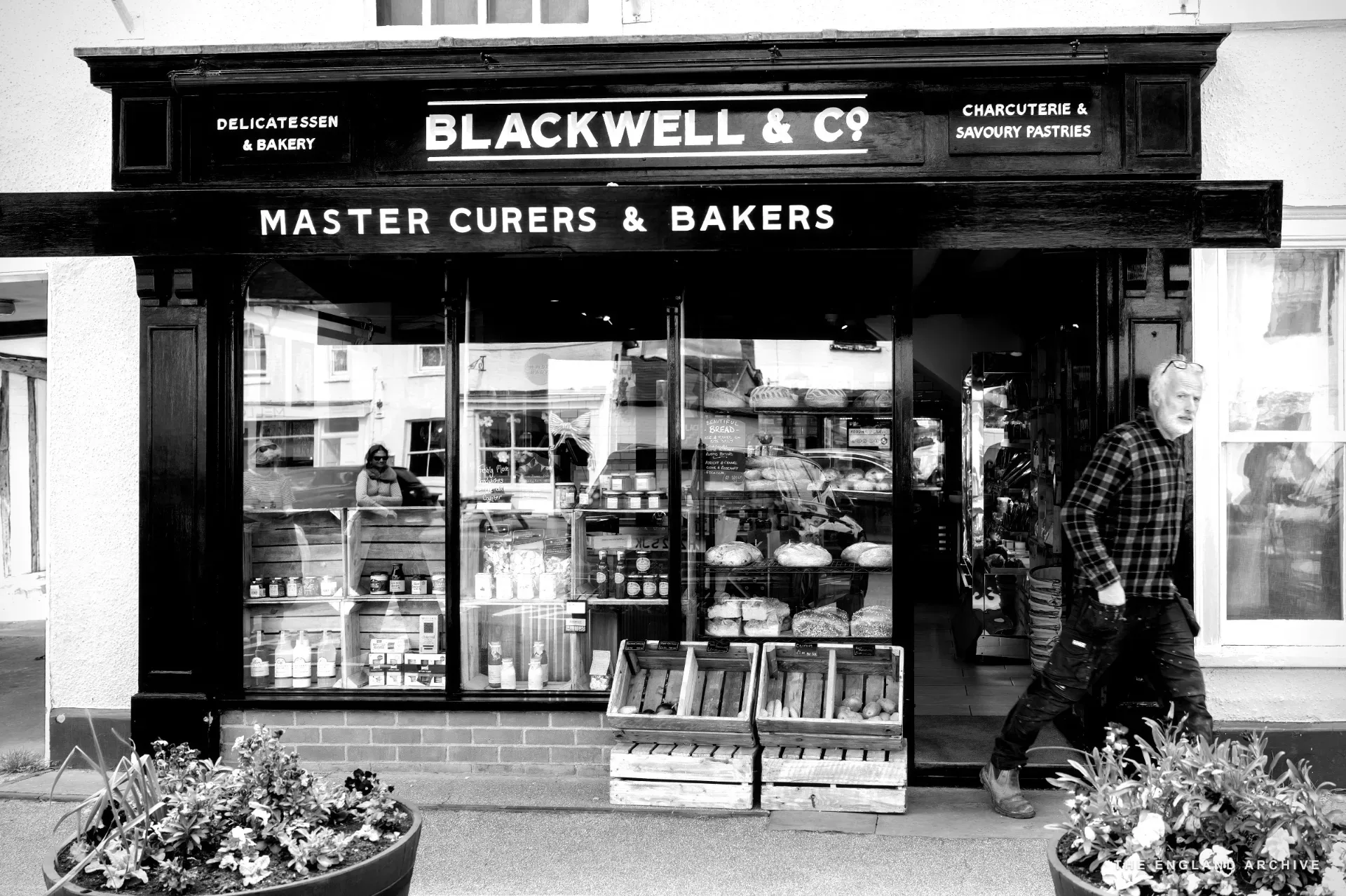
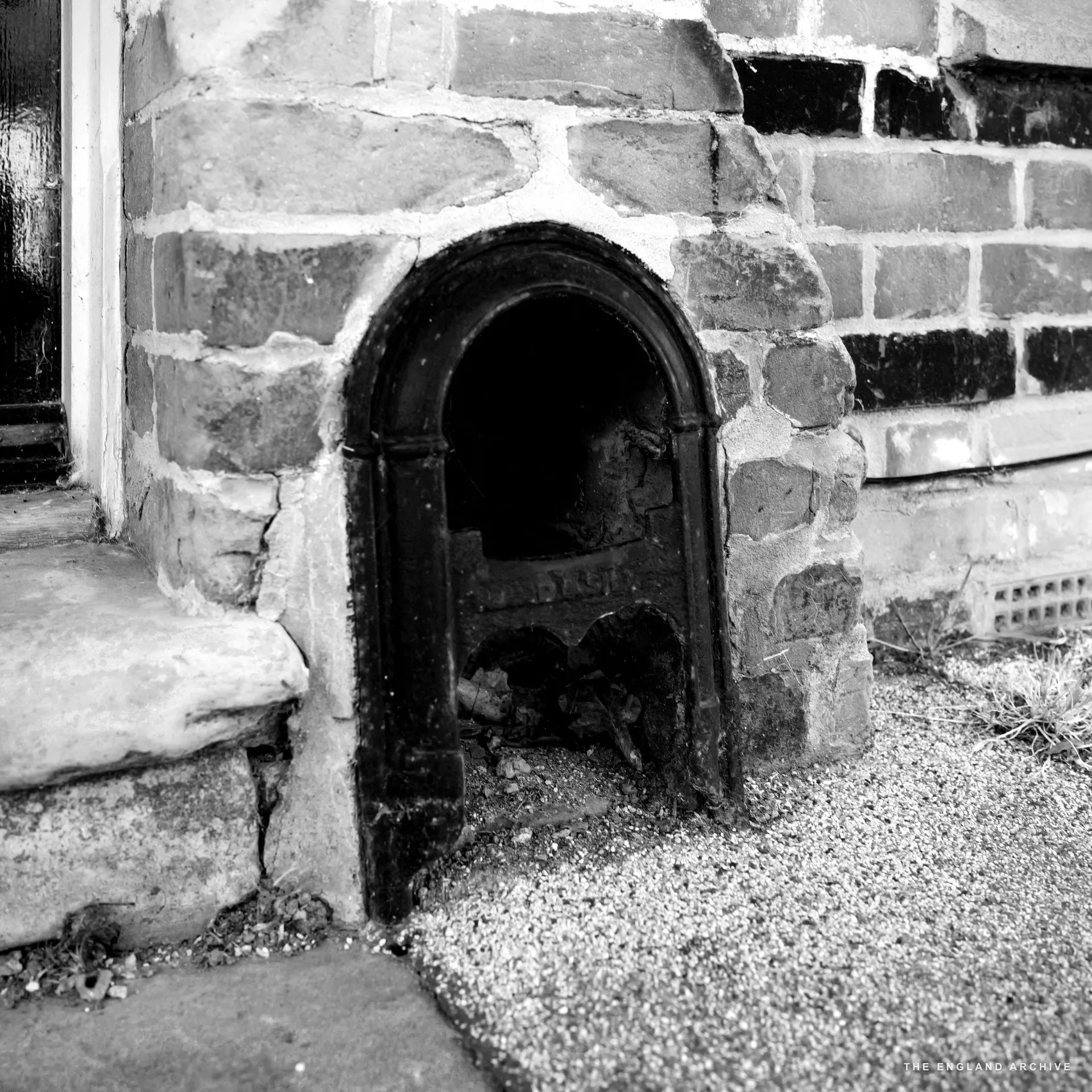
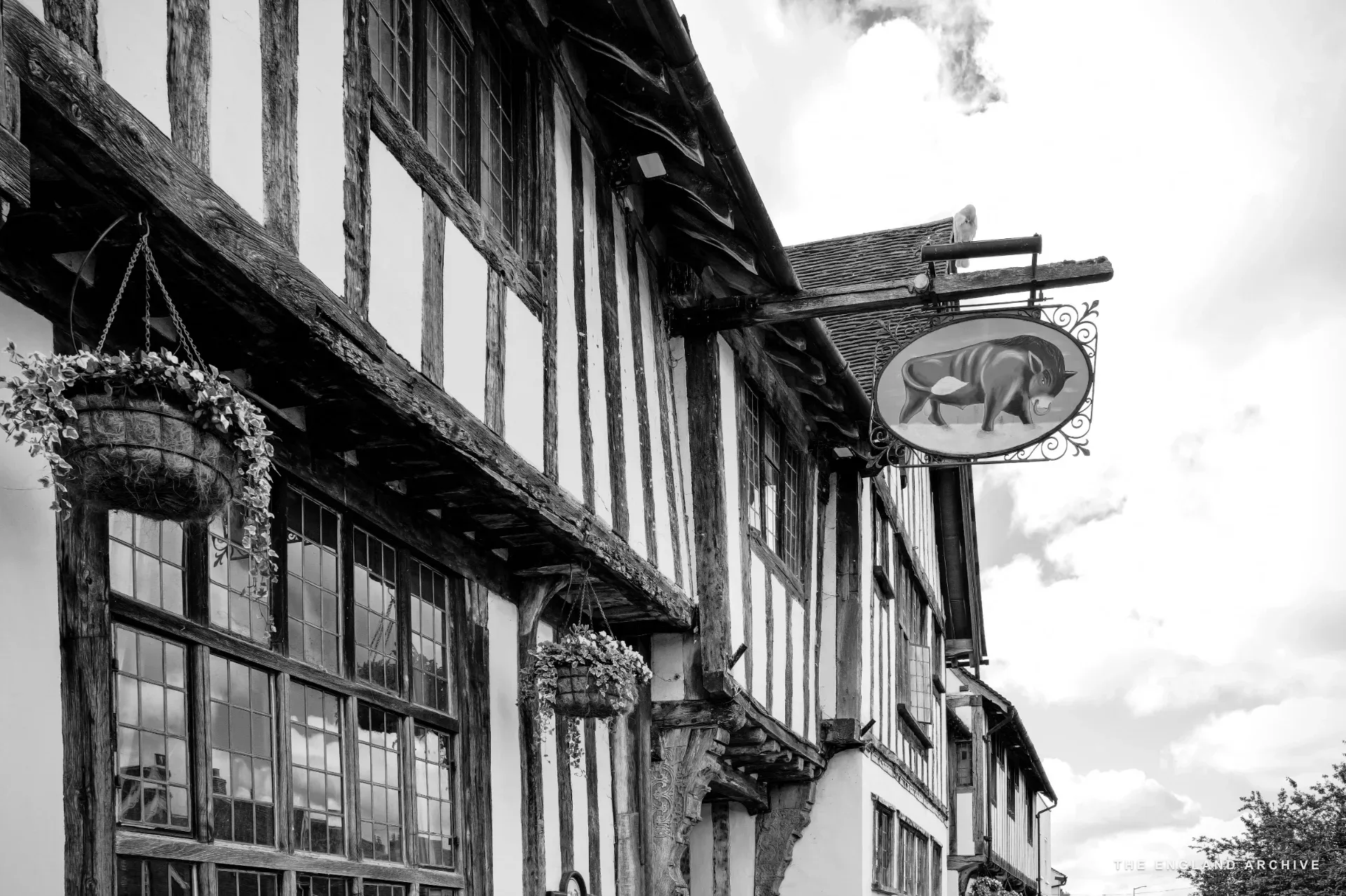
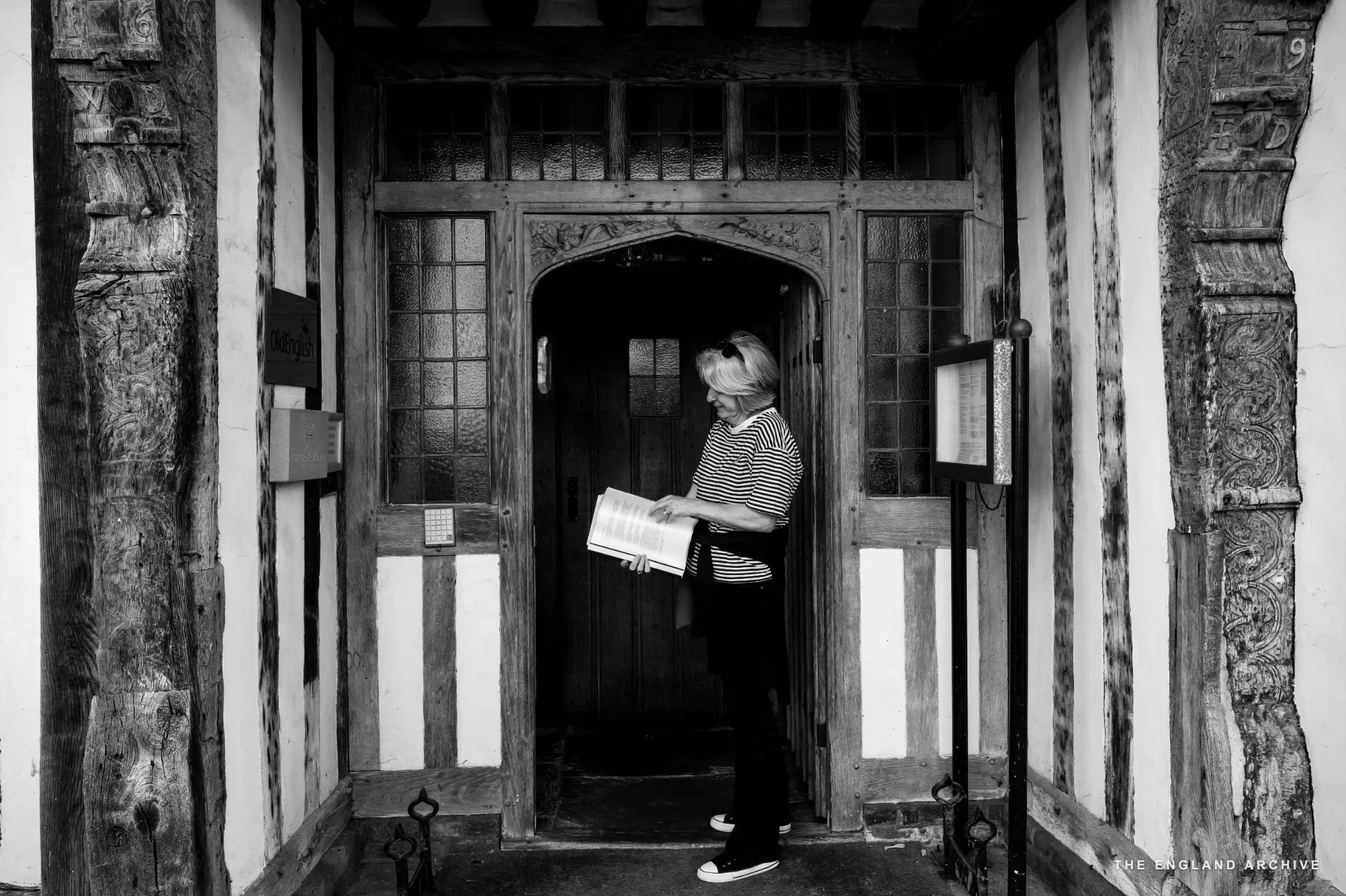
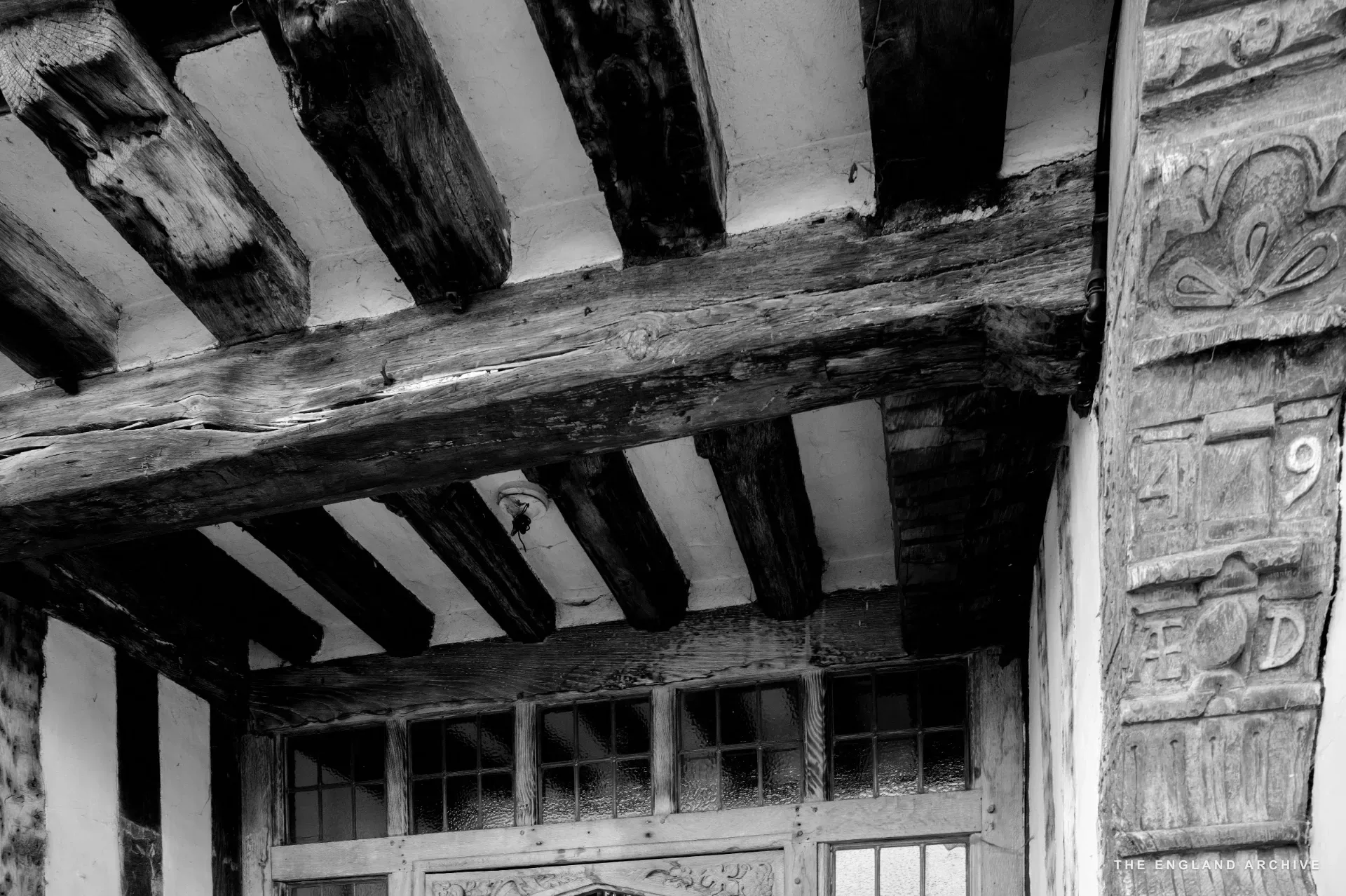
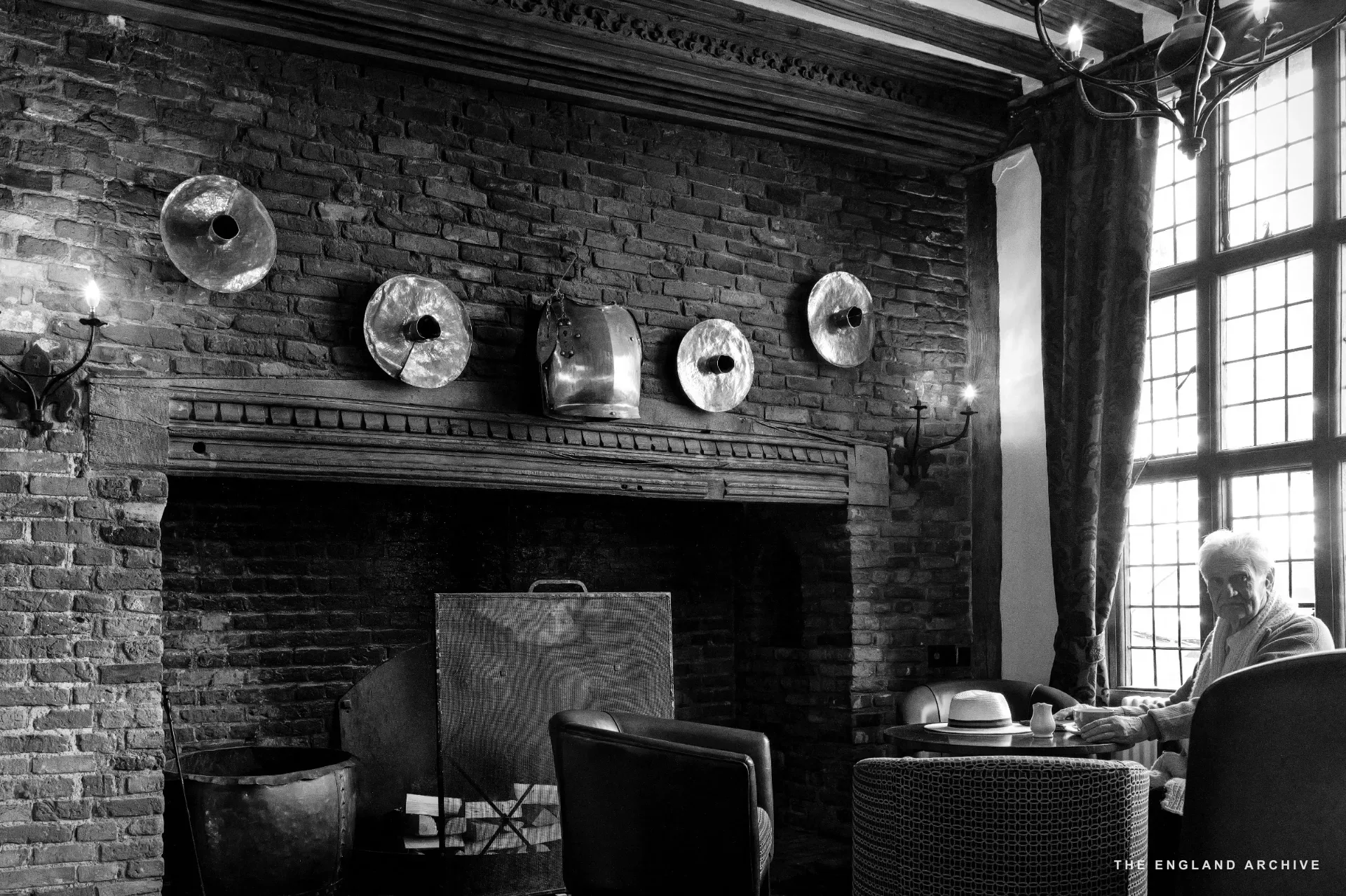
Heading south on the east side, the Bull Hotel dominates that stretch of the street. Big black and white timber-framed frontage, the kind of building that photographs itself. It was built around 1450 as a wealthy wool merchant’s house, and has been an inn since roughly 1580. That is 450 years of continuous operation. John Lennon stayed here for a spell in the 1960s.
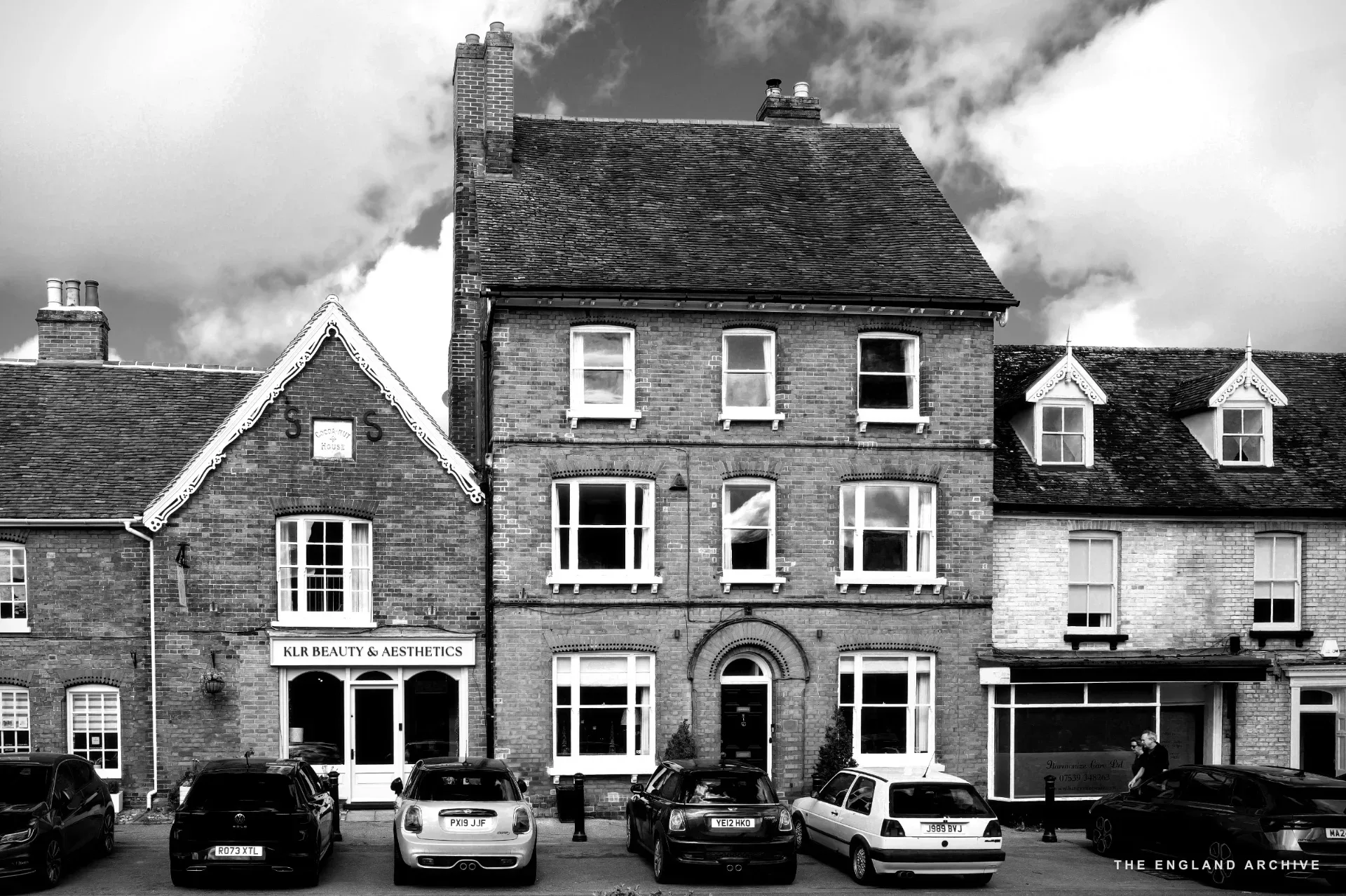
Opposite the Bull, tucked behind the Village Hall down Chemists Lane, is the Long Melford Heritage Centre. This is where the finds from the 2011 Long Melford Dig are displayed, along with Roman artefacts recovered over the years and old photographs of the village.
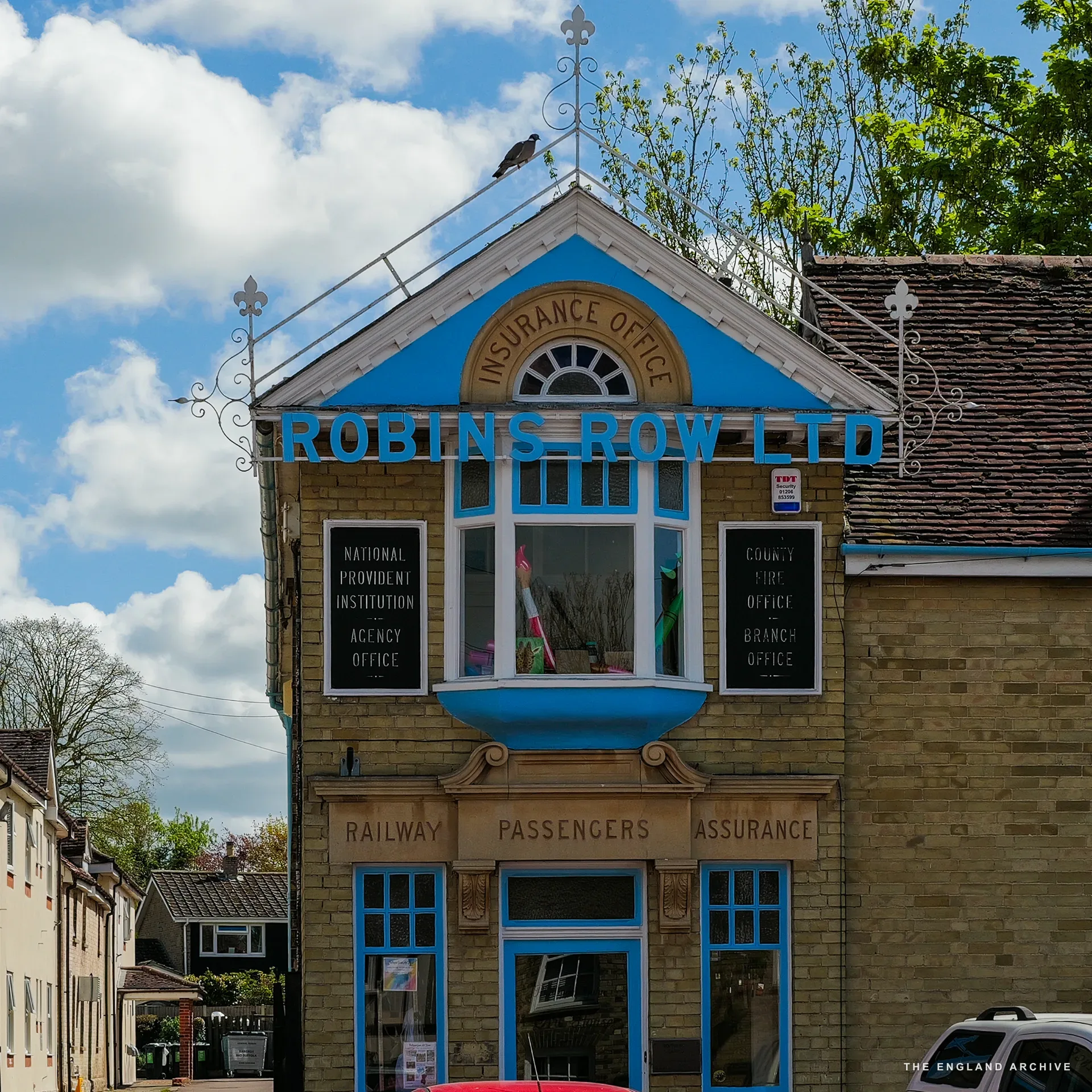
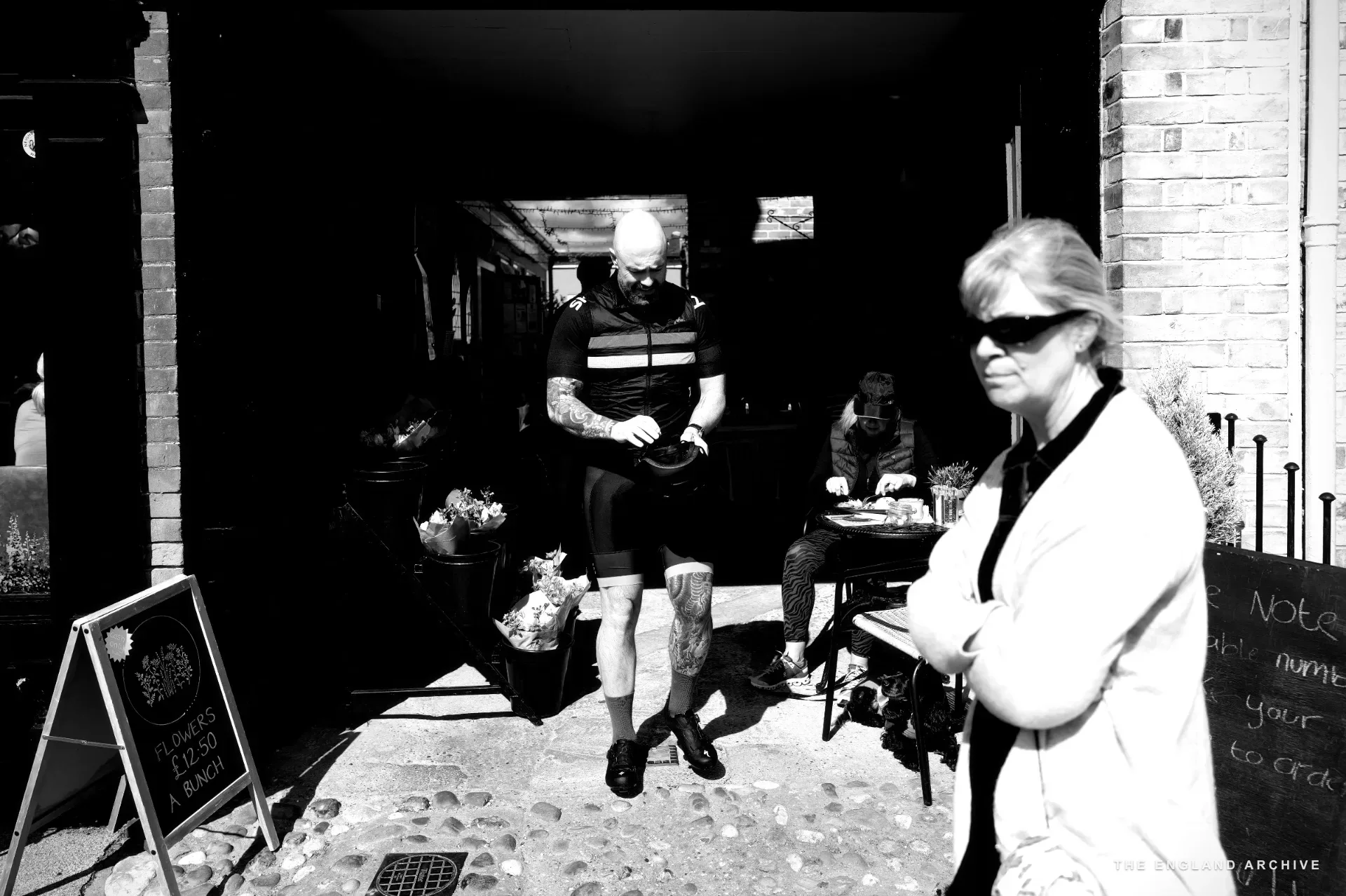
Further along, the Black Lion sits on the Green. 15th century, log fires, the kind of coaching inn that survives because enough people still want an evening in a building like this. The Hare, The Bull, The Swan, The Crown, The Cock & Bell and The George and Dragon are the remaining public houses left now. Several of these are genuine Pillar 5 subjects for the archive, interior-led, best shot on a dim afternoon with the bar lights on.
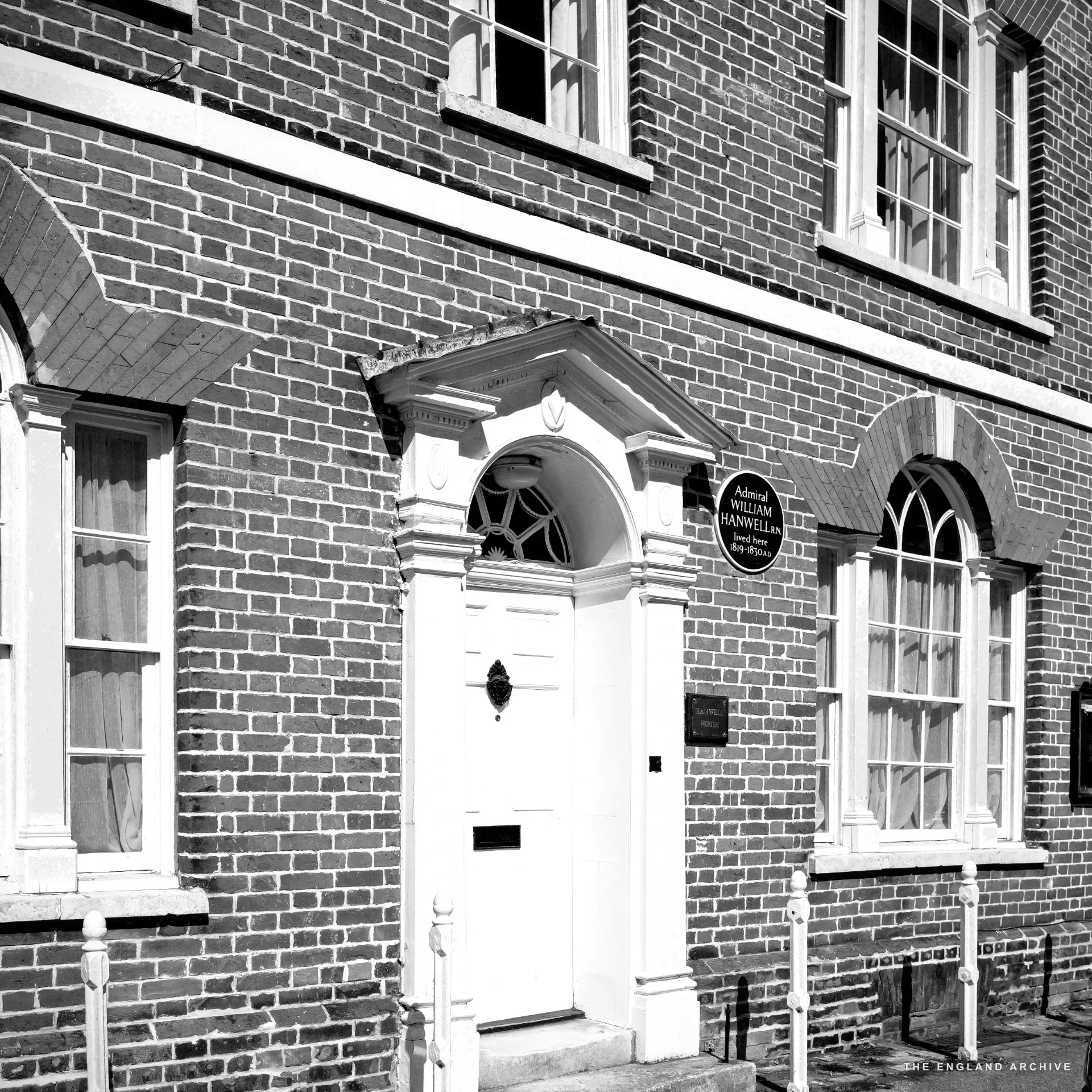
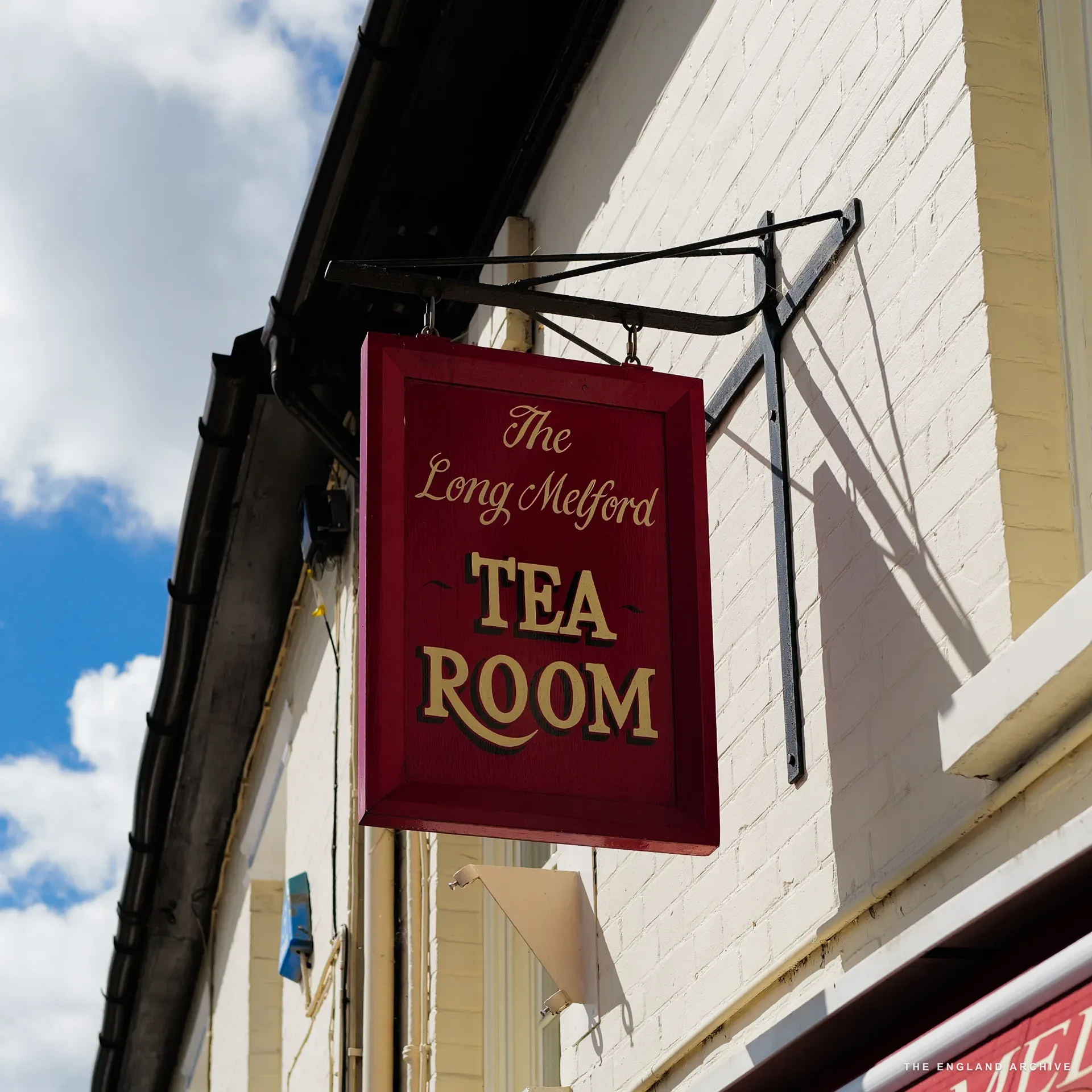
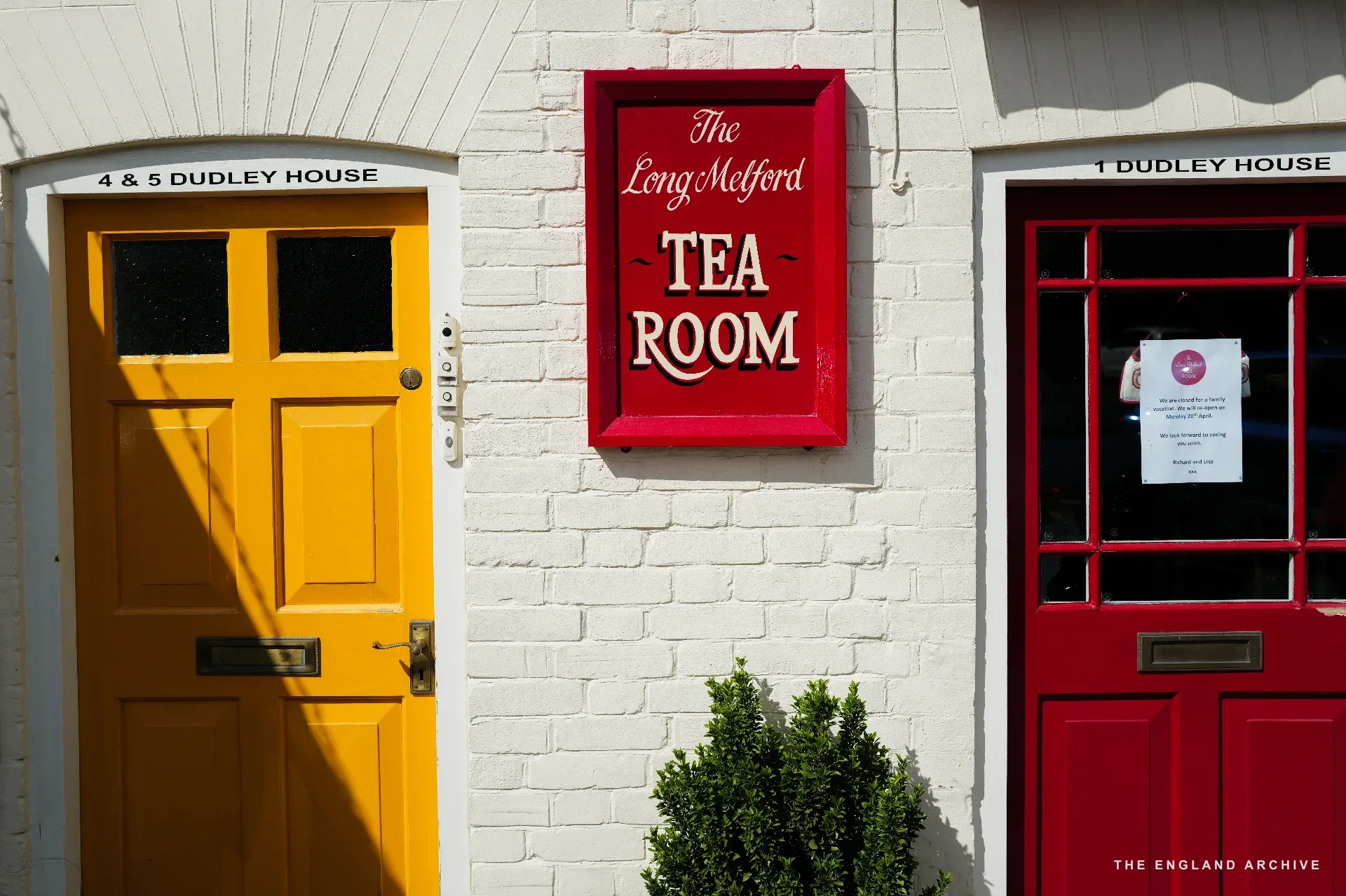
At the point where Chad Brook crosses under the road you pass Old Mill House. This is the ford in the village’s name. Melford means Mill Ford. The stone bridge is worth a frame on its own.
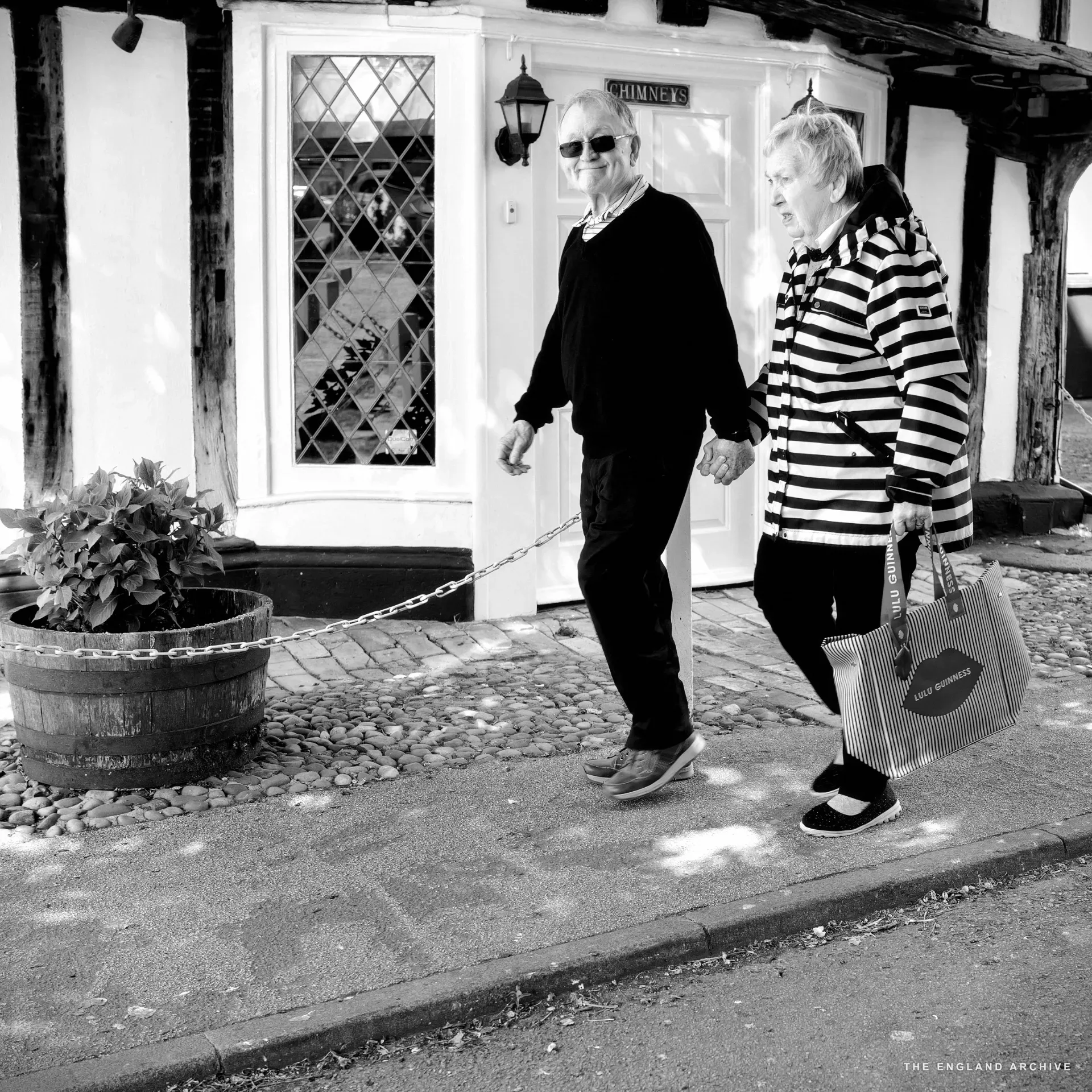
Further south again, past Chapel Green, is where Michael Wood and a team of villagers excavated part of a Roman road in 2011 for the BBC series The Great British Story. Iron Age finds from the same year pushed the occupation back further. Mesolithic material found nearby takes the settlement story back to 8,300 BC.
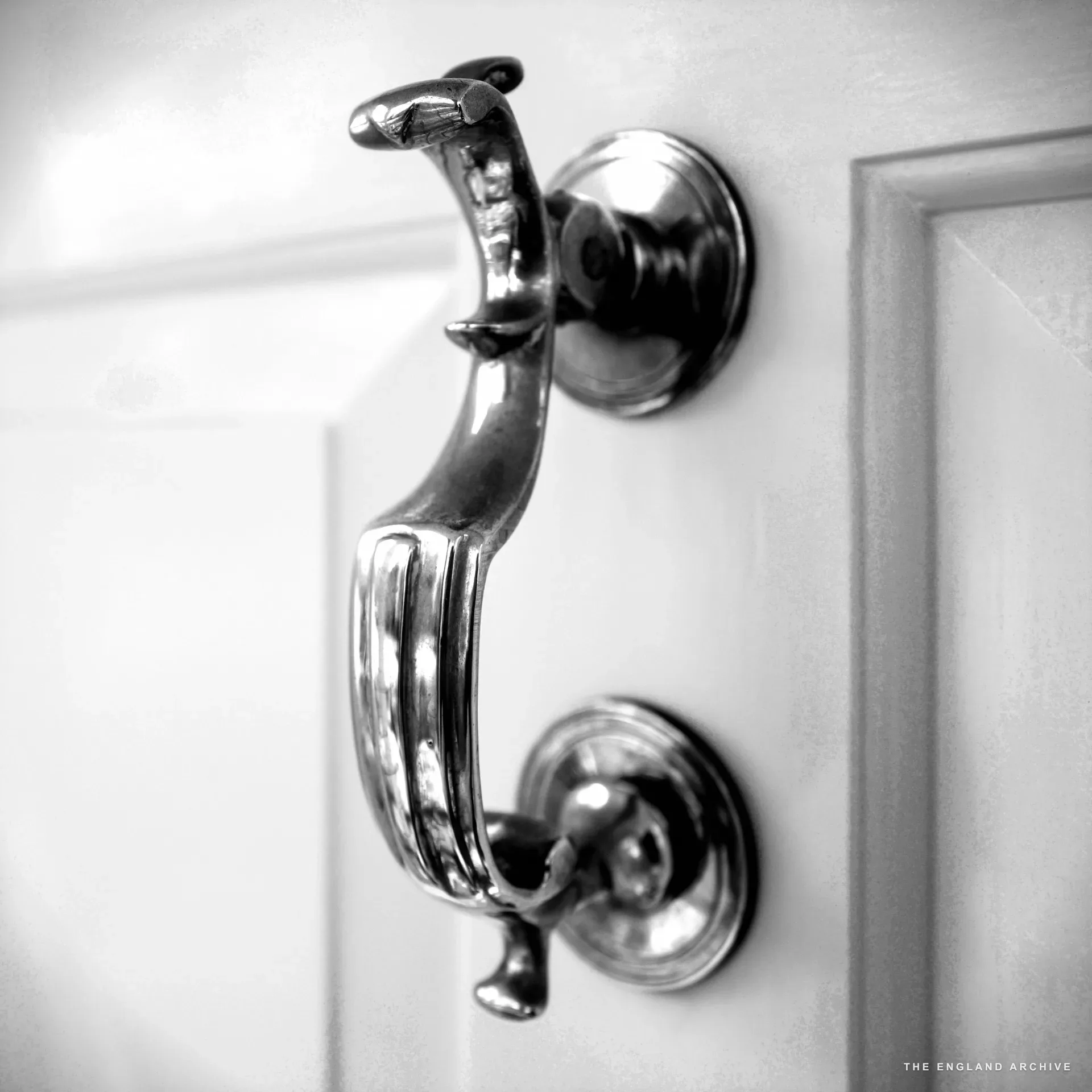
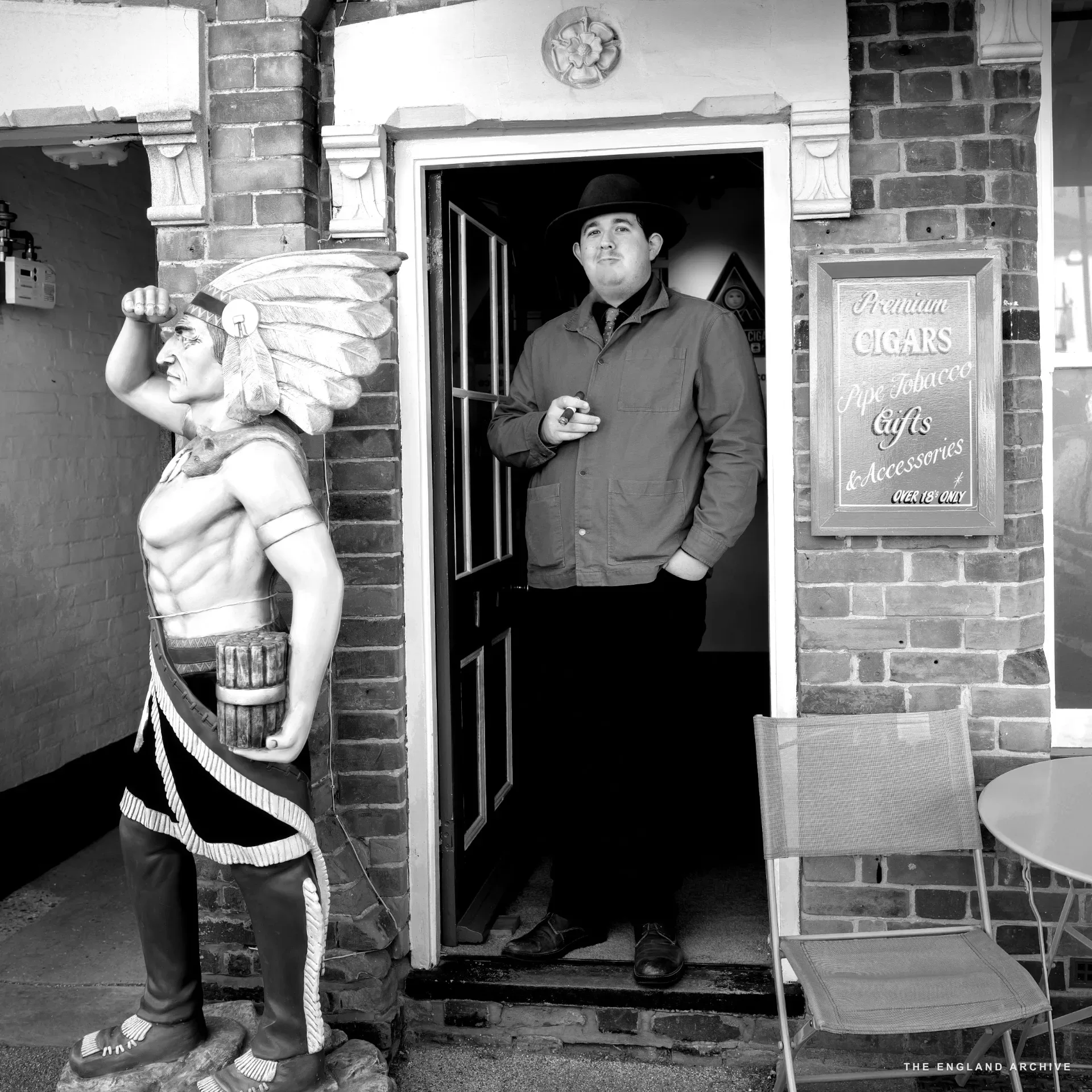
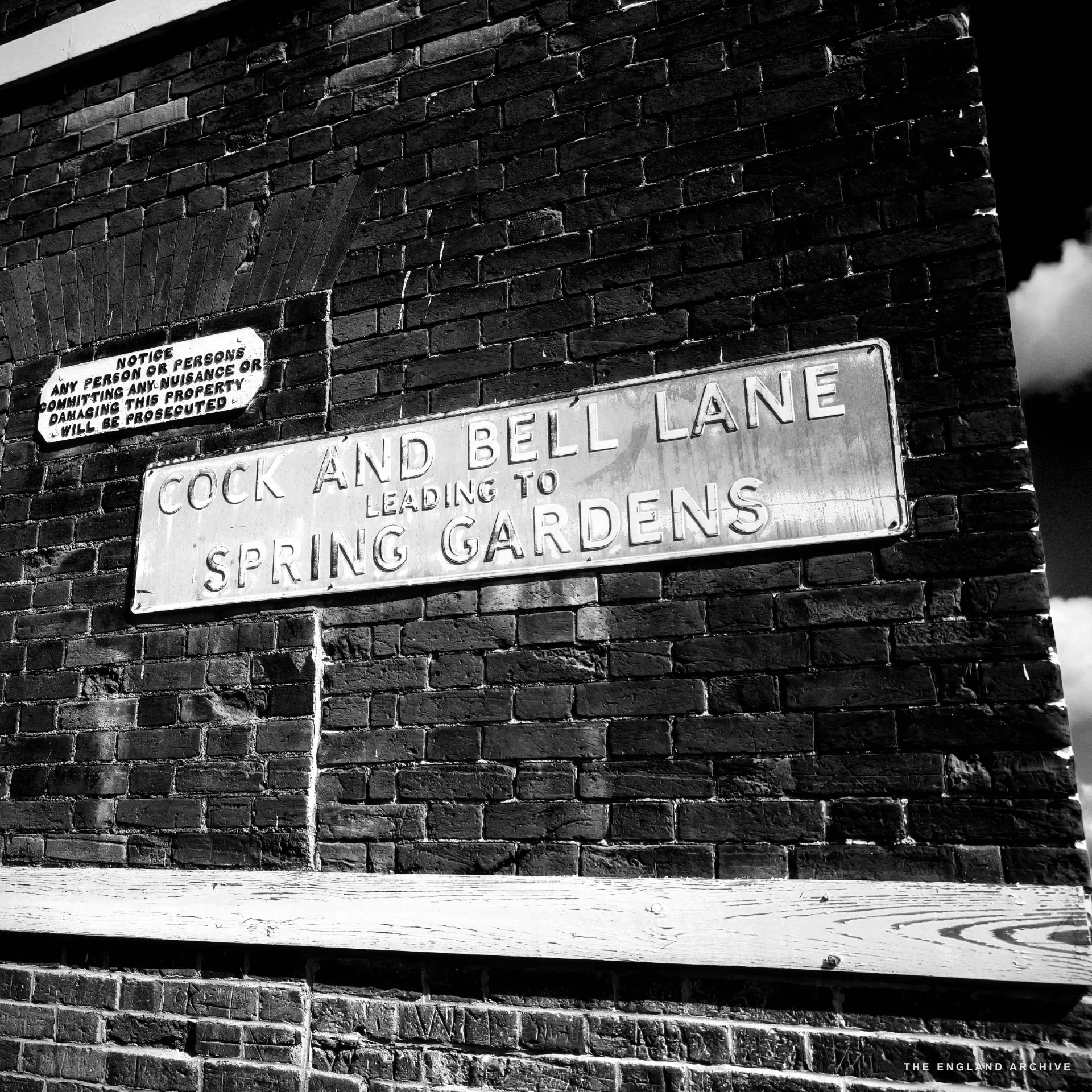
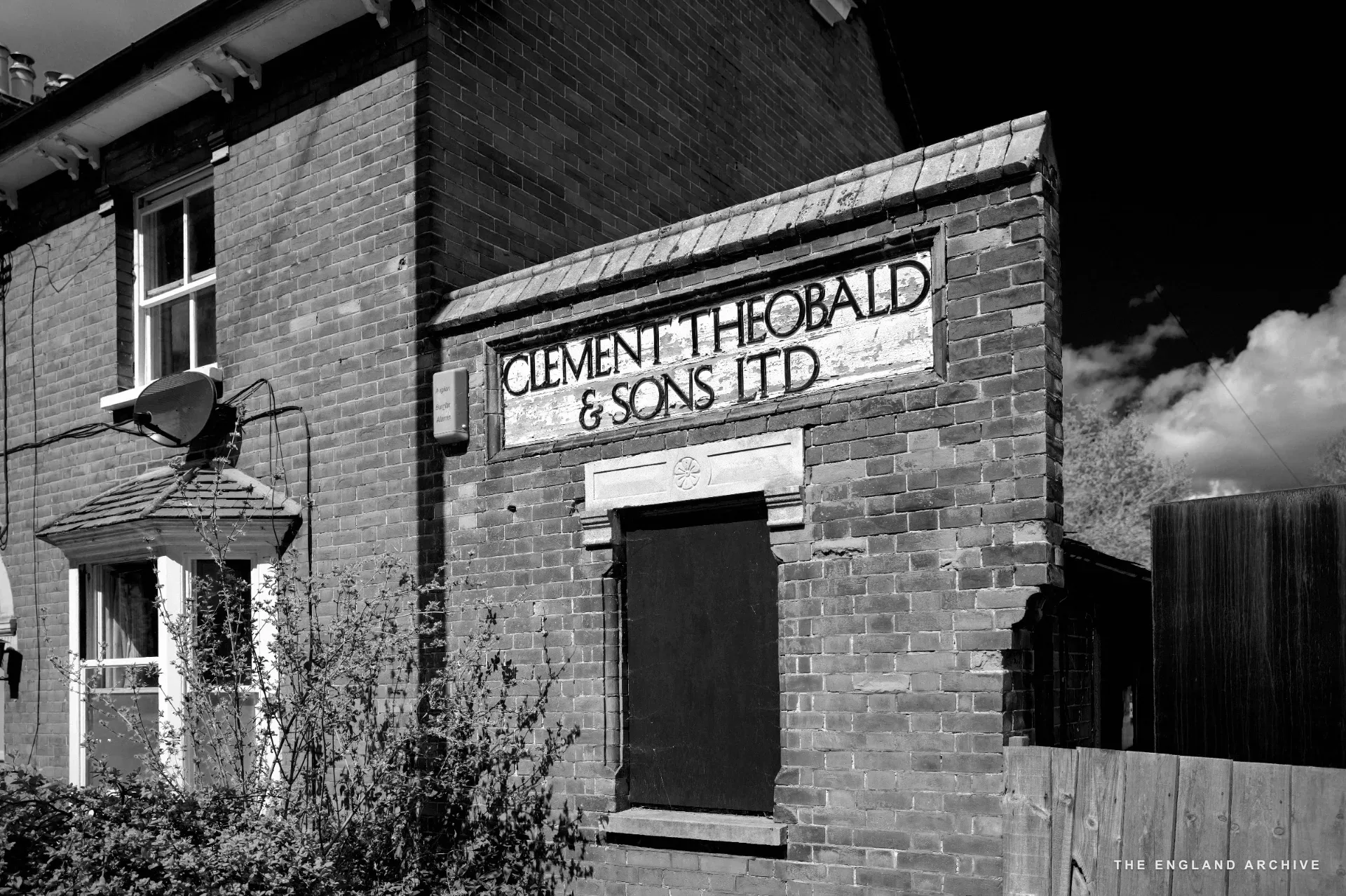
Julie turned us off the main street before we reached the antique centre at the far south end.
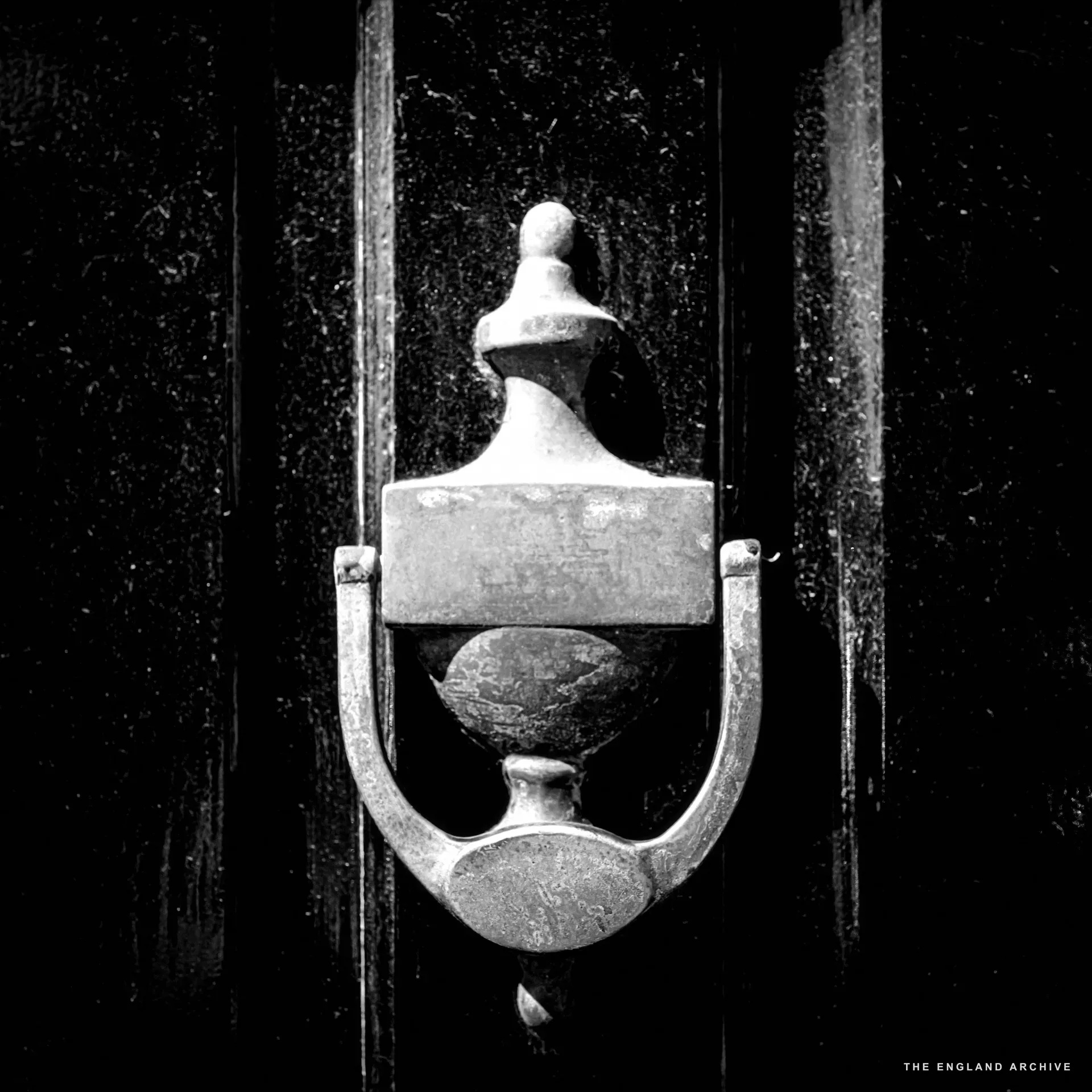
Liston Lane and St Catherines Road
We turned right off the main street into Liston Lane, and the register of the walk changed completely.
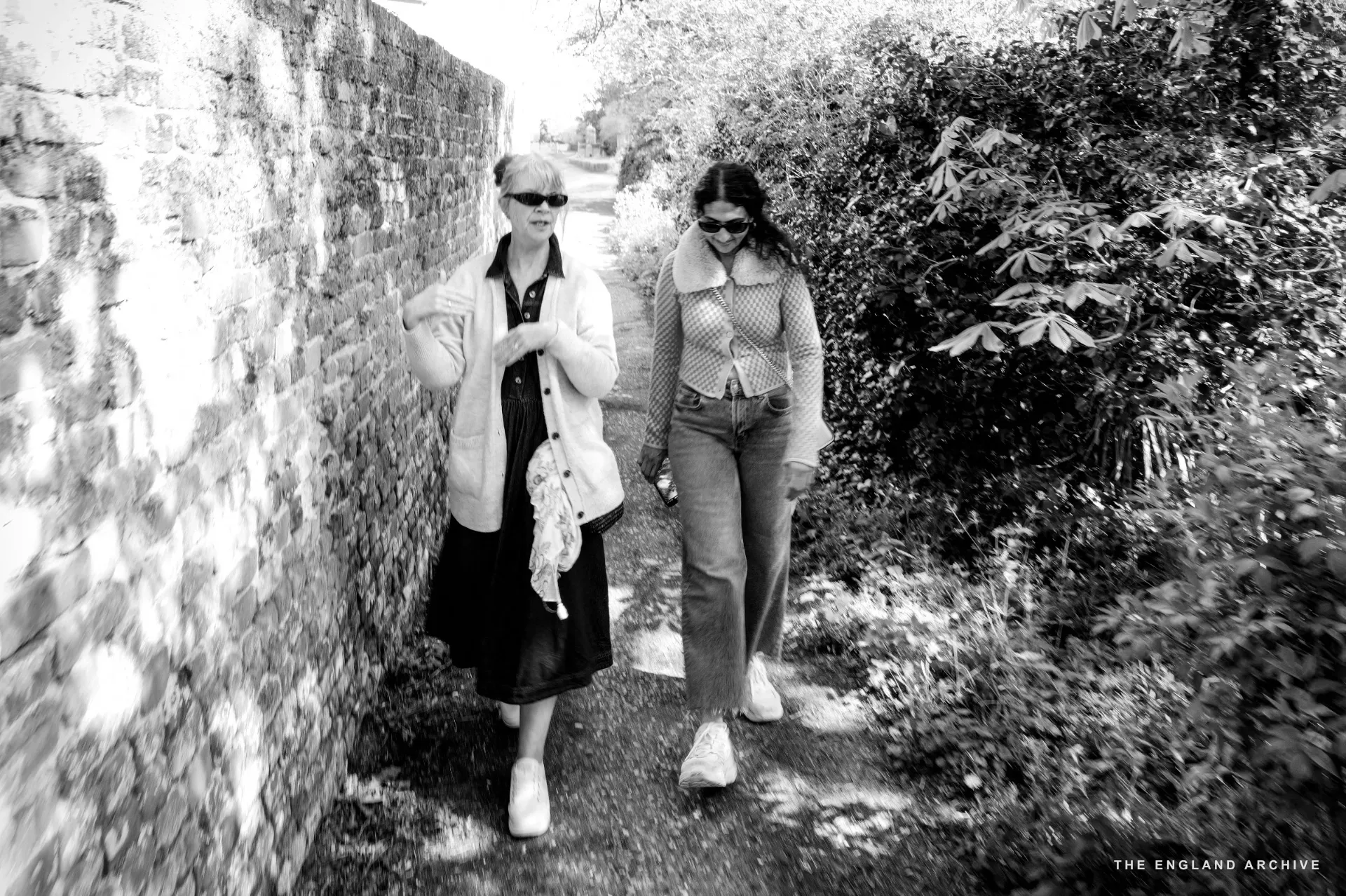
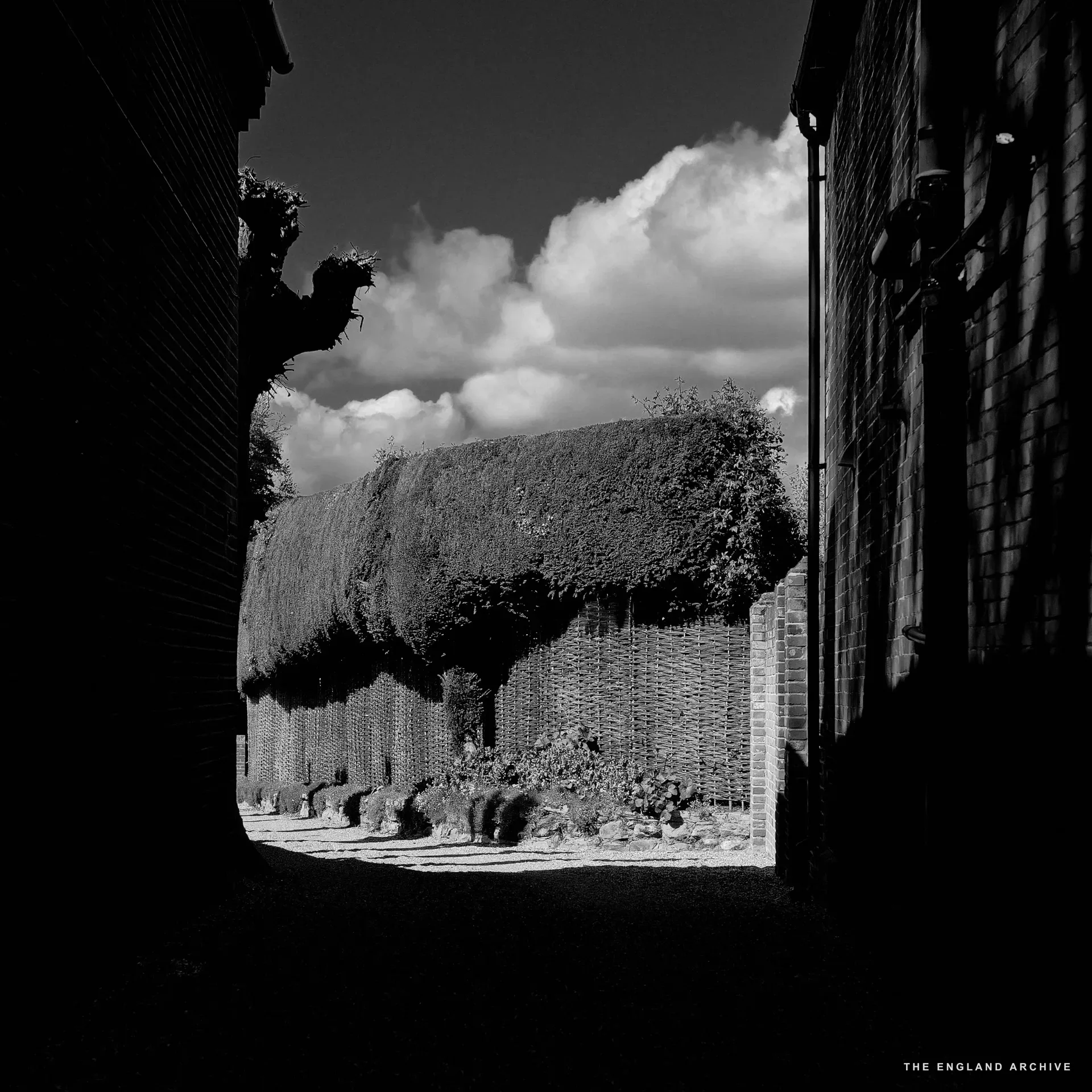
Liston Lane is residential. Ordinary brick houses, gardens, parked cars, the kind of street that never appears in any guidebook because there is nothing there to sell. This is where Long Melford actually lives. The Hall Street frontage is the face the village shows the outside world. The lanes, side roads and estates are where the life happens.
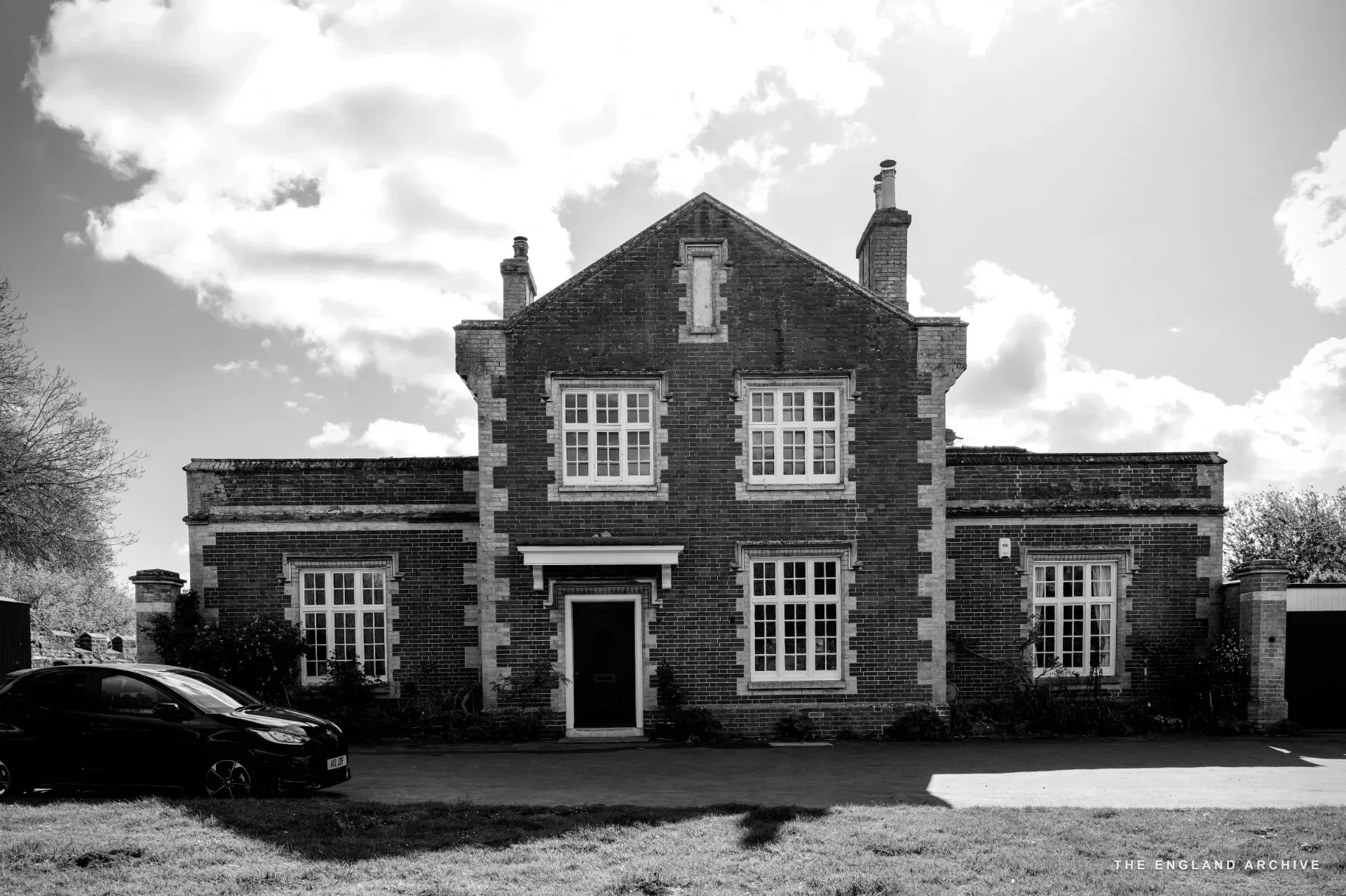
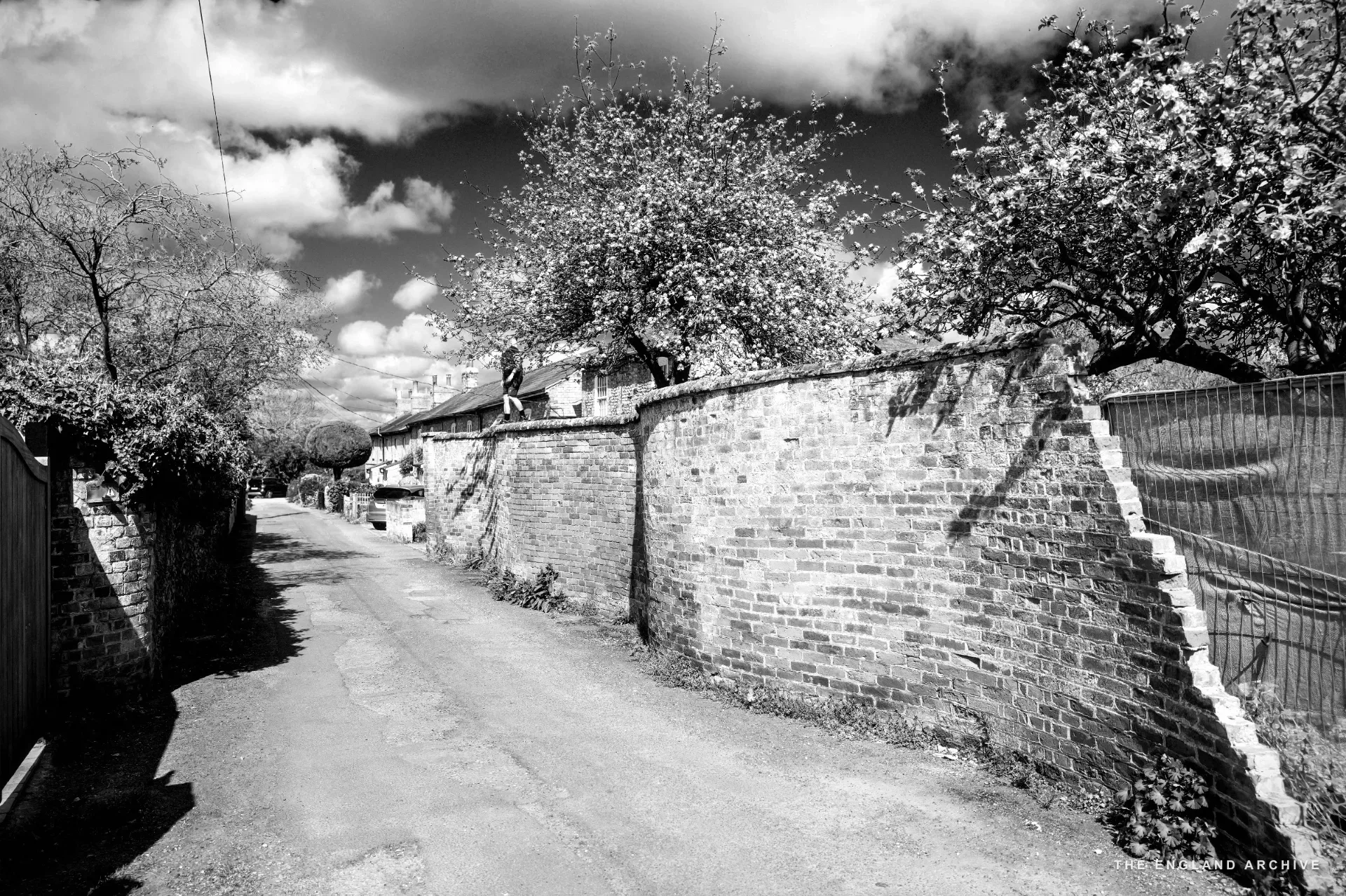
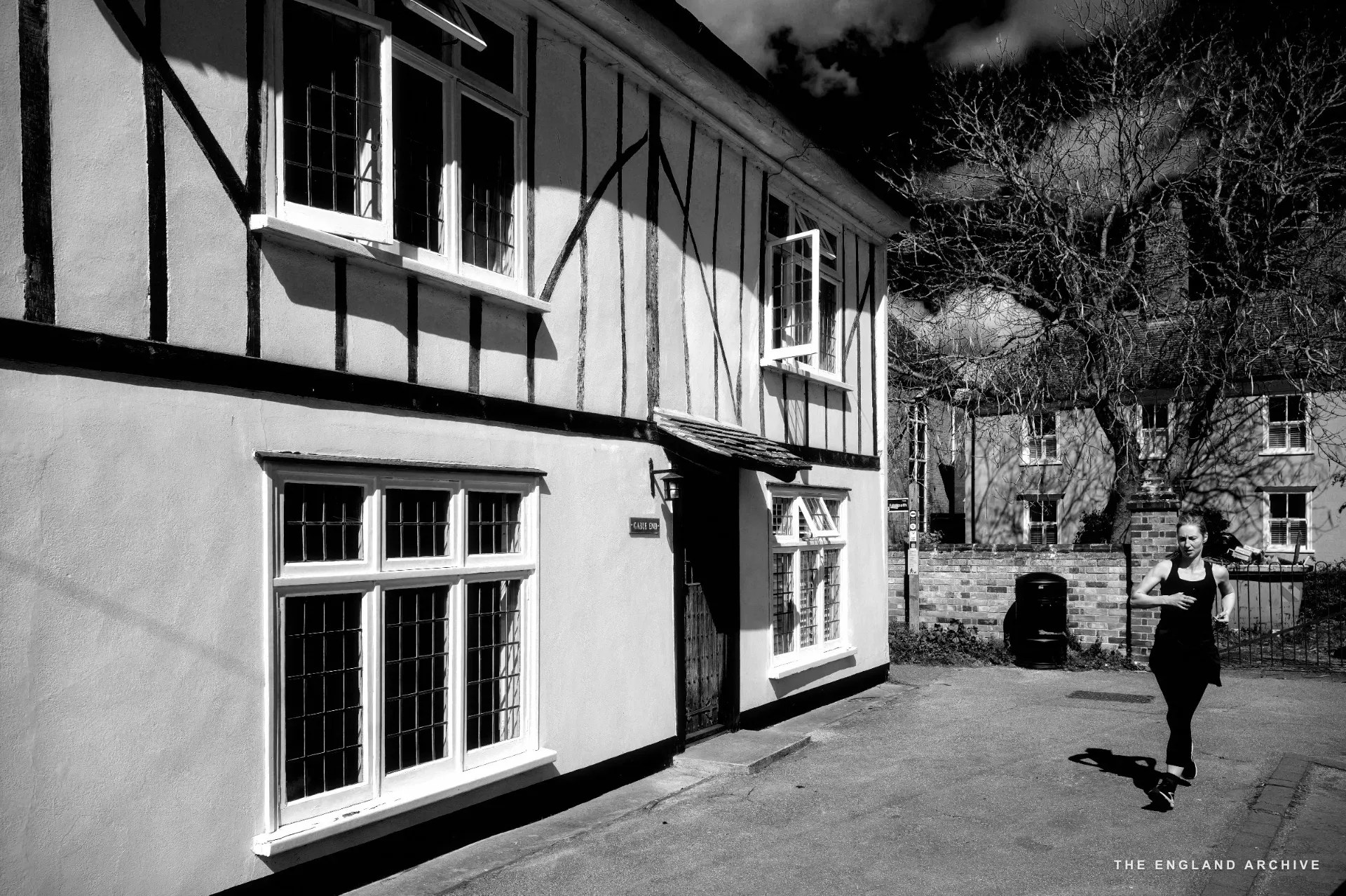
Julie talked about the houses as we passed them. Who had lived where. Which families had stayed through generations. Which ones were new. Melonie chimed in with the sharper edge of that same knowledge. She could tell you who had been born in which front bedroom, who the grandparents were, who had married into the village and who had married out.
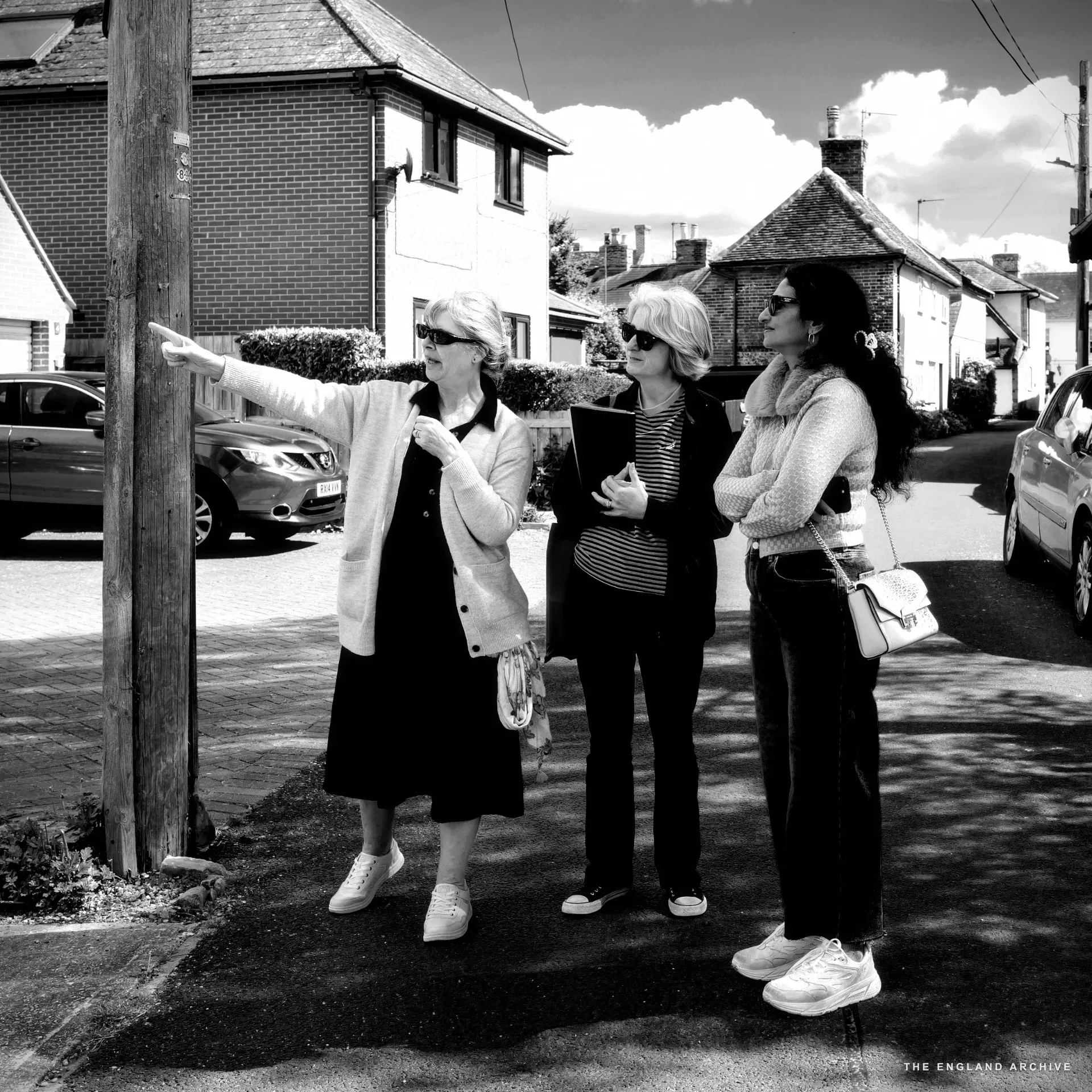
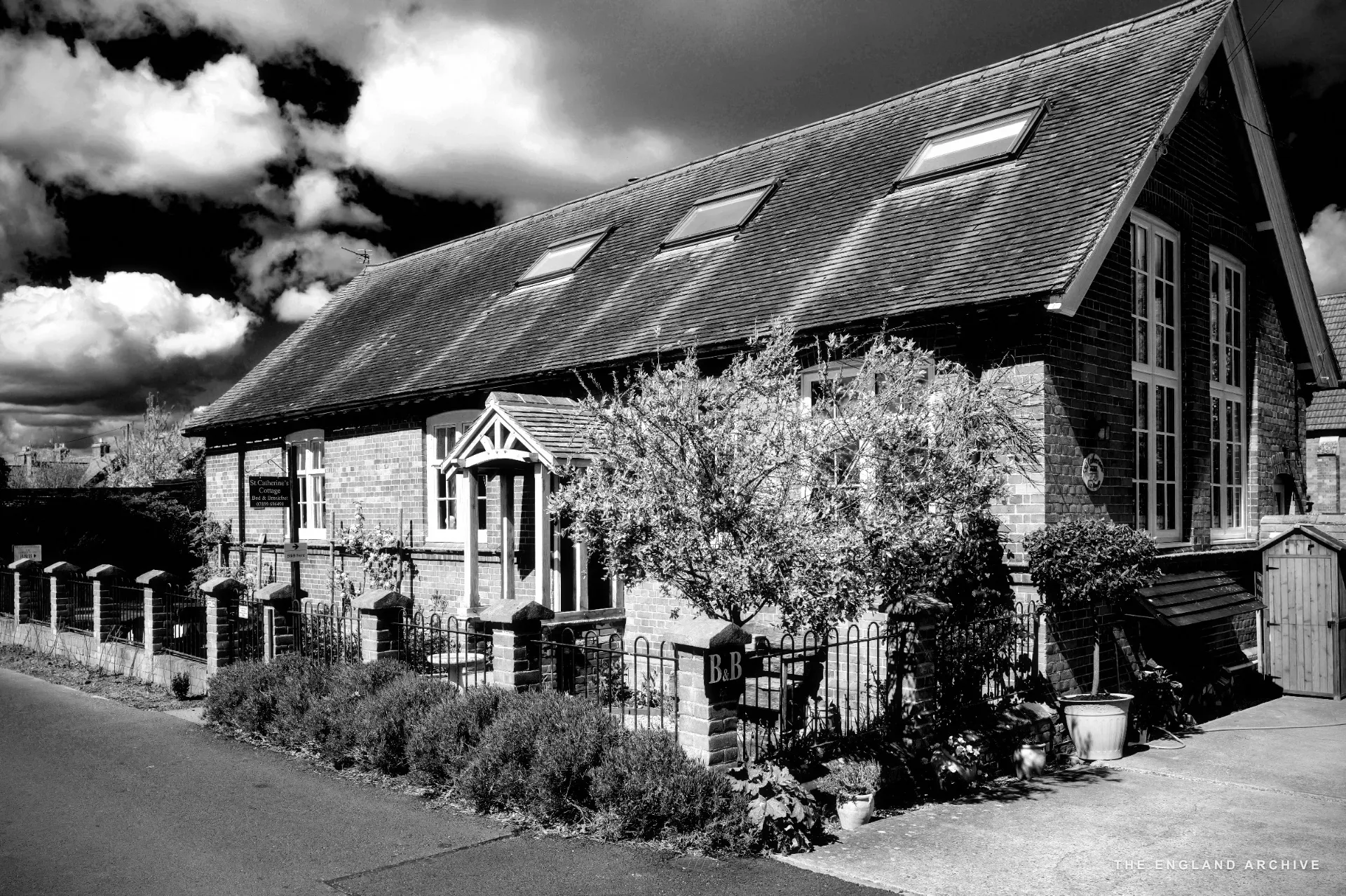
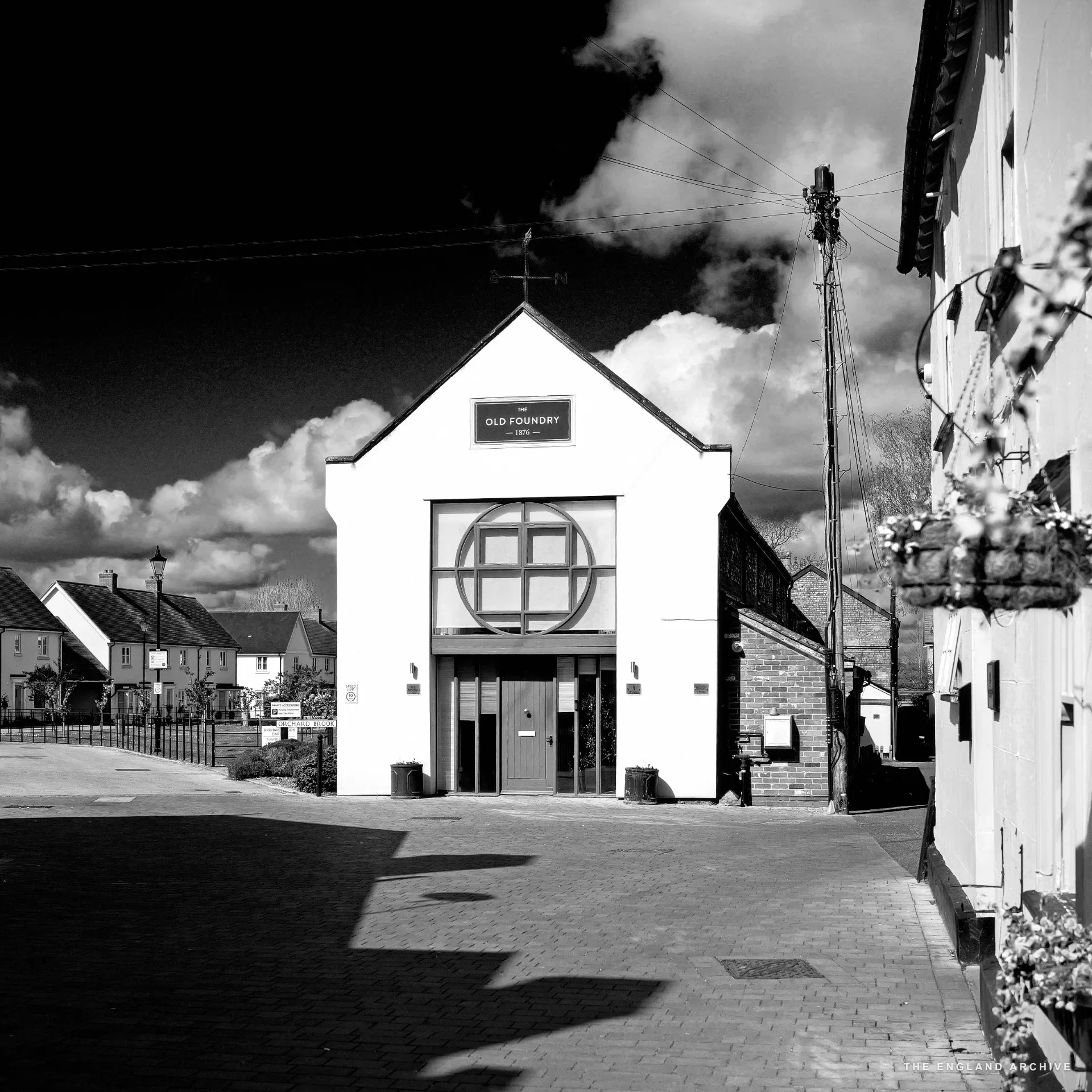
This is the part of village documentary work that you cannot do from a guidebook. You have to be walked through it by someone who knows. And you have to do it slowly enough that the stories have time to surface.
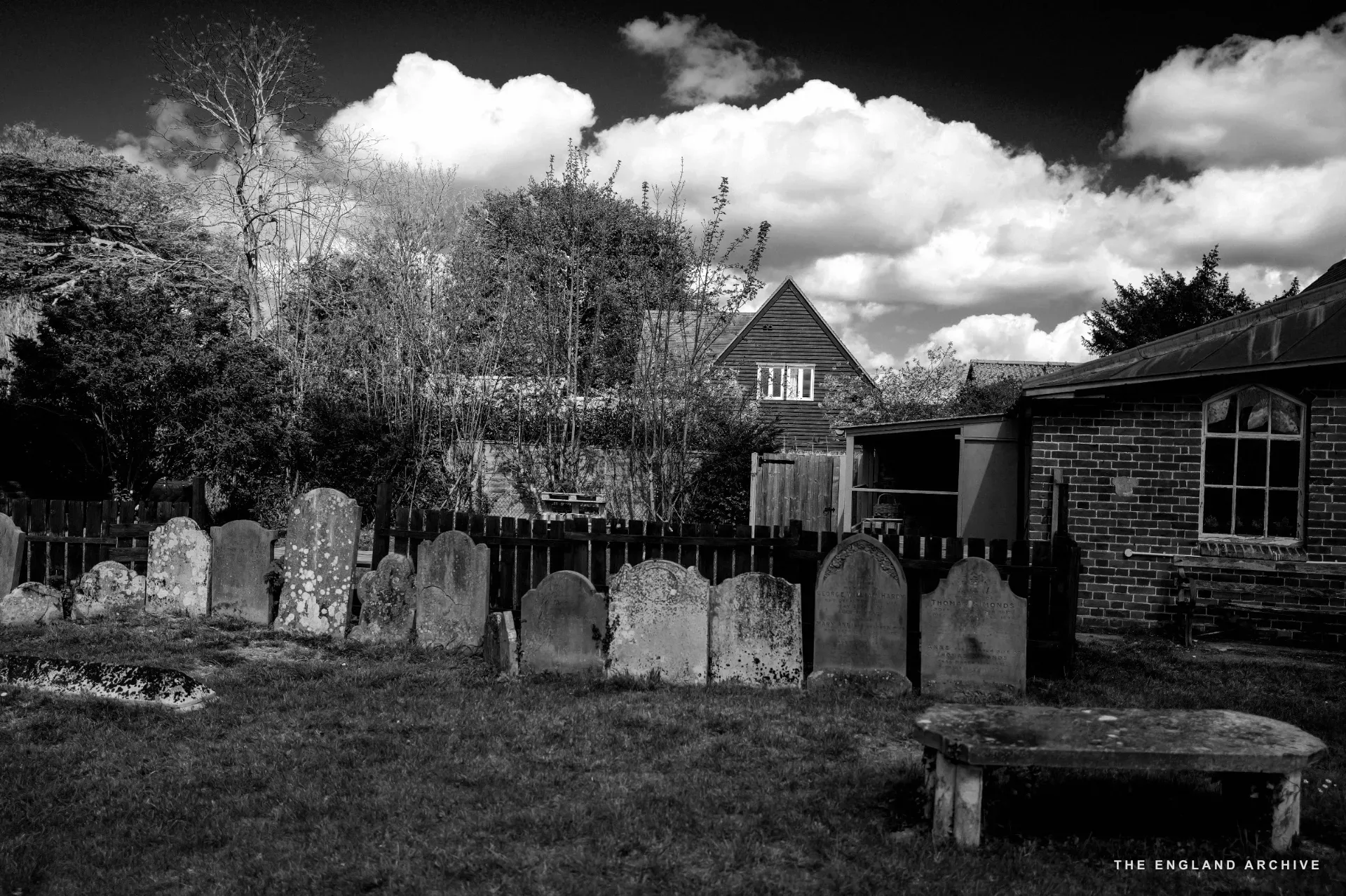
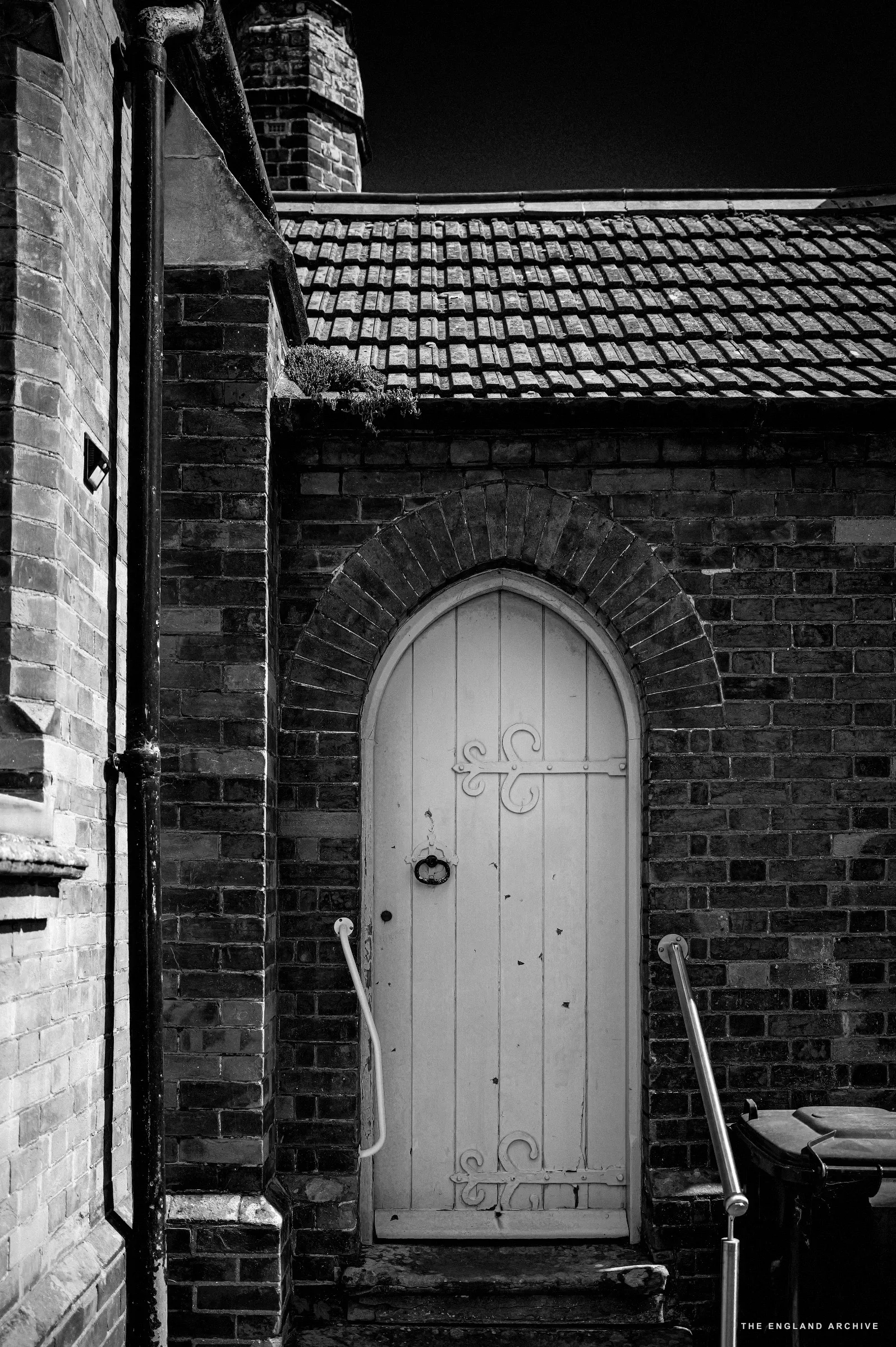
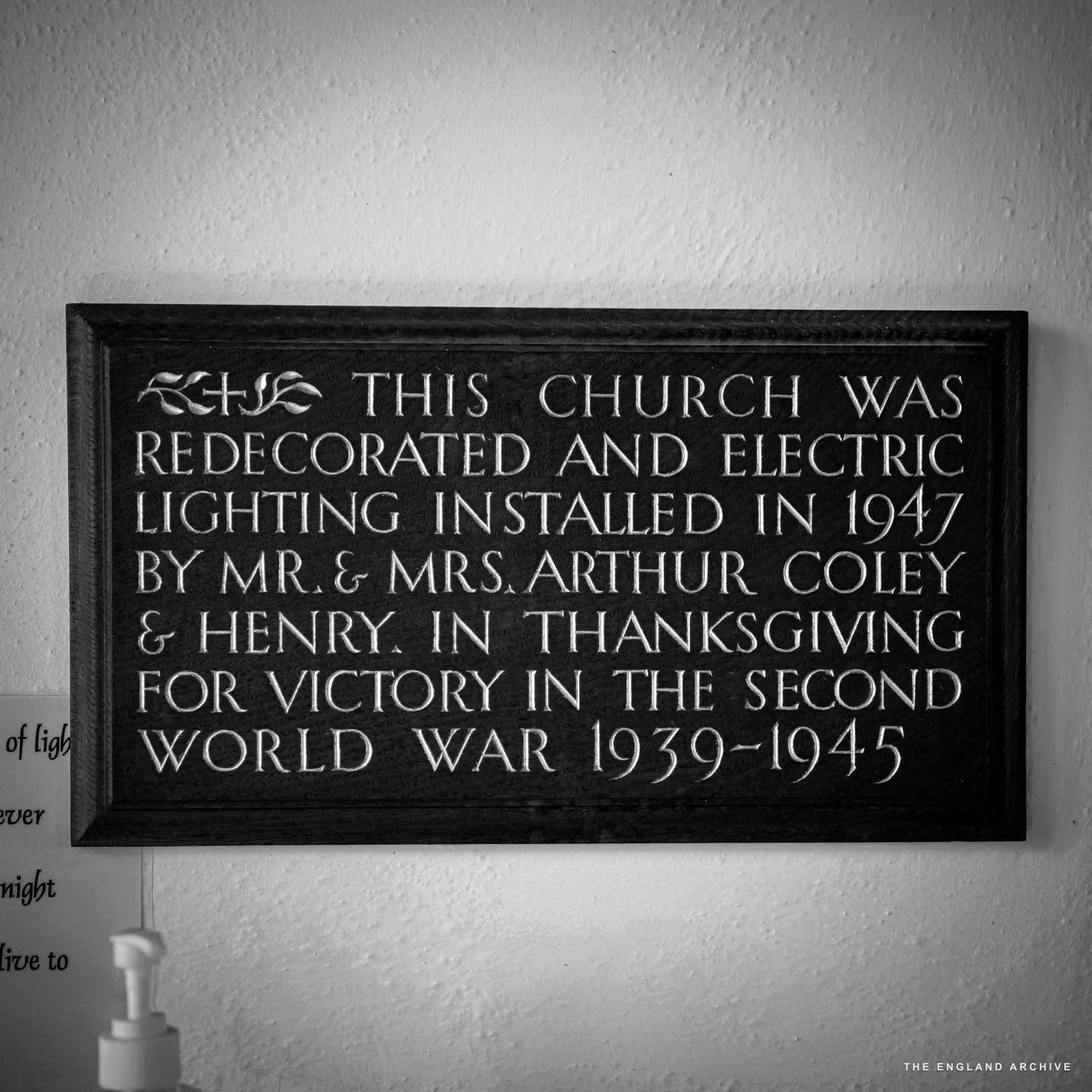
Toward the Stour
The back of the village fell away into countryside. The lanes thinned. Fields opened up. We kept walking west and south, and the land began to slope gently toward the river.
The Stour is the boundary between Suffolk and Essex. It has been for centuries. On one side you are in East Anglia proper, wool country, flint churches, pink-washed cottages. On the other side you are into the Essex watershed that flows down to the coast at Manningtree and Harwich. Long Melford sits about three miles north of the actual county line at Sudbury, but the parish footpaths take you right down to the river.
This is Constable country in its upper reaches. A few miles south of where we were walking, the same river runs through Dedham Vale, where Constable painted The Hay Wain. The water meadows, the slow-moving river, the willow trees leaning over the banks, the specific greens of the grazing land in spring, all of it is a single cultural landscape that stretches from here down to the sea. Long Melford is at the top end of that landscape. You can feel it in the light on the river.
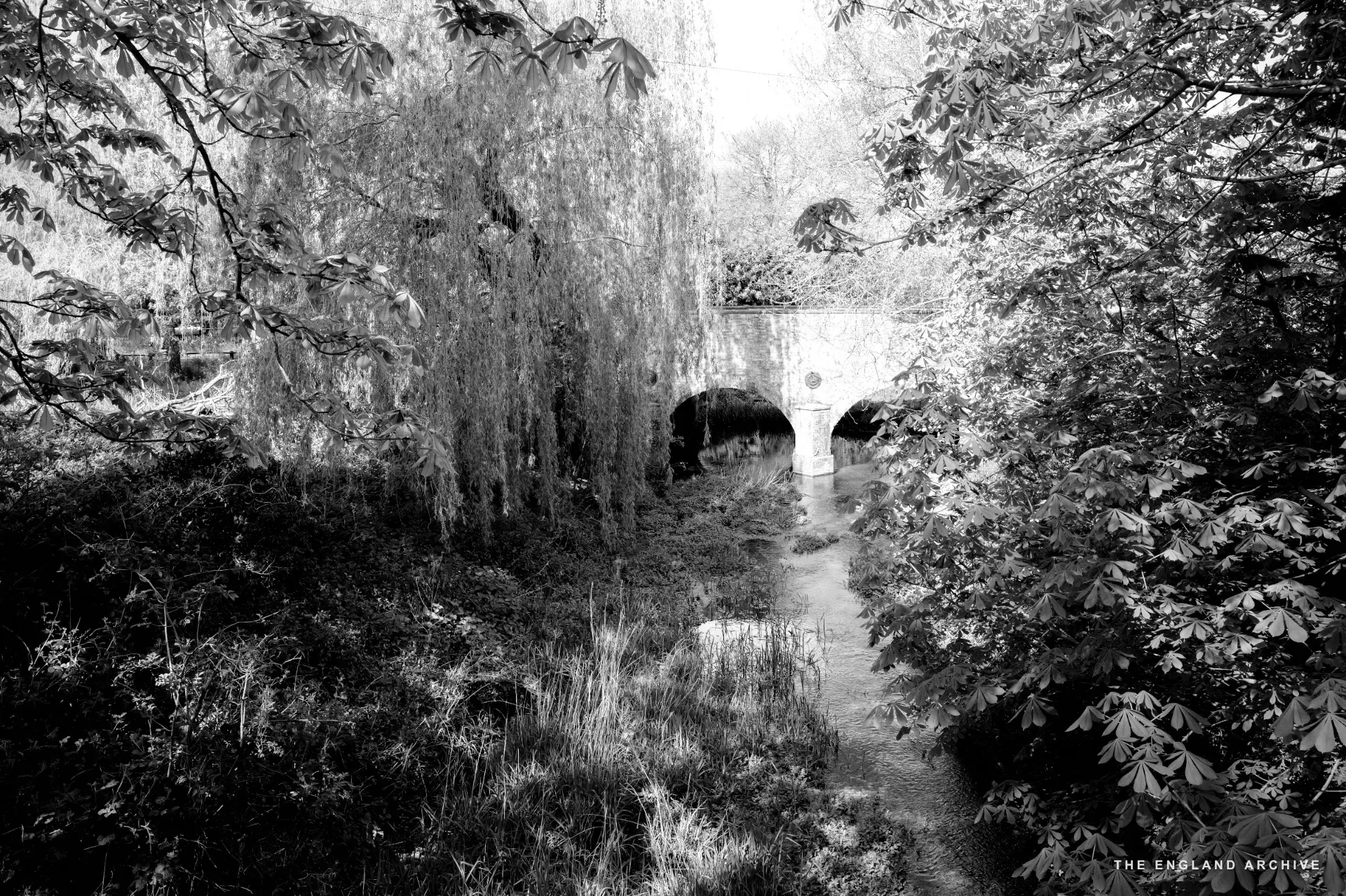
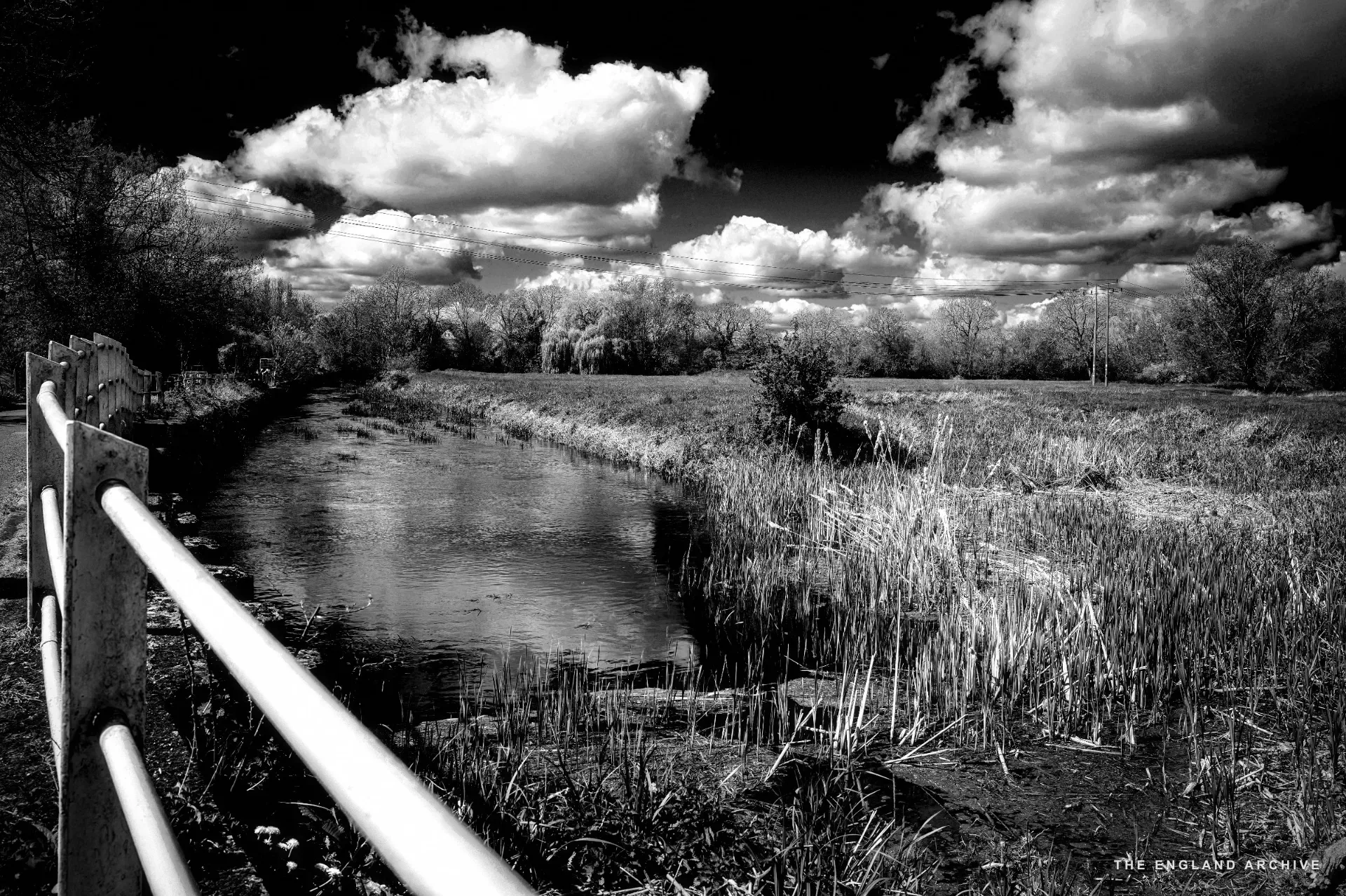
We reached the water, stood on the bank for a few minutes, and turned back.
Into the woodlands
On the way back we did not retrace our steps. Julie took us into the woodlands on the eastern side of the village, where the footpaths loop around through managed woodland and back toward Hall Street from a different angle.
The woods here are a mix of old standards and coppiced hazel, with ash and field maple throughout. This is the kind of landscape that reads as timeless but is actively managed. Someone cuts the coppice. Someone maintains the paths.
Melonie was in her element here. She remembered playing in these woods as a child. Where the dens had been. Which paths the children used and which ones the adults used. Whose land technically belonged to whom.
When she stops walking through it, that version is gone.
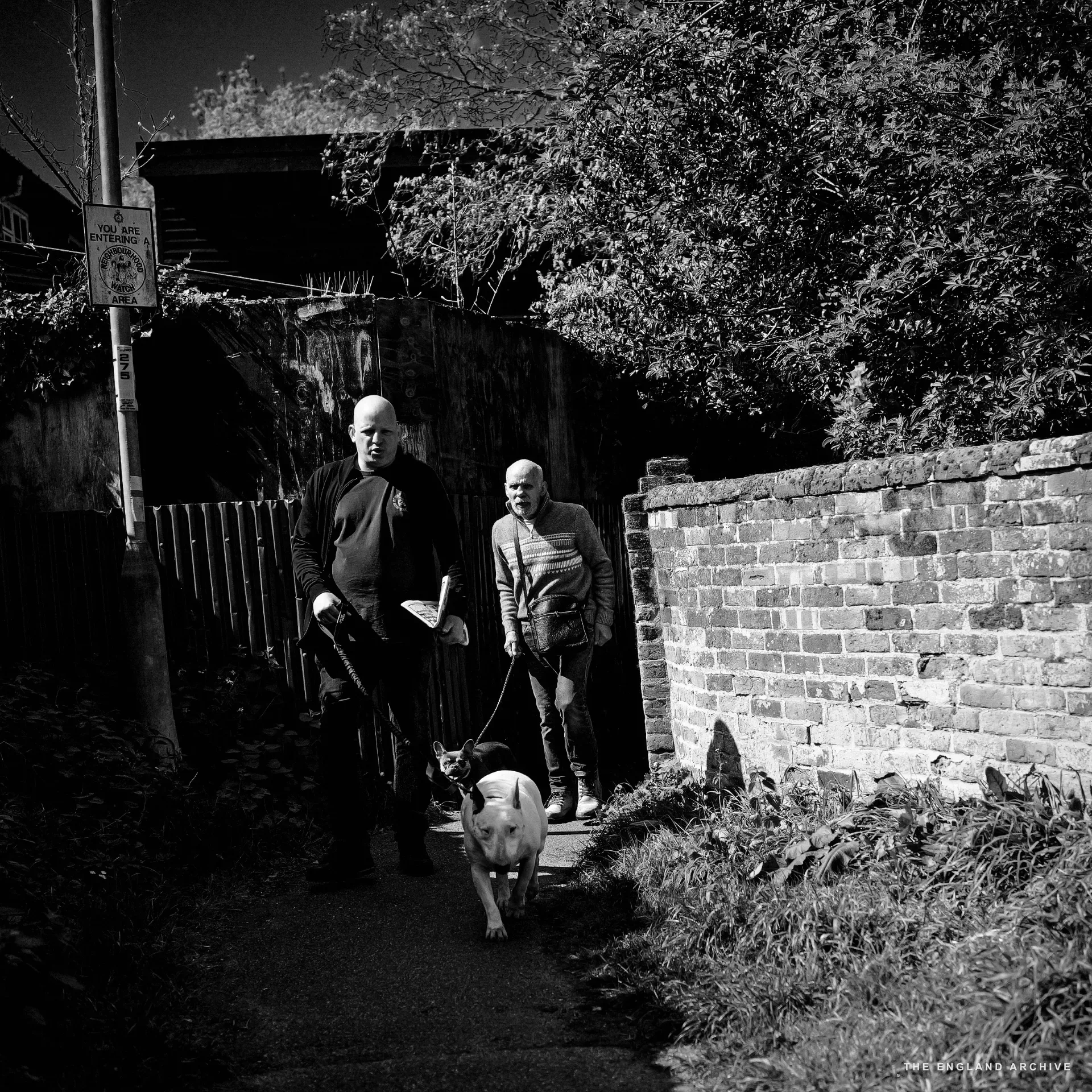
The railway and the bridge
We came out of the woods onto a straight stretch of ground that was noticeably flatter and more even than the land around it. Melonie pointed it out. We were walking on the bed of the old railway.
The line was the Stour Valley Railway, with its branch to Bury St Edmunds. It opened on 9 August 1865 and ran for almost a century. The Bury branch closed to passengers on 10 April 1961. The main Stour Valley line closed in 1967 under the Beeching cuts. The tracks are gone now. The station building at Long Melford survives as a private house. The trackbed has been preserved in places as the Melford Walk, which the Parish Council manages as a footpath and wildlife corridor, running for about a mile and a quarter along the eastern edge of the village.
A few brick arch bridges remain along The Melford Walk, but here, where the old line crossed a small stream, we found what remained of an old iron railway bridge. The water running through is shallow enough that children could play in it and deep enough that they could die in it.
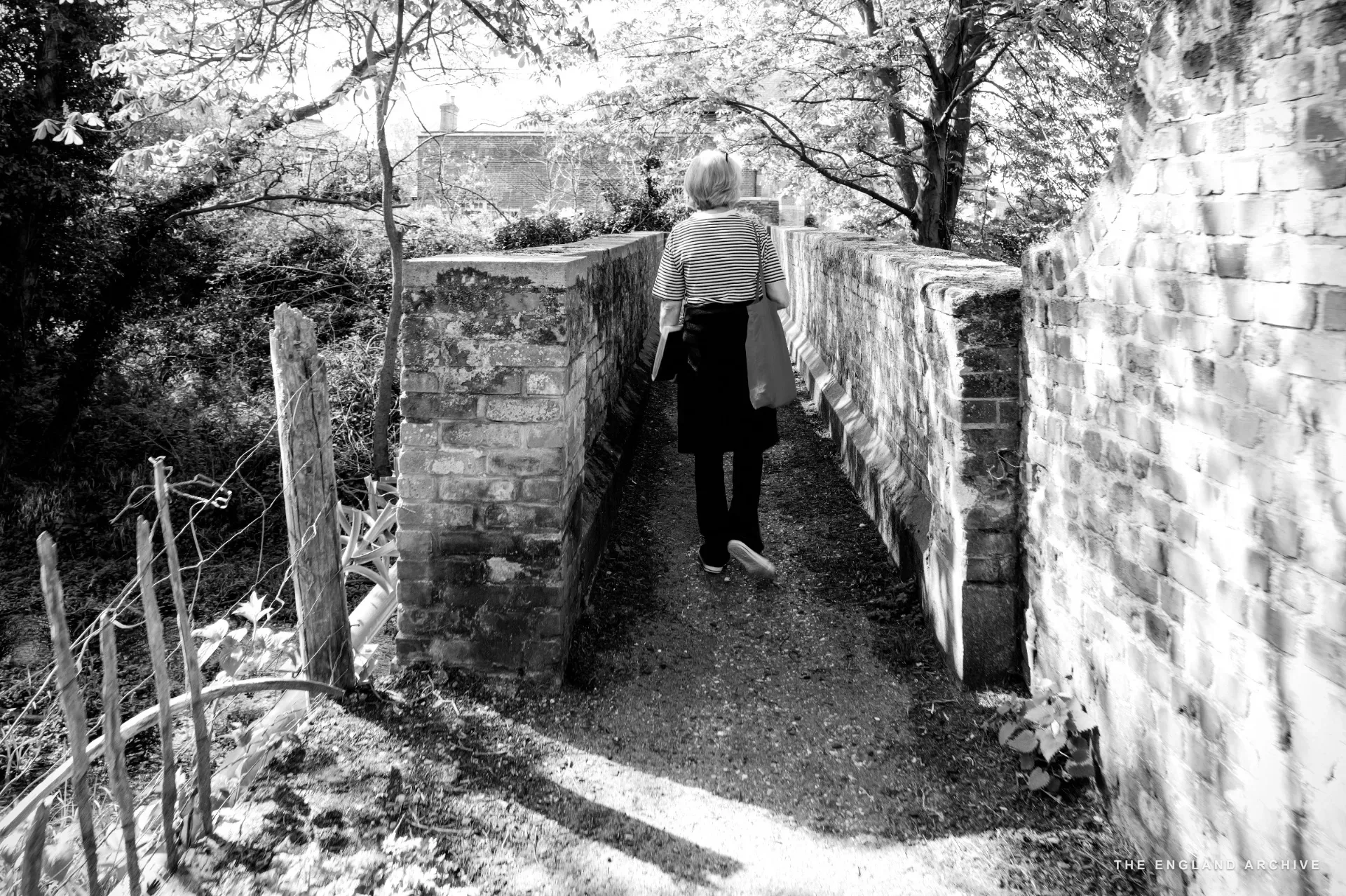
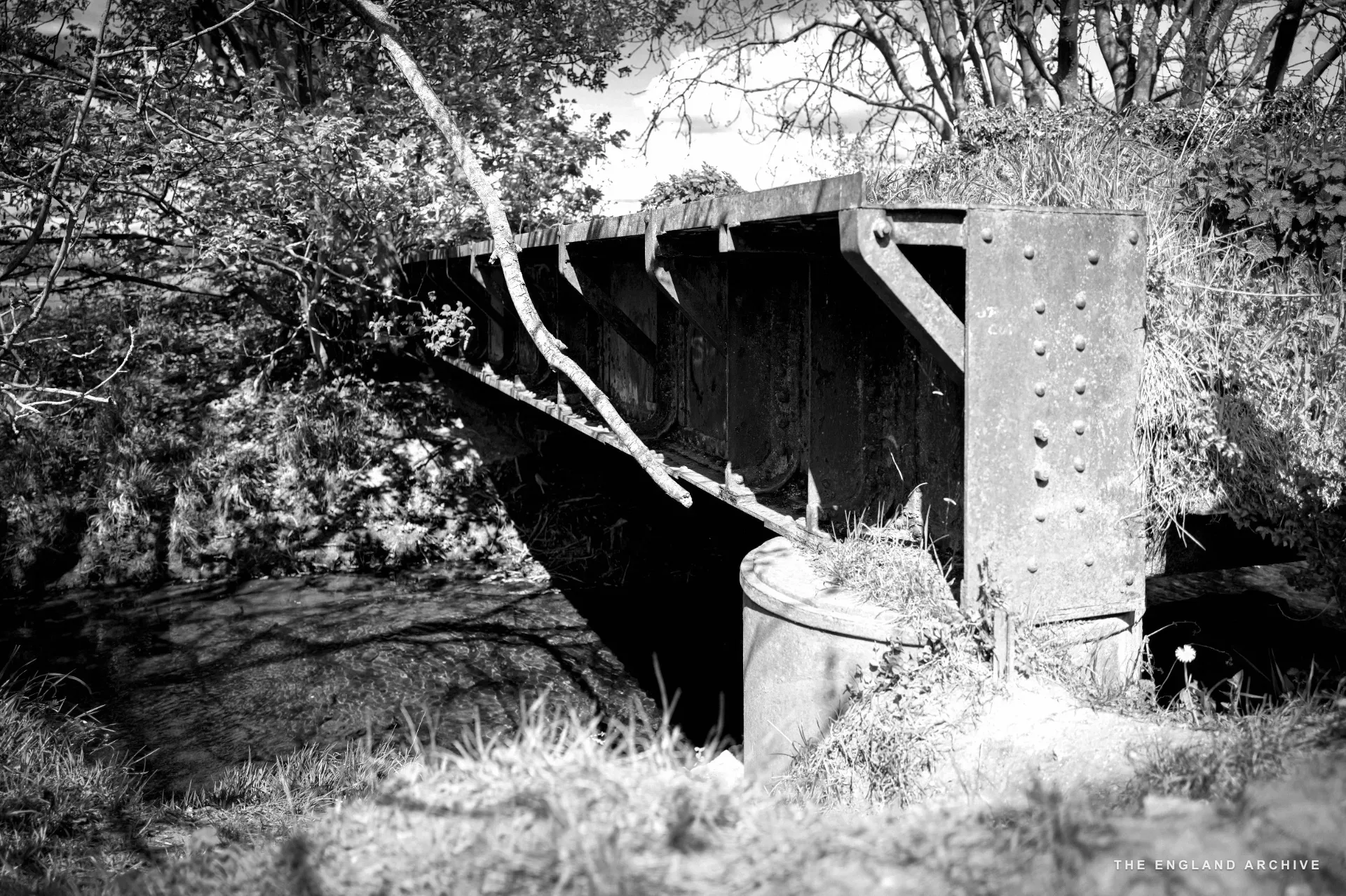
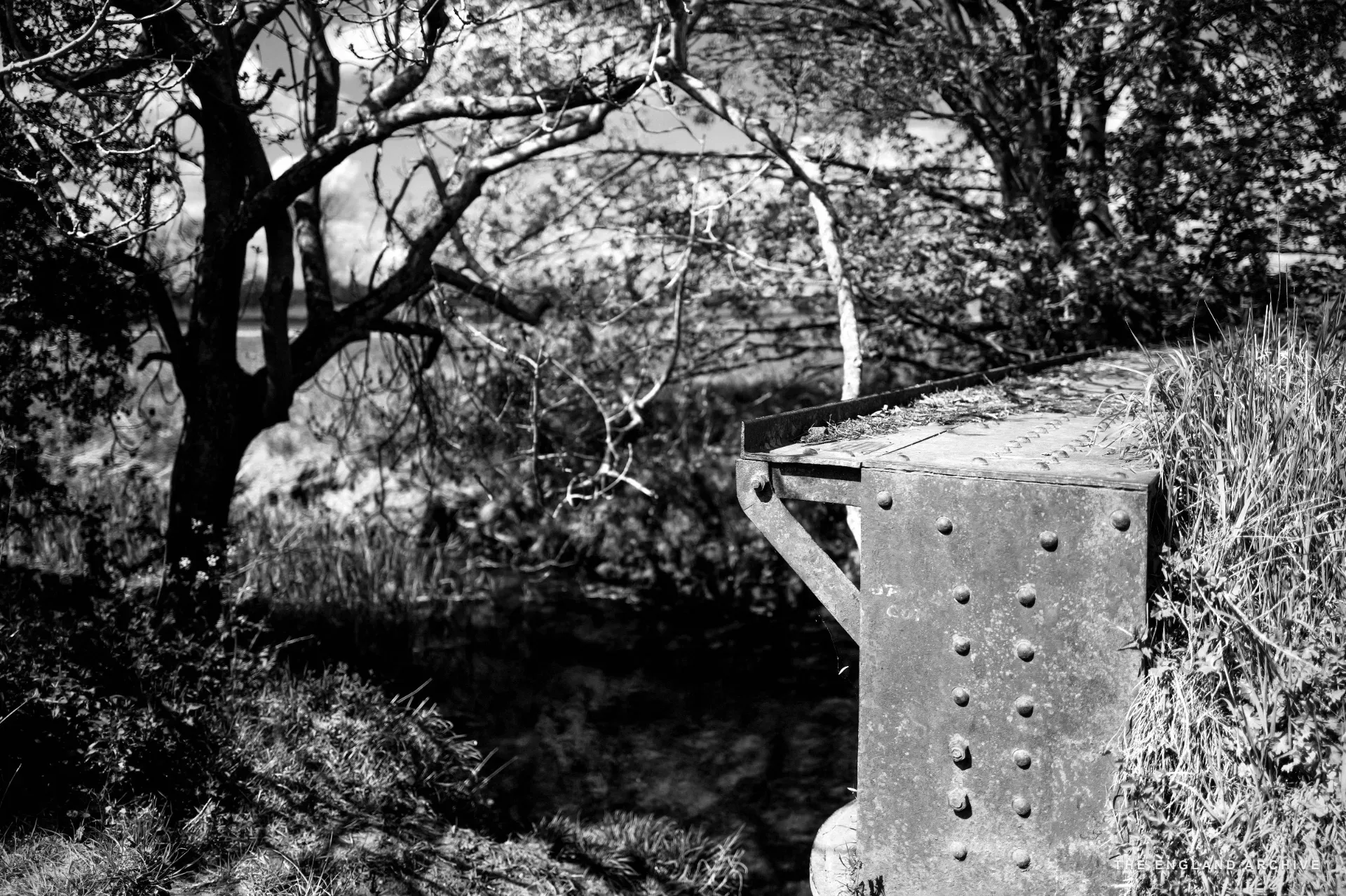
Melonie told us about two children she had known of. It was a place they had all played as kids. It was also a place where things had gone wrong. She told us the stories with the particular flatness that people use when they are describing something that happened long ago but that still matters in the village memory. No drama, no embellishment, just the facts of what had happened.
That is the work the archive exists for. Not to prettify the village, but to carry forward the specific, local, unembellished knowledge that only people like Melonie hold.
The story will not go in the photograph. That is the point. The photograph of the bridge is one thing. What Melonie told us standing under it is another thing. The archive needs both, and this Journal entry is one of the few places where I can put the two beside each other.
Across the fields
We arrived at the open farmland on the eastern side of the village. Fresh ploughed fields, some of them. Winter wheat coming up in others. The path ran along the edge of the field for a quarter of a mile, and then we came over a slight rise.
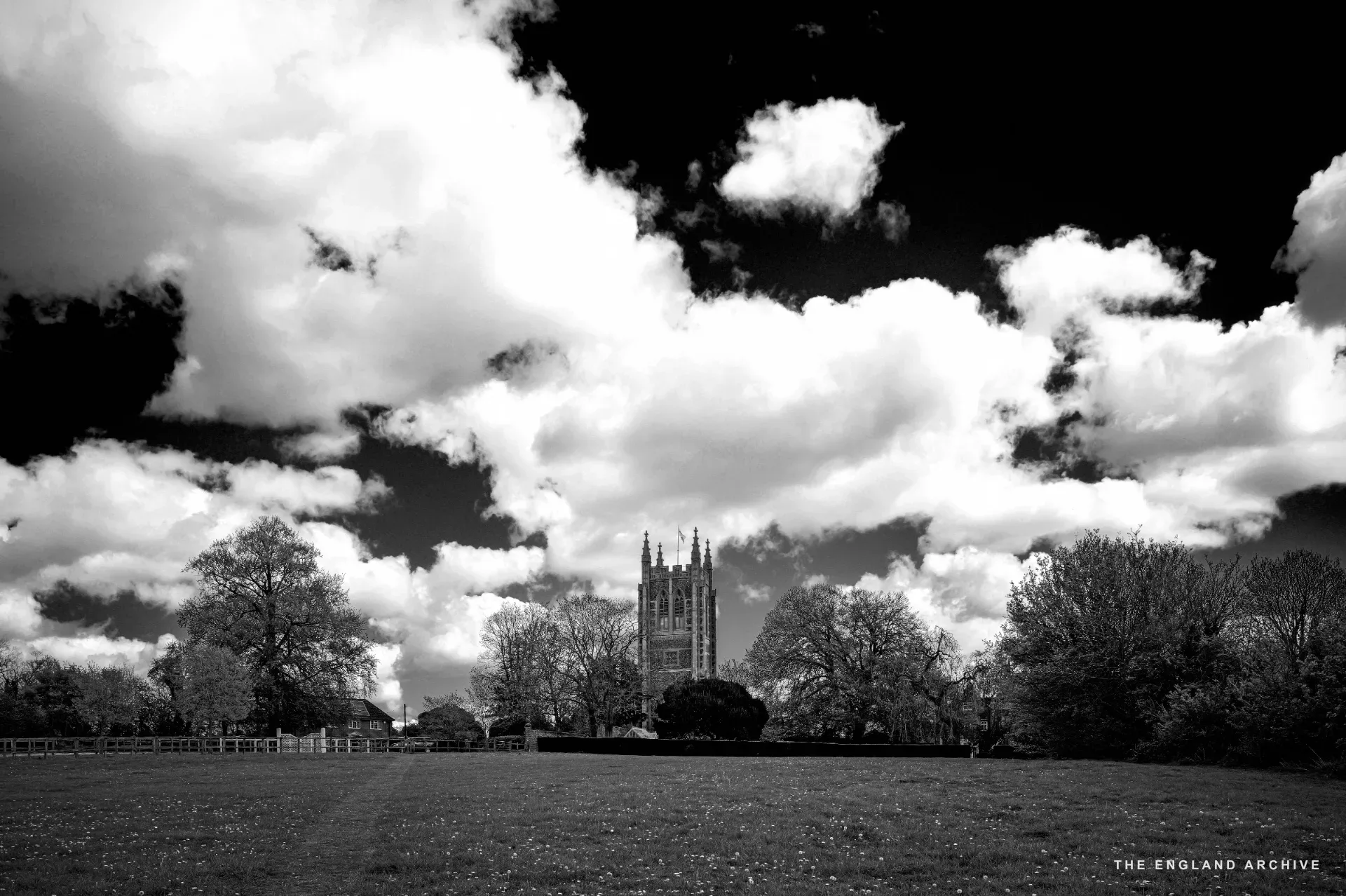
The tower of Holy Trinity appeared above the trees.
This is the classic approach view of Long Melford. It is the same view that eighteenth-century travellers would have seen coming across the fields from the east. The church rises out of the landscape before you see anything else of the village. It tells you what the wool trade was, and what this place once was, before you see a single building. I stood on the path for a few minutes and looked.
This is a future Bronica frame. Possibly a Brenizer. I want to come back and make it in different light, probably a clear cold morning in winter, when the trees are bare and the tower shows cleanly against the sky. Today the light was not right and I did not try it. But I noted the spot.
Holy Trinity
Everything in Long Melford points toward Holy Trinity eventually. From the top of the Green you see the tower rising above the Trinity Hospital, and the closer you get the more extraordinary the building becomes.
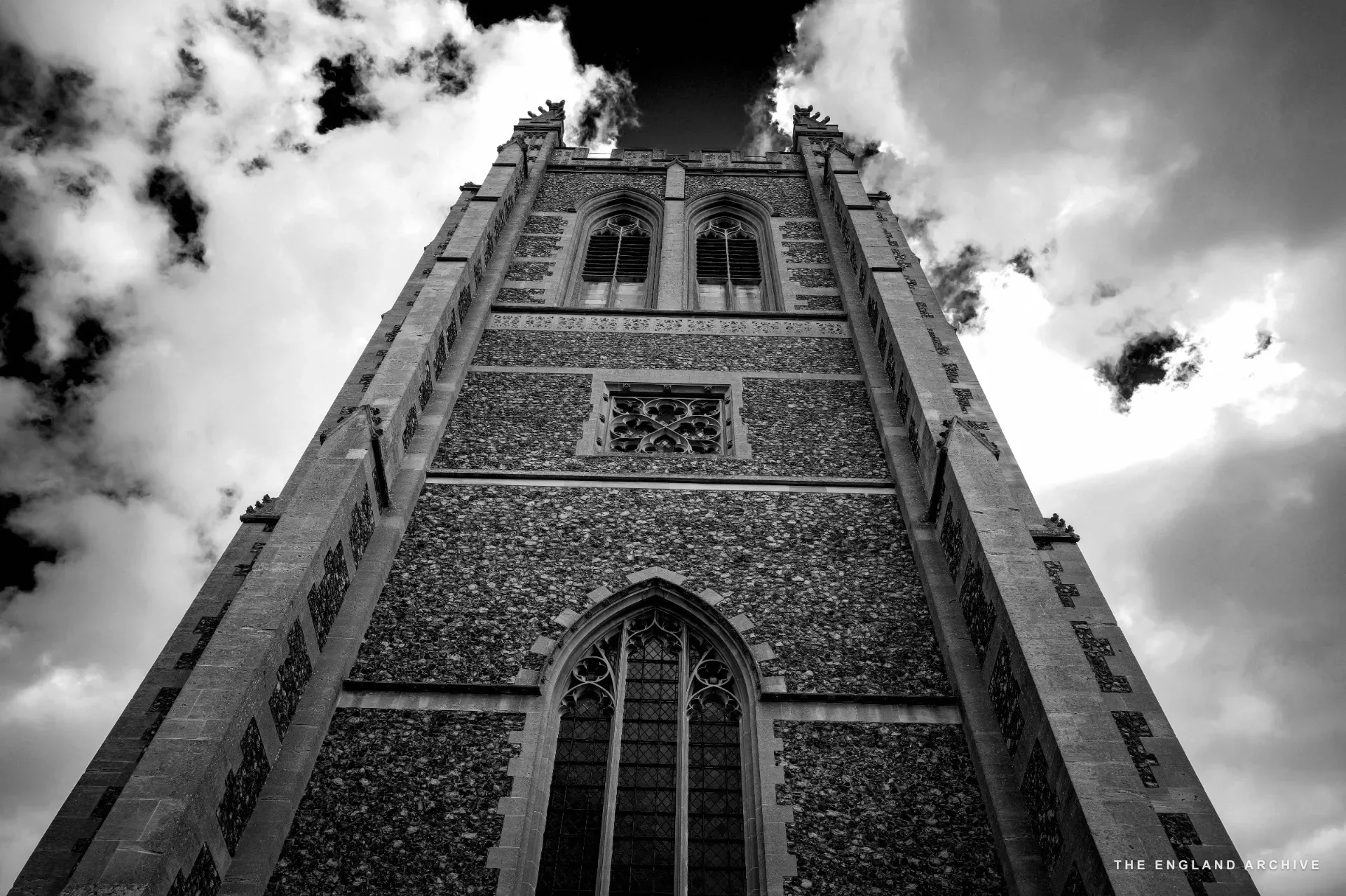
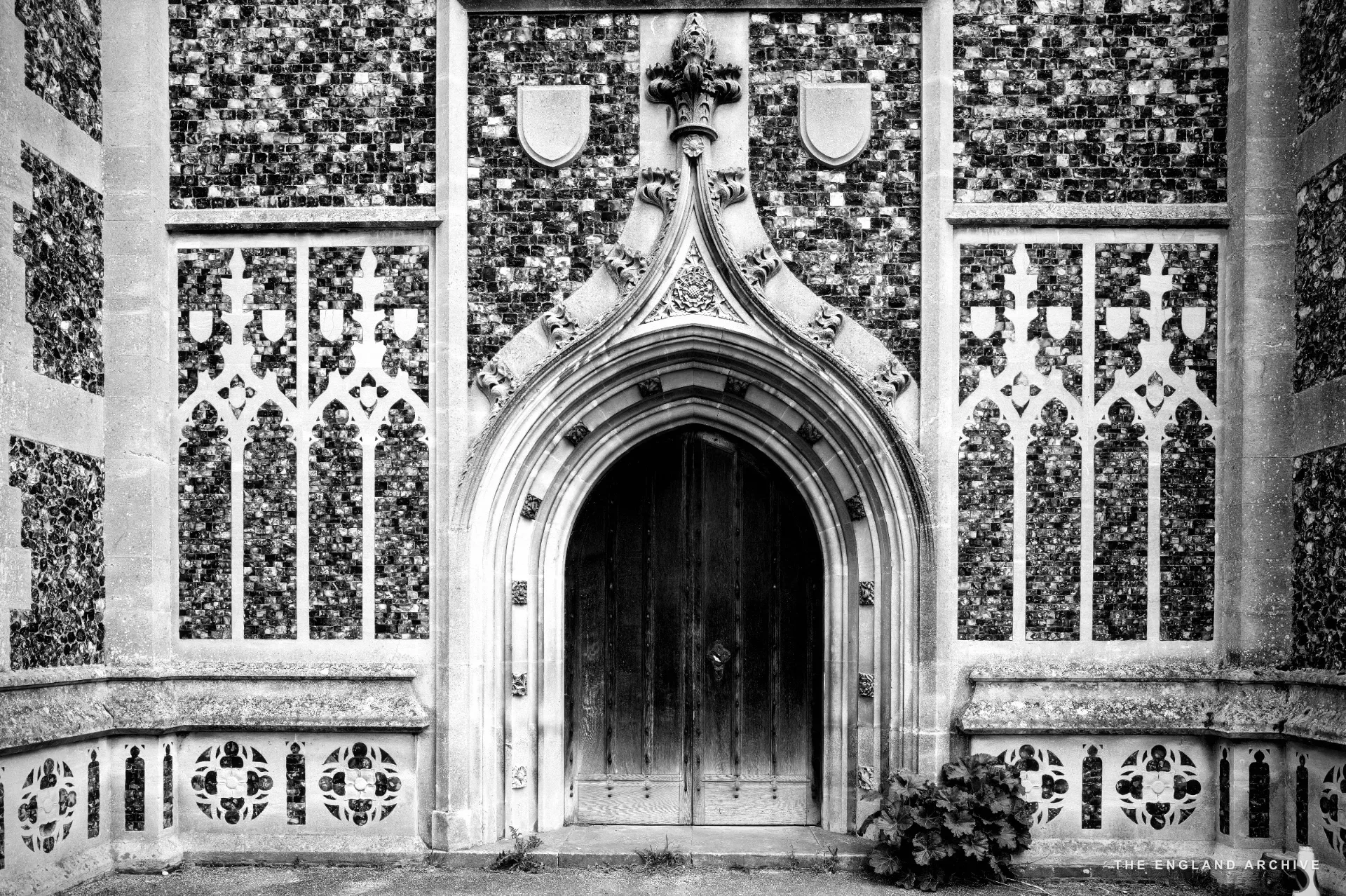
It is a wool church. The village grew rich in the late medieval cloth trade, and the Cloptons, who lived up at Kentwell, used some of that wealth to rebuild the parish church between 1467 and 1497. What they produced is one of the longest parish churches in England, nearly 250 feet from west front to east end, done in the full Perpendicular style, the walls patterned with flushwork flint and stone in chequerboards that catch the light differently at every time of day.
The tower is a later addition. The original medieval tower fell in 1710. What you see now was built in 1903, carefully matched to the rest of the church. You would not spot the difference from the road.
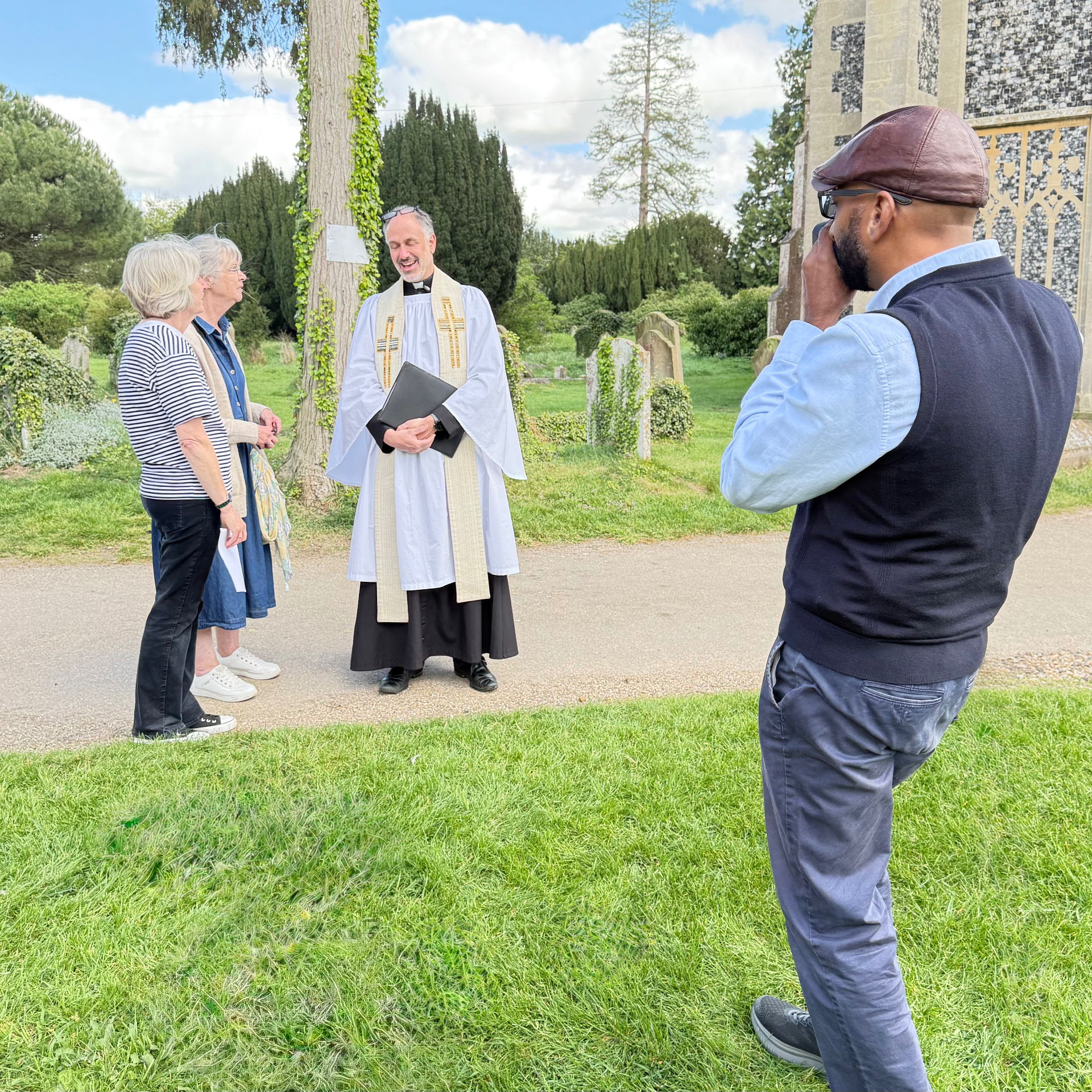
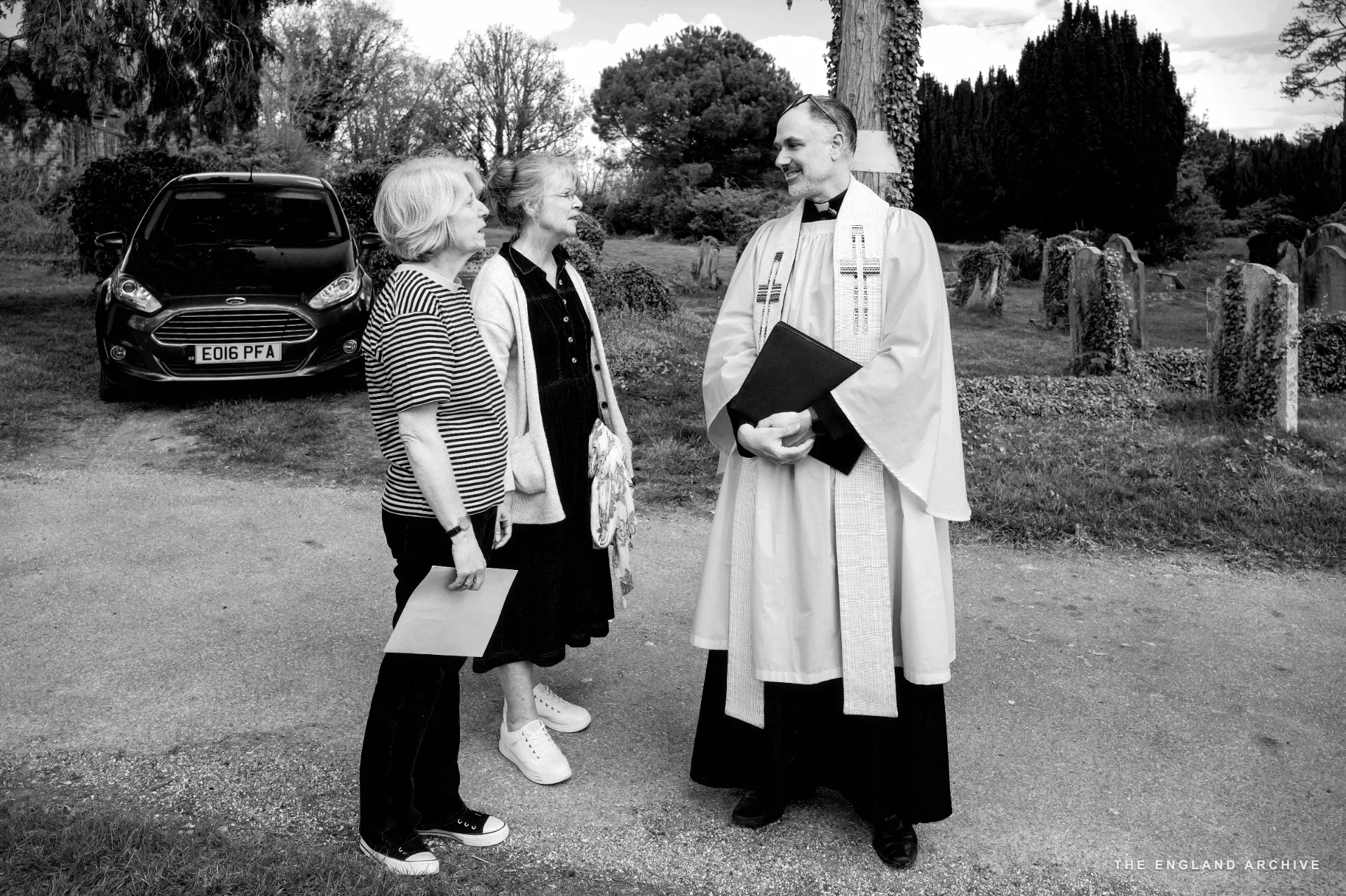
As we came up the hill, the Reverend came out of the church to greet us. Warm, direct, unhurried. There was a wedding on inside. I mention this because it is the kind of detail that defines a place. You can walk through Long Melford on an ordinary April Saturday and find a church built five centuries ago doing exactly what it was built to do. Two people getting married in it this morning. Communion tomorrow. A funeral next week. The building is not a museum. It is still the parish church.
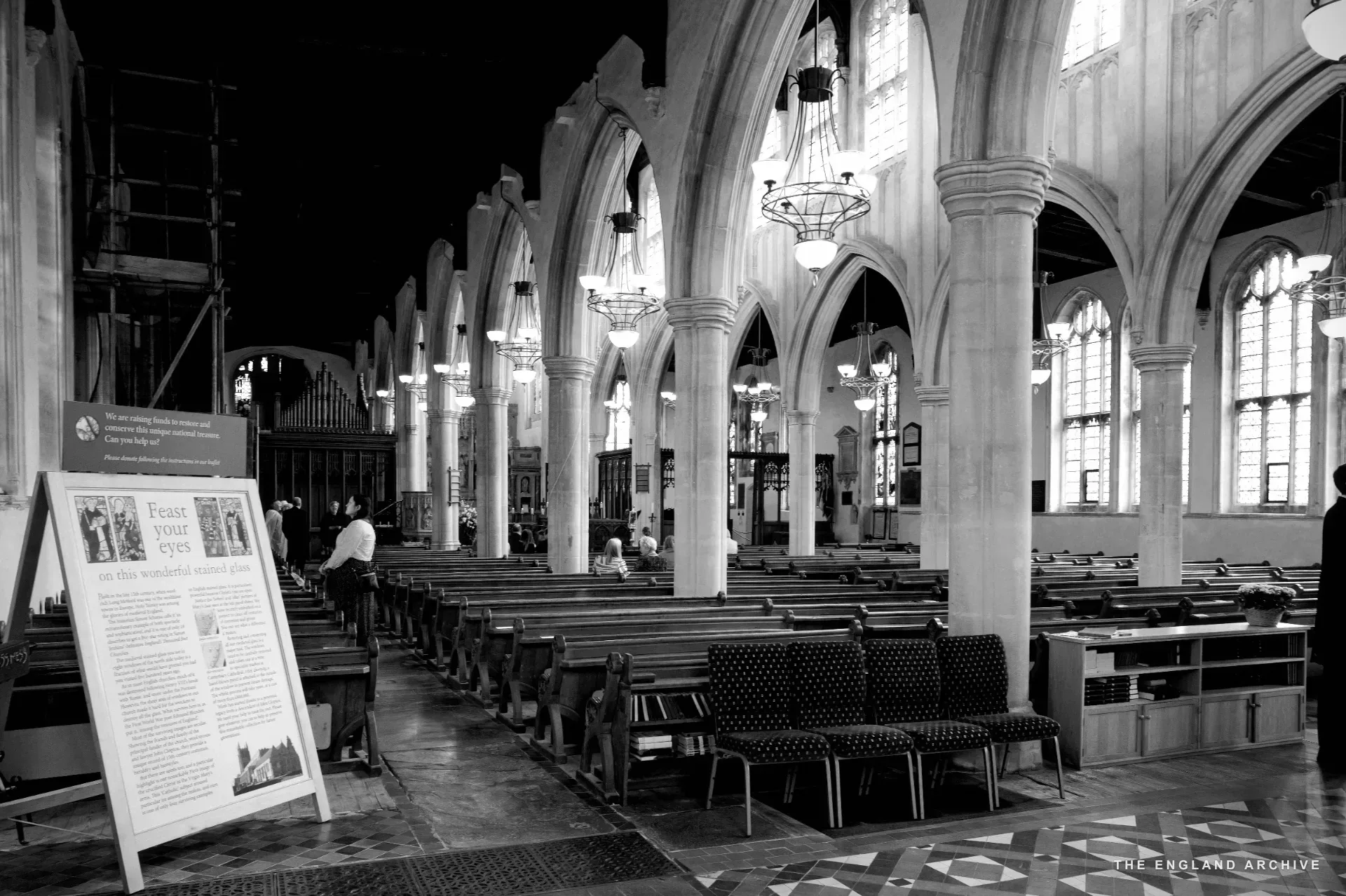
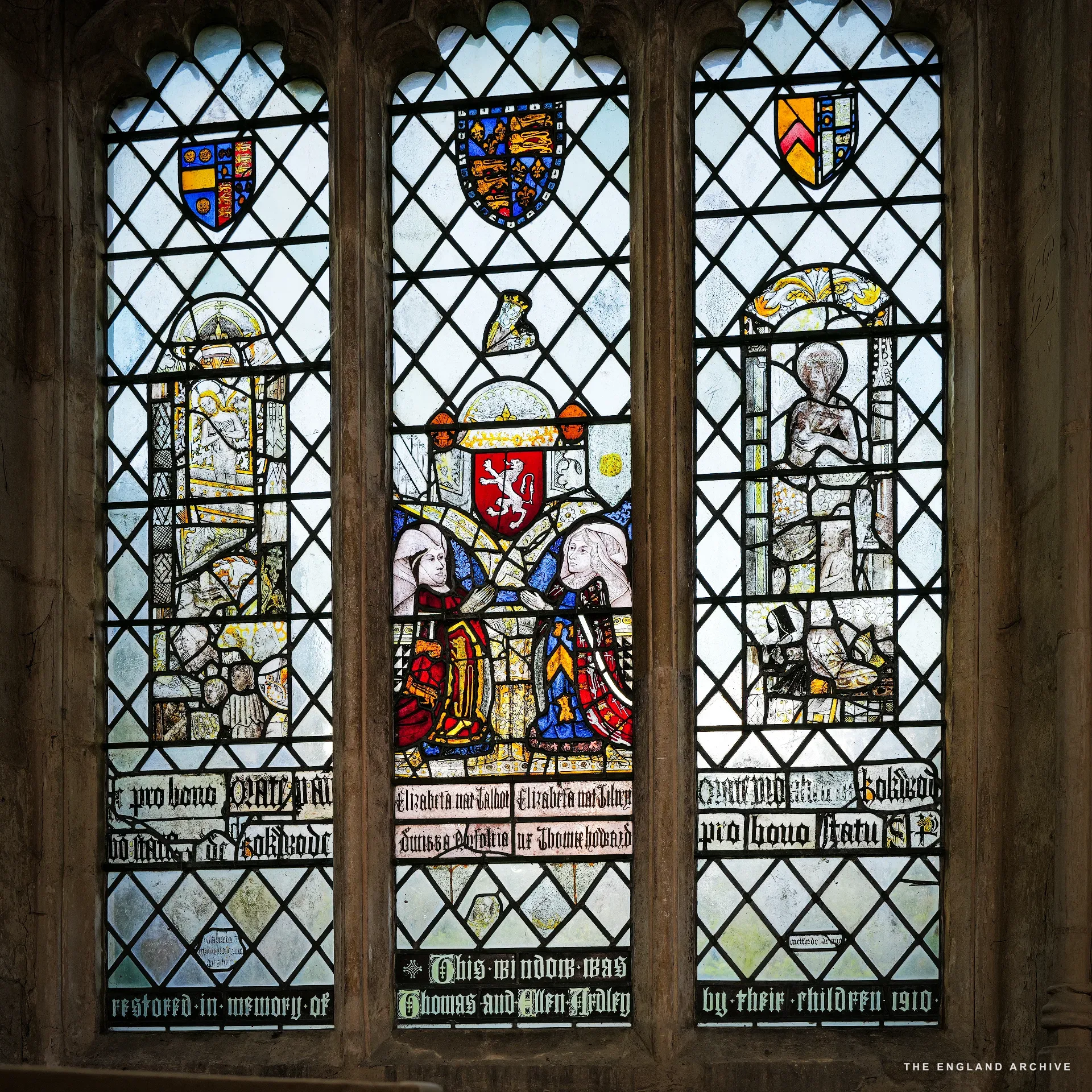
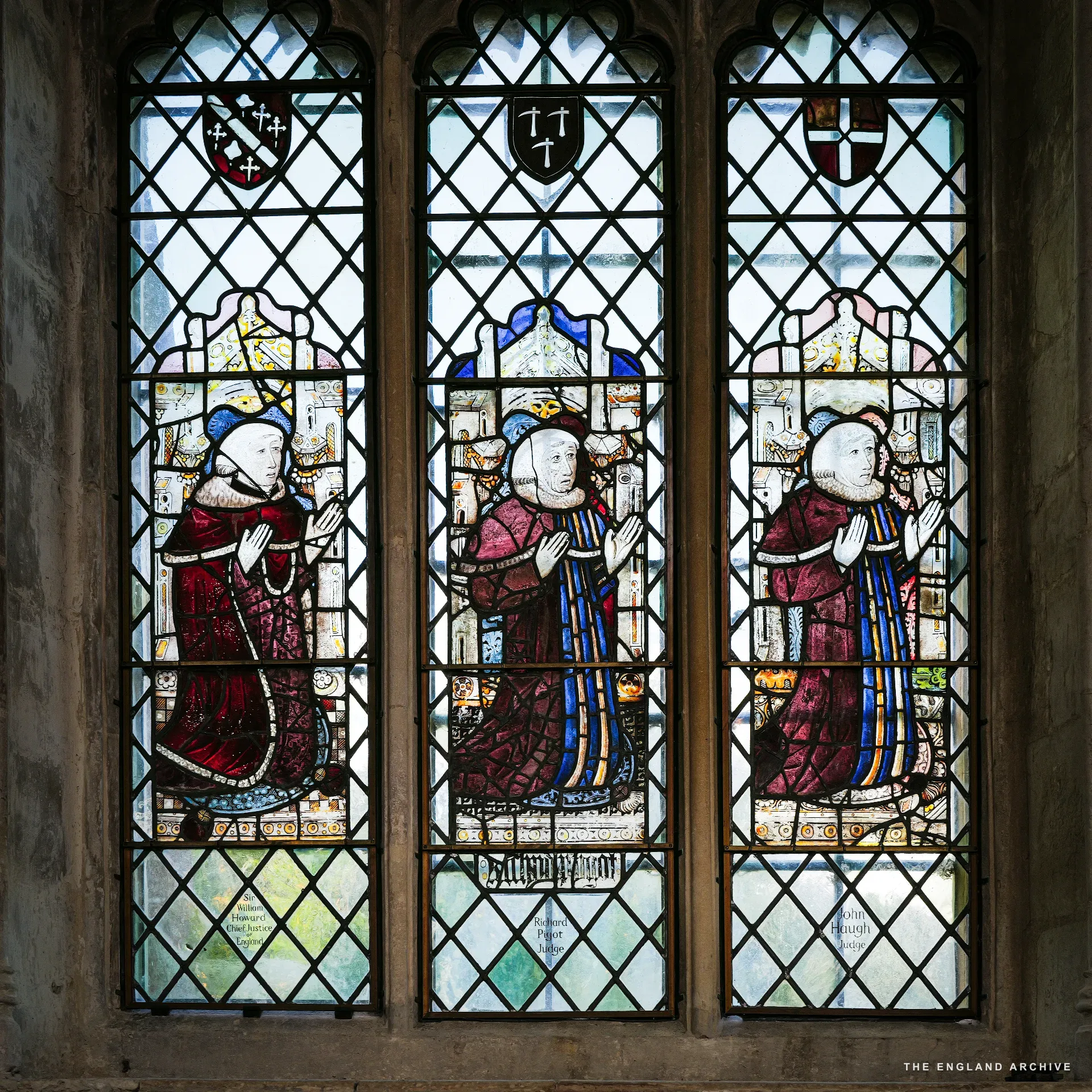
Inside, the nave is almost aggressively long. Your eye runs down to the east window and keeps running. The Lady Chapel sits beyond, practically a small church in its own right, with a painted multiplication table on the wall that was added in the 18th century when it was briefly being used as the village school. At the top of both aisles there are memorial brasses. The Clopton Chantry Chapel has 15th century painted vines running around the ceiling and the words of an Old English poem, The Vine of Life, by the monk John Lydgate. Medieval stained glass survives in some of the windows, including the Hare Window, which is three hares chasing each other in a circle, each sharing ears with the next, so that three ears serve for three hares. A symbol of the Holy Trinity, older than the church, appearing in this form across Europe and Asia.
Edmund Blunden, the First World War poet, is buried in the churchyard.
The Bronica frames
This was the moment I had been waiting for without quite admitting it to myself.
The 4x5 stayed at home today, as I had planned. A first visit is not a 4x5 visit for a Rememberer. But the Bronica had been on my shoulder all morning, loaded with HP5, and I had been watching for the right place.
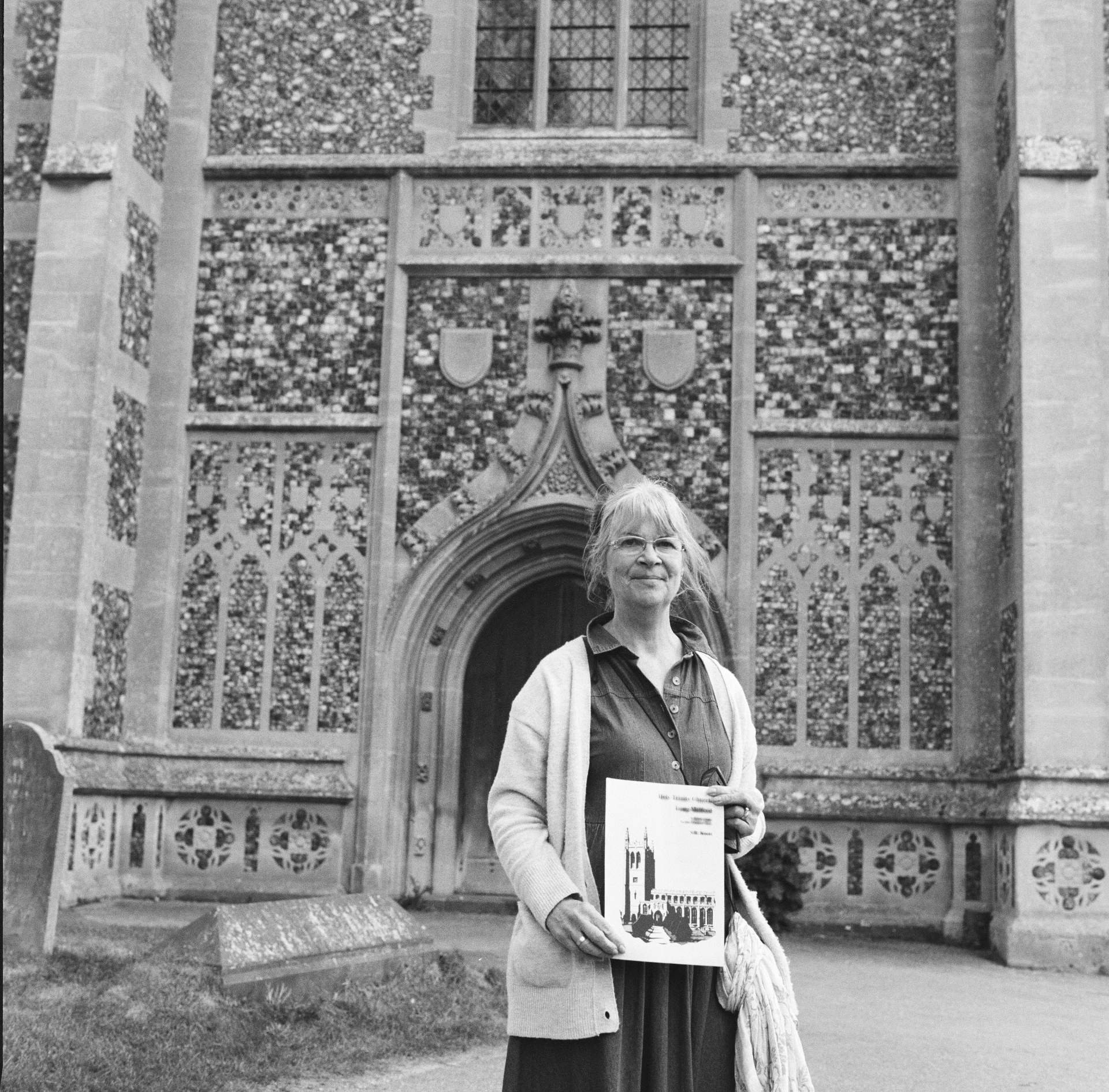
At the south door of the church I stopped Melonie. I asked if I could make her portrait against the door. The oak was old. The stonework around it was the flushwork that makes Holy Trinity what it is. The light was direct but not harsh. It was the right backdrop for her.
She had brought with her, tucked under her arm, a booklet her father had produced. Her father who was one of the founding members of LMHAS in 1969. The booklet was his work. The society is his legacy. Melonie is the living thread that connects the two.
I made two frames. One of her holding the booklet, so that the object of her father’s work was visible in the portrait. One of her without it. I wanted both versions in the archive. The one with the booklet is the formal Rememberer portrait, her inheritance made visible. The one without is her, simply, standing at the door of her parish church on a Saturday in April.
She stood well. Subjects who have been watched by a camera before stand one way. Subjects who have not, stand another way. Melonie has not been photographed much. She held still, she looked at the lens, she waited. Two frames. I did not push for more.
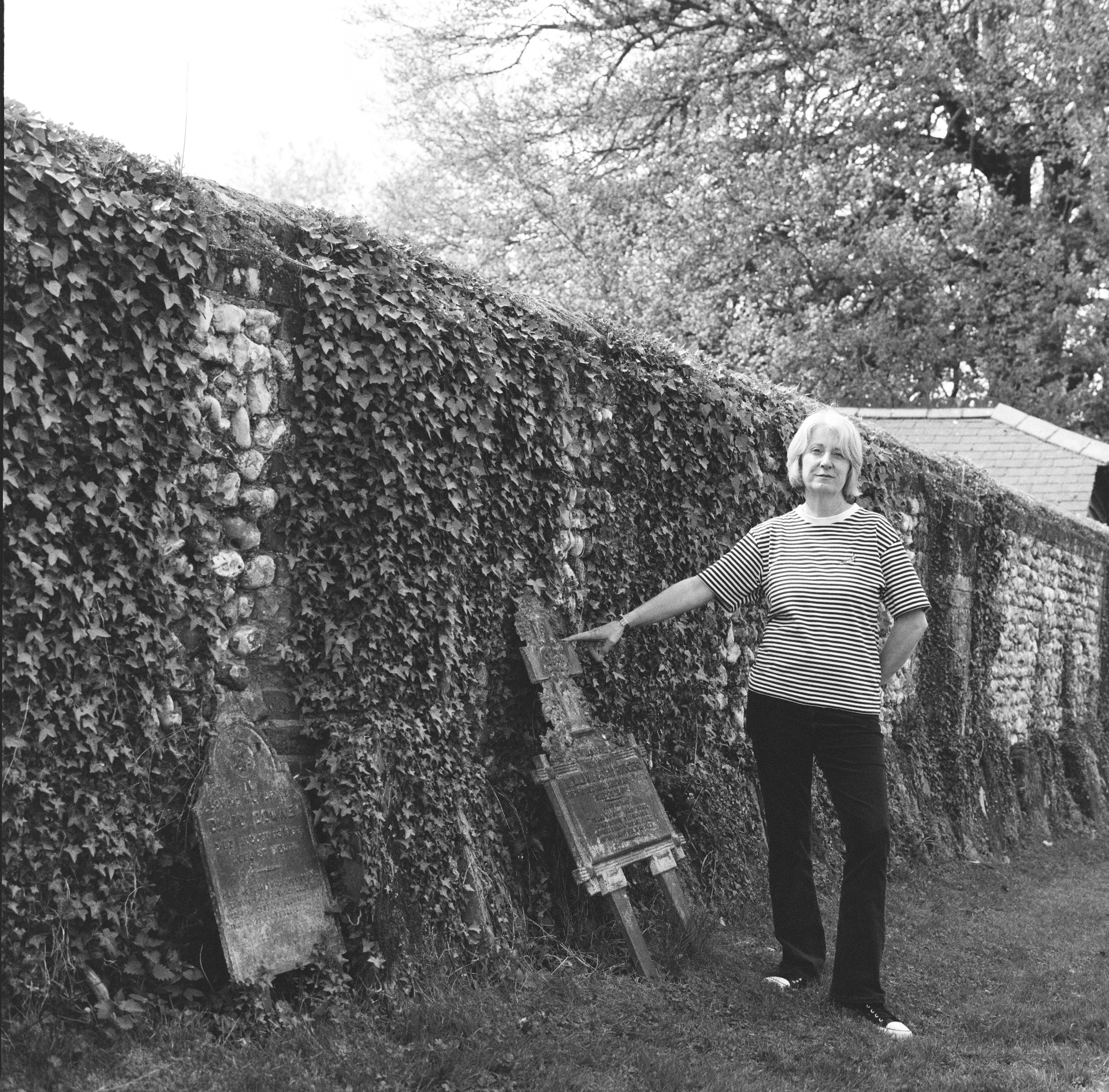
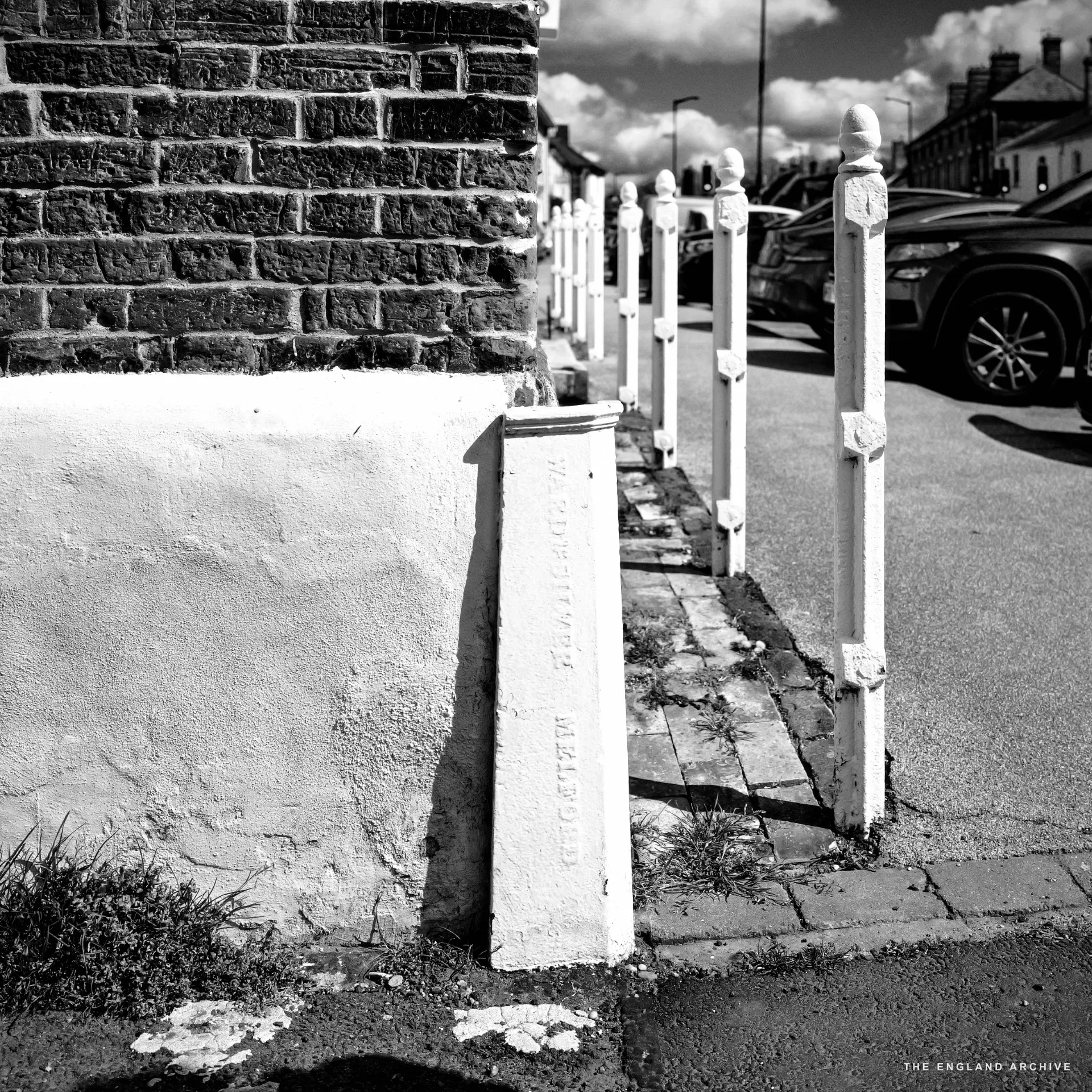
Julie wanted her portrait made somewhere else. She took me into the churchyard and stopped at the iron grave marker, made by the long-gone Ward & Silver Ironworks in the village, now placed against the boundary wall, no longer marking the place of burial. I made her portrait there, at the place she had chosen for herself. Julie is the historian. The fact that she chose a gravestone as the place to stand is its own quiet statement about what she carries and why.
Three Bronica frames in total from the visit. Two of Melonie, one of Julie. All of them deliberate, all of them at places the two women had chosen or had led me to. The frames will not be back from the lab for a couple of weeks. When they are processed and scanned I will update this entry with them, and add them to the subject pages for Melonie and Julie.
Holy & Blessed Trinity Hospital
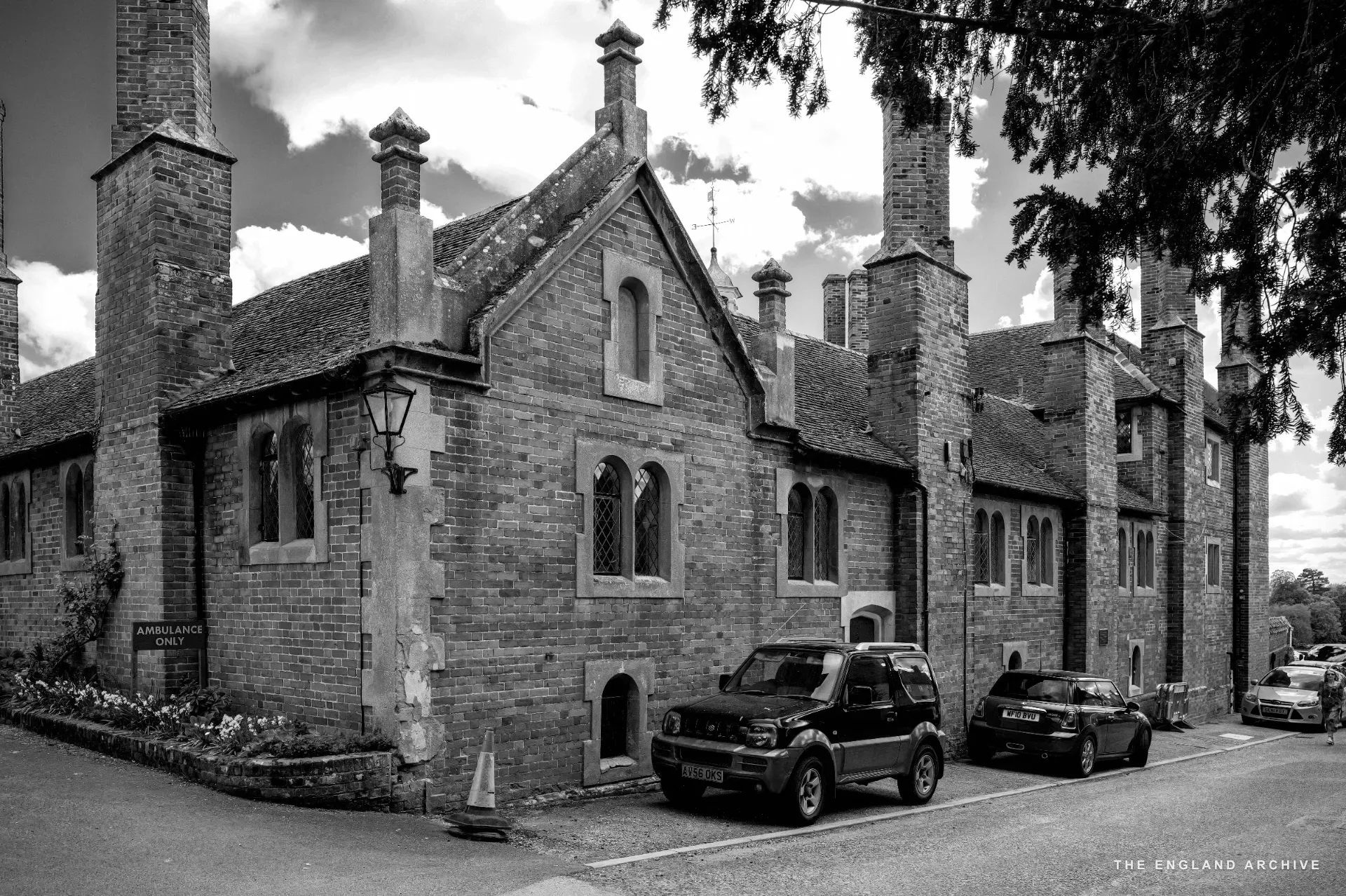
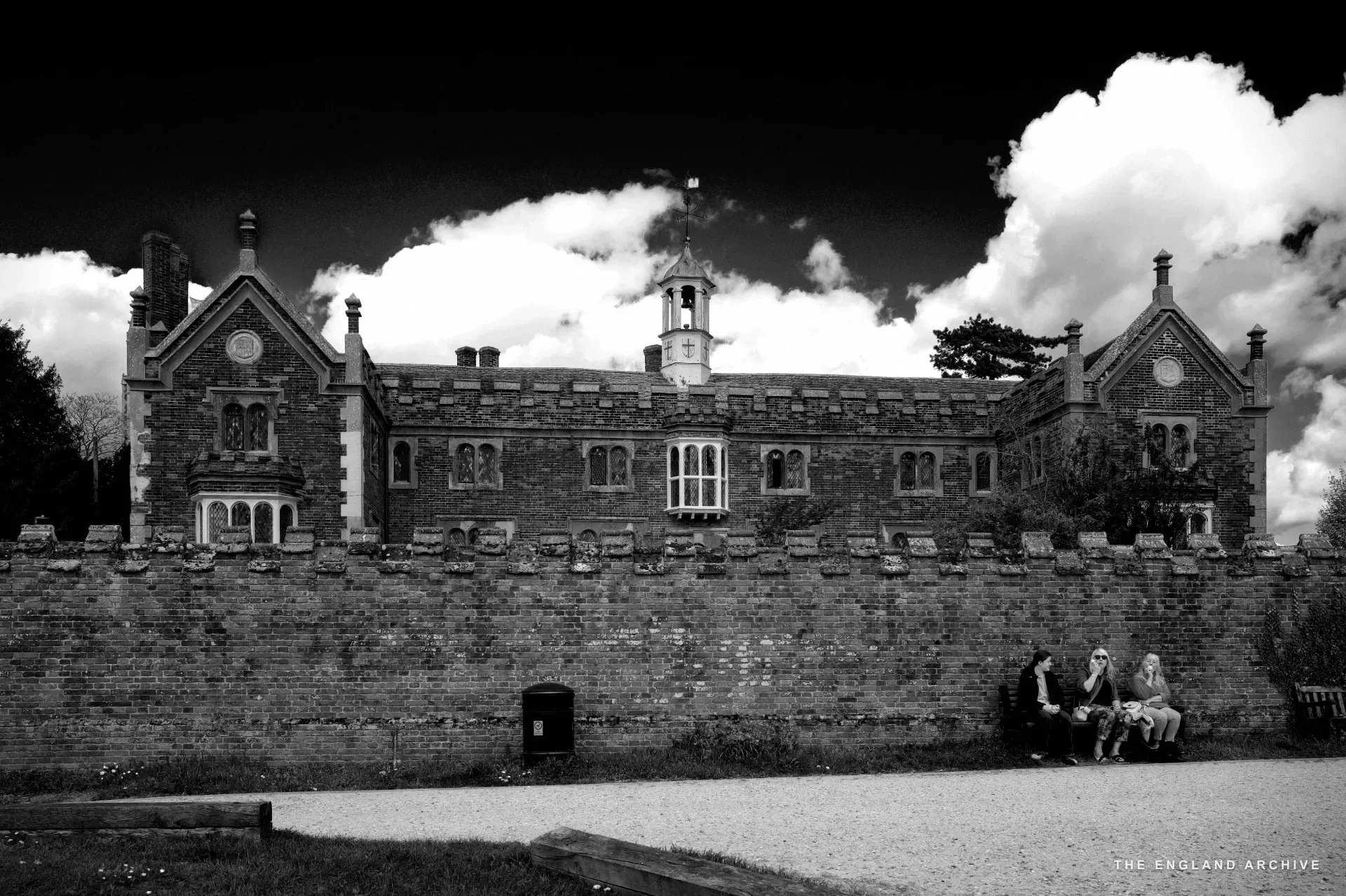
Leaving the churchyard we passed Trinity Hospital, which stands immediately next to the church, sharing its plot of ground.
The word hospital here means hospitality, not medicine. It is an almshouse.
Sir William Cordell founded it in 1573. He had bought the Melford Hall estate and its lands, and he endowed the hospital with enough of that land to pay for twelve aged men, a warden, and his helper. They had to be over 55, they had to be from Long Melford or an adjacent parish, and the rector and two churchwardens decided who got a place. Once you were in, you were in. You could not be removed unless you broke the rules.
The building is a quadrangle in soft red Tudor brick, with an inner courtyard garden and an outer walled garden. The outer wall was raised in 1633 when the brethren complained that their fruit was being stolen, and four or five feet of the Green had to be given up to accommodate it. That wall is still there.
The hospital is still doing what Cordell set it up to do. Eleven flats are occupied by low-income or elderly residents, a twelfth is for the warden, and the trustees still meet and administer the charity. Dudley Kemp, who retired as a trustee a couple of years ago, had served for more than 40 years. His father served before him. That is the kind of continuity the archive exists to document.
I made a few Q3 frames of the building and the wall and told Julie I want to come back and do the hospital properly. She said she could help with that.
Melford Hall
Melford Hall sits at the north end of the Green, flint and red brick, turreted at the corners, behind a long wall and a moat. Bhavani and I had been before so we did not go in. We walked past it on the way back to the car park.
The Hall was given to the Cordell family after the Dissolution of the Monasteries. Sir William Cordell, the same man who endowed Trinity Hospital, rose far under the Tudors, holding the office of Master of the Rolls and, in 1558, Speaker of the House of Commons. He entertained Queen Elizabeth I here in 1578. The Hyde Parker family hold the seat of Melford Hall since 1768. In the 1960s the National Trust took over the building, and Sir William and Lady Hyde Parker and family are still in residence. Beatrix Potter was a cousin of the Hyde Parkers and visited often, and some of her animal sketches are in the hall.
You can feel the weight of Melford Hall from the road. The turrets are distinctive, the chimneys tall, the brick weathered into a colour that photographs well in almost any light.
The Green
We walked back down the Green from the church toward the car park. The Green is one of the great pieces of English village landscape. It is broad and grassed and edged on one side by houses that sit back behind grass verges. Nothing else in England is quite like it. The Greens, all three of them, and many of the trees and verges along the length of the village are owned and managed by Melford Estates.
Until the 1980s the Green was dominated by a stand of great elms. One of them was among the largest in Britain. S R Badmin painted them in 1940, in a watercolour called Long Melford Green on a Frosty Morning, which now sits in the Victoria and Albert Museum. Dutch elm disease took the trees. The Green is more open now than anyone alive remembers it being as a child. Melonie talked about the trees as we walked. That stretch of her childhood is gone and there is nothing to be done about it.
The goodbye
We got back to the car park around half past one. Four hours of walking and talking. All four of us hugged. It was not a polite formality hug. It was a real one.
I thanked them properly. I meant it. Julie and Melonie had given us the entire village, in two voices, on a Saturday morning that they did not have to give us.
Bhavani and I got in the car, pulled out of the Old School car park (correctly this time), and drove back down to the A12 toward London.
What the day was actually about
Every subject in this archive sits under a question. The question is: who is keeping this alive, and what happens when they stop?
For Long Melford today, the answer is Julie and Melonie.
Julie is an enthusiastic amateur historian. She knows the dates, the names, the architectural terms, the documents, the society’s archive, the order of events. She can walk you through the village and tell you who built what and when and why. She is the keeper of the public record of the place. Without her and the people like her who work through LMHAS, the historical record of Long Melford exists only as scattered papers, unread books, and half-remembered stories.
Melonie is the rememberer. She knows the grain of the place. She knows what her father taught her because he was one of the founding members of the society in 1969. She knows which room of the Old School she sat in as a child. She knows which trees on the Green were the biggest before Dutch elm disease took them. She knows the story of the child who drowned under the railway bridge. She carries the lived texture of the village in her body, and when she walks through it she re-animates it.
These are not the same thing. You need both. And what Julie and Melonie did today, without making a fuss about it, was walk Bhavani and me through Long Melford in exactly the two registers you need to properly see a place. Julie gave me the skeleton. Melonie gave me the flesh.
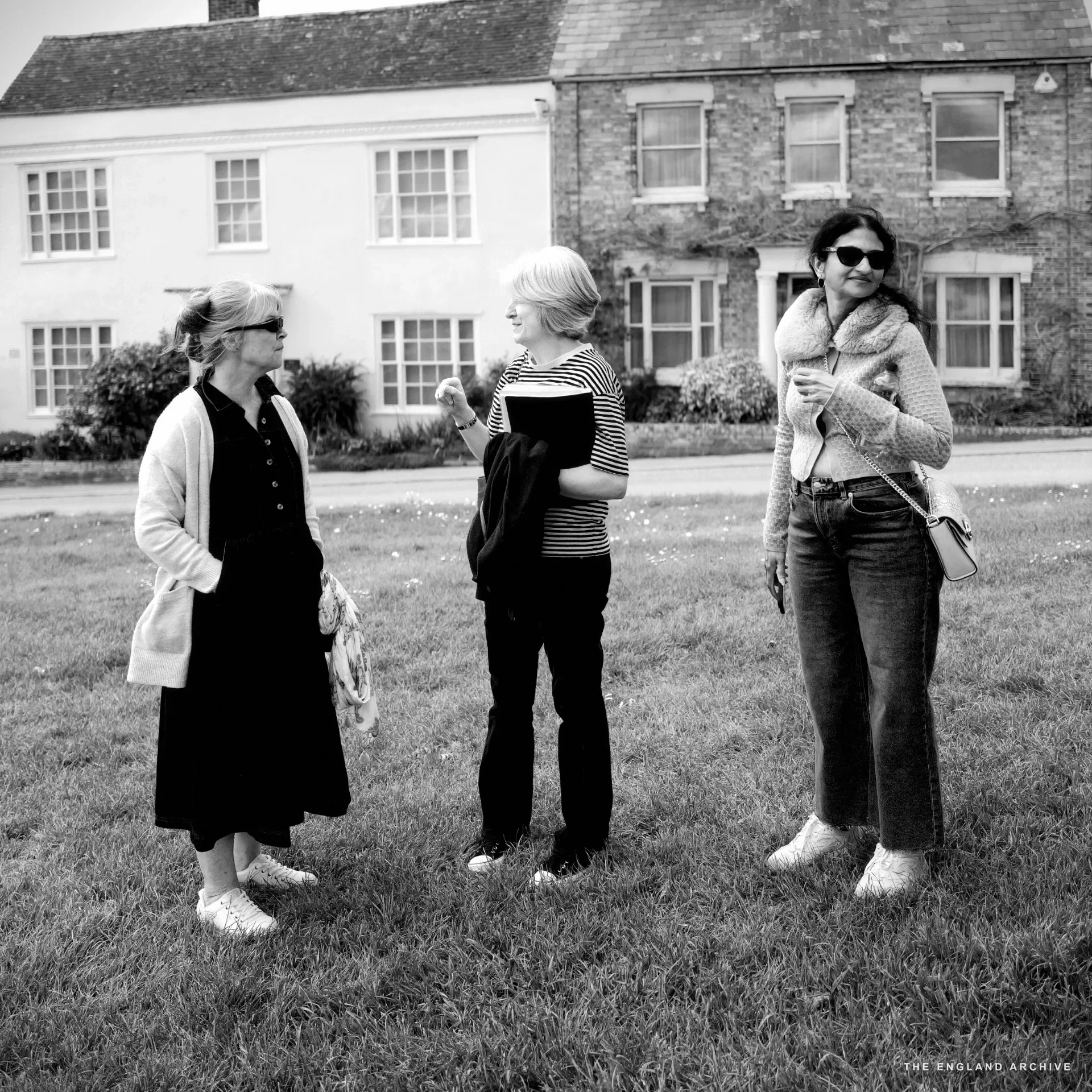
Mash Bonigala and Bhavani Bonigala visited Long Melford on Saturday 18 April 2026 as part of Year 1 of The England Archive, a three-year documentary photography project recording the people keeping England’s heritage crafts, traditions, landscapes and buildings alive.
The Long Melford Historical and Archaeological Society meets at the Old School Community Centre, Long Melford, Suffolk CO10 9DX. The society welcomes visitors and new members. Contact: LMHAS1969@outlook.com.
If you have a connection to Long Melford, or to any aspect of English heritage that you think the archive should document, we would love to hear from you.