The Heritage Crafts Red List of Endangered Crafts
The definitive register of traditional crafts at risk of disappearing from the UK - what it is, how it works, and why it matters
If you want to understand how fast England’s craft knowledge is disappearing, I can tell you the clearest place to start. It is not a funeral. It is a spreadsheet.
The Heritage Crafts Association publishes, every two years, a document called the Red List of Endangered Crafts. It is a register of every traditional craft currently practised in the UK, assessed by how likely each one is to survive to the next generation, categorised by risk level, and updated with new data from hundreds of practitioners and organisations across the country. It is, in the words of the team that produces it, the first research of its kind - a systematic, evidence-based attempt to do for craft knowledge what conservation biology does for threatened species: take stock, assign risk, and make visible what is being lost before it is too late to act.
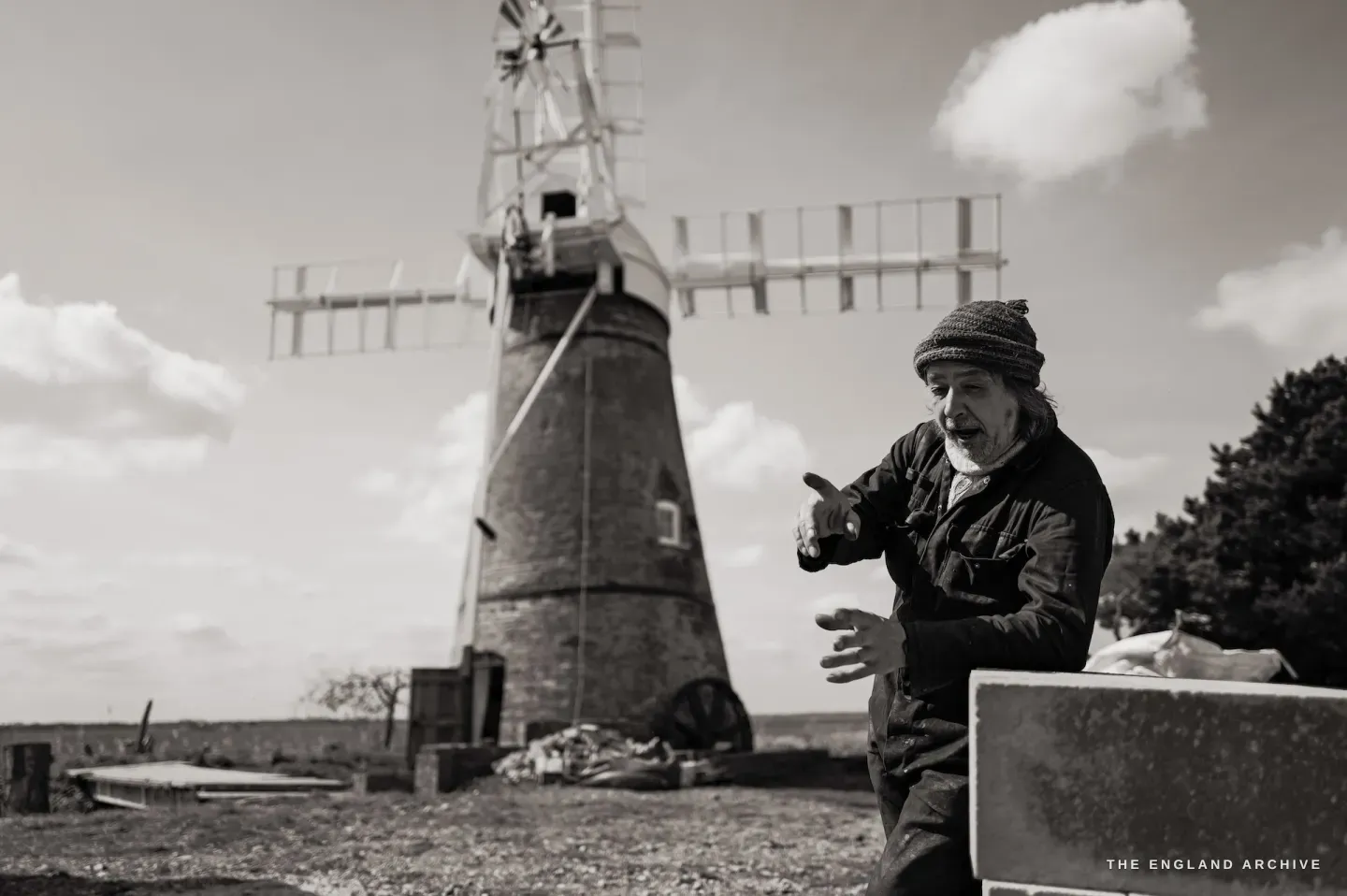
I keep this list open the way a sailor keeps a chart. Every craftsperson in the archive’s Makers strand is cross-referenced against it; every region I plan carries notes on which Red List crafts still survive there. It is not an abstraction to me. When I sat with Stephen Wright over a Victorian pattern book in Sheffield, stood inside a working windmill with Paul Kemp on the Norfolk marshes, or watched Seth Kennedy cut a field of light into silver on a machine older than anyone in the room, I was, in each case, looking at a single line on this document. The list is the reason this archive exists, and understanding it - what it is, how it is built, and what it actually measures - is the same as understanding why I am in such a hurry.
This resource post is the most thorough guide to the Red List that we know of outside the Heritage Crafts Association’s own publications.
What the Red List Is
The Red List of Endangered Crafts is modelled explicitly on the International Union for Conservation of Nature Red List of Threatened Species - the global standard for assessing which animal and plant species are at risk of extinction. The IUCN Red List does not merely note that a species is rare. It classifies it by severity of risk, documents the reasons for that risk, and provides a shared language that conservation organisations, governments, and funders can use to prioritise action. The Heritage Crafts Red List applies the same logic to craft knowledge: the craft is the species, the practitioners are the population, and the conditions threatening it - economic pressure, ageing demographics, lack of succession - are the habitat pressures driving decline.
- Small, isolated populations
- Loss of breeding-age females
- Habitat destruction
- One bad year can tip the balance
- Handful of remaining practitioners
- All active makers over sixty, no trainees
- Economic pressure, lost markets
- A single retirement can end the line
The biological framing is precise, not decorative.
The comparison is not merely rhetorical. It reflects a genuine structural similarity. Just as a species can survive in small, isolated populations that are more vulnerable to a single bad year than a large healthy one, a craft can survive with a handful of practitioners who are more vulnerable to individual deaths or retirements than a widespread one. Just as a species that has lost its breeding-age females is in more immediate danger than one that has lost only its young, a craft where the active practitioners are all over sixty and there are no trainees is in more immediate danger than one where the practitioners are spread across age groups.
“A practice which employs manual dexterity and skill at the point of production, an understanding of traditional materials, design and techniques, and which has been practised for two or more successive generations.”
That definition does important work. It excludes purely industrial processes where machine production has replaced hand production. It excludes recently invented crafts that have not yet passed through two generations of practitioners. And it includes crafts that originated outside the UK, provided they are being practised here now - an important recognition that England’s craft heritage includes skills brought by diaspora and migrant communities that are as much at risk as any purely English tradition.
How the research works
The research for each edition involves contacting, directly, over 900 organisations and individuals: craft guilds, training institutions, individual practitioners, heritage organisations, trade associations, and anyone else who can provide current data on the number of active craftspeople, the number of trainees, the average age of practitioners, the availability of training routes, and the economic pressures affecting the craft’s viability. Each craft is then assessed against a combination of objective criteria - head counts, essentially - and subjective criteria: what does the evidence suggest about the direction of travel? Is this craft gaining new entrants or losing them? Are the training pathways that exist functional or theoretical? Are the markets that sustain the craftspeople stable, growing, or contracting?
The result is a classification against five possible statuses, which the 2025 edition has refined further as part of the new Heritage Craft Inventory framework.
The Categories Explained
The craft is no longer practised in the UK. For the purposes of the Red List, this category covers only crafts lost in the past generation - roughly the past thirty years.
Five crafts have been classified as extinct in this century: cricket ball making, gold beating, lacrosse stick making, mould and deckle papermaking, and mouth-blown flat glass. That last one is worth dwelling on. English Antique Glass in Birmingham produced mouth-blown flat glass - the material in England’s stained church windows - until 2022, when the workshop became too expensive to maintain. The knowledge went with it. In the 2023 edition, the repair and restoration of historic stained glass was immediately reclassified as newly endangered. One extinction pulling another toward the edge.
There is a small piece of good news attached to that particular loss. As of 2025, glassblower Elliot Walker, funded by Heritage Crafts, is actively working to revive mouth-blown flat glass production. It is the only case in recent editions where a craft classified extinct has begun to move back toward practice.
The craft is at serious risk of ceasing to be practised in the UK. The criteria include: very few active practitioners (typically fewer than ten), limited or no training opportunities, low financial viability, and no clear mechanism by which the skills can be transmitted to the next generation.
72 crafts are listed as critically endangered in 2025, up from 62 in 2023 - nine new entries and three reclassifications from less severe categories.
The crafts in this category include things that most people would not know are endangered because they have no occasion to think about them until they need them. Parchment and vellum making. Silk ribbon weaving. Flint knapping for building (as opposed to archaeological reproduction). Arrowsmithing. Concertina making. Cut crystal glassmaking. Organ building. Watchmaking - where, in 2019, fewer than 30 watchmakers in the UK were capable of commercially creating a watch from scratch. Silk ribbon weaving, which was the defining industry of Coventry from the early 1700s until the 1860s, and which now survives in a handful of specialist workshops producing medal ribbons and ceremonial textiles.
The craft currently has enough practitioners to transmit the skills to the next generation, but there are serious concerns about whether it will remain that way.
The concerns may be a shrinking market, an ageing practitioner base without corresponding recruitment, or structural factors - the cost of materials, the difficulty of finding workspace - that make continuation increasingly difficult. 93 crafts are listed as endangered in 2025, up from 84 in 2023. Illumination, hand engraving, letterpress printing, and pigment making are all in this category. So is thatching in certain regional styles, traditional wooden boatbuilding, and a range of textile skills that have enough active practitioners to function but whose demographic profile gives serious cause for concern.
A craft is designated resurgent when it is currently experiencing a positive trajectory - new entrants, increased demand, improving training provision - after a period of decline.
Resurgent does not mean safe: a craft can be simultaneously resurgent and endangered, meaning its decline has begun to reverse without yet reaching a stable position. The 2025 resurgent designations include hazel basket making - the archive’s first documented practitioner in that craft is Lewis Goldwater at Turnham Green Wood, who teaches the split-hazel Whisket of the Welsh Marches at venues across the country - reverse glass sign painting, and side saddle making. Dry stone walling has shown resurgent characteristics in recent editions, partly as a result of the Dry Stone Walling Association’s structured certification and training programme, and partly because the landscape conservation sector creates real employment for certified wallers. That employment pipeline is the key variable - it gives people a reason to train.
The craft has enough practitioners to transmit skills to the next generation and no immediate threat to its continuation.
115 crafts are currently viable in 2025, up from 112 in 2023. Viable does not mean risk-free. Every viable craft is still monitored, because conditions change and the trajectory from viable to endangered can be faster than a single edition of the Red List captures. Calligraphy, for instance, is currently viable, while illumination - a closely related skill - is endangered.
Cross-cutting designations
The 2025 edition also introduces two new cross-cutting designations within the Heritage Craft Inventory framework.
Crafts that hold particular significance for a defined community of practice, whether geographic, cultural, ethnic, or religious - canal art and boat painting is the example given, significant to the narrowboat community in ways that extend beyond purely technical heritage.
Crafts that are both culturally distinctive and endangered. A dual designation recognising that losing these crafts means losing not just a skill but a community’s living heritage.
A Decade of Data: The Edition by Edition Story
The Red List was first published on 3 May 2017, with financial support from the Radcliffe Trust and a foreword from the then Prince of Wales, who wrote:
“I urgently believe that we must gather more information on the crafts identified so far to ensure that no more treasured skills are lost for ever.”
HRH The Prince of Wales, foreword to the first edition, 2017That first edition assessed 169 crafts and identified 17 in the critically endangered category. The trajectory since then tells its own story.
The list was the first of its kind in the UK and attracted significant media coverage, reframing heritage crafts as an intangible heritage emergency rather than a charming cultural sideline.
New additions to the critically endangered list included watchmaking. Bell founding was added following the closure of the Whitechapel Bell Foundry, Britain’s oldest manufacturing company, which had been casting bells on its Whitechapel Road site since 1570.
The Covid-19 lockdowns were cited as a contributing factor, accelerating retirements and disrupting training pipelines. Sheet glass blowing, barometer making, Scottish kilt making, Shetland lace making, and glass eye making were all added.
Traditional wooden boatbuilding, Cornish hedging, marionette making, and canal boat painting were all added. Mouth-blown flat glass, lost in 2022, appeared for the first time in the extinct category.
The introduction of the Heritage Craft Inventory framework, the first resurgent designations, and the addition of 20 new entries. Cut crystal glass making, quilting in a frame, and rattan furniture making among the new critically endangered entries. Glove making reclassified as more severely endangered than in 2023.
The numbers tell a consistent story: the list is growing, the critically endangered category is growing faster than the endangered one, and the rate of acceleration is itself accelerating. From 17 critically endangered in 2017 to 72 in 2025. That is a fourfold increase in eight years, and nothing in the underlying conditions - workshop costs, raw material prices, demographic pressures on aging practitioner populations, the difficulty of pricing handmade goods in a market dominated by industrial alternatives - suggests the trend is about to reverse.
The UNESCO Context
One of the most significant developments in the Red List’s history arrived not in the list itself but in a government announcement between the 2023 and 2025 editions. Following years of campaigning by Heritage Crafts and partner organisations, the UK Government ratified the 2003 UNESCO Convention on the Safeguarding of Intangible Cultural Heritage - one of the last countries in the world to do so.
Craft knowledge widely agreed to be valuable, but not formally recognised by the state as heritage comparable to listed buildings or museum collections.
The UK is formally committed to identifying, documenting, and safeguarding its intangible cultural heritage. The loss of a craft skill is not just a cultural regret but a heritage failure.
The Convention is the international framework that recognises knowledge, skills, and practices - intangible heritage - as being of comparable cultural and social value to tangible heritage like buildings and monuments. Its ratification means, for the first time, that the UK is formally committed to identifying, documenting, and safeguarding its intangible cultural heritage. The Government’s consultation on how the Convention should be implemented cited the Red List as an example of good practice, and Heritage Crafts is currently working with the Department for Culture, Media and Sport on implementation of a new UK inventory of Intangible Cultural Heritage.
The Government’s consultation on Convention implementation cited the Red List as an example of good practice. Heritage Crafts is currently working with the Department for Culture, Media and Sport on the new UK inventory of Intangible Cultural Heritage.
This is a substantial shift. For most of the Red List’s history, craft knowledge in the UK occupied an awkward position: widely agreed to be valuable, but not formally recognised by the state as heritage comparable to listed buildings or museum collections. The UNESCO ratification changes that framing. It means there is now a legal and policy context in which the loss of a craft skill is not just a cultural regret but a heritage failure - the kind of thing governments are supposed to prevent, not simply mourn.
Whether the practical consequences of ratification match the symbolic significance will depend on how the new UK inventory is developed and what resources follow it. But the direction of travel, and the fact that the Red List is specifically cited as the model for how the inventory should work, represents the most important policy development in heritage craft advocacy since the list was first published.
How It Works, What It Funds, and How to Use It
How the research is conducted
The Red List is not produced by a small team of experts deciding from the outside which crafts look precarious. It is produced by direct consultation with the craft community itself, which is both its strength and its limitation.
For the 2025 edition, research ran from September 2024 to May 2025 and involved direct contact with over 900 organisations and individuals by email and telephone. The scope covers every craft guild and professional association in the UK, training institutions from universities to specialist schools, individual practitioners identified from previous editions and through extended networks, heritage organisations with relevant expertise, and anyone else who can provide current data on a specific craft’s situation. The research is led by Mary Lewis, Heritage Crafts’ Head of Craft Sustainability, and the 2025 edition was funded by the Pilgrim Trust, with additional project funding from the National Lottery Heritage Fund, the Swire Charitable Trust, and others.
The craft’s history, its techniques, its regional forms, its relationship to adjacent crafts in the same ecosystem.
The number of skilled craftspeople working at a professional level, the number of active trainees, the age profile of the practitioner base, and any recent changes in these numbers.
The current state of training opportunities, the market conditions affecting the craft, the specific pressures that most threaten its continuation, and any positive developments that might improve the outlook.
Each craft is then assessed against both objective and subjective criteria. The objective criteria are quantitative: how many practitioners, how many trainees, what is the trend direction. The subjective criteria are qualitative: given everything known about this craft’s situation, how likely is it that the skills can be transmitted to the next generation? The combination is deliberate. Pure head counts can miss structural problems - a craft with twenty practitioners, all of whom are over seventy and none of whom have apprentices, is more immediately at risk than a craft with ten practitioners, half of whom are actively teaching. The qualitative assessment catches what the numbers alone do not.
- Number of active practitioners
- Number of trainees
- Trend direction over editions
- Age profile of practitioner base
- Likelihood of skills transmission
- Training pathway viability
- Market stability and outlook
- Structural pressures on continuation
Pure head counts can miss structural problems. The qualitative assessment catches what the numbers alone do not.
The limitation of this methodology is one the Heritage Crafts Association acknowledges directly. The list can only assess crafts it knows to look for. Crafts that have already lost their last practitioner and are not connected to any surviving network or institution will not appear on the list at all. Every edition is accompanied by a standing invitation to flag crafts that have been missed, and the list grows partly in response to those flags. But there is every reason to believe that some craft knowledge has already disappeared without being noticed, and that the list is a lower bound on the true scale of loss.
The Endangered Crafts Fund
The Red List was always intended to be more than a document. It was intended to be a call to action, specifically to funders and policymakers, to direct resources toward the crafts most at risk before they pass the point of no return. The Heritage Crafts Association’s own response to that call was the Endangered Crafts Fund, established in 2019, which provides small grants to craft practitioners and organisations working to support crafts classified as endangered or critically endangered on the current Red List.
The grants are targeted at the specific bottleneck that the Red List research consistently identifies as the most critical: the transmission gap. The moment when a craftsperson needs to step back from production to teach someone else, earning almost nothing during that period, which most craftspeople cannot afford to do without external support.
The funded projects are specific and practical, and reading them gives a clearer picture of what craft survival actually looks like at ground level than any amount of general advocacy.
Grant to buy tools to pass on his skills as a flint waller.
Funding to train an apprentice flute maker through making a copy of a historical concert flute.
One of the last makers of hand-forged English scissors - a craft that was once the defining industry of the city. Funding to create dies for producing scissor blanks that she and other makers can use.
Funding to be trained in making the critical working components of the English system concertina.
Funding to develop his arrowsmithing skills and teach the craft to others.
Funding to pass on flute making skills and develop a new model.
Each of these grants represents a specific person acquiring or transmitting a specific skill at a specific moment when that transmission was otherwise unlikely to happen. Whether the funded apprentice stays in the craft, whether the funded master finds a successor who carries what they learn forward - these questions are not resolved by a small grant. But the grant creates the possibility where there was none, and in the ecosystem logic of craft survival, that is what matters.
A number of grants are ringfenced for Essex, East Sussex, West Sussex, and Brighton and Hove, reflecting specific funding sources. But craftspeople and organisations outside those areas are also eligible, and the majority of funded projects are not from those counties. The core eligibility criterion is that the craft must be listed as endangered or critically endangered on the current Red List.
Applications are invited on a rolling basis. Details and application guidance are available at heritagecrafts.org.uk/ecf.
Who Else Is Responding to the Red List
The Heritage Crafts Association does not work in isolation, and the Red List functions as a shared evidence base for a number of organisations working in adjacent areas. Understanding the wider landscape helps explain both the progress that has been made and the scale of what remains to be done.
Uses the Red List to inform its work on traditional building skills. Many of the crafts most urgently listed are those needed to maintain listed buildings correctly. Lime rendering, flint walling, leadwork, traditional thatching in regional styles - these are the maintenance skills that keep England’s built heritage standing. Historic England’s traditional building skills research has documented the overlap between craft extinction and heritage building deterioration.
Uses Red List data to inform its advocacy for craft as a distinct creative sector deserving of investment and policy attention. The Council’s own research on the craft economy regularly references the Red List as evidence that the problem is systemic, not individual - a structural failure of markets and training systems, not a series of isolated cases.
Has funded Red List research directly and supports projects working on heritage craft transmission through its grants programmes. One of the most significant public funders of heritage craft work in England.
Funded the original 2017 edition and continues to support Heritage Crafts’ work. Specifically focused on the arts and crafts sector and was an early institutional voice for treating craft knowledge as heritage deserving of the same attention as material heritage.
Has funded multiple editions of the Red List. One of the most consistent funders in this space.
Represents independently owned historic properties with a direct stake in the survival of the craft skills needed to maintain them. Its members are, collectively, major employers of heritage craftspeople, and the Red List provides evidence for why those craftspeople need to be supported into the next generation.
Connects directly to the Red List through its work on pre-industrial building techniques. SPAB’s training programmes for craftspeople and architects working on historic buildings are one of the few institutional mechanisms designed to produce people who can apply traditional craft skills in professional practice.
At the University of Reading, holds one of the largest collections of rural craft objects and documentation in the country. Increasingly its collection function is being supplemented by active programmes to record oral testimony from practitioners before it is lost. The Red List helps prioritise which practitioners are most urgently worth reaching.
How to Use the Red List
The Red List is a free, publicly available document. The 2025 edition can be downloaded directly from the Heritage Crafts Association website at heritagecrafts.org.uk/skills/redlist. It is also browsable online by category, making it possible to search by region, by risk level, and by craft type.
If your craft is listed as endangered or critically endangered, the most immediately useful step is to register with the Heritage Crafts Association and engage with their Find a Maker directory. Visibility matters: commissioners and researchers looking for practitioners of endangered crafts use the directory, and being in it puts you in front of people who want to commission, document, or learn from you.
If your situation might qualify for an Endangered Crafts Fund grant - particularly if you are trying to take on an apprentice or develop transmission work - the application process is relatively straightforward.
The Red List is the essential reference document. It provides both the evidence base - the numbers, the trajectories, the specific pressures - and, through its craft entries, introductions to specific practitioners and organisations who are actively engaged with documentation and public engagement. The crafts on the Red List are not reclusive. They are, by and large, people who understand that visibility is one of the few tools they have.
An architect working on a listed building, a curator restoring a collection, a film or television production in need of authentic craft work - the Red List and the Find a Maker directory are the most direct route to practitioners. Commissioning work from an endangered craft practitioner is not just a quality decision. It is a direct contribution to the craft’s viability, because demonstrating that a market exists is one of the key factors in whether new entrants decide to train in it.
A trust, a foundation, a local authority, or a heritage organisation with grant-making capacity - the Red List is arguably the most useful document available for understanding where money will make the most difference. The critically endangered category represents the crafts where the window for intervention is narrowest and the consequences of inaction are most immediate.
Several organisations work at the intersection of heritage craft and formal education, including Heritage Crafts’ own outreach programmes and the Crafts Council’s education resources. The Red List provides the context that makes craft education feel urgent rather than optional.
Resurgence: What It Takes to Move Up the List
The Red List is not only a record of decline. It also documents, in the resurgent category and in the movement of crafts between categories across editions, what genuine recovery looks like. Understanding the conditions that produce recovery is as important as understanding the conditions that produce decline.
Dry stone walling is the most cited example of a craft that has shown real resurgent characteristics in recent editions. The Dry Stone Walling Association of Great Britain has built a structured certification scheme - a sequence of accessible courses with graded assessments, leading to certification at multiple levels - that creates a legitimate training pathway where none previously existed in any organised form. That pathway is reinforced by a demand side: the Yorkshire Dales National Park Authority, Natural England, the National Trust, and landscape conservation bodies all employ certified wallers for maintenance work on the historic field systems of upland England. Trained wallers can find work. That basic economic reality changes the calculation for someone considering whether to invest time and effort in learning.
Removes the learning bottleneck. You do not have to find an individual master and persuade them to take you on.
Removes the economic bottleneck. You can see, before you start, that this skill is worth acquiring.
New entrants, improving trajectory, a craft moving back from the edge.
Several organisations are attempting to build similar structures for other endangered crafts. The British Artist Blacksmiths Association and the National School of Blacksmithing at Hereford College of Arts together provide a training and community infrastructure for smithing. The Basketmakers’ Association supports weavers across traditional and contemporary forms. The Association of Professional Thatchers maintains a professional register and advocates for the craft’s role in maintaining listed buildings. Each of these, in different ways, is trying to solve the same problem: make it possible to learn, and make it worth having learned.
- Structured training pathway exists
- Certification or professional standards
- Visible employment or commissioning market
- Active guild or association maintaining community
- Master practitioners isolated from each other
- No organised apprenticeship route
- Market too small or specialist to attract entrants
- No guild, no register, no collective voice
The crafts without internal infrastructure are precisely those where external intervention makes the most difference.
The Crafts The England Archive Is Documenting
This is the part of the document where it stops being other people’s research and becomes my marching orders. The Makers strand uses the Red List as its prioritisation tool: every craftsperson I approach is weighed against it, and I push hardest at the critically endangered category, because that is where the window for witnessing living practice is shortest - in some cases a single retirement wide.
We are also paying close attention to several crafts whose ecosystem dependencies make their loss doubly significant. The stained glass repair crisis, which followed directly from the extinction of mouth-blown flat glass making in 2022, is a clear example of how one craft’s loss immediately threatens another. We are documenting stained glass conservation practitioners while they exist, understanding that the skills they hold become harder to exercise with each year that passes without the source material.
For each person I document, the Red List entry hands me context that would take months to assemble otherwise: the count of active practitioners, the state of training, the specific pressures bearing on the craft, the others working the same ground. To me it is not just a reference document but a map - the clearest one I have found of where England’s craft knowledge is most urgently in need of a witness before it goes. I have come to read it as a list of appointments I am at risk of missing.