Makers
Paul Kemp
Millwright
Toft Monks Mill, Norfolk Broads
Millwright
Toft Monks Mill, Norfolk Broads
He stepped out and was exactly as I had imagined a millwright would be, though I could not have told you exactly why until I saw him. There was a solidity to him, an unhurried ease.
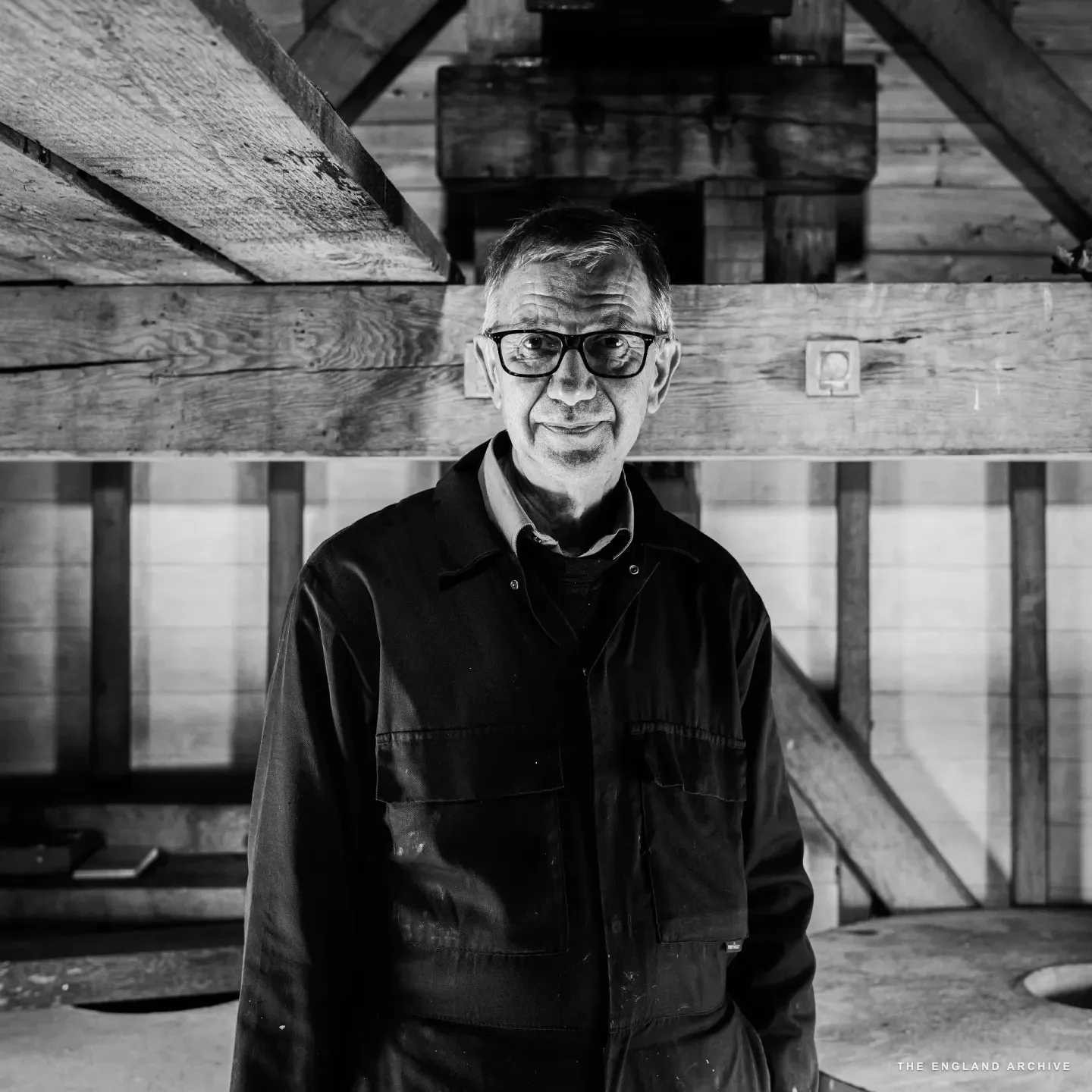
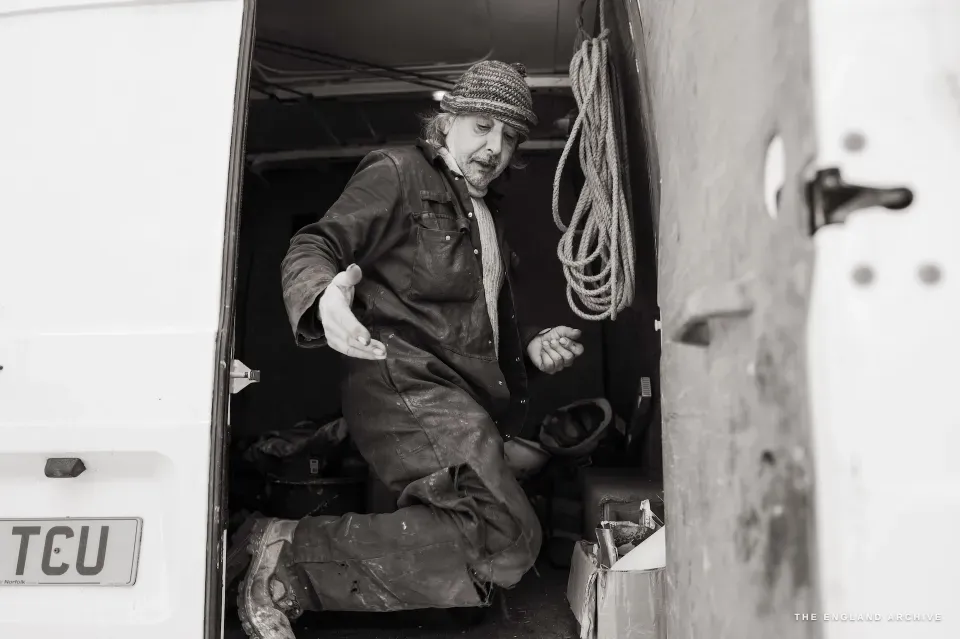
Paul’s van pulled in at ten thirty. He stepped out and was exactly as I had imagined a millwright would be, though I could not have told you exactly why until I saw him. There was a solidity to him, an unhurried ease. He beamed at us with a wide, generous smile, shook my hand, and said he was going to have a cup of tea and change into his work clothes and then we could begin.
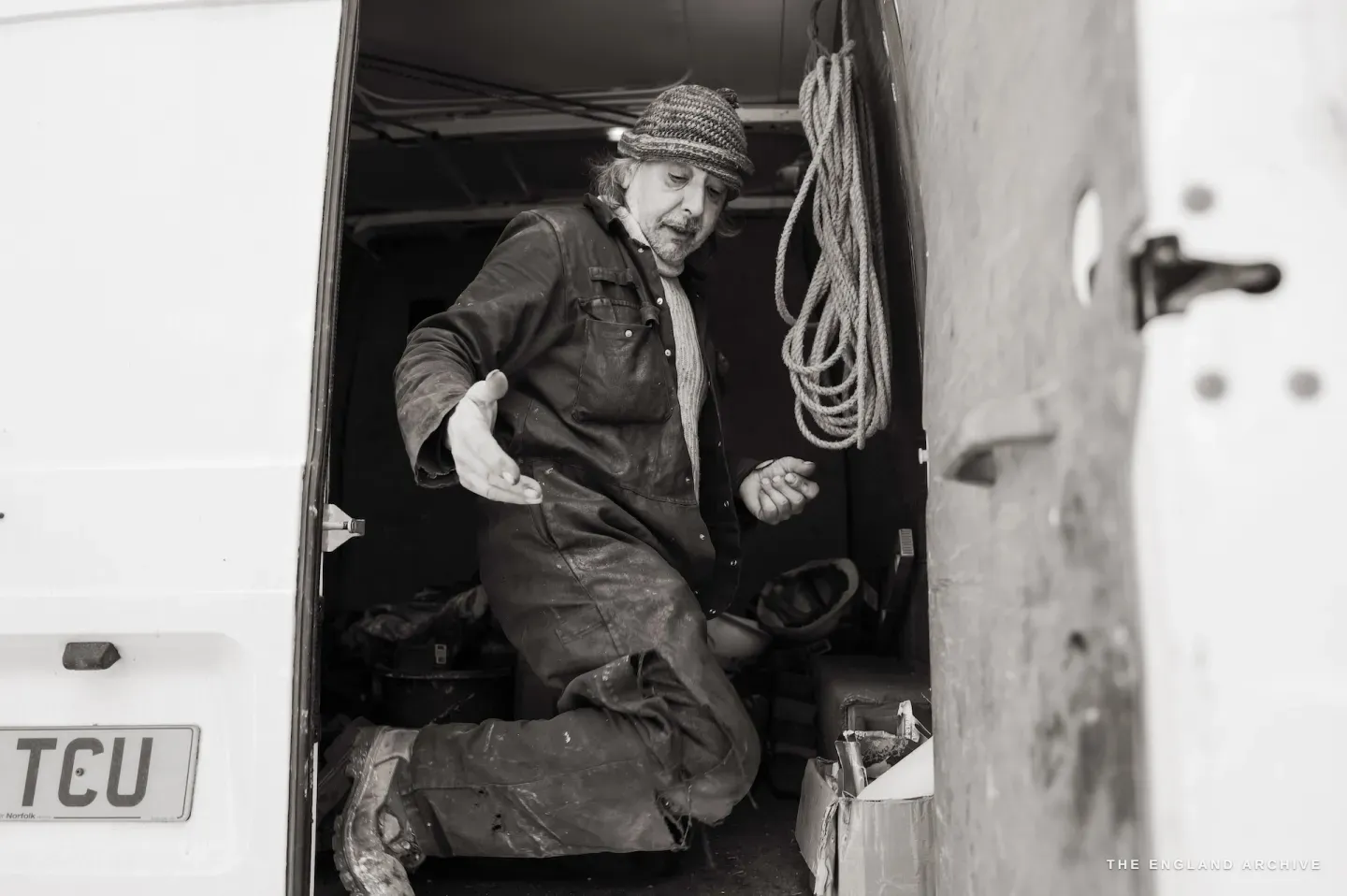
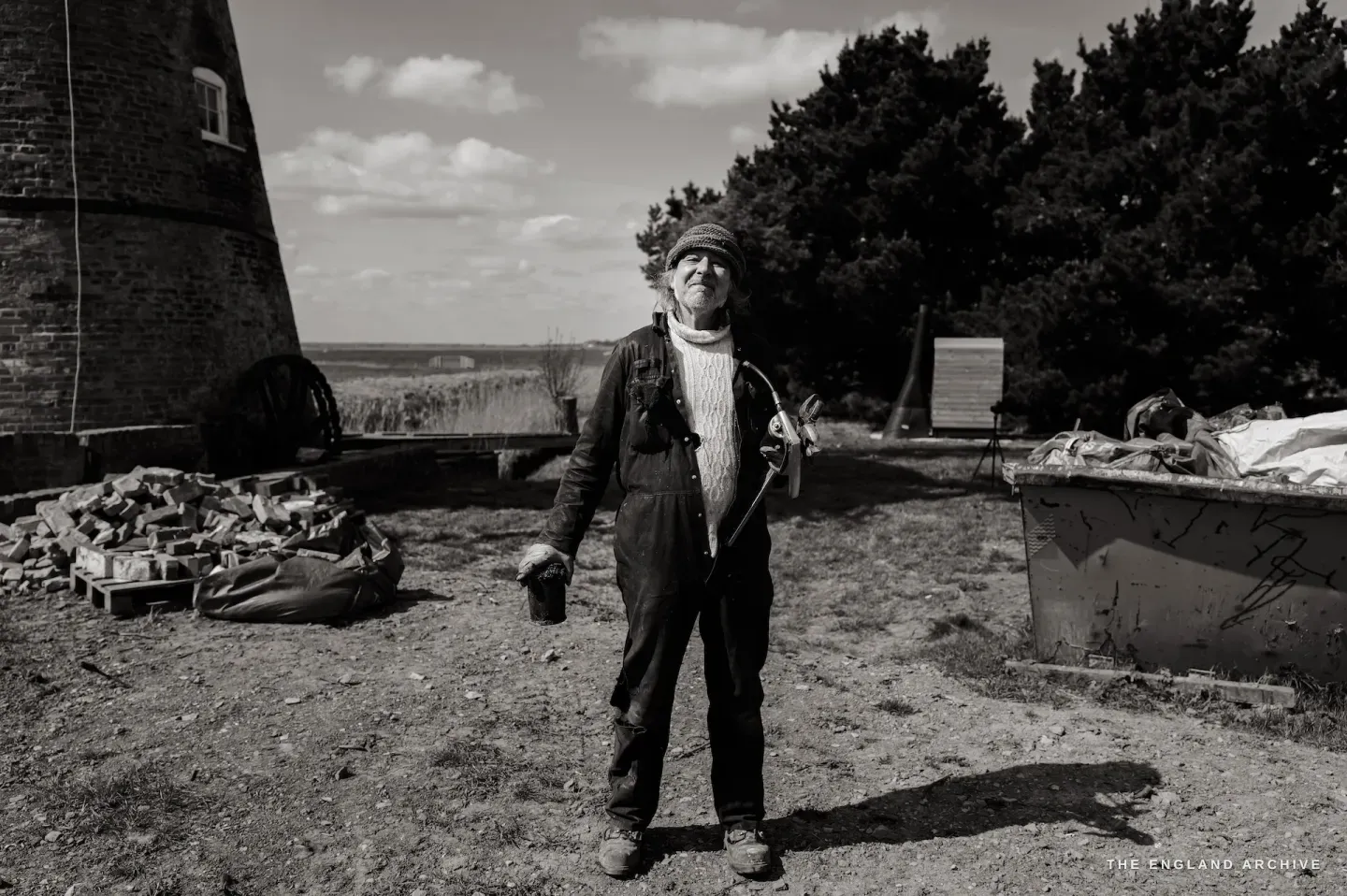
It was a small moment but it set the tone for everything that followed. This was a man entirely comfortable in his own skin, in his own knowledge, in his own time.
Then he began.
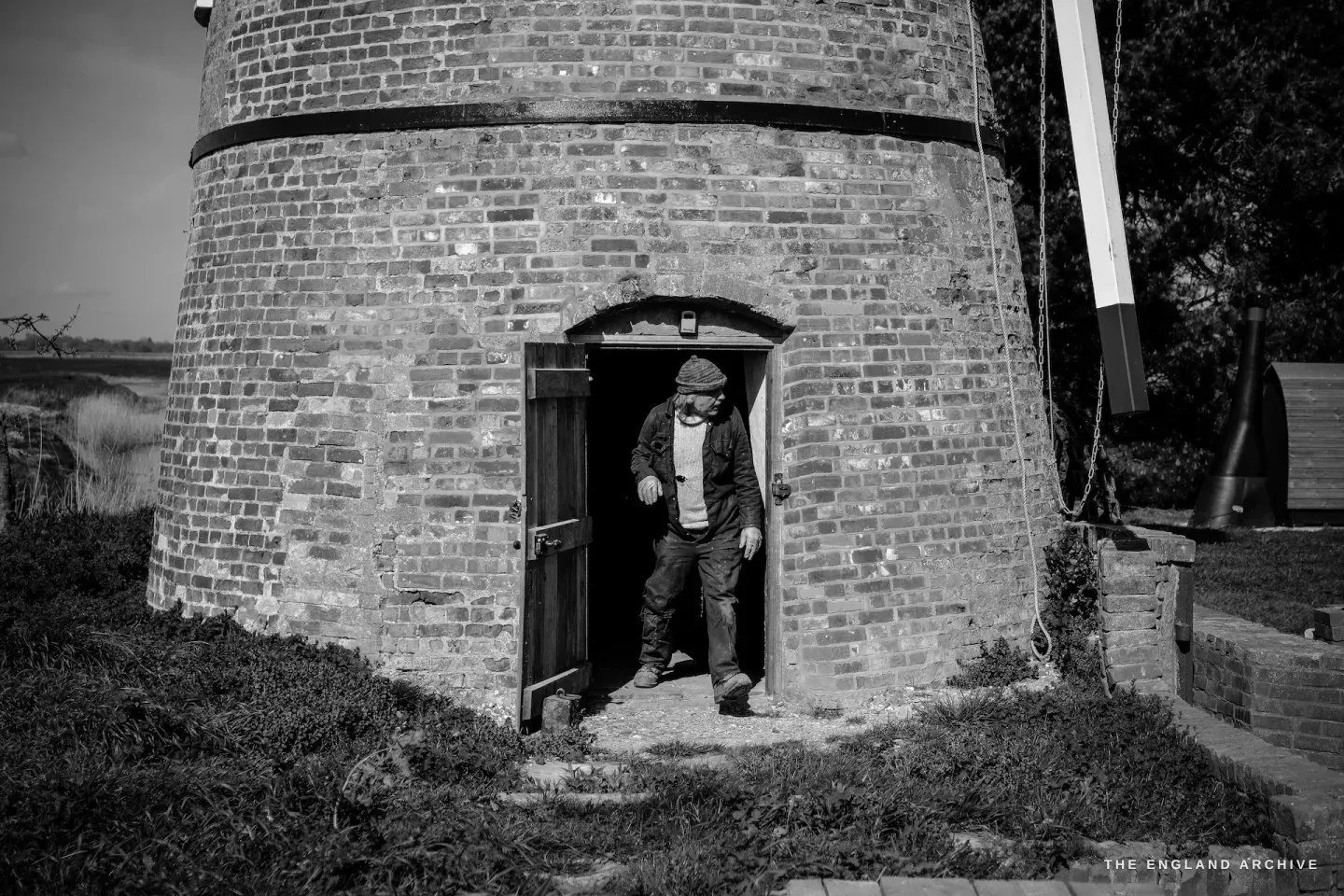
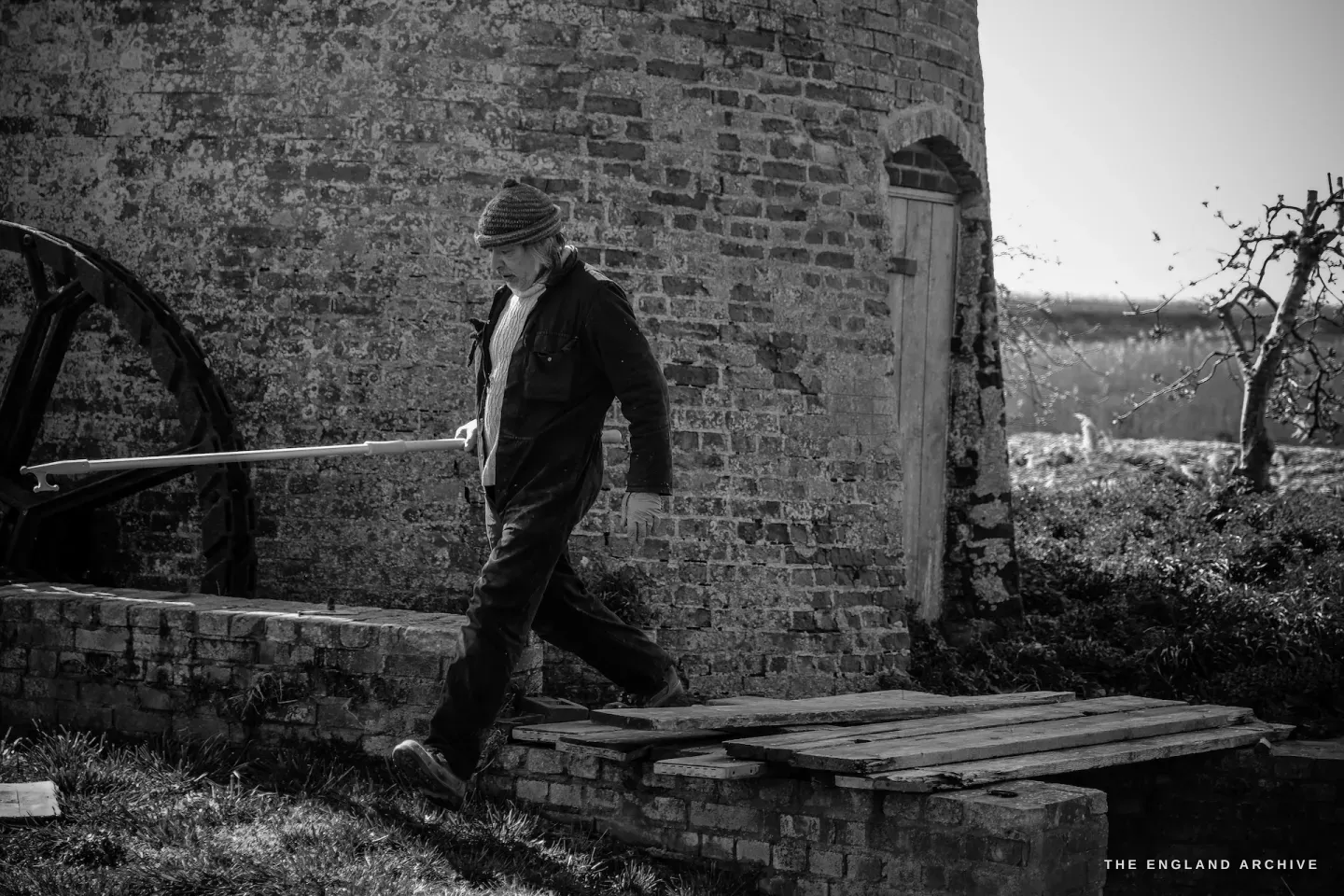
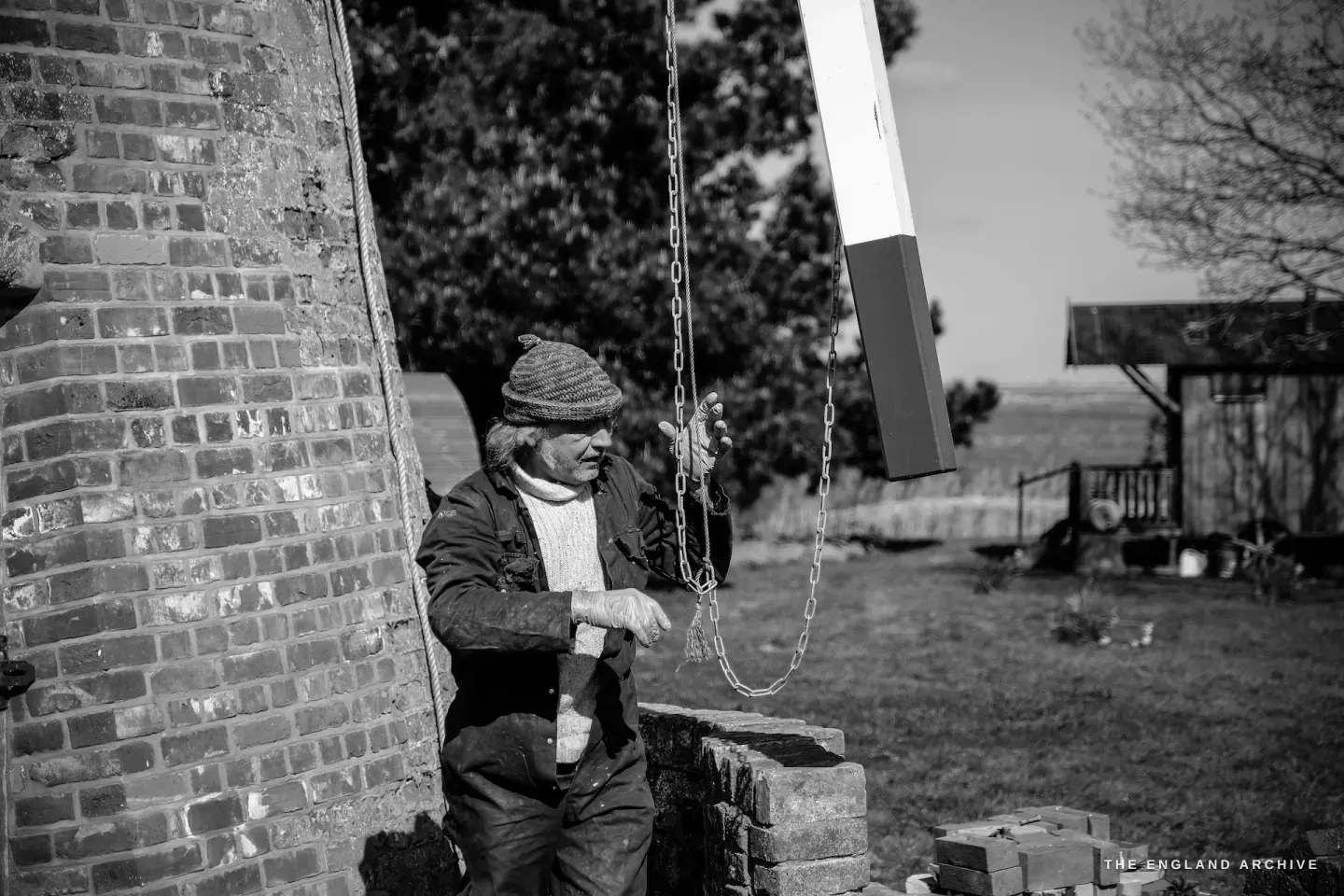
He climbed the mill first, working at the brake mechanism, pulling at the chain to release it. The sound of it carried across the marsh. I was below, shooting upward, and Bhavani was beside me filming, capturing me capturing him, the layers of documentation folding over each other.
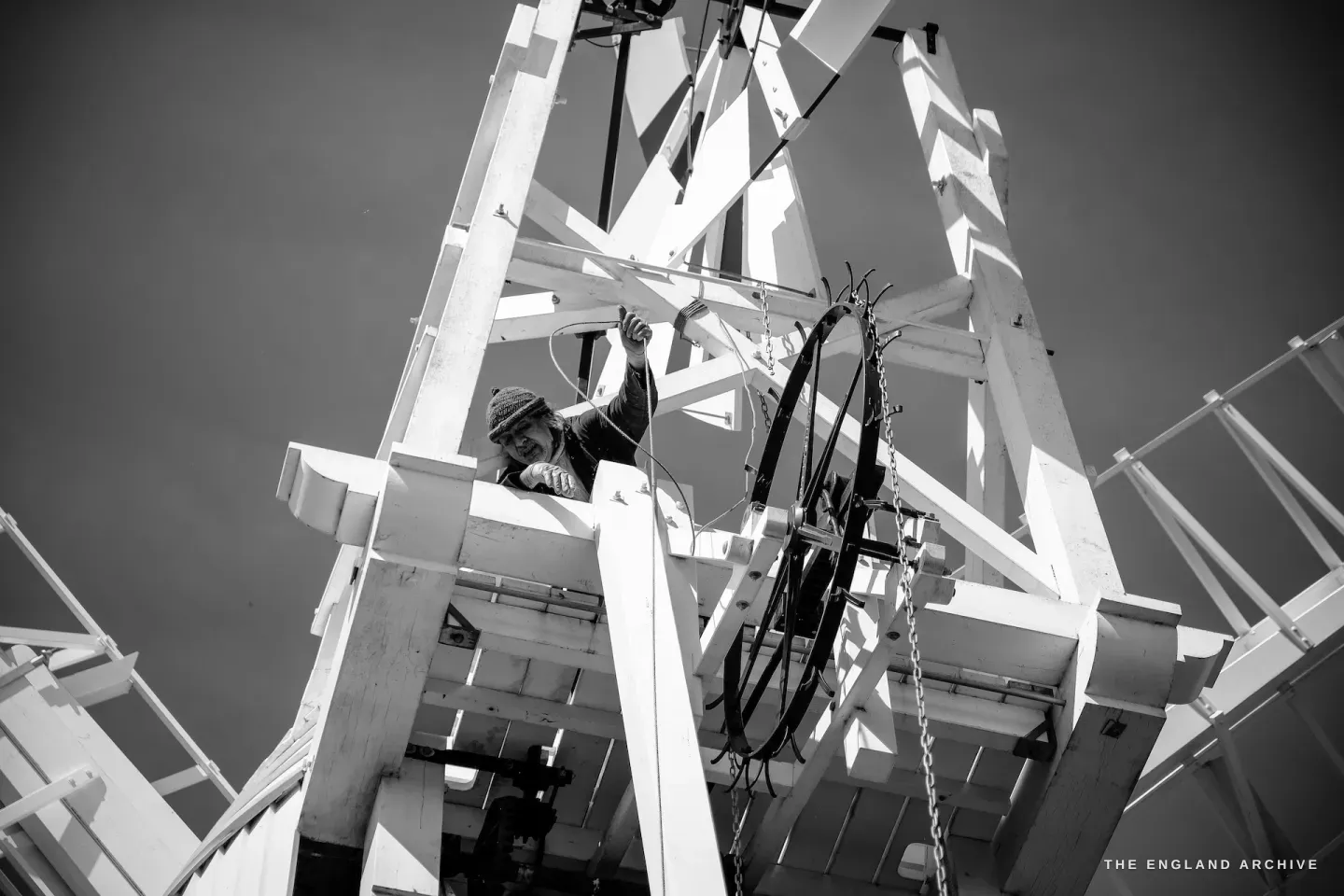
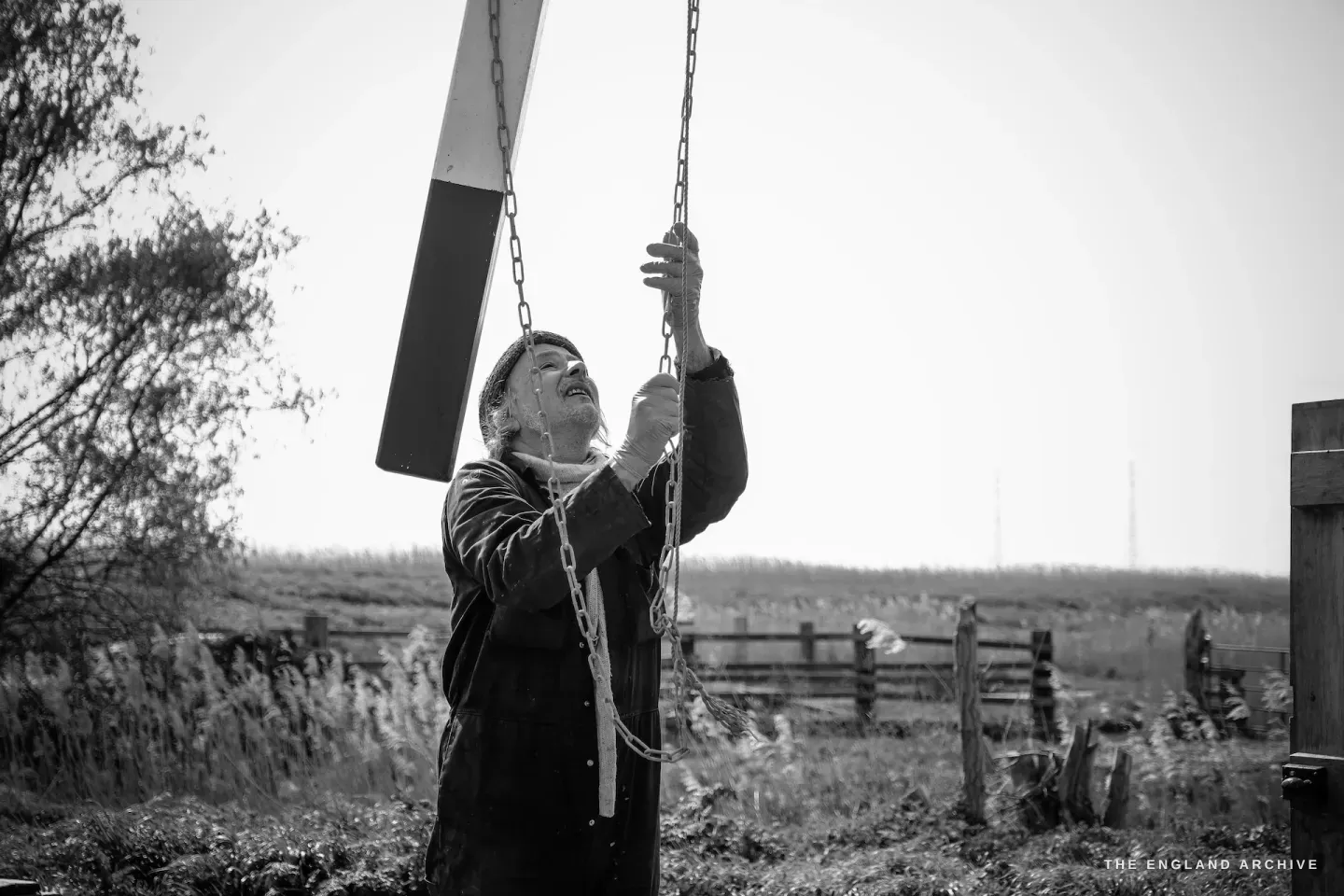
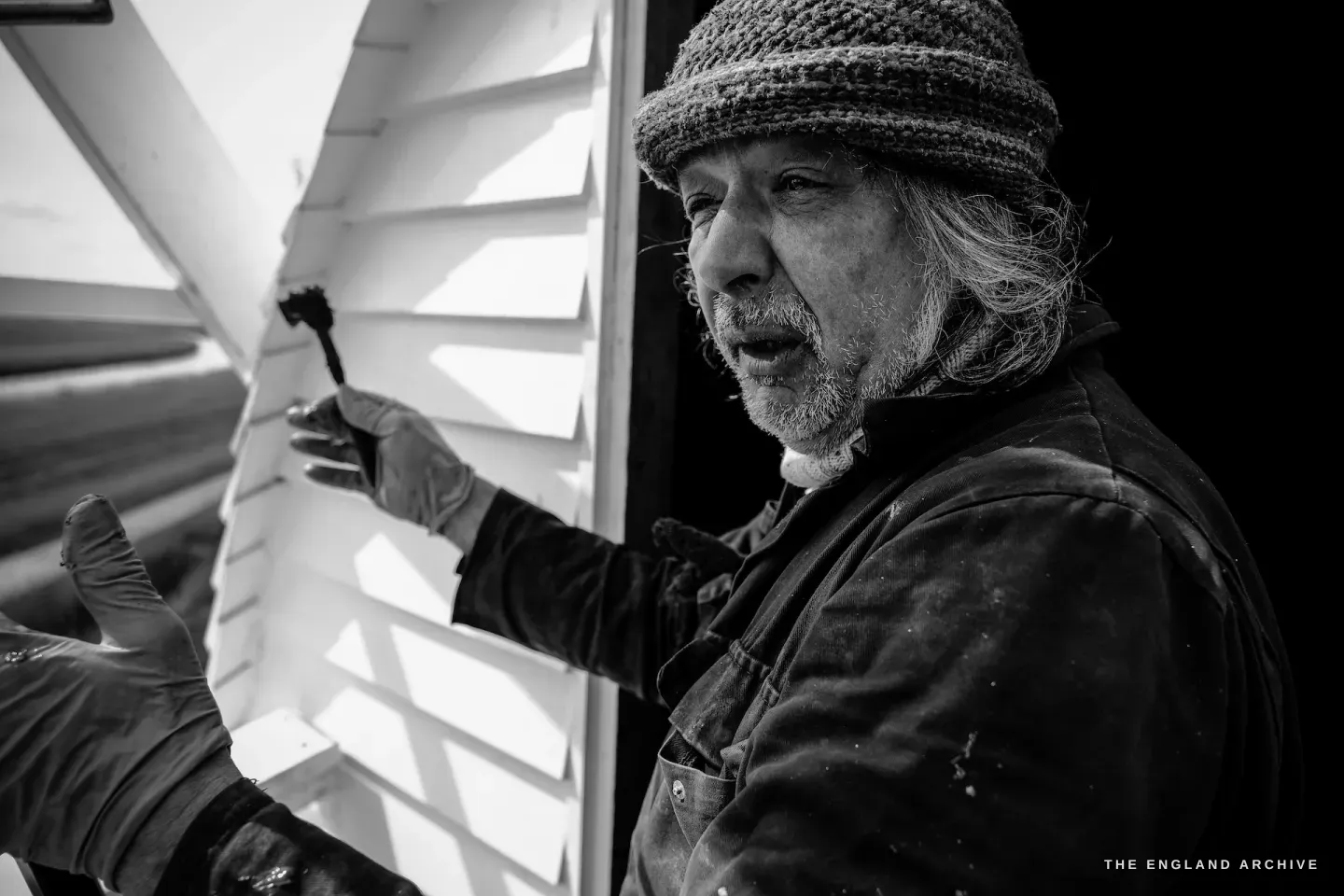
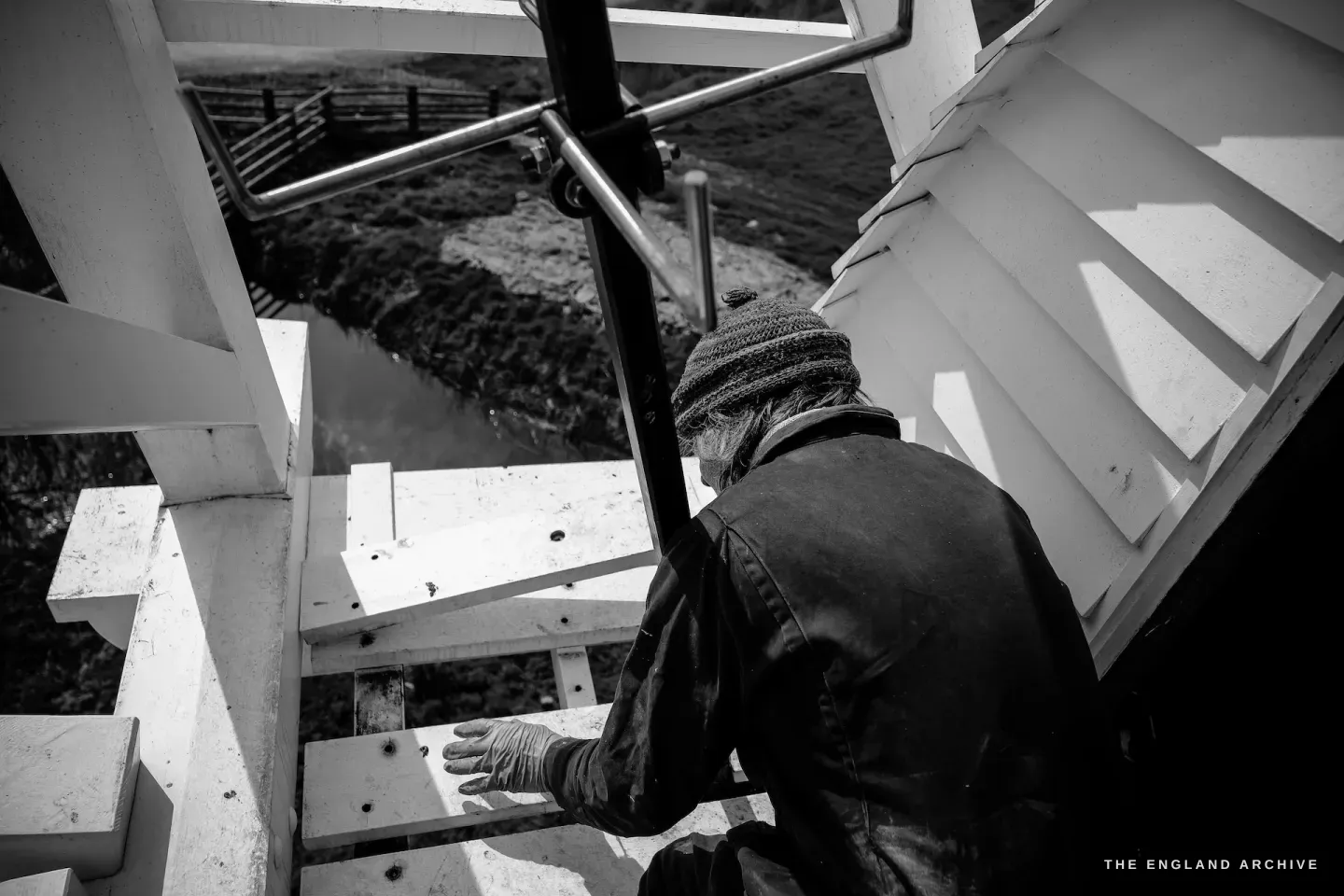
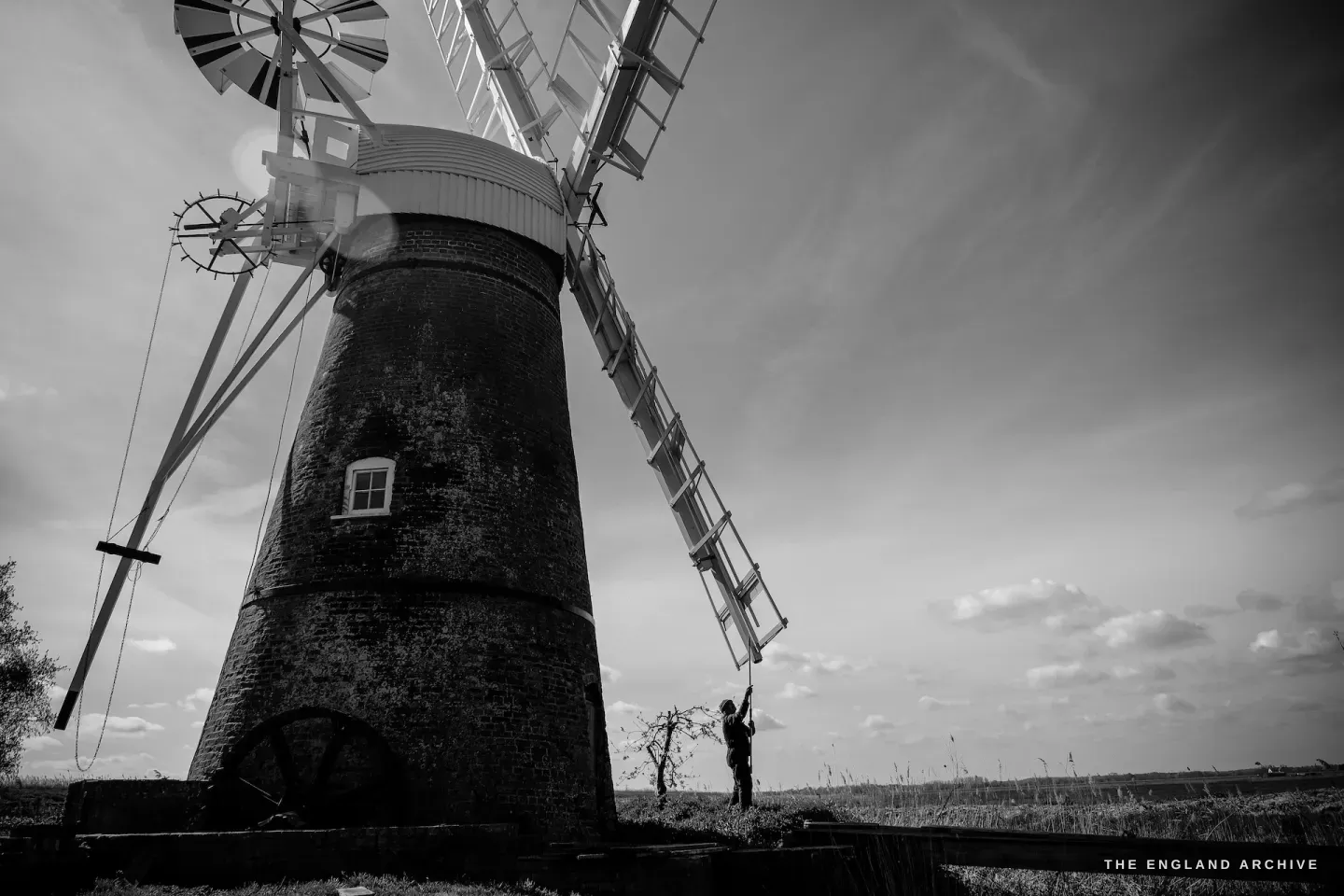
After a while Paul came back down and then did something I had not expected: he invited me up.
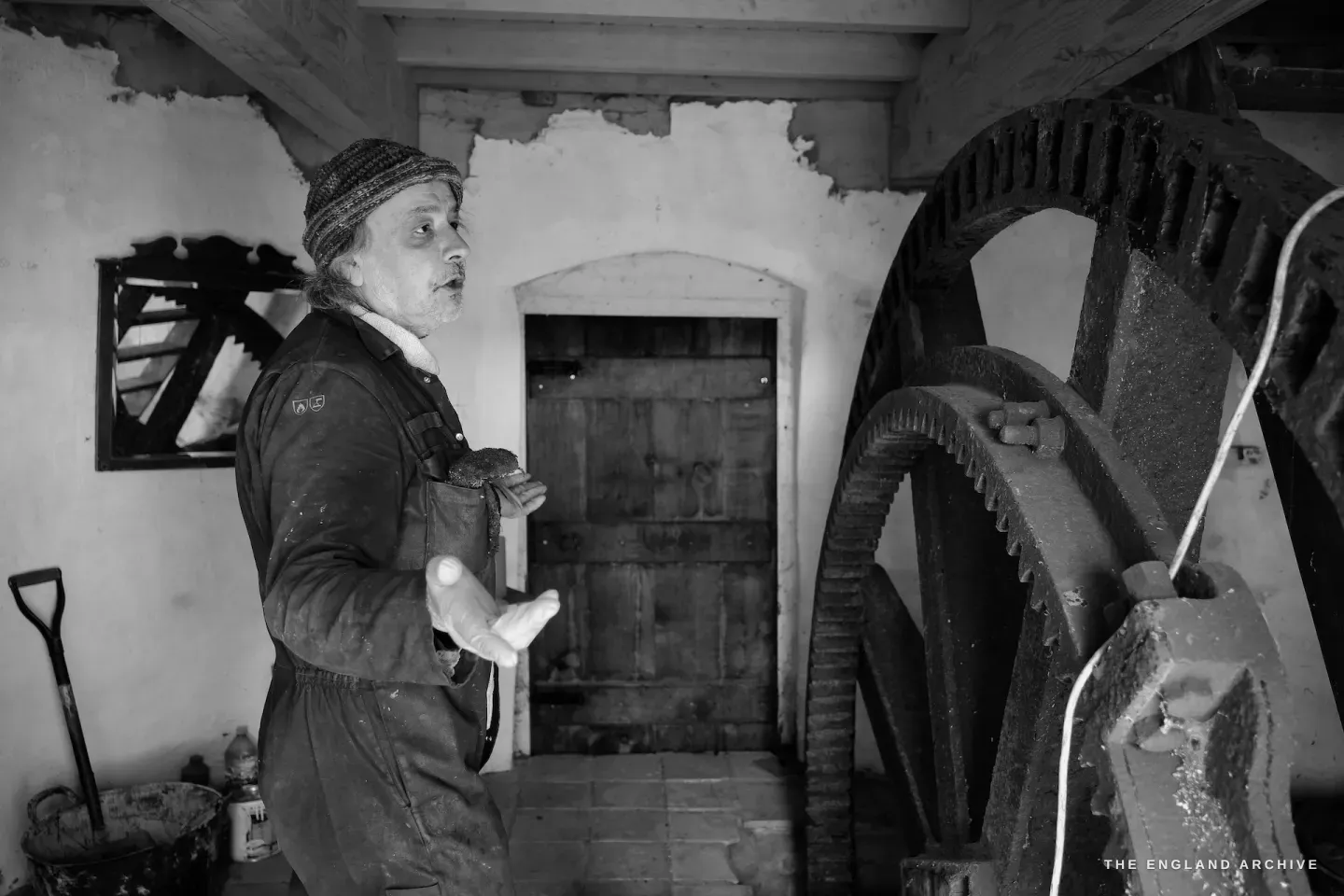
We climbed together through the interior of the mill and Paul talked as we went, explaining everything with the patience of someone who has long since stopped assuming people already know. The windshaft sits at fifteen degrees, he told me, pointing to where the weight falls. Here is how the brake engages. Here is what happens when the wind shifts. Here is where this mill differs from the others along the Broads.
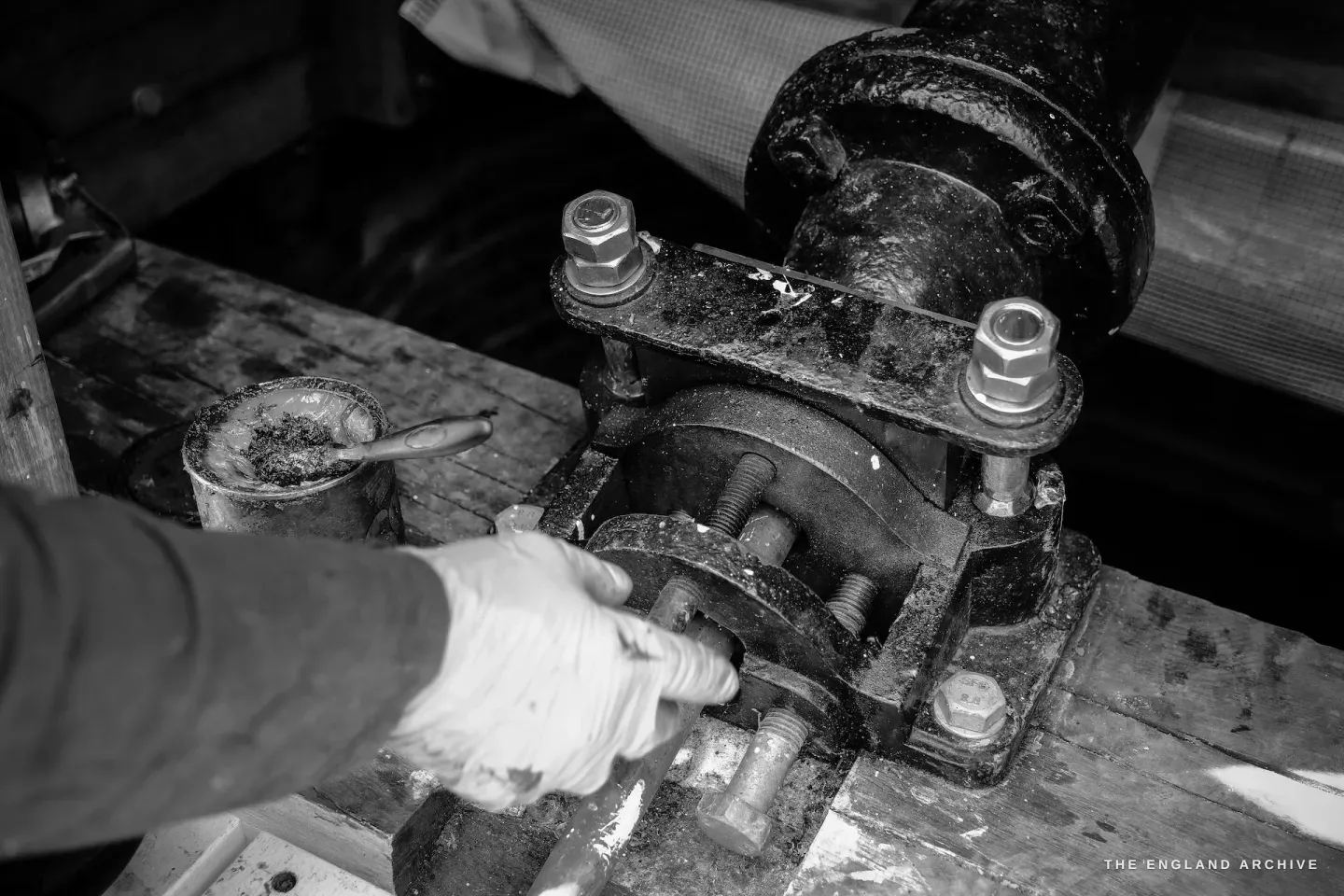
He oiled components as he talked, greasing joints and checking fittings, his hands moving with the kind of automatic knowledge that only comes from decades of the same work. I was shooting constantly, the Leica and the Fujifilm alternating, trying to hold both the man and the machine in the same frame, trying not to let the photography overtake the listening.
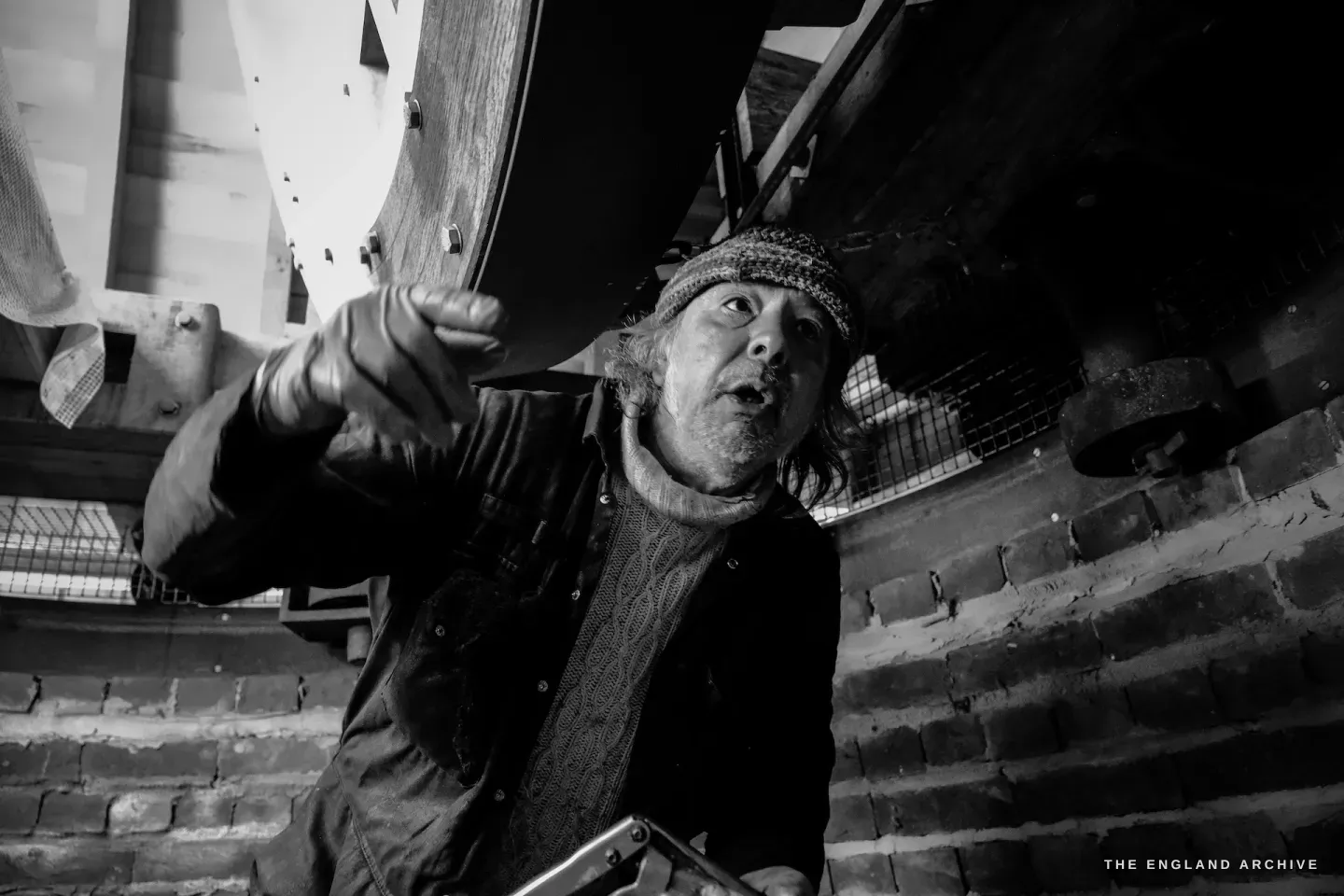
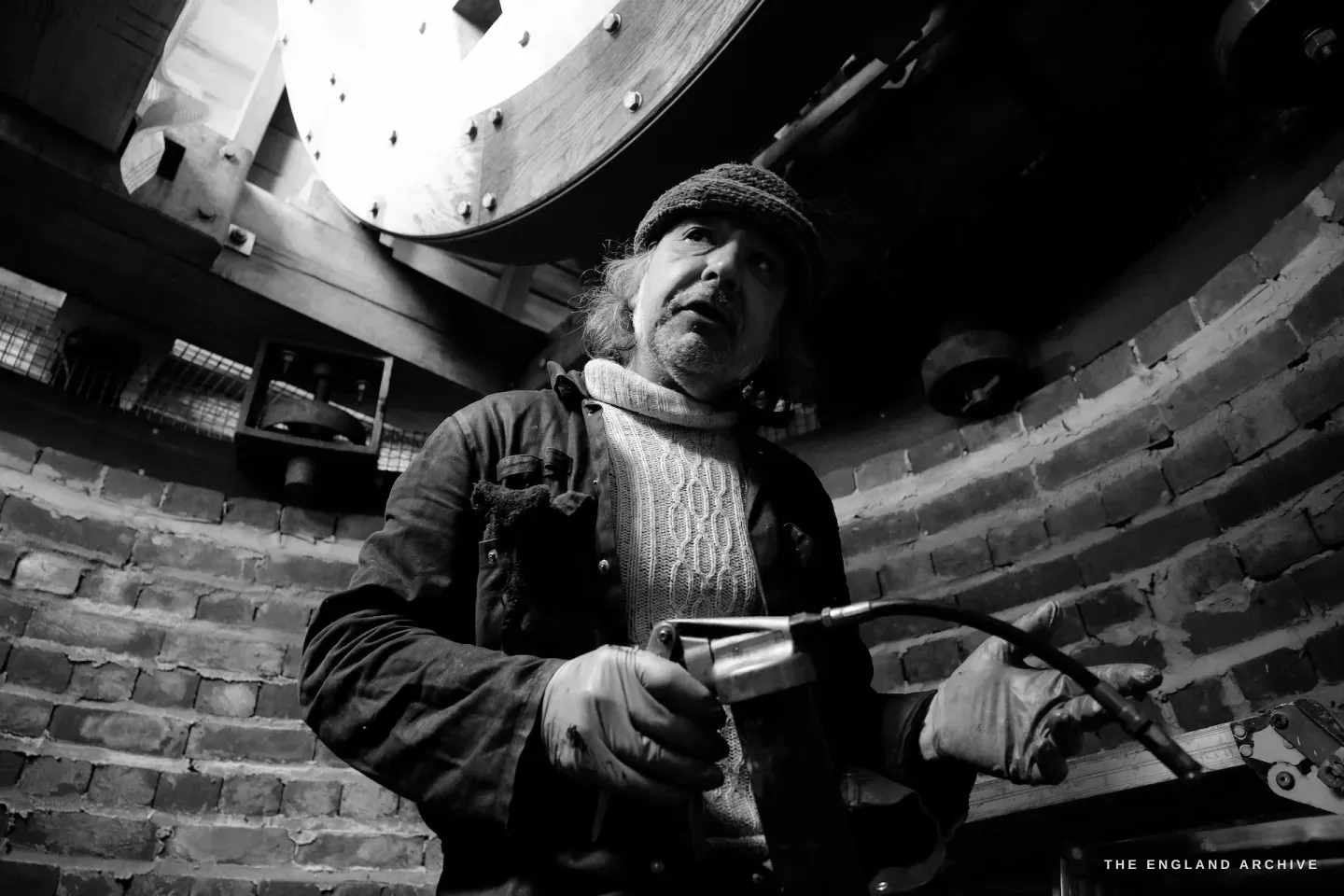
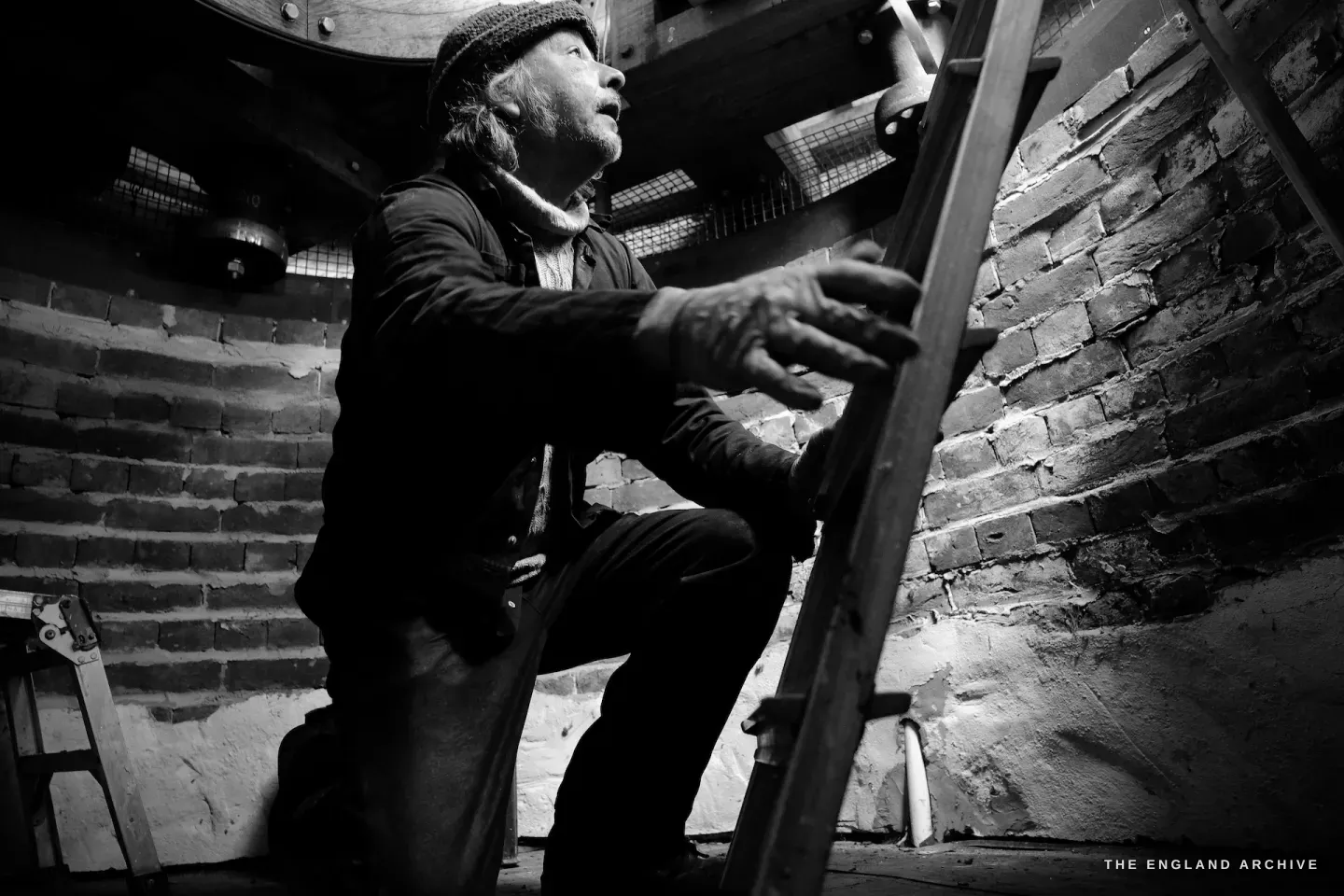
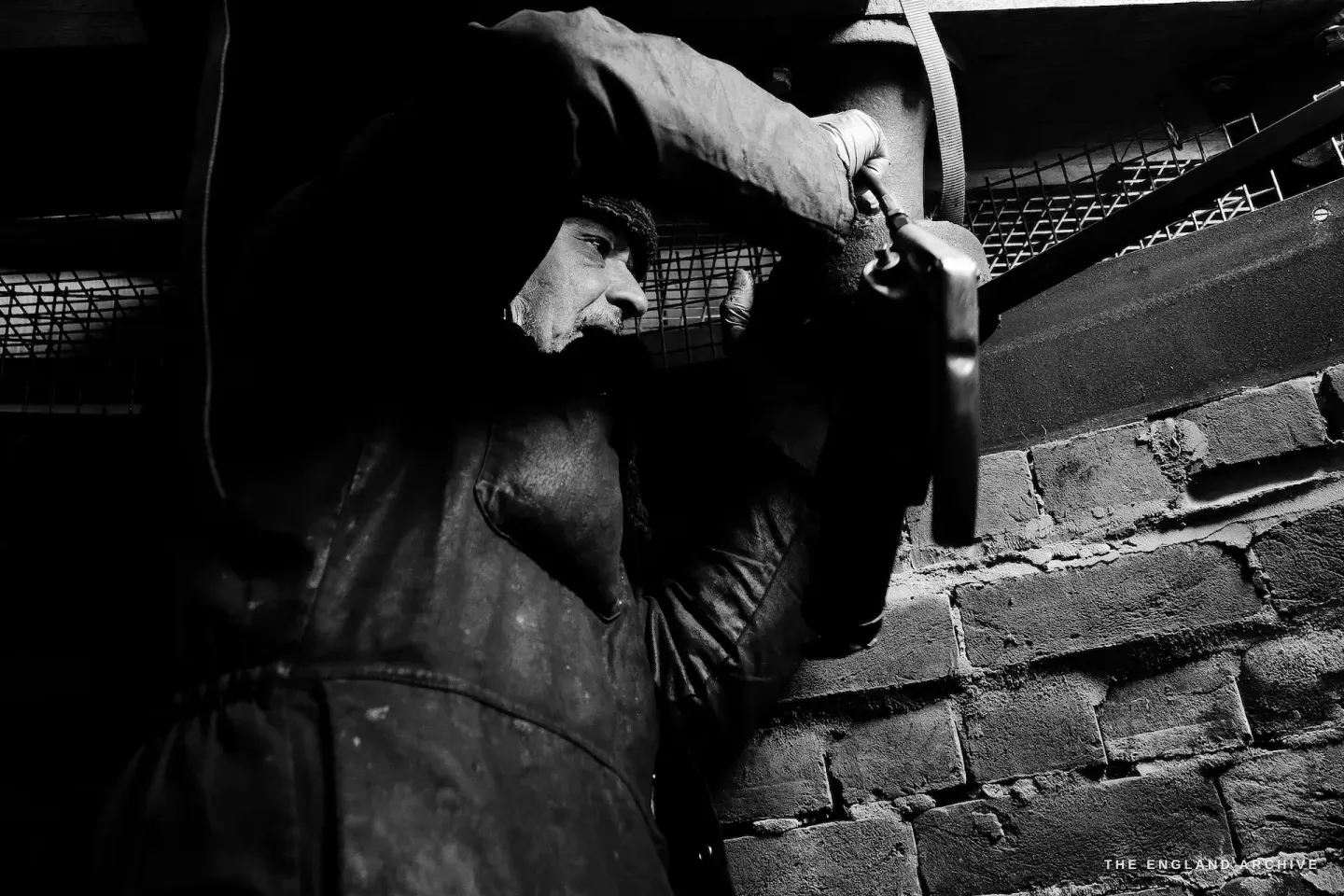
The mill had been fully refurbished by its owners. New sails, new timber, new components throughout - a two-year project involving a team of specialist craftspeople. Paul led on the gearing and metalwork and was responsible for getting the mill running again. He mentioned his part without ceremony.
Two years. He said it the way you might mention that a job took a long afternoon.
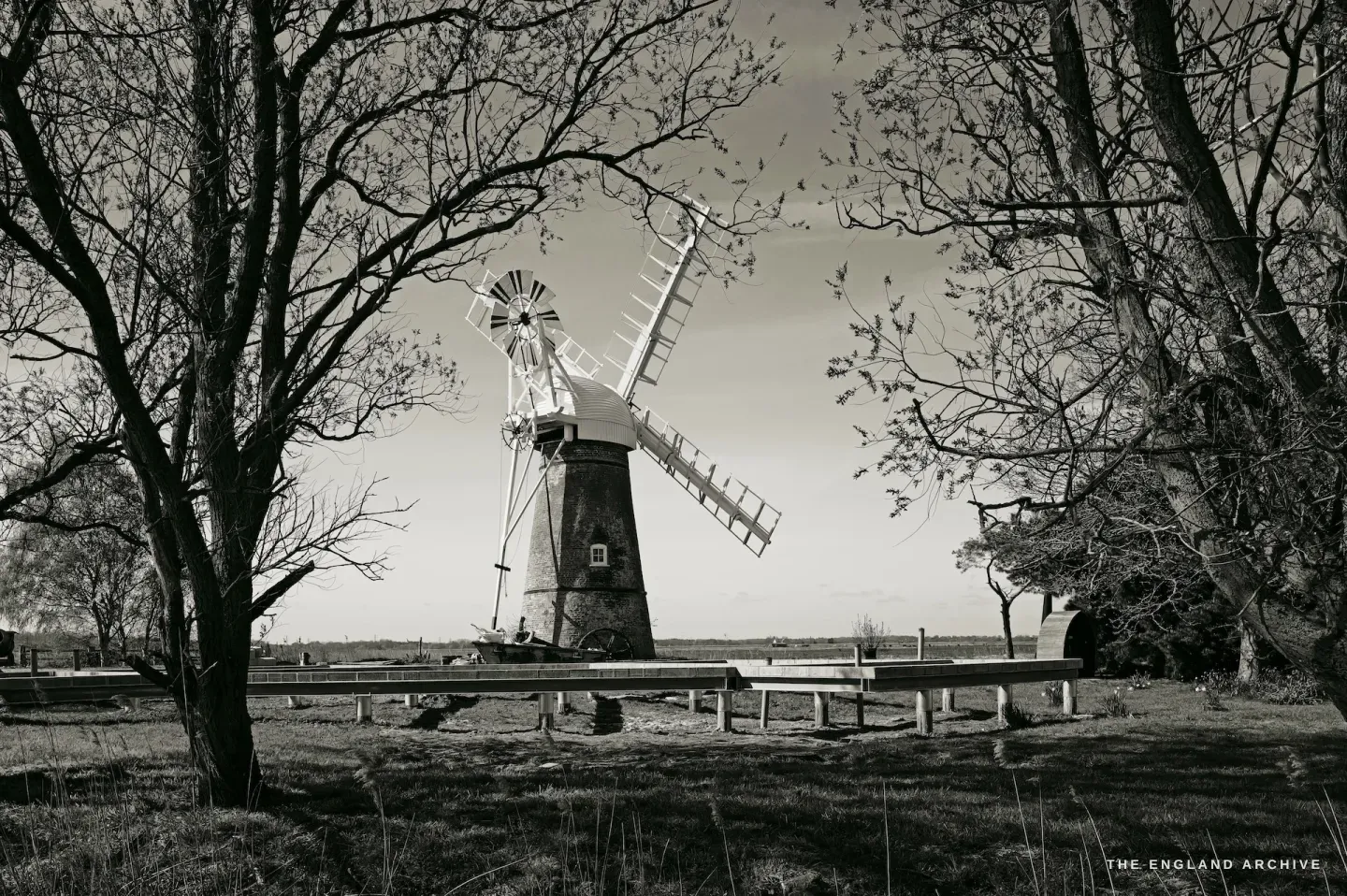
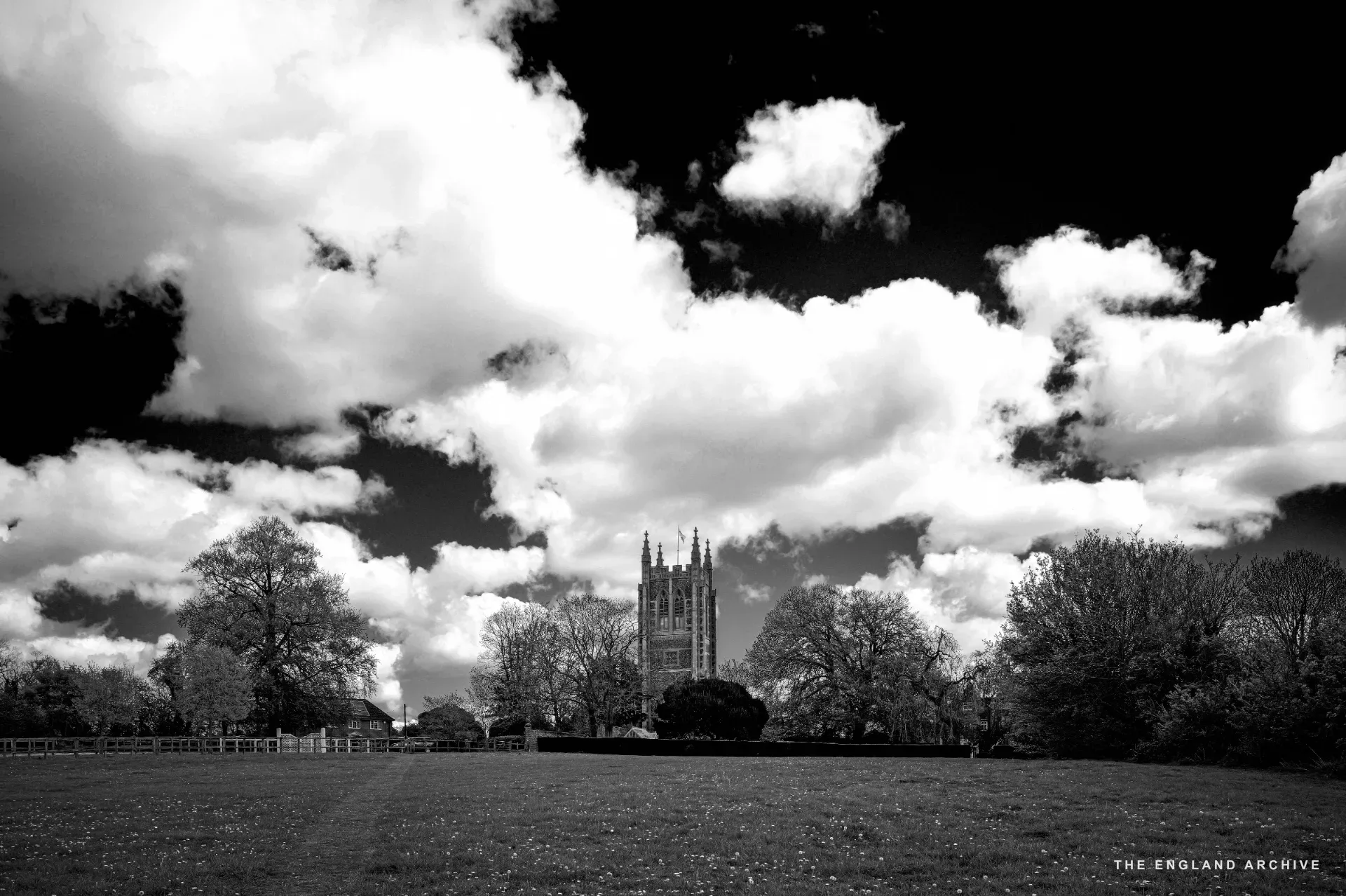
Bhavani and I had left London before eight and driven two and a half hours north into Norfolk, the flat landscape opening up around us as the city fell away. We pulled into Toft Monks just after ten, fifteen minutes before Paul was due to arrive. The mill stood at the edge of the Broads, the sails still, the sky wide and pale above the marshes.
I took a few frames to settle myself, walked the perimeter, worked out where I wanted to be standing when things began. You are learning a place before you have to share your attention.
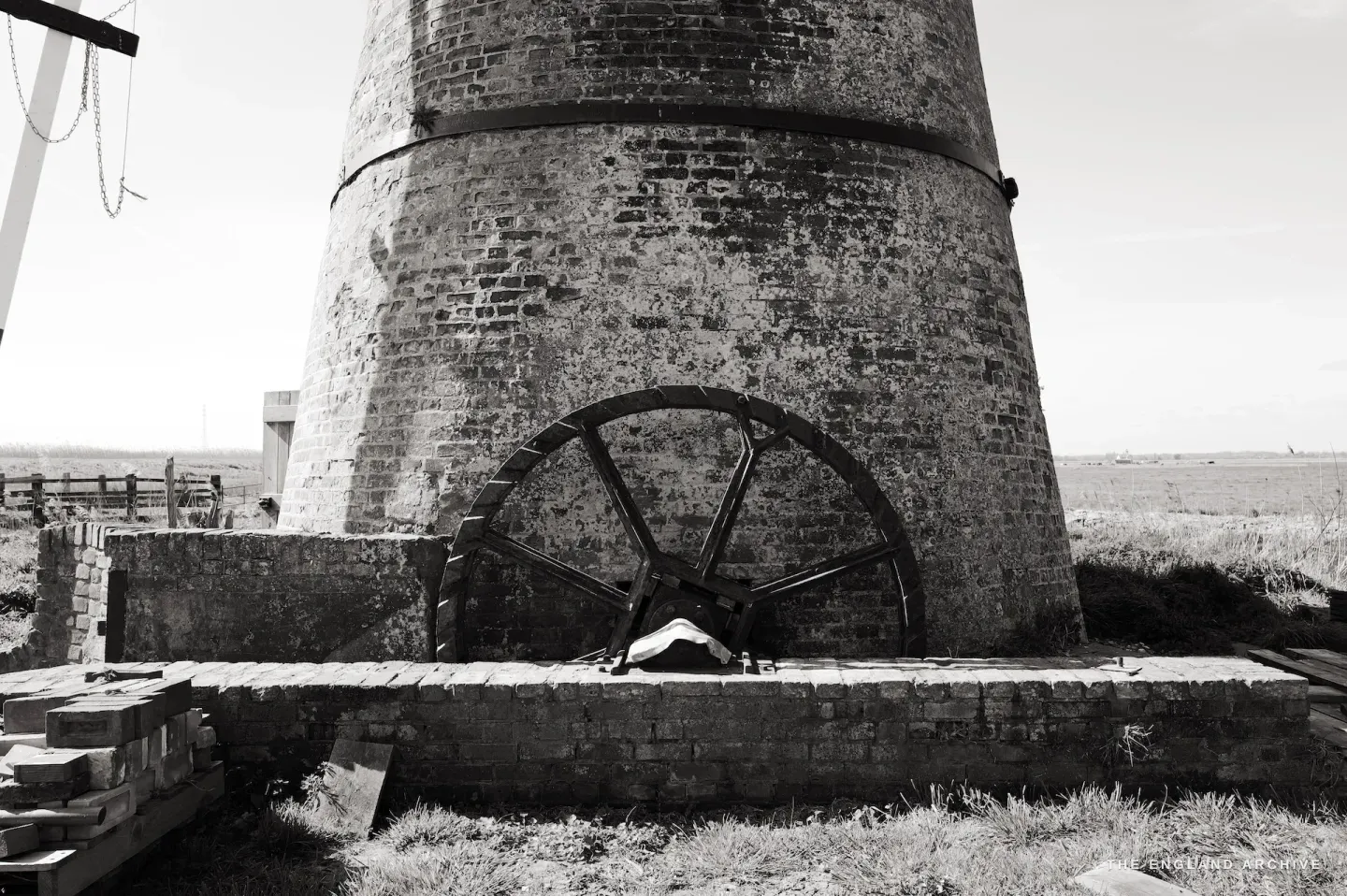
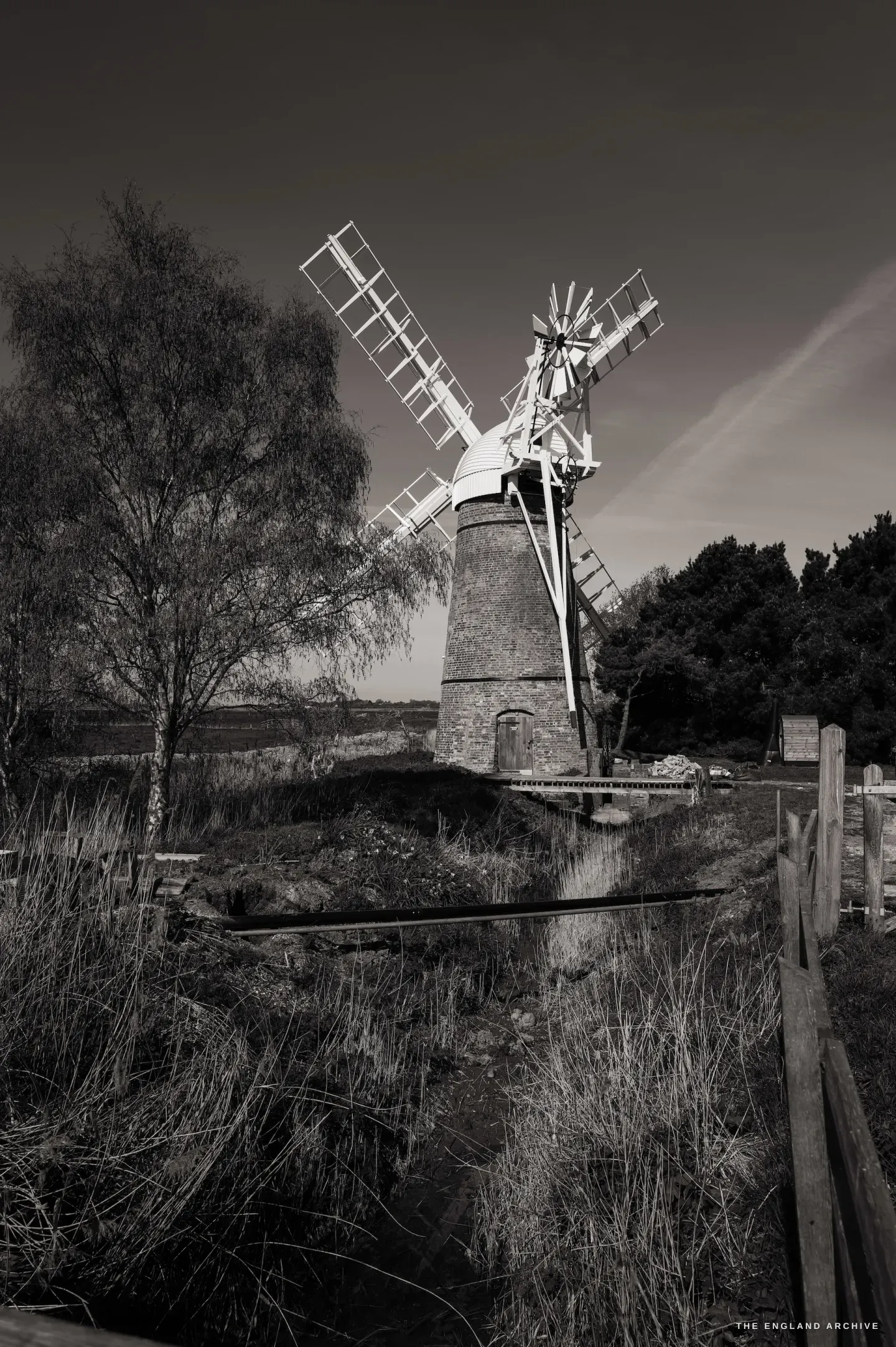
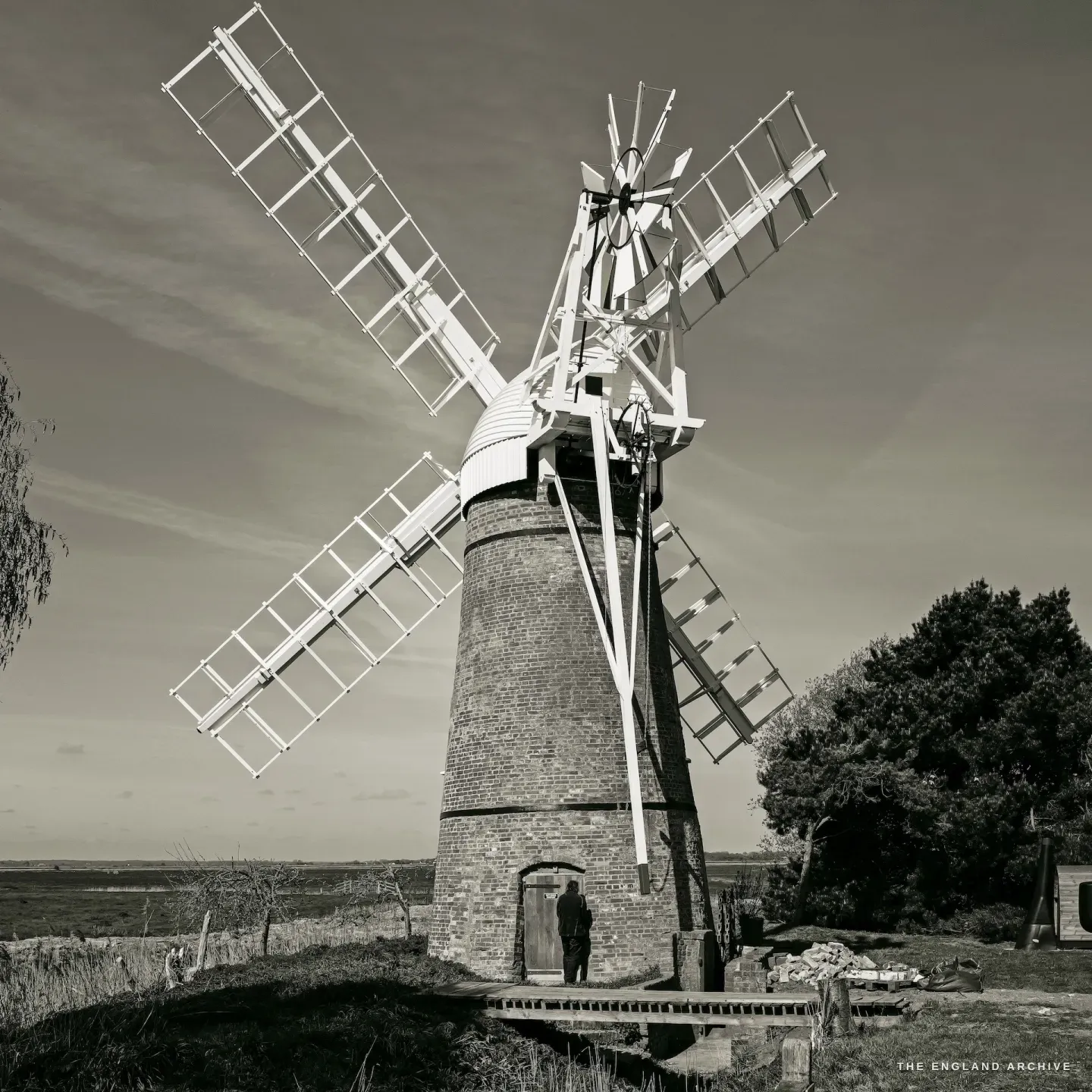
What struck me most was not Paul’s skill with the machinery but his willingness to explain it. Not lecturing. Not performing. Just telling you what he knows, steadily and clearly, because the knowledge matters and someone ought to hear it.
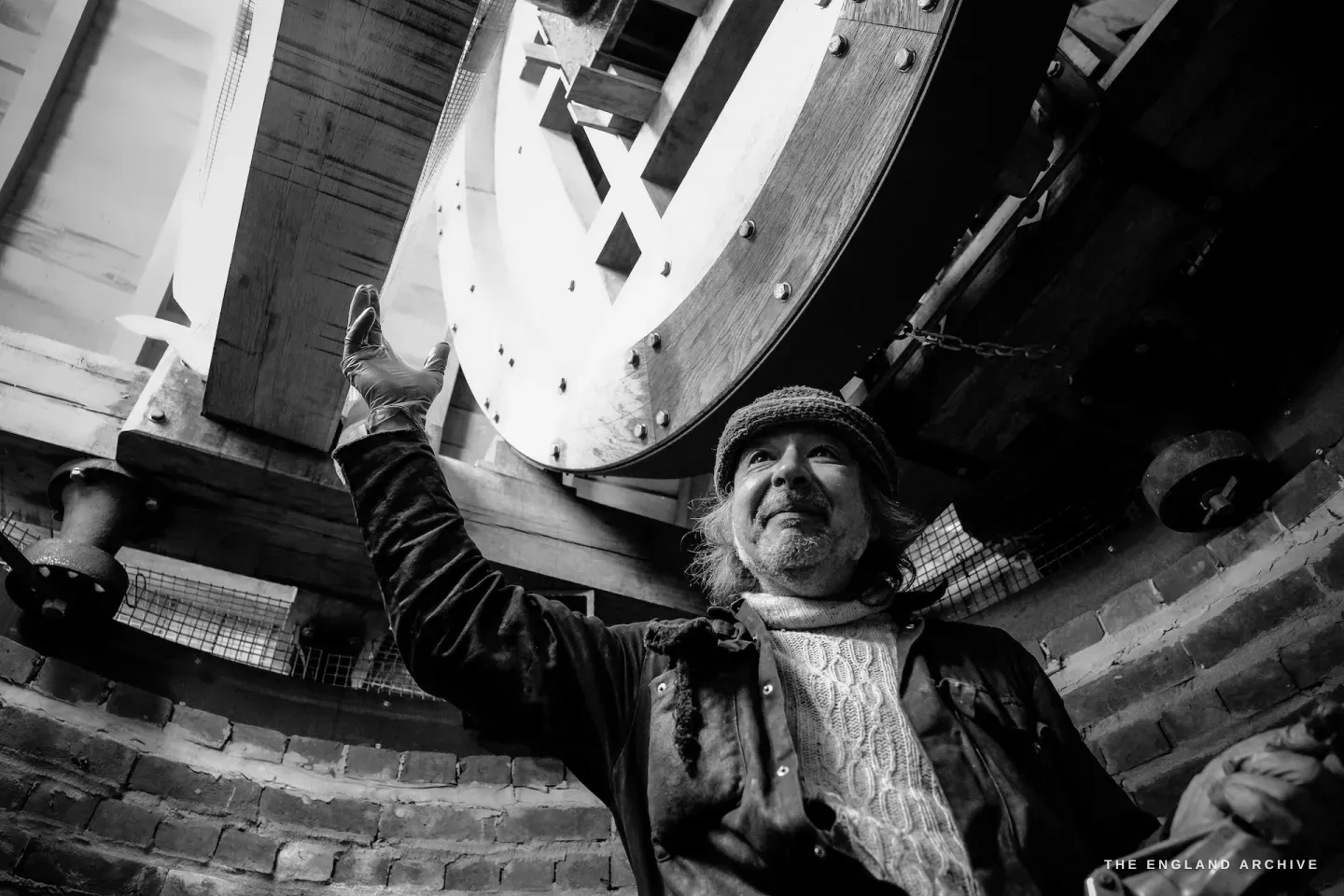
He pointed to joints and fittings as he spoke, his hands landing on each component with the certainty of a man who has touched it a thousand times, and I worked to keep up: the windshaft angle, the brake engagement, the way the cap tracks the wind. What I noticed was that every explanation stayed rooted in the specific - this mill, this timber, this fitting - and yet built into something larger, a picture of how these machines work as systems, every part dependent on every other. I have photographed people who guard what they know. Paul is the opposite, and it is the most hopeful thing about him.
What Paul Kemp Knows
The windshaft sits at fifteen degrees. Here is how the brake engages. Here is what happens when the wind shifts. Here is where this mill differs from the others along the Broads.
A millwright is not a carpenter, not an engineer, not a builder. A millwright is all three and something else besides - someone who understands a machine that is also a building that is also a sailing vessel. A windmill is a structure that moves. Its sails catch the wind. Its cap turns to follow. Its shaft transmits power through gears and stones. Every component is under load, under weather, under the specific stresses of a structure that was designed to convert moving air into mechanical force.
The person who maintains it must understand timber - which species for which purpose, how it behaves under load, how it responds to moisture, how it ages. They must understand iron - wrought iron, cast iron, the different forgings used for different components, how metal fatigues and where to look for cracks. They must understand wind - not as weather but as engineering force, the pressures on a sail in a gusting north-easterly, the torque on a shaft when the wind backs suddenly, the stresses that will find every weakness in a structure and exploit it.
Paul carries this knowledge the way a surgeon carries knowledge of anatomy - not as theory but as practice, built up over decades of putting his hands inside the machine and feeling what is right and what is not. He knows every mill he has worked on individually, the way a doctor knows patients. This one has a tendency to shift in a north-easterly. That one needs its brake adjusted before every season. The timber in this cap is original and sound; the timber in that one was replaced in the 1920s and is showing its age.
This is not information that exists in a manual. It exists in Paul Kemp, and in the handful of people like him scattered across East Anglia, and in nobody else.
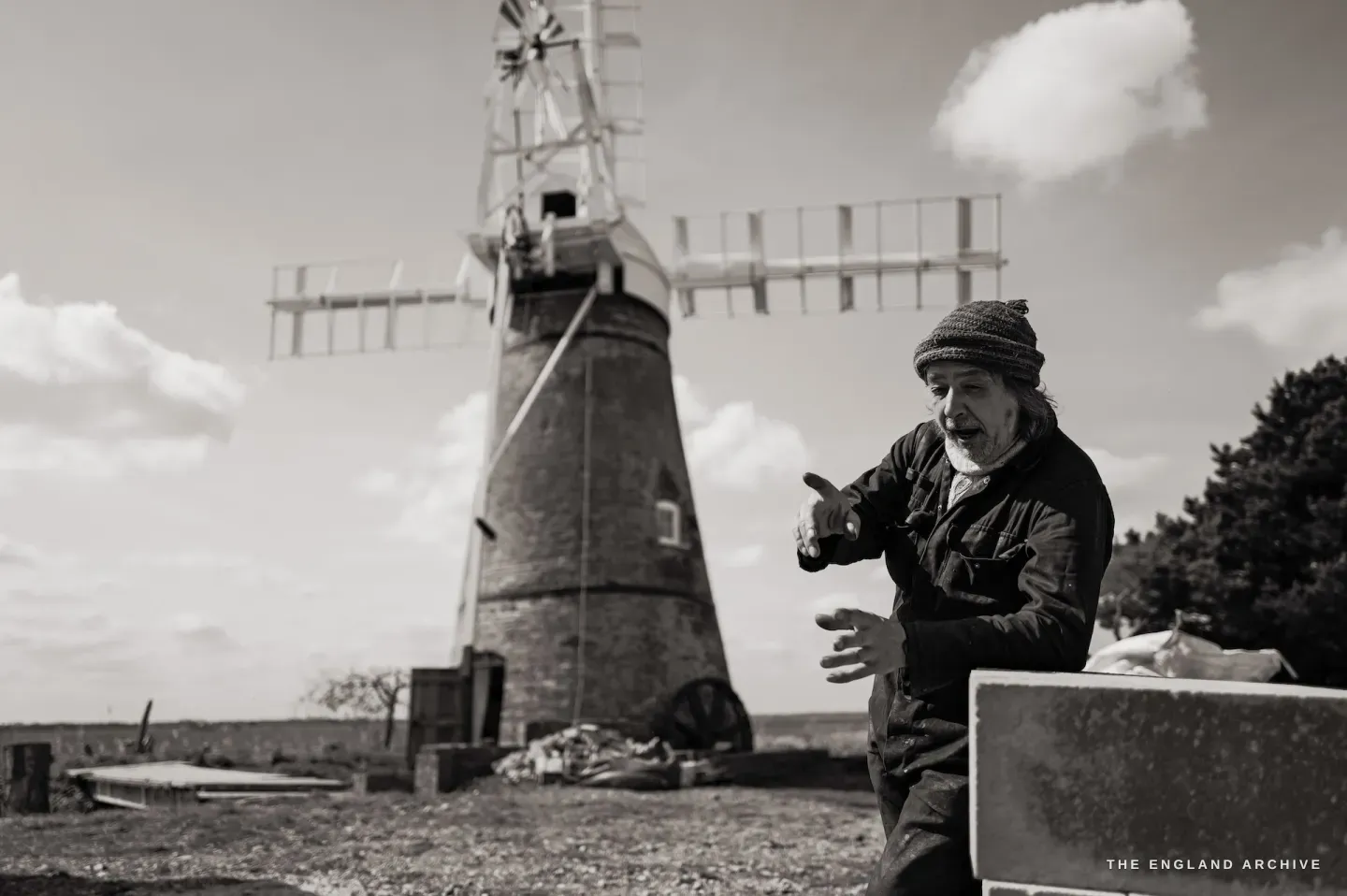
Towards the end of the session I put down the Leica and brought out the Bronica. The pace changed. Fewer frames, more stillness, more intention. Profile shots of Paul against the mill, the sails and the Norfolk sky behind him. The square format demands that you slow down and I was glad of it by then. The morning had been fast and full and the Bronica made me stop and look properly at what was in front of me.
What was in front of me was a man in his working life, doing work that almost nobody else in England can do, in a place that would fall into silence without him. The mill at Toft Monks works because Paul Kemp exists. That is not a small thing.
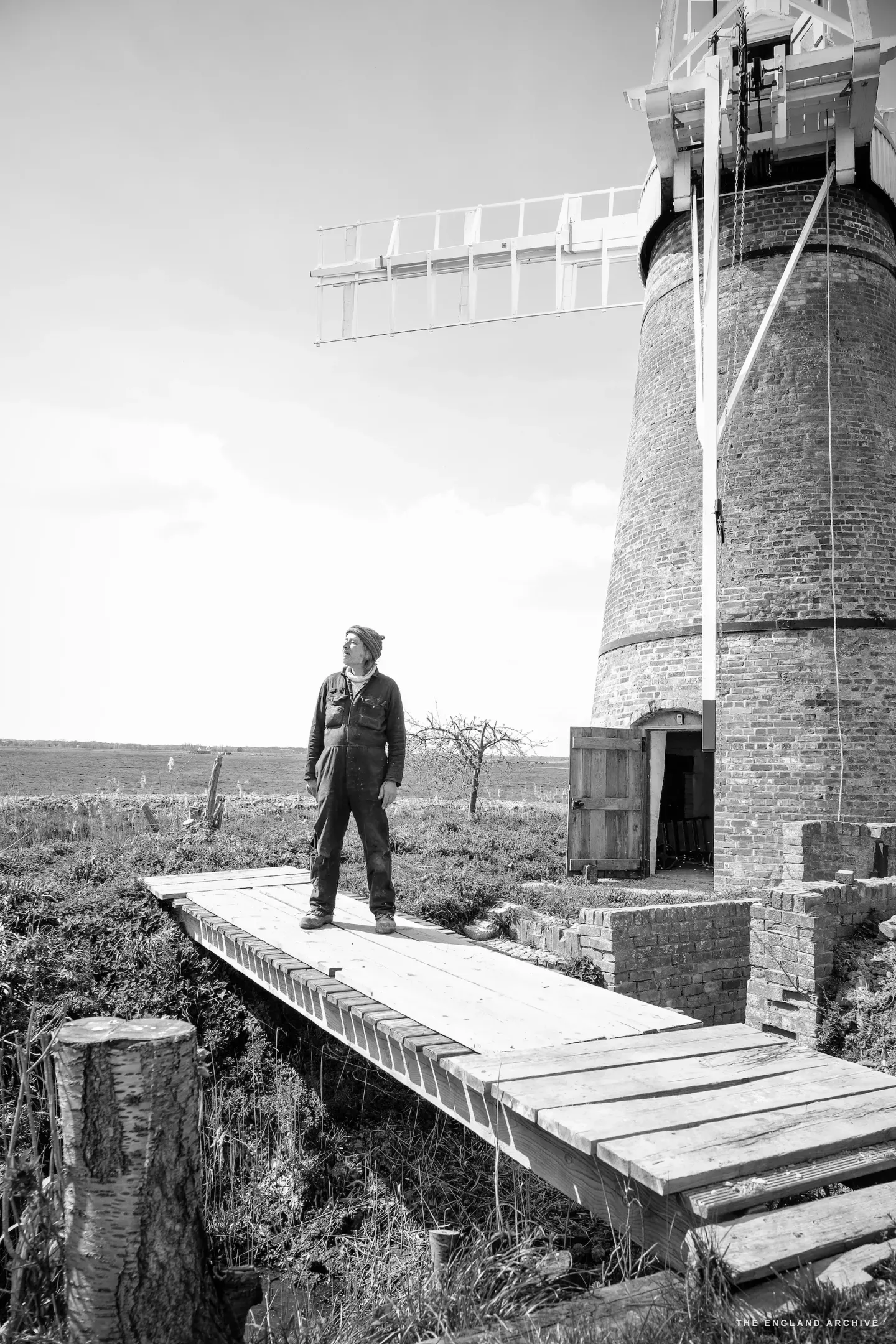
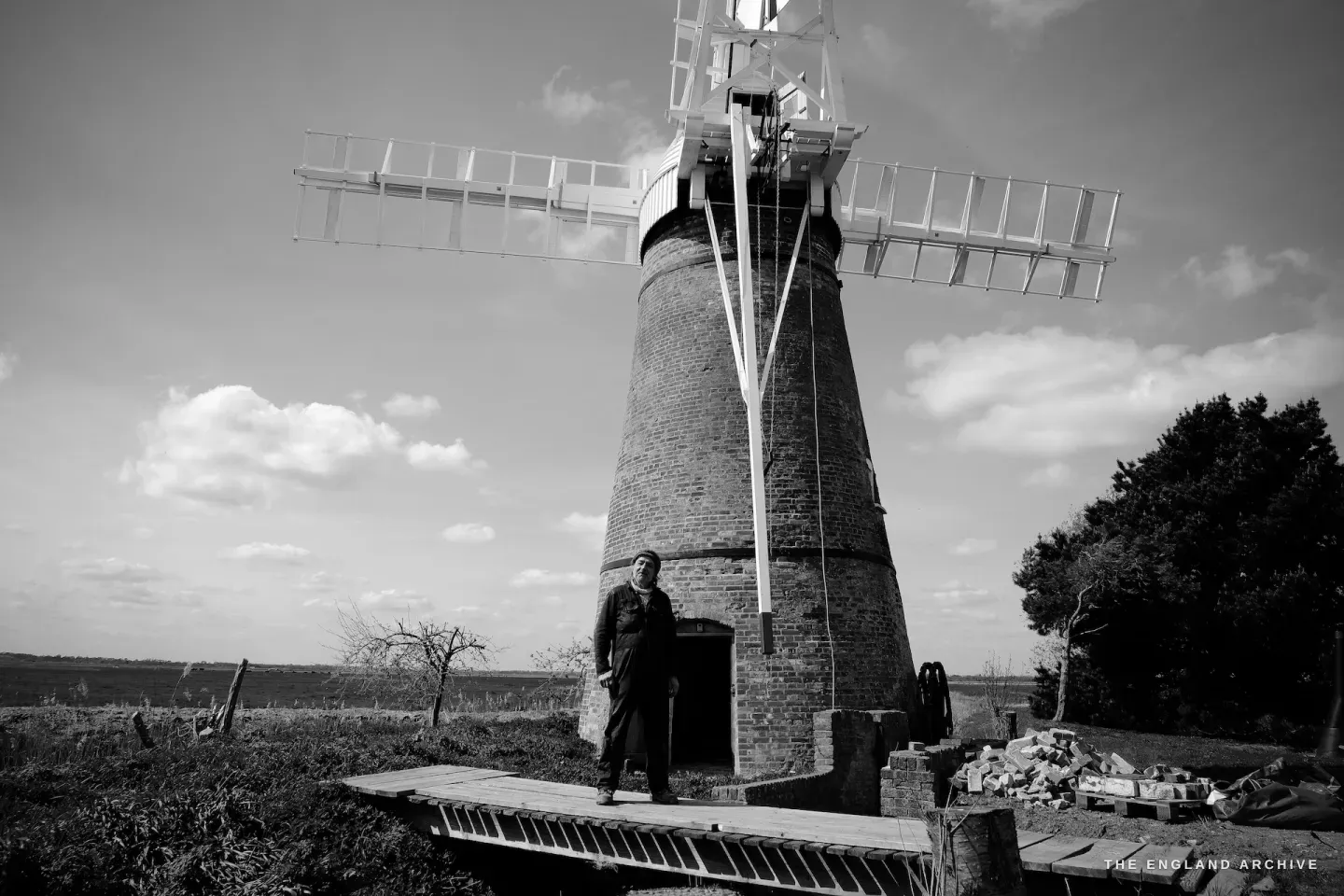
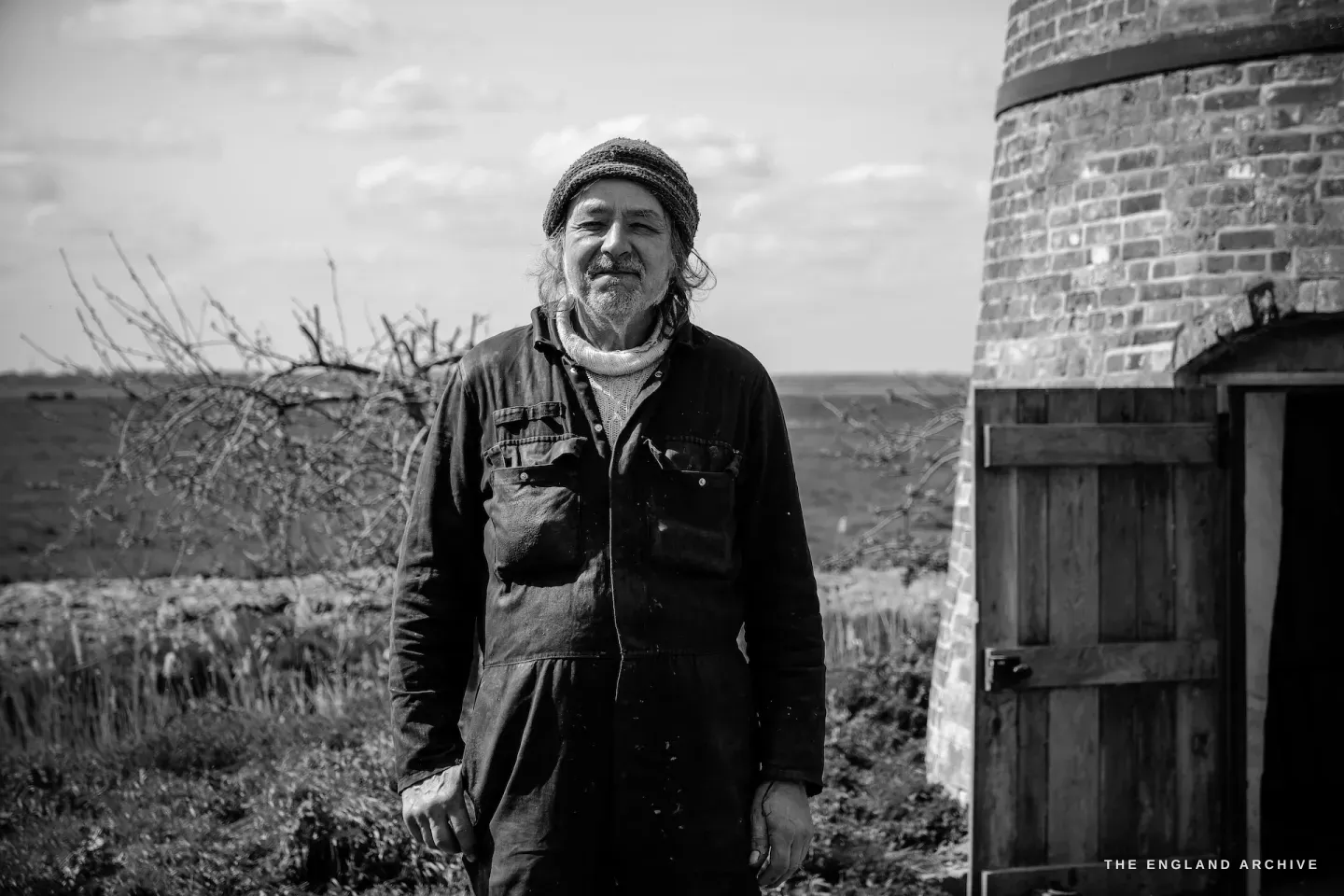
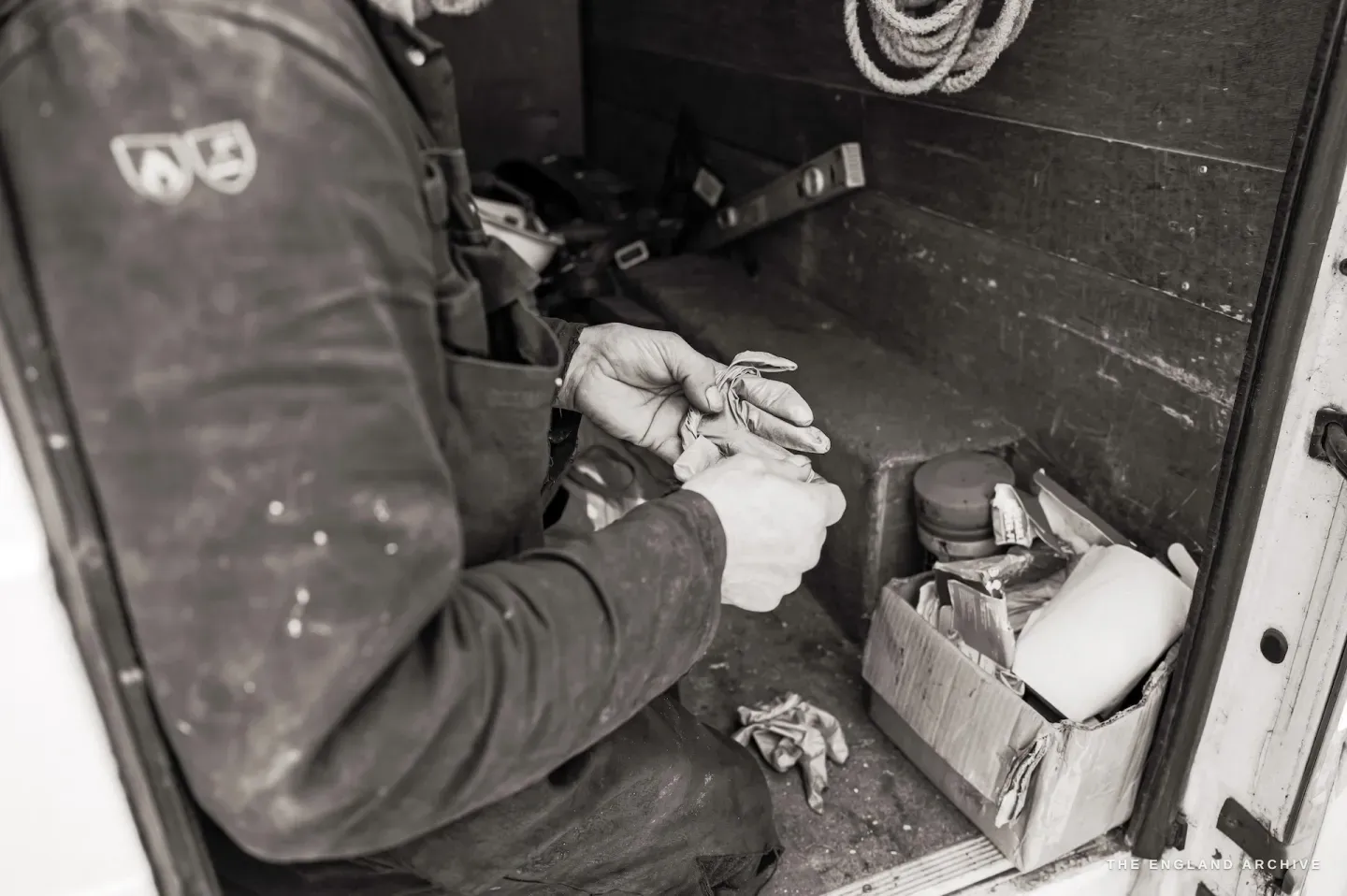
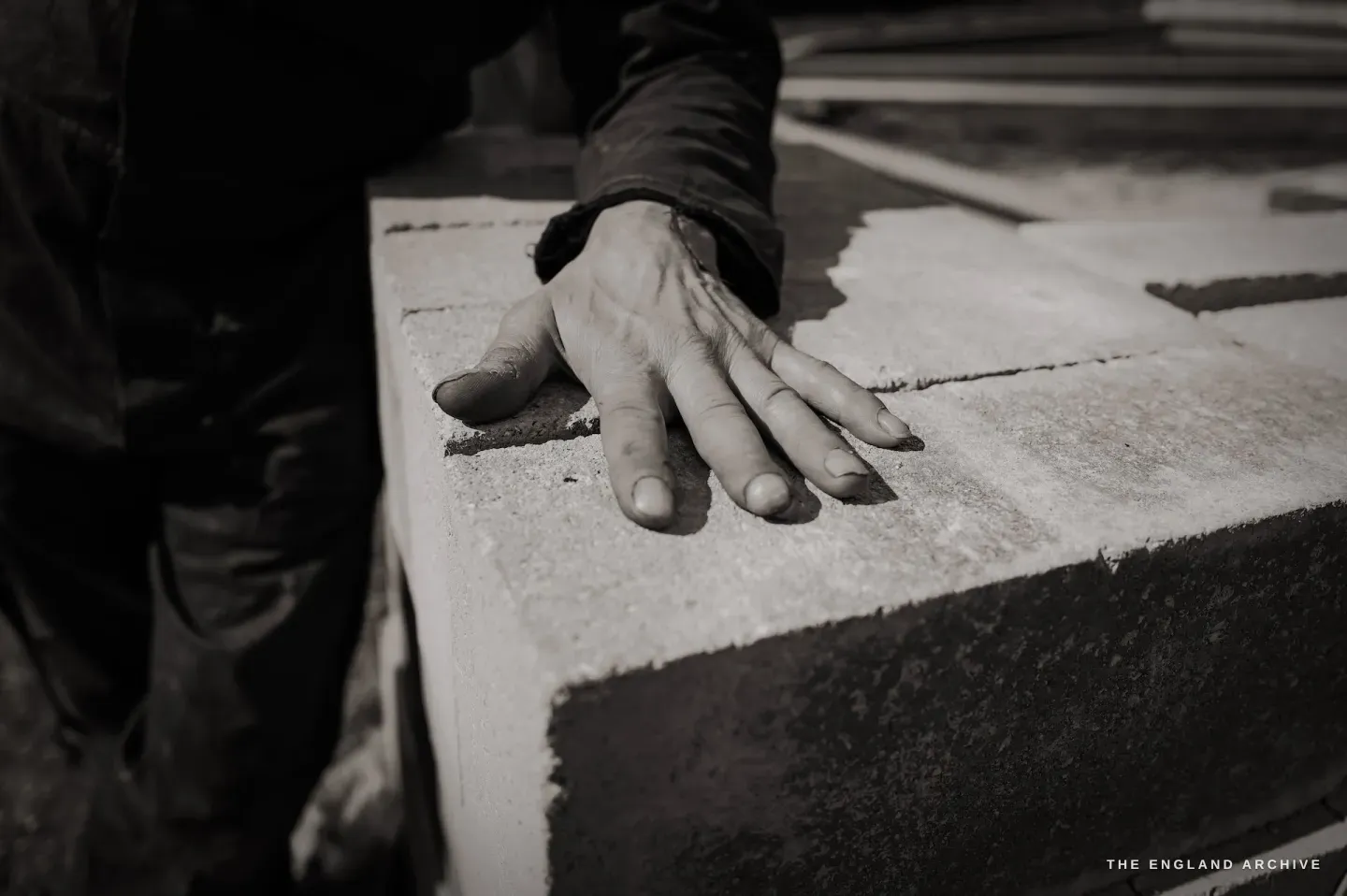
Between the portraits and the leaving I made a series of close studies of the mill itself - the surfaces and components that Paul’s hands know better than anyone. Timber grain worn smooth by decades of contact. Iron forged by hand and darkened by weather. Brickwork repaired across multiple lifetimes. Every surface carries the evidence of use and of care.
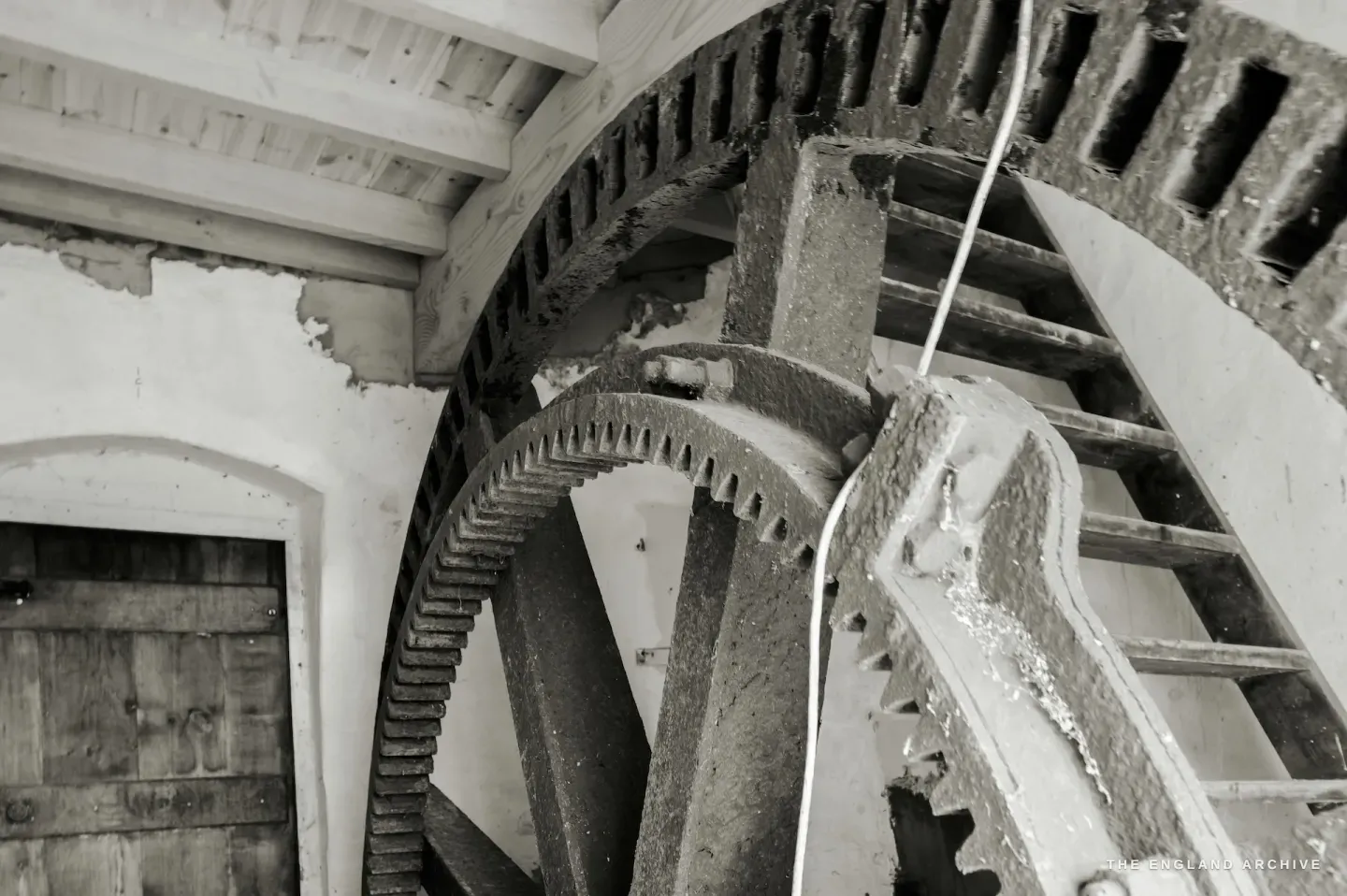
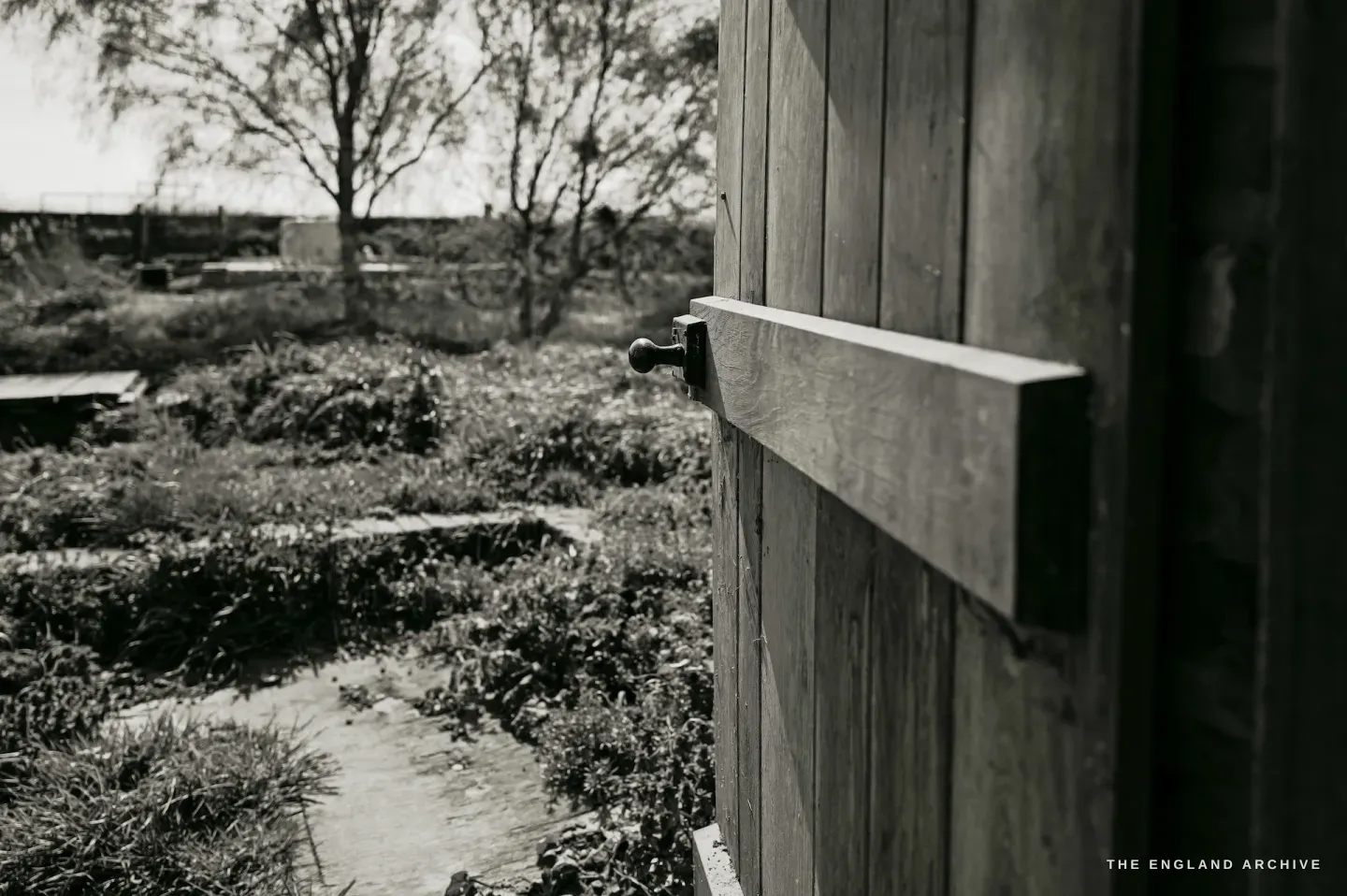
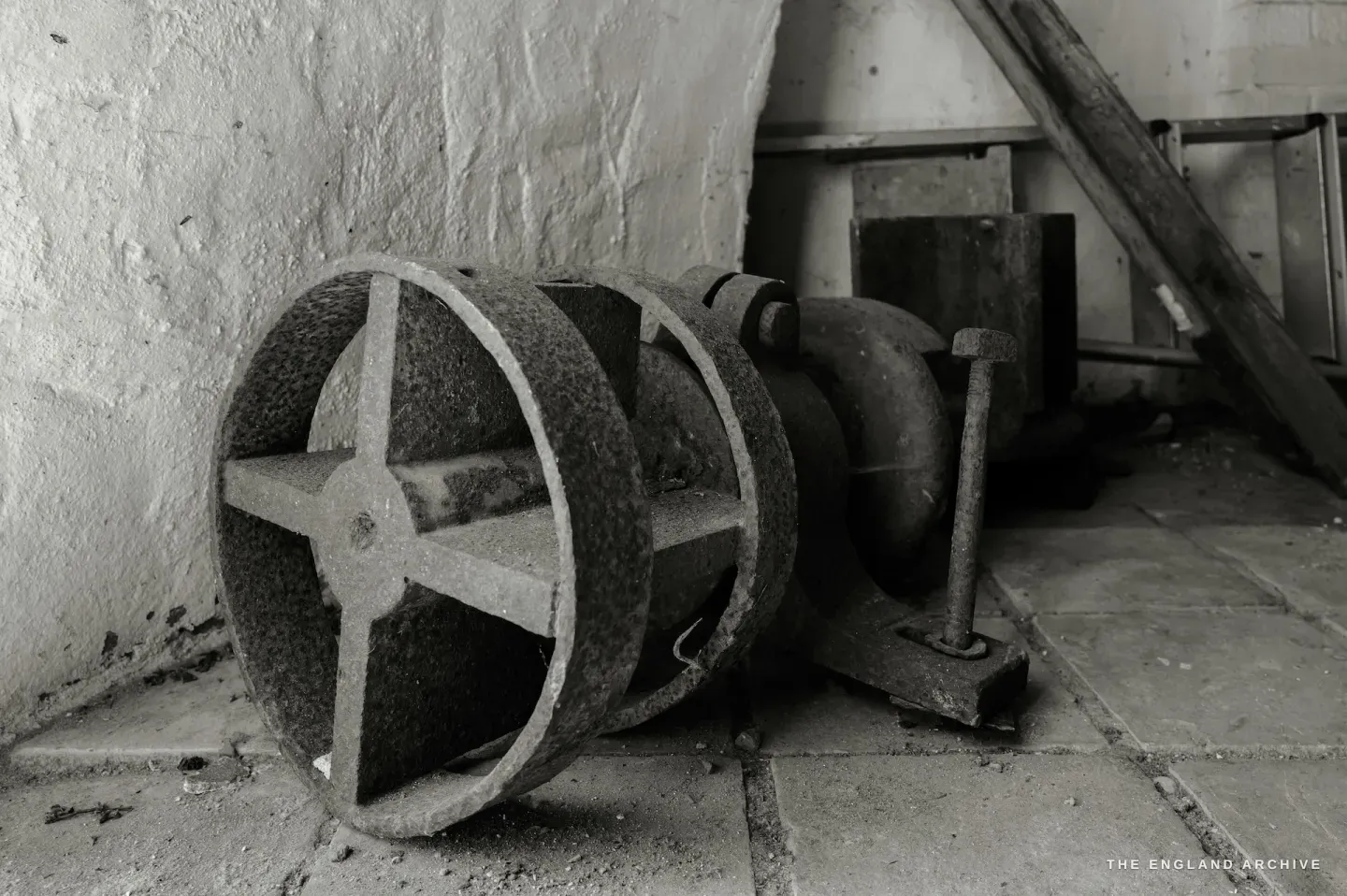
Toft Monks drainage mill stands on the edge of the Norfolk Broads near Beccles, and Paul took me up inside it. It is one of the surviving drainage mills that once numbered in the hundreds across the marshlands of Norfolk and Suffolk. These were not built to grind grain. They were built to pump water - to lift it from the low-lying fields into the drainage dykes that kept the Broads farmland workable. Without the mills, the land flooded; without the millwrights who kept them turning, the mills stopped. Standing in the tower while Paul named each part around me, I understood that the relationship between this craft and this landscape was never metaphorical. It was hydraulic.
The mill had fallen into disrepair before its current owners undertook a complete refurbishment - a two-year project carried out by a team of specialist craftspeople. Luke Bonwick served as millwright consultant and architect. Paul Kemp led on the gearing, metalwork, and getting the mill running. Alex Hunter and Gary May produced the timber elements - the new curb, cap frame, rafters, cladding, fan stage, fan blades, brake wheel, sails, and the wooden striking gear components. Damian Burton-Pye and his team renewed ten courses of brickwork below the cap, installed new floors and beams, and carried out structural repairs to the tower.
The result is a mill that works. Not as a museum piece. Not as a decorative landmark. As a machine - a machine that can catch the wind and turn it into mechanical force, the way it was designed to do, because the craftspeople who restored it understood the building well enough to make it whole again.
He knows every timber in it, every joint, every tendency in different winds. That knowledge lives nowhere except in him and in the handful of people like him scattered across the county.
The session ended naturally, the way good sessions do, without a formal close. We stood and talked for a while in the shadow of the mill. Then Paul had somewhere else to be, and so did we.
I looked the word up afterwards, and what I found only deepened what I had watched. Millwright dates to the medieval period: the person who built and maintained the mechanisms of a mill, water and wind alike. What strikes you, once you have seen Paul move around one, is that unlike a carpenter who works static timber, or a smith who works metal alone, the millwright stands at the intersection of materials and forces. He has to hold the whole machine in his head as a single system - the sails that catch the wind, the cap that turns to face it, the main shaft that carries the power, the gears that step it down, the stones that grind.
It is hard now to picture how common this once was. At the height of England’s milling history there were thousands of working windmills across the eastern counties; Norfolk alone had over three hundred. Every one needed a millwright to raise it and then to keep it - the annual inspection of timbers, the worn components replaced, the sails and gears adjusted, the constant attention that keeps a moving building from shaking itself apart. Paul, I kept thinking, is what is left of that.
Today the working mills number in the dozens. The millwrights number in fewer. The trade is not on the Heritage Crafts Red List of Endangered Crafts - not because it is safe but because there are so few practitioners that the trade barely registers as a category. It exists in the space between craft and civil engineering, taught by apprenticeship and sustained by practice, and it survives only as long as the people who carry it continue to work.
Watching him, you understand why the skills cannot be picked up quickly. A millwright must be able to read timber - to identify species, to assess grain direction and structural soundness, to select the right piece for a component that will bear load in a specific way for decades. They must be able to work at height, in confined spaces, in weather. They must understand the aerodynamics of a sail - how the angle of the shutters affects the speed of the mill, how the twist along the length of a stock translates wind into rotation. And they must understand the specific history and character of each individual mill they work on, because no two mills are identical and the solutions that work on one may not work on another.
Paul learned from the generation before him, who learned from the one before them, in an unbroken chain of practical knowledge running back centuries. Standing in the mill with him, I kept catching how thin that chain has worn. When his generation retires, the question is not whether the knowledge will be diminished. It is whether it survives at all. That sentence is the reason this archive exists, and Paul is the reason I believe it.
A millwright makes a building work. Not in the abstract, not on paper, but with hands and timber and iron and an understanding of wind that is closer to seamanship than to engineering. Paul Kemp is a Maker in the most fundamental sense: he makes things that would otherwise stop. Without craftspeople like him and the team he works alongside, the mill at Toft Monks would be a monument. With them, it is a machine.
The Makers strand of The England Archive documents people whose craft knowledge exists primarily in their hands and their practice. Paul’s knowledge of Norfolk’s windmills cannot be extracted into a textbook. It lives in the specific feel of a timber joint under his fingers, in the sound a gear makes when it is running true, in the instinct that tells him when the wind is about to back and the sails need attention. This is embodied knowledge - the kind that can only be transmitted from practitioner to practitioner, hand to hand, in the presence of the work. It is exactly the kind that vanishes quietly, and for good, when no one is watching.
We documented Paul Kemp because his knowledge of Norfolk’s windmills exists nowhere except in his hands and his memory. Every mill he has restored is a structure that would fall silent without the continuing attention of someone who understands it. The archive exists to record this knowledge - not as a substitute for the work, but as a record that the work was done, by this person, in this way, at this time. When someone in the future asks what a millwright was and what they knew, this page is part of the answer.
Location: Toft Monks Mill, Norfolk Broads, near Beccles. Arrived 10:00, Paul arrived 10:30. Session ran approximately three hours.
Access: By invitation. Paul was conducting scheduled maintenance and invited us to observe and photograph. Interior access granted during the session.
Equipment: Leica Q3 (digital, primary documentary camera). Fujifilm X-S20 (backup, detail work, interiors). Bronica SQ-A with 80mm f/2.8 (medium format portraits, Kodak Portra 400).
Light: Overcast morning, pale Norfolk sky. Even, diffused light throughout - good for interior work and for the white-painted mill exterior. No direct sun, which kept the contrast manageable inside the mill.
Key moments: Paul releasing the brake mechanism (sound carried across the marsh). The invitation to climb the interior. Paul explaining each component with unhurried patience. The Bronica portraits against the mill and sky at the end of the session.
Video: Bhavani filmed the full session for the documentary companion. Behind-the-scenes footage of the photography process. Separate audio recording of Paul’s explanations inside the mill.
Frames: Approximately 280 digital frames (Leica + Fujifilm). Two rolls Portra 400 on the Bronica (24 frames medium format).
Follow-up: Return visit planned for a working day when the sails are running under wind. Second portrait session at Paul’s own workshop. Longer recorded conversation about his career, the mills he has known, and the future of the trade in Norfolk.